
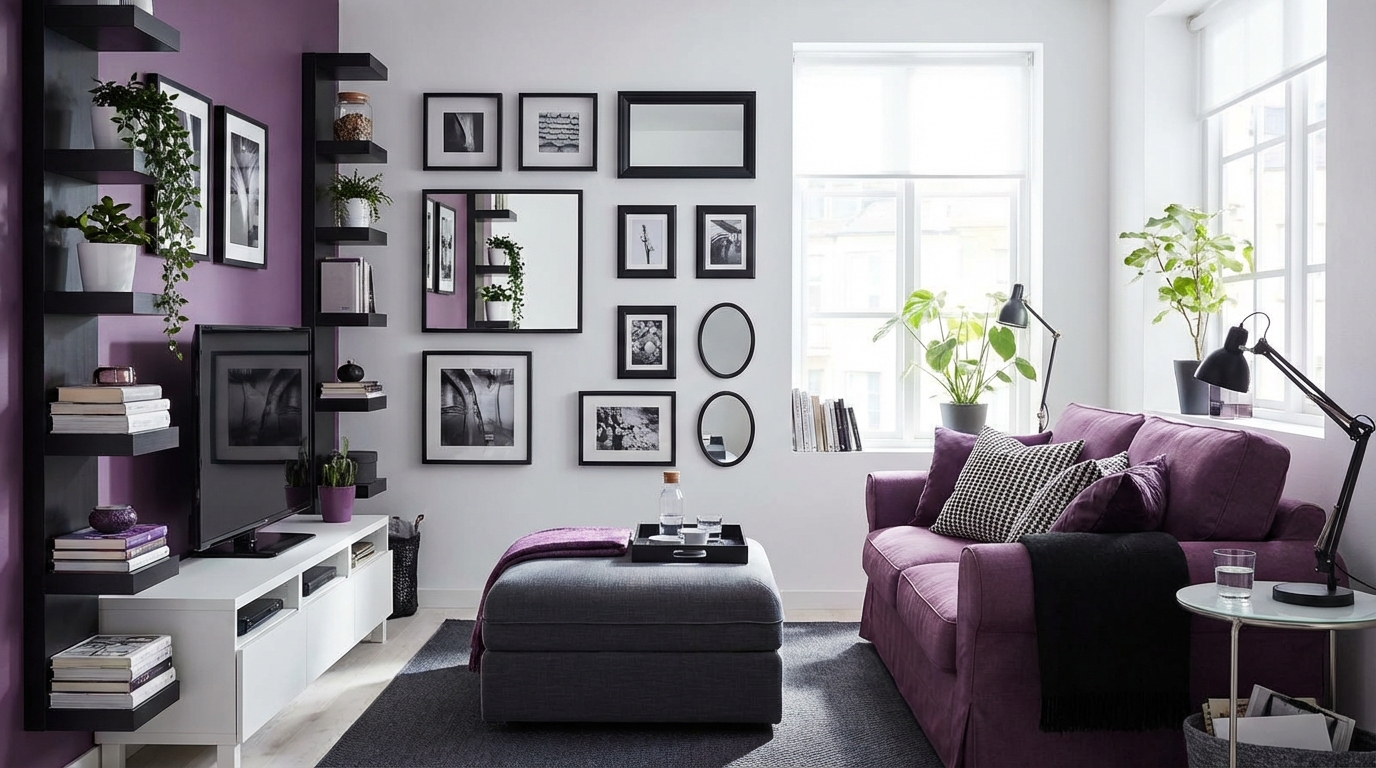

“Small spaces are hopeless. No matter what you do, they feel cramped and cluttered.”
That line shows up in comments, emails, and DMs all the time. It sounds true when you are staring at piles of stuff and a sofa that barely fits. But it is not true. Small spaces can work very well if you treat them with intention. That is what this guide on [Sunday Best](https://sundaybestblog.com/) is about: simple home decor fixes that make a tight room feel clearer, calmer, and more useful without needing a full remodel.
I might be wrong, but most people do not have a “space problem”. They have a “decision problem”. Too many random items, not enough structure. Too much furniture, not enough planning. The good news is that both of those can change with a few focused moves.
This is not about perfection. You are not styling a showroom. You are trying to live without bumping your hip on a coffee table every time you walk across the room. So if some of this feels a bit rough or in-between, that is fine. Real homes are like that.
You will see 13 fixes here. Think of them as experiments, not rules. Some will work for you, others will not. Take what fits your space, budget, and energy level, and leave the rest.
Why small spaces feel cramped in the first place
“If I just had a bigger house, all my space problems would vanish.”
Sometimes that is true, but not as often as people hope. A bigger place can just turn into a bigger version of the same clutter. Before jumping into specific fixes, it helps to see what usually creates that cramped feeling.
Most small spaces feel tight because of a mix of these factors:
1. Too much furniture for the floor area.
2. Dark, heavy color blocks that stop the eye.
3. Poor storage, so items live on every surface.
4. Weak lighting in corners and around the ceiling.
5. Random decor that breaks a room into fragments.
When you solve those, a small room can feel much lighter without adding a single square foot. That is the lens I will use for the 13 fixes below.
1. Edit your furniture before you buy anything new
“I just need more storage furniture, then the room will calm down.”
Often the opposite is true. The fastest home decor fix for a small space is subtraction, not more stuff.
Walk into your room and ask one hard question about each large item: “If this vanished tonight, would my life get worse, or mostly stay the same?” Be strict. Your sofa, bed, dining table, and a work surface are usually non‑negotiable. Everything else is up for debate.
Take out one item at a time and live without it for a few days, if you can. A side table, an extra chair, that small bookshelf you are not really using. You might feel odd at first. Then you notice you can walk around without sideways shuffles.
Here is a simple way to think through edits:
| Item | Do you sit/sleep/work on it daily? | Does it store things you use weekly? | Keep / Test removal |
|---|---|---|---|
| Main sofa | Yes | No | Keep |
| Accent chair | Sometimes | No | Test removal |
| Console table | No | Holds keys/mail | Test removal |
| Extra bookshelf | No | Old decor/books | Test removal |
If something only holds clutter, it is not helping the room feel bigger. It is shrinking it.
2. Use vertical space instead of horizontal sprawl
Small rooms lose a lot of potential because everything hovers between the floor and your waist. Once you look up and think in terms of vertical lines, you open more options.
Go taller with storage
Trade low, wide pieces for taller, narrower ones. For example:
| Swap this | For this | Why it helps |
|---|---|---|
| Low 3‑drawer dresser | Tall 5‑drawer chest | Same footprint, more storage, more vertical emphasis |
| Short TV stand | Slim media cabinet with wall‑mounted TV | Frees surface space and floor area visually |
| Wide bookshelf (waist height) | Narrow floor‑to‑ceiling shelf | Draws the eye up, breaks less floor |
You are not just adding storage. You are lifting the visual weight away from the floor.
Hang storage, do not just place it
Use wall hooks, rails, and pegboards for items that float around: bags, headphones, scarves, keys. A simple rail with a few hooks above a shoe rack in a narrow hallway turns a pile into a clear zone.
In the kitchen, hang utensils or mugs on a rail under cabinets. That frees drawer or counter space and keeps the work surface calm.
3. Choose light, low‑contrast base colors
“I love dark colors, so my tiny living room is painted charcoal. It just feels small and heavy now.”
Dark walls are not always a problem, but they can make a short room feel even shorter if the ceiling is low and the furniture is bulky.
For tight spaces, a light and low‑contrast base helps. That means walls, large furniture, and big rugs sit in a similar lightness range. You do not have jarring breaks between a dark sofa, stark white walls, and a black rug.
Here is a simple guide:
| Element | Safer choice for small spaces | Why |
|---|---|---|
| Walls | Soft white, light beige, pale gray | Bounce light, create background |
| Large sofa | Light neutral close to wall color | Blends into space, feels less bulky |
| Rug | Light to medium tone, subtle pattern | Grounds space without chopping it up |
You can still bring in deeper colors. Just use them in smaller ways: cushions, throws, art, one accent chair. The room keeps breathing while still feeling like you.
4. Pick furniture with legs, not heavy bases
Solid blocks on the floor make a small room feel closed. When you can see the floor run under a sofa or bed, the eye reads the room as bigger.
Look for pieces with visible legs, not big skirts or boxy bases. A sofa on slim legs, a coffee table with a light frame, chairs that show more floor under them. The same goes for beds; a simple bed frame with space underneath feels lighter than a whole storage base.
If you already own bulky items, you can still improve the feel:
– Pull the sofa a few inches from the wall to create a shadow line.
– Use a rug that extends past the sides of the furniture so everything sits on one visual “island”.
– Keep the floor under heavy pieces clear. No boxes, no random bags.
Even small gaps help. They break up that “wall of furniture” look.
5. Use multi‑purpose pieces that earn their footprint
In a small home, every big item needs at least two jobs. If a piece only does one thing and takes a lot of space, question it.
Here are some helpful combinations:
| Piece | Job 1 | Job 2 |
|---|---|---|
| Storage ottoman | Extra seat / footrest | Hidden storage for blankets, games, gear |
| Drop‑leaf table | Desk for work | Dining table when opened |
| Nesting tables | Compact coffee table | Side tables when separated for guests |
| Sofa bed or daybed | Daily seating | Guest bed |
| Bench with storage | Entry seating | Shoe or bag storage |
I might be wrong, but if a piece cannot explain its second job, it is taking more space than it should.
6. Control visual clutter on surfaces
“My space is not that small, it just feels messy all the time.”
Visual clutter is one of the biggest reasons a room feels cramped. When every surface holds multiple items, your brain never rests. It keeps scanning, which creates that tight feeling.
You do not need bare counters. You do need limits.
Try a simple rule: one functional group plus one decor group per surface, max. For example:
– Coffee table: tray with remote and coasters + one small plant.
– Nightstand: lamp + book and glasses.
– Entry console: bowl for keys + small frame.
Everything else either moves to hidden storage, hangs on a wall, or leaves the house.
To make this stick, give every “floating” item a clear home. A lidded basket for random cords, a drawer for mail, a box for kids’ toys in the living room. The decor fix is not just styling, it is making sure things have somewhere to go.
7. Use mirrors and glass carefully, not blindly
People often hear “use mirrors to make rooms look bigger” and cover every wall with reflective surfaces. That can backfire. Mirrors double clutter and bad views too.
Use mirrors where they reflect something calm: a window, a plain wall, or a simple piece of art. Place them across from light sources, not across from piles of stuff.
Some practical tips:
– A large mirror behind or beside a sofa can widen a narrow living room.
– A tall mirror near a window in a bedroom bounces light into dark corners.
– Mirrored closet doors can work if the rest of the room is simple.
Glass furniture, like a glass coffee table, can also reduce visual weight. The floor shows through, so the piece feels smaller. Just be honest with yourself: if you hate wiping fingerprints, a glass table might annoy you more than it helps.
8. Upgrade your lighting in layers
Overhead ceiling light alone almost always makes a room feel flat and small. Balanced lighting does more than any decor item for the feel of a space.
Think in three layers:
1. Ambient: main ceiling light or wall sconces.
2. Task: reading lamps, under‑cabinet lights, desk lamps.
3. Accent: small lamps, LED strips behind furniture, picture lights.
You do not need twenty lamps. Even adding two or three targeted sources can shift the mood.
For example, in a small living room:
– Keep the ceiling light, but change the bulb to a warmer white that is pleasant at night.
– Add a floor lamp in a dark corner near the sofa.
– Put a small table lamp on a console or shelf.
Use dimmable bulbs where you can. Bright, uniform lighting is harsh. Soft pools of light that overlap a bit make the edges of the room feel less harsh and more spacious.
9. Zone your space with rugs and furniture placement
In a studio or open small plan, everything blurs together: bed, sofa, desk, kitchen. That can feel chaotic. Zoning gives your brain clear areas without adding walls.
Use rugs to mark these areas. One for the seating zone, one for the sleeping zone, one for a small dining or work area if needed. Keep patterns simple so they do not fight each other.
Furniture placement matters too:
– Float the sofa slightly away from the wall if possible, with a rug under it.
– Place the bed so you can walk around at least one side.
– Use the back of a sofa or a low shelf as a divider between “living” and “sleeping” sides in a studio.
Here is a quick comparison:
| Layout style | Effect on small space |
|---|---|
| Everything pushed to walls, big empty center | Feels like a waiting room, no clear function zones |
| Furniture grouped on rugs into zones | Feels intentional, each area has a purpose |
Zoning also makes cleanup easier. Each zone has clear thing types that belong there.
10. Keep window treatments light and high
“I need heavy curtains for privacy, so my windows are covered almost all day.”
Heavy or low‑hung window treatments can shortchange a small room. They cut light, shorten the wall, and crowd the window.
A cleaner approach:
– Hang curtain rods a few inches below the ceiling (or as high as you can) and extend them wider than the window frame.
– Use light fabrics that filter light instead of blocking it, like linen blends or cotton.
– Pull curtains fully off the glass when open so you do not lose window width.
If privacy is a real concern, add simple roller shades or cellular shades that cover just the glass. Then your curtains can stay lighter and more decorative.
The goal is a tall, broad window, even if the actual window is not that big. Higher rods and full‑length panels create that illusion.
11. Curate decor instead of filling every gap
Small spaces cannot carry heavy decor on every surface and wall. That does not mean cold or bare. It means picky.
Try this approach:
– Choose one focal point in each room: a piece of art, a bold headboard, a statement rug, or a nice light fixture.
– Keep the rest quiet so that focal point can breathe.
– Group small decor items together instead of spreading them across the room.
For example, three framed prints aligned above the sofa read as one strong element. The same three prints scattered on different walls fragment the room.
Think in “collections” rather than singles: a stack of books with a small plant, three vases of similar tone, a mini gallery wall. Collections feel intentional and take similar visual energy as one larger piece.
If something does not add clear joy or function, test the room without it for a week. Many items stay in place just because they have always been there.
12. Create hidden storage in plain sight
Storage is not just closet space. It is every box, drawer, basket, and built‑in you can tuck into your layout without crowding it.
Here are practical storage ideas that do not overwhelm the room:
| Location | Storage idea | What it holds best |
|---|---|---|
| Under bed | Low rolling bins or drawers | Out‑of‑season clothes, spare linens, shoes |
| Sofa side | Slim side table with shelves or doors | Books, remotes, chargers, notepads |
| Entry area | Bench with lift‑up seat | Shoes, bags, umbrellas |
| Above doors | Simple shelf | Boxes with rarely used items |
| Inside closet doors | Over‑the‑door rack | Accessories, cleaning supplies, small items |
The key is to match storage to the items that actually live in that room. If your living room keeps absorbing gym gear, board games, or kids’ toys, give those items specific containers there instead of forcing them into another room.
Hidden storage is not an excuse to keep everything forever. It just controls what truly belongs.
13. Set simple “capacity rules” for your space
This last fix is about habits, not furniture. Without some kind of capacity rule, clutter slowly creeps back and all your decor tweaks lose power.
Capacity rules are simple limits you decide ahead of time. For example:
– “Our bookshelf holds 80 books. When it is full, something has to go before something new comes in.”
– “The entry bench basket holds our scarves and hats. If it overflows, we sort and donate.”
– “The coffee table tray is the only place for remotes and small items. If something does not fit, it needs another home.”
You are telling the room how much it can carry. That keeps small spaces stable.
Here is a way to frame capacity:
| Area | Capacity rule idea |
|---|---|
| Closet | Number of hangers equals number of hanging clothes. No extra hangers. |
| Kitchen counter | Only appliances used daily live out. Others live in cabinets or go. |
| Bathroom | One caddy or shelf for products. When full, older ones leave. |
If you skip this step, every decor fix turns temporary. With it, the room has a chance to stay clear.
Putting the 13 fixes together without overwhelm
You do not need to apply all 13 at once. That would feel heavy and probably stall you. A better path is to run small experiments in this order:
Step 1: Clear and edit
1. Edit furniture: remove one or two non‑essential pieces and test living without them.
2. Reduce surface clutter: limit each main surface to one functional group and one decor group.
These two alone often free up a surprising amount of space.
Step 2: Shift the structure
3. Change one big color block: walls, rug, or sofa cover to a lighter, calmer tone.
4. Rework layout: create clear zones with rugs and adjust furniture placement.
5. Add one vertical storage piece and remove a low, wide one.
Here you are shaping the bones of the room.
Step 3: Refine the details
6. Raise curtain rods and lighten window treatments.
7. Replace or add two or three lighting sources to build layers.
8. Hang one mirror in a spot that reflects light or a calm view, not clutter.
9. Swap a single‑purpose item for a multi‑purpose item, like an ottoman with storage.
10. Add hidden storage where clutter tends to gather: bench, baskets, under bed.
This phase smooths daily living.
Step 4: Lock in new habits
11. Set capacity rules for books, clothes, and small items.
12. Re‑curate decor: one focal point per room, grouped smaller items.
13. Recheck surfaces after a week and adjust storage or habits where clutter reappears.
If, while reading this, your instinct is “I just need more stuff that hides clutter,” that is the bad approach. Hiding without editing just delays the same problem. Start with less, then add smarter storage only where needed.
A small space will probably never feel like a big open loft. That is fine. It can feel clear, calm, and personal. The 13 fixes above move you toward that, one decision at a time.
