
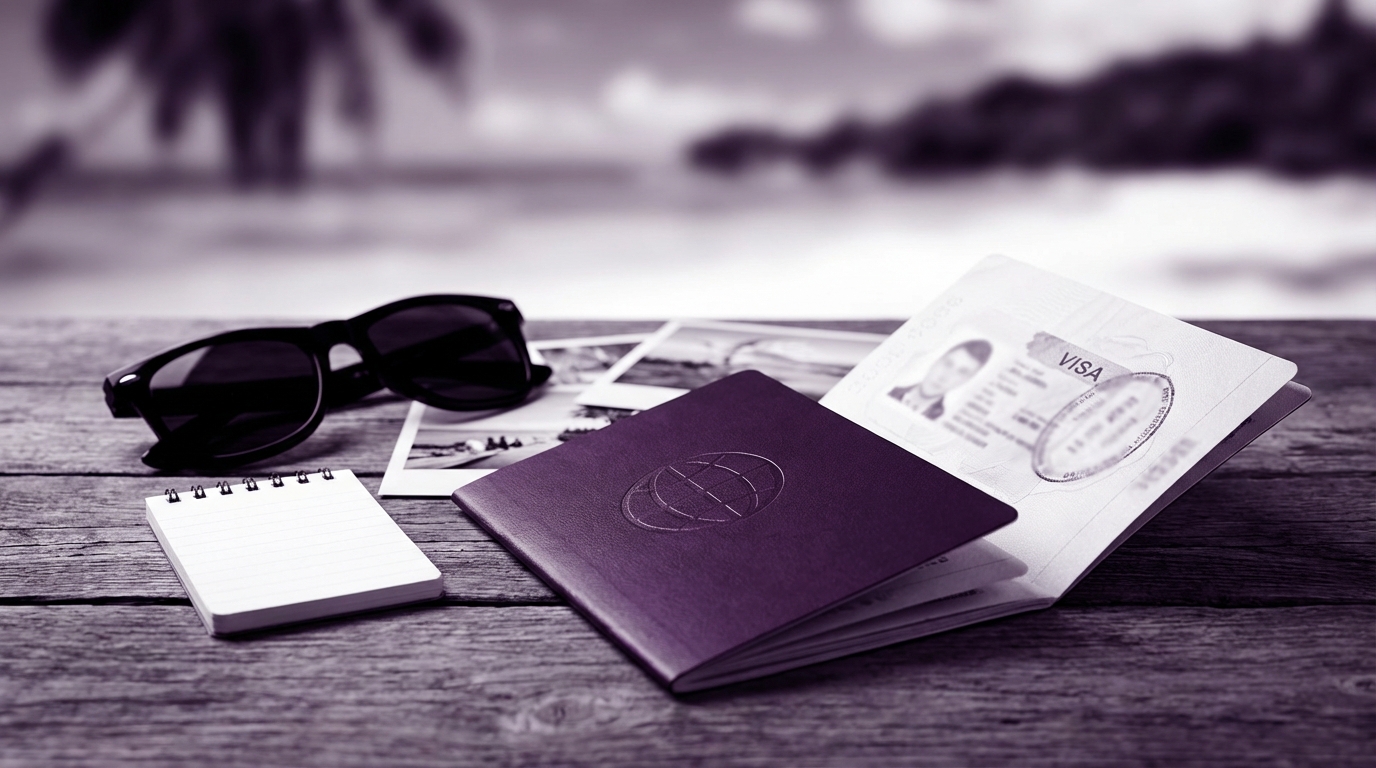

“If you are visiting the Bahamas, you can just show up with your passport and everything will be fine.”
That sounds nice, but it is not always true. Travel visa rules for the Bahamas depend on your nationality, your route, and how long you plan to stay. If you get this wrong, you might be denied boarding before you even reach the islands. This guide on Bahamas visa requirements will walk through what different travelers need, who can enter visa free, who needs a visa in advance, and a few small details that many people miss. If you want broader trip planning help, the main travel hub at Sunday Best Blog covers flights, packing, and destination guides that connect well with what you will read here.
Why Bahamas visa rules confuse so many travelers
Most people hear two things about the Bahamas: cruise ships make stops there all the time, and tourists from many countries enter without a visa. That is partly right, so it creates a false sense of security.
I might be wrong, but I see three main reasons travelers get confused:
They mix up “no visa” with “no rules.”
They copy advice from a friend with a different passport.
They ignore transit and onward ticket rules because the trip “looks simple.”
Visa free entry still has conditions. Even if your passport lets you enter the Bahamas without a visa, you still need proof of onward travel, a valid passport with enough time left, and in some cases proof of funds and accommodation. The immigration officer at the border has the final say.
“Visa free means I can stay as long as I want, right?”
No. Visa free stays have time limits. For many nationalities that is up to 8 months as a visitor, but the officer can shorten that stay based on your plans and what you show them. You are not guaranteed the maximum period.
Key idea: three questions decide your Bahamas visa requirement
Before going deep into country lists, it helps to reduce the problem to three simple questions:
1. What passport do you hold?
2. How long do you plan to stay in the Bahamas?
3. How will you enter and leave (air, sea, or transit through another country like the US)?
Once you are clear on those, you can plug into the rules much more easily.
Question 1: Your nationality comes first
The Bahamas has different visa policies for different groups of countries. Some travelers never need a visa for short tourist or business visits. Others must apply in advance.
If your approach is “my friend went there with no visa, so I am fine too,” that is risky. Visa policy is based on passport, not where you live or where your friend lives.
“If my residency card is from country X, I can follow country X rules.”
This is often wrong. Residency in another country rarely changes your visa status for the Bahamas. What matters is the passport you present at the border.
Question 2: Length and purpose of stay
Short visits for tourism or simple business meetings face lighter rules. Work, long study, or moving to the Bahamas is an entirely different process that needs permits, not just a visitor visa or visa free entry.
It seems to me many people stretch the idea of a “visit.” If you plan to work online from the Bahamas for months, you are still normally a visitor, but if you will work for a Bahamian employer or run activities locally, that can require other permissions. This guide focuses on short visits for tourism or basic business, which is what most travelers need.
Question 3: Route and transit
Your route matters. Many visitors reach the Bahamas via the United States. Some nationalities that do not need a Bahamas visa still need a US visa or ESTA to transit through a US airport. Others may need a transit visa in other hub countries.
If you ignore this and book a cheap routing through a country whose transit rules you do not meet, the airline will probably stop you at check-in. That is one of the most common trip failures I see around Bahamas travel.
General overview of Bahamas entry rules
To give structure, here is a simplified table. This is not a government source, and rules can change, so always confirm with the nearest Bahamian embassy or consulate before you book.
| Traveler type | Visa need for short visit | Typical stay allowed | Key conditions |
|---|---|---|---|
| Passport from visa-exempt country | No visa for tourism / simple business | Up to 8 months (officer decides) | Valid passport, onward ticket, possible proof of funds / stay |
| Passport from country that needs a Bahamas visa | Visa required before travel | Set by visa, often up to 3 months | Apply at embassy/consulate, show documents, pay fee |
| Cruise passenger, same-day back to ship | Often no visa if in transit and ship returns you | Hours on shore | Follow cruise line and Bahamas rules, carry ID |
| Transit traveler staying airside | Varies by nationality and airport rules | Short transit window | Check both airline and airport; some still need visa |
Who usually does not need a visa for the Bahamas
The Bahamas allows visa free entry for many passport holders for short tourist or business visits. While I cannot list every country here, you can expect visa free access for:
– Many Caribbean Community (CARICOM) states
– United States
– Canada
– United Kingdom
– Most EU countries
– Some Latin American and Asian countries
I might be wrong on one or two edge cases, so you should still confirm on the official Bahamas government or consular site. Policies change over time.
If your country is on the visa exempt list, this usually means:
– You do not need a visa before travel for a short visit.
– You still need a valid passport.
– You need a return or onward ticket.
– You need to show that you can support yourself or that someone is hosting you.
Passport validity and blank pages
Many travelers overlook passport validity. Airlines tend to check this because they can be fined if they carry someone who does not meet entry rules.
Common rules for the Bahamas:
– Passport should be valid for at least 6 months beyond your planned departure date.
– You should have at least one or two blank pages for entry and exit stamps.
If your passport is close to expiring, renew before your trip. It is not worth the risk of being denied boarding.
Length of stay for visa exempt travelers
People often quote “8 months” as the allowed stay for visitors. This is a maximum, not a promise. The officer at the border can grant less based on your ticket and what you explain.
For example:
| Scenario | Likely decision | Reason |
|---|---|---|
| Return ticket in 7 days, hotel booked for 7 nights | Stamp for 7 days or a bit longer | Trip length is clear and supported by documents |
| One-way ticket, no clear plan | Short stay stamp or refused entry | No clear onward travel or plan |
| Long stay with strong proof (rent, funds, work remote) | Officer choice, maybe up to some months | More evidence, still at officer’s discretion |
If you need to extend your stay, you often can apply within the Bahamas at the Department of Immigration. Extensions are not automatic, and you may need to pay a fee and explain your reason.
Who needs a Bahamas visa
Some nationalities must get a Bahamas visa ahead of time, even for short visits. The country list shifts at times, but it often includes some African, Asian, and other states.
If your country is in the visa required group, you need to:
1. Apply at a Bahamian embassy, high commission, or consulate before travel.
2. Provide supporting documents.
3. Wait for approval before buying non-refundable tickets if possible.
“If my flight is booked, they have to approve the visa.”
This is not correct. Visa officers do not approve an application just because you already booked your trip.
Common documents for a Bahamas visitor visa
The exact list can change by embassy, but you will usually see requests such as:
– Completed visa application form.
– Valid passport with enough validity and blank pages.
– Passport-size photos.
– Proof of travel (flight reservation or itinerary).
– Proof of accommodation (hotel booking or host letter).
– Proof of funds (bank statements, pay slips, sponsorship).
– Letter from employer or school stating your status and leave dates.
– Visa fee payment.
– For minors, consent letters from parents or guardians.
Some missions require an in-person interview; others accept applications through a visa center or by mail. Always check the specific mission instructions, as they can differ.
Single-entry vs multiple-entry visas
If you expect to enter the Bahamas more than once during your trip, you might need a multiple-entry visa. For example:
– You plan to visit the Bahamas, then the US, then return to the Bahamas.
– You are on a regional cruise with multiple stops including more than one Bahamas port on different days.
Ask the issuing mission which visa type best matches your travel pattern. Choosing a single-entry visa when you need multiple entries can complicate your route later.
Transit through the Bahamas
Some travelers pass through a Bahamian airport on the way to another country. In that case, your questions change slightly:
– Will you go through immigration and leave the sterile transit area?
– How long is your layover?
– What does your airline require for boarding?
If you stay airside and do not cross the border, you may not need a visa even when ordinary visitors do. That said, I would not assume this. Airlines follow specific rules, and some airports have limited true transit arrangements, where even connecting passengers must clear immigration.
If your connection is long and you hope to go out into the city between flights, you are then entering the Bahamas normally, so all standard visa rules apply.
Bahamas visa rules for cruise travelers
Cruise travel adds another layer. Many people visit Nassau or Freeport as a cruise stop without ever dealing directly with visa rules. Cruise companies typically screen passengers before boarding.
General patterns:
– Travelers from visa exempt countries often can go ashore with just a passport or even the cruise ID, depending on the cruise line.
– Travelers who normally need a visa may still need one, even if they are only on shore for a few hours.
– Some nationalities can join “closed-loop” cruises from US ports with different ID rules, but that is tied to US law and cruise company policy.
If you are not sure, contact the cruise operator and ask in writing. Then cross-check with a Bahamas consulate. If their answers conflict, follow the more strict rule and resolve the difference if you can.
Special cases: minors, groups, and mixed-nationality families
Travel with children and groups can add complications that people tend to miss.
Minors
When minors travel to the Bahamas, border officers often pay extra attention to protect them from abduction or trafficking. There are a few patterns:
– Children traveling with one parent only may need a consent letter from the other parent and proof of relationship (birth certificates).
– Children traveling with relatives or school groups may need notarized authorization letters from parents or guardians.
– Adoption or guardianship cases sometimes require additional documents.
If you travel with children who have a different surname, bring documents that explain the link, such as birth or marriage certificates. This small step helps avoid long questioning on arrival.
Group travel
Tour groups often rely on one organizer for all paperwork. That can be efficient, but it also hides individual issues. For example, one member might hold a passport that requires a visa, while others do not.
Each traveler is still responsible for meeting entry rules. Do not assume that a group “clearance” from an agent replaces personal requirements.
Mixed-nationality families
In families where each person has a different passport, visa rules can vary inside the same group. It is common to see:
– One spouse with visa free access.
– Another spouse from a country that needs a visa.
– Children with yet another citizenship.
The safe process here:
1. Check rules for each passport separately.
2. Make sure the strictest requirement is met across the family.
3. Keep documents together for quick presentation at the border.
Onward travel, funds, and accommodation evidence
Many travelers focus only on visas and forget about supporting proof. Bahamas immigration officers can ask more questions even of visa exempt travelers.
Onward or return ticket
In general, visitors should carry a return or onward ticket leaving the Bahamas within a reasonable time. For example:
– Return ticket to your home country.
– Onward ticket to another country where you have entry rights.
If you want open-ended dates, you can explore options like flexible tickets or changeable bookings, but you still need something solid to show at the border and to the airline.
Proof of funds
Officers can ask how you will support yourself. Evidence might include:
– Recent bank statements.
– Credit cards.
– Letter of support from a sponsor with their financial proof.
– Proof of prepaid packages or tours.
There is no single magic number, but you should show that your funds match your stay length and style. A long stay with very low funds can raise questions.
Accommodation details
Whether you stay in a hotel, rental, or with friends, have details ready:
– Hotel or Airbnb booking confirmations.
– Full name, address, and contact of your host.
– Any invitation letters if a resident is hosting you.
Keep electronic and printed copies. Phones run out of battery or fail at the wrong moment, and a paper copy can save time.
Health, insurance, and other entry checks
Health rules can shift faster than visa rules. While the Bahamas has relaxed some health checks over time, you should pay attention to:
– Vaccination rules that may apply to some travelers, especially those arriving from yellow fever risk countries.
– Any remaining health forms or arrival apps.
– Travel insurance expectations.
“Nobody checks travel insurance, so I do not need it.”
This might be true at the border, but it can still be a poor choice. Medical care abroad can be expensive, and many policies cover trip interruptions as well. From a risk perspective, travel insurance is often a smart spend for trips to the Bahamas, especially for longer stays or active holidays.
How to check the current official Bahamas visa rules
Because rules change, the most reliable plan is to use a layered approach. Do not rely on a single blog, including this one.
Here is a simple step-by-step path:
- Find the official Bahamas Ministry of Foreign Affairs or Department of Immigration website.
- Look for “Visa Requirements” or a country list and confirm your nationality status.
- Write down exact wordings, such as “visa required” or “visa not required for stays up to X days.”
- Contact the nearest Bahamas embassy, consulate, or high commission by email or phone and confirm what you read.
- Ask about any recent changes that may not be reflected online yet.
- Double-check transit needs for all countries in your route (for instance, US, UK, Canada, Schengen states) through their own official sites.
- Talk to your airline and confirm what they see in their system for your passport and route.
If any of these sources conflict, assume the stricter version is correct until you get clear written clarification from an official mission.
Common mistakes travelers make with Bahamas visas
I see a few repeating errors that cause trip problems. If you avoid these, you are already in a better place than most travelers.
| Mistake | What people assume | What actually happens |
|---|---|---|
| No visa check because “it is just the Caribbean” | All islands follow the same rules | Every country sets its own policy; some require visas |
| Copying a friend’s experience | Friend got in, so my case is identical | Passport, history, or documents differ and officer decides differently |
| Ignoring transit country rules | Only destination visa matters | Denied boarding at start of journey because of missing transit visa |
| Booking non-refundable tickets before visa | Visa will be granted, so no risk | Visa delayed or refused; money lost on tickets and bookings |
| Assuming maximum stay is automatic | Right to stay for full 8 months | Shorter stay stamped; overstay creates legal issues |
If your current plan matches one of these mistakes, you are taking a bad approach. Step back, check your assumptions, and adjust before you pay more money.
Practical preparation checklist for Bahamas travel visas
To make things easier to act on, here is a compact checklist you can work through before your trip.
1. Confirm visa status by nationality
– Look up your passport country on the Bahamas official visa list.
– Verify with a Bahamas embassy or consulate.
– Note whether you are visa exempt, visa required, or can get any special arrangement.
2. Check passport validity
– Make sure your passport is valid for at least 6 months beyond your planned last day in the Bahamas.
– Confirm there are enough blank pages.
– Renew if close to expiry.
3. Review your route and transit visas
– Look at each leg of the journey and each country you pass through.
– For each transit country, check whether you need:
– A regular visa.
– A transit visa.
– An electronic authorization (such as ESTA for the US, if that fits your case).
– Confirm with your airline that you meet all transit rules in their system.
4. Prepare supporting documents
Gather evidence you might need at check-in and at the border:
– Flight bookings (printable confirmations).
– Hotel or rental bookings.
– Host invitations with ID copies for sponsored stays.
– Bank statements or proof of funds.
– Work or school letters.
– Travel insurance documents.
– Consent letters for minors, where relevant.
5. If you need a visa, plan early
– Check processing times on the consulate site.
– Apply with time buffer for delays, mistakes, and extra documents.
– Avoid paying for non-refundable bookings until you have approval, unless you accept the risk.
Handling changes and uncertainties
Rules around travel can move faster than many travelers expect. New health measures, security events, or diplomatic changes can alter visa policies.
Since nothing is static, get in the habit of re-checking your assumptions:
– When you buy your ticket.
– A few weeks before you travel.
– A few days before departure.
If something changes and you no longer meet entry rules, contact the airline and the embassy right away. Sometimes you can shift dates or routes and still save the trip.
“I checked once when I booked. Why should I check again?”
Because conditions shift, and what was true when you planned might not match the day you fly. It is a bit of extra work, but it saves you from surprises at the airport.
Bringing it together for your Bahamas trip
Travel visa requirements for the Bahamas are not as complex as some regions, but they still need careful attention. Everything starts with your passport, your route, and how long you want to stay.
If your passport is on the visa exempt list, your focus should be on:
– Passport validity.
– Onward ticket.
– Basic supporting documents.
If your passport needs a visa, your focus shifts to:
– Early application.
– Accurate and complete documentation.
– Matching your itinerary to the visa you are granted.
When your plan feels too casual, such as “I will sort it out at the airport,” that is a warning sign. Tighten your preparation, verify with official sources, and then enjoy the easy part: landing in the Bahamas and starting your time on the islands.
If you keep this structured view in mind, visa rules turn from a vague worry into a list of clear steps that you can handle with confidence.
