

“If you just get the water out and open some windows, the house will dry on its own. You do not really need professional water damage restoration.”
That sounds tempting, but it is mostly false. You can mop and air things out, but proper Snyderville Water Damage Restoration goes much deeper than that. It is not only about drying what you can see, it is about hidden moisture, structural issues, and avoiding mold that can show up weeks later when you thought everything was fine.
I think this is where a lot of people in Snyderville get stuck. The water is gone, the floor looks dry, the smell is not too bad, and life is busy. So you move on. Then a month later there is a soft spot by the wall, or you notice a musty odor in a closet, or your kid starts coughing more at night. It feels unrelated, but often it is not.
If you want restoration you can actually trust, you need more than surface drying. You need a clear plan, real moisture checks, and people who are honest about what can be saved and what cannot. That does not always mean the most expensive option. It just means no guessing.
I remember walking into a house where the owner had done everything they could on their own. Towels everywhere, fans running, space heaters. They had worked hard and it showed. Parts of the home were fine because of that effort. But we still found soaked insulation behind the baseboards and standing water inside a wall cavity. From the outside, it looked “handled.” Inside the wall, not even close.
The hard part about water damage is that what you see is often only half the story.
So if you are in Snyderville, looking at a wet floor, maybe a ceiling stain, or a flooded basement, the key question is simple: how do you know who to trust and what actually needs to happen next?
That is what this article is for. Not to scare you, and not to sell you on the most dramatic option, but to walk through real steps, real costs, and real decisions, so you can protect your home without feeling lost or rushed.
Why Snyderville homes face special water damage risks
Snyderville is not the wettest place in the country, but the mix of cold winters, snowmelt, and sudden storms creates its own set of problems. The big issues are not always the obvious ones like a big flood. Small, repeating events can be just as damaging.
Here are a few common patterns you might recognize:
You get heavy snow, and then a quick warm spell. Snowmelt runs toward the foundation, and a tiny crack in your basement wall lets a slow trickle in. Not a full flood, just enough to soak carpet edges and the bottom of drywall.
Gutters clog, and water overflows against the house. It seeps under siding or finds its way behind a window frame. Months later you see bubbling paint or warped trim.
A plumbing line in a crawl space or basement sweats or drips for weeks. You never quite see the water, you only notice that one area always seems cold or damp.
Because of the temperature swings, things do not always dry evenly. Cavities in walls, ceiling spaces, and insulation can stay damp long after surface materials look fine. That is where mold and structural damage quietly start.
What makes a restoration job “trustworthy” is not just fast response. It is complete drying, clear communication, and no surprises six months later.
The real difference between cleanup and restoration
Many people mix these two ideas together. Cleaning up water is only one piece of the puzzle. Restoration covers the whole journey from “this is a mess” to “this feels like my home again.”
Basic water cleanup
Water cleanup is what most people think of first. It focuses on:
Removing standing water, soaking up puddles, and stopping active leaks.
Throwing out ruined items that are clearly not salvageable.
Drying the surface so you can walk through the home again.
That part matters. If you do it quickly, you can reduce damage. But on its own, it is not enough for most Snyderville water events, especially if water has touched drywall, insulation, subflooring, or cabinets.
Full water damage restoration
Restoration goes further and is more methodical. It aims to:
Find where the water actually traveled, even if you cannot see it.
Dry the structure, not only the surface.
Test and treat for mold when needed.
Repair or replace damaged materials in a way that brings your home back to safe, livable condition.
A trustworthy company treats cleanup as step one, not the finish line. They do not just vacuum, place a few fans, and disappear. They monitor. They explain what is happening. You understand what is wet, what is drying, and what needs repair.
Common causes of water damage in Snyderville homes
If you are dealing with a current problem, you might already know the source. But it still helps to see where most issues start, because that affects how the restoration should be handled.
1. Broken or leaking pipes
Frozen pipes are a big one in cold weather. Even a partial freeze can create a tiny split that slowly leaks inside a wall or under a floor. Often the first sign is a spike in your water bill or a soft, discolored spot on drywall.
The tricky part with pipe leaks is that water often drips in hidden areas for days or weeks before you notice. That usually means mold risk is higher.
2. Appliance failures
Dishwashers, washing machines, and water heaters all fail in their own ways. A loose hose clamp behind a washing machine can spray water against the wall for a long time. A slow drip from a water heater can spread across a basement floor and soak boxes, framing, and drywall.
These events are often classed as “clean water” at first, but if the water sits, it can quickly turn into a more serious category with higher health risks.
3. Roof leaks and ice dams
Snow buildup on roofs in Snyderville can form ice dams at the edges. Water backs up under shingles and into the attic. The first sign is usually a stain on the ceiling, but by that point insulation might already be wet, and wood may have started to absorb moisture.
Attic and ceiling leaks need careful moisture checks, because water can travel along framing and show up in places far from the original entry point.
4. Foundation seepage and groundwater
Basements and lower levels are vulnerable when the soil is saturated. Maybe you see water along the slab edge, or a thin stream running down a wall after heavy rain or rapid snowmelt. It might look small, but repeated events can cause serious damage over time.
Groundwater issues often require both restoration inside and some kind of exterior fix later, like grading changes, drains, or gutter work.
How professional Snyderville water damage restoration should actually work
You can judge a restoration company by their process. Not their promises, not their branding. Their steps.
Below is what a reliable process usually looks like, with some small variations from company to company.
Step 1: Fast, calm arrival and safety check
The first thing any professional should do is look for safety issues. That includes:
Electricity and water contact
Ceiling sagging that could collapse
Contaminated water from sewage or outside flooding
A good team will speak plainly. Something like: “We will shut off this breaker, stay out of this room for now, and here is what we are checking.”
No drama, no scare tactics. Just clear steps.
Step 2: Finding what is wet, not just what looks wet
This is where real restoration starts. Moisture meters, thermal cameras, and physical checks help map the spread of water. You should see them testing:
Baseboards and lower drywall
Floors, including edges and corners
Closets and rooms next to the obvious damage
Ceiling below any known leak
You should also hear explanations. If they say a wall is “reading wet,” ask them what that means in numbers. Normal drywall moisture might be in one range, and your wall could be double that. A transparent company is comfortable sharing those details.
Step 3: Extracting water and protecting belongings
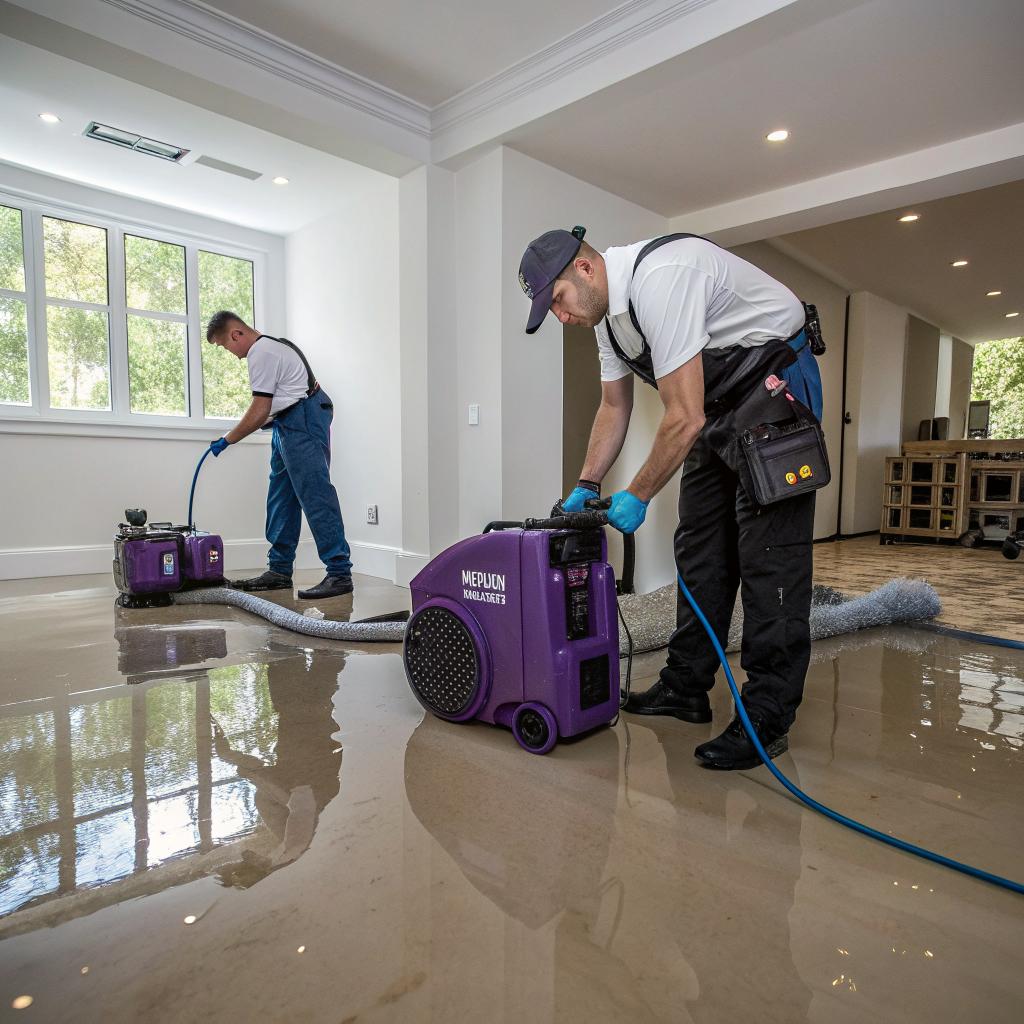
Standing water is removed using pumps and vacuums. After that, they often lift carpet edges, remove soaked pads, or move furniture to dry parts of the home.
A trustworthy crew does not rush to throw everything away. They sort:
Items that can be dried and saved
Items that can be cleaned but may take more time
Items that are unsafe to keep because of contamination or deep saturation
If something you care about is on the line, ask directly: “Is there any realistic way to save this?” Sometimes the answer is yes, sometimes no. But you deserve a real answer, not vague language.
Step 4: Controlled demolition, not demolition for its own sake
This part is where trust really matters. Some materials cannot be dried in place. For example:
Soaked drywall usually needs to be cut and removed at least up to the moisture line.
Wet insulation tends to hold moisture and is rarely worth saving.
Swollen particleboard in cabinets or subfloor often loses its strength.
Still, the goal is to remove the minimum amount needed to dry the structure fully and keep your home safe. Walls are often cut in straight lines at a consistent height so repairs are easier and less costly.
If it feels like a crew wants to tear out more than needed, you are allowed to slow the conversation. Ask:
“Is this section wet beyond repair, or are we removing it for convenience? Can you show me the readings?”
A good company will talk it through without pushing.
Step 5: Drying and dehumidification
Once wet materials are removed, the real drying starts. This usually involves:
Air movers to promote evaporation
Dehumidifiers to pull moisture from the air
Occasional heaters or focused drying units for tight spaces
Here is where many people feel impatient. Fans in your living room for several days are not pleasant. But short-cutting this stage is one of the most common reasons people end up with mold later.
The restoration team should return regularly to measure moisture levels and adjust the setup. Drying is not guesswork. You should see numbers dropping toward a normal range.
Step 6: Mold checks and treatment when needed
Not every water loss leads to mold. Fast response and proper drying can prevent it. Still, if the water sat for more than 24 to 48 hours, or if humidity was trapped in closed spaces, mold risk goes up.
Mold handling can include:
Physical removal of moldy materials
Cleaning of nearby surfaces
Use of approved antimicrobial products
Containment and filtration in higher risk cases
Again, the key is clarity. “We see visible growth here and here. This is the plan to remove it and keep spores from spreading.”
Step 7: Repairs and getting your space back
Restoration is not done until your home is put back together. That can involve:
Drywall repair and painting
New flooring or carpet pad
Cabinet repair or replacement
Trim, baseboards, and other finishes
Sometimes one company handles everything. Sometimes they work with local contractors. Either way, you should know who is responsible for each part and what the timeline looks like.
How much does water damage restoration in Snyderville usually cost?
Costs vary a lot, which can be frustrating. One leak might cost a few hundred dollars to dry, while another event could run into many thousands, especially if multiple rooms and levels are affected.
Here is a simple table that gives rough ranges for typical situations. These are not quotes, just examples to help you think about scale.
| Type of incident | Typical affected areas | Rough cost range |
|---|---|---|
| Small clean water leak (quickly discovered) | One room, minor wall or floor dampness | $500 – $2,000 |
| Moderate leak or appliance failure | 2–3 rooms, drywall removal, some flooring impact | $2,000 – $6,000 |
| Large multi-room event | Several rooms, ceilings, walls, flooring, contents | $6,000 – $15,000+ |
| Water plus mold remediation | Water damage with clear mold growth and containment | $4,000 – $20,000+ |
Several factors push costs up or down:
How long the water sat before drying started
Type of water (clean, gray, or sewage)
Size and layout of the affected area
Whether you need structural repairs or only finishes
Insurance coverage and deductibles
If a company will not walk you through these variables, that is a red flag. You should understand what is driving the cost, even if the final number is not pleasant.
Working with insurance on Snyderville water damage claims
Many water losses are covered by homeowners insurance, but not all. Supplies left on a windowsill are one thing. A burst pipe in a wall is another. Coverage often excludes long-term neglected leaks or groundwater seeping through a foundation.
Here is what usually helps:
Document from the start
Take photos and short videos before cleanup begins, if it is safe. Capture:
The source of the water if visible
All affected rooms and items
Close-ups of damage like warped flooring, stains, or bubbling paint
Keep any receipts for temporary repairs, fans, or pumps you use.
Talk to both your insurer and the restoration company
A solid Snyderville restoration provider should be used to working with insurance adjusters. That does not mean they are “on the side” of the insurer. It means they know:
How to write estimates in a way carriers recognize
What documentation is needed to justify work
How to explain moisture readings and damage clearly
You still make the choices. Insurance is a factor, not the only voice in the room.
How to judge if a Snyderville water damage company is actually trustworthy
Trust can feel vague, but you can break it down into behavior you can see and questions you can ask.
Clear signs you are in good hands
- They answer the phone or call back quickly, but do not pressure you into instant decisions.
- They explain what they are doing in plain language and invite questions.
- They show you moisture readings instead of just telling you “it is wet” or “it is fine.”
- They talk openly about what can be saved and what cannot, even if that means less billable work.
- They give you some kind of written scope, estimate, or work authorization before going too far.
Questions you can ask before saying yes
- “Are you licensed and insured in Utah, and can you show proof?”
- “Do you have training or certification in water damage restoration or mold remediation?”
- “Can you walk me through exactly what you plan to do in the first 24 hours?”
- “How will you know when the area is fully dry?”
- “Who will be in my home each day, and how will you handle access if I am not here?”
If the answers sound vague or defensive, that is useful information in itself.
What you can safely do yourself vs what you should not
You do not have to stand back and watch everything. There are clear steps that make sense for homeowners to handle, and other steps that are better left to trained crews.
Reasonable homeowner steps in the first few hours
- Stop the source if you can do so safely. Shut off the main water valve, unplug appliances, or cover an active roof leak with a tarp from the outside.
- Move dry valuables, electronics, and sentimental items out of the affected area.
- Blot and soak up water on hard surfaces with towels or a wet vac if you have one.
- Open doors and closets to encourage air movement, unless you are dealing with contaminated water.
These actions reduce damage and may lower your final bill.
Tasks better handled by professionals
- Working near electrical outlets or panels where water is present.
- Opening up walls or ceilings without knowing where electrical or plumbing lines are located.
- Handling sewage or suspected contaminated water.
- Using antimicrobial chemicals or mold removal methods without proper protection.
It might feel like you are saving money by doing everything yourself, but one wrong cut into a pipe or wire can create bigger costs and serious safety risks.
How long does Snyderville water damage restoration usually take?
Time frames vary, but there are some rough patterns that can help you plan your life around the mess.
| Scope of damage | Drying time | Repair and rebuild time |
|---|---|---|
| Small, one-room clean water incident | 2–3 days | Several days to 2 weeks |
| Multi-room event without mold | 3–7 days | 1–4 weeks, depending on materials |
| Water with mold remediation and major repairs | 7–14 days of active drying and containment | Several weeks to a few months for full repairs |
Weather, material availability, and scheduling all affect timing. Clear communication helps. A reliable contractor will update you if timelines change, instead of letting days pass without word.
Tips to reduce the chance of future water damage in Snyderville
No one can remove all risk, but simple habits can cut it down a lot. You do not need a big project list. Focus on a few key areas.
Watch your plumbing and appliances
- Inspect visible pipes and hoses under sinks and behind toilets a few times a year.
- Replace old rubber washing machine hoses with braided stainless lines.
- Check around your water heater for damp spots or rust streaks.
- Consider water sensors on the floor near key appliances and under sinks.
Protect your roof and gutters
- Keep gutters clear so water can move away from the house.
- Check for missing or damaged shingles before and after heavy storm seasons.
- Watch for ice build-up along the roof edge in winter and deal with insulation or venting issues that cause it.
Pay attention to your basement or crawl space
- Look for new cracks or damp spots on walls or floors after storms.
- Store items on shelves or pallets instead of directly on the basement floor.
- Make sure downspouts carry water away from the foundation, not right next to it.
These steps are simple, not dramatic. But they often mean the difference between a minor annoyance and a full restoration project.
What “trust” really looks like during your restoration
Trust is not just about picking a company with good reviews, though that helps. It shows up in small moments while the job is going on.
You feel comfortable asking questions and do not feel rushed. When you are not sure why a wall has to be opened, you ask, and you get a patient, specific answer. If you want a second opinion on a major decision, no one tries to scare you out of it.
You see consistent faces. Crews show up when they say they will, or they inform you when they cannot. If something unexpected comes up, like hidden damage inside a wall, they show you, not just tell you.
And maybe most telling, you do not feel pressured to choose the most expensive option at every turn. Sometimes the honest answer is, “We can safely save this,” even though replacement might pay more.
Good Snyderville water damage restoration is not about a perfect home. It is about a safe home, honest communication, and no hidden problems left behind.
Common questions about Snyderville water damage restoration
Do I always need a professional, or can I handle small leaks myself?
For a very small, clean water spill on hard flooring, with fast cleanup, you can usually handle it on your own. If water has touched drywall, insulation, subfloor, or has been present for more than a day, getting a professional opinion is wise. Think of it as a medical checkup for your house. Sometimes the answer is “you are fine,” which is good to hear from someone who knows what to look for.
Will my home ever feel the same after a major water loss?
It might not feel the same at first. Holes in walls, fans running, people walking through with equipment, it can all feel invasive. With careful repairs, though, most homes do return to a point where you do not think about the event every time you walk in the door. In some cases, people end up with updated flooring or better insulation than before. It just takes time and patience.
How do I know the area is truly dry and safe?
You should not have to trust your eyes alone. Ask your restoration company to show you final moisture readings and explain what “normal” looks like for your materials. If mold was involved, you may also choose independent air or surface testing, but it is not always required. The key is transparency. If you walk away with numbers, photos, and a clear explanation, you can feel more confident that the job is complete.
