
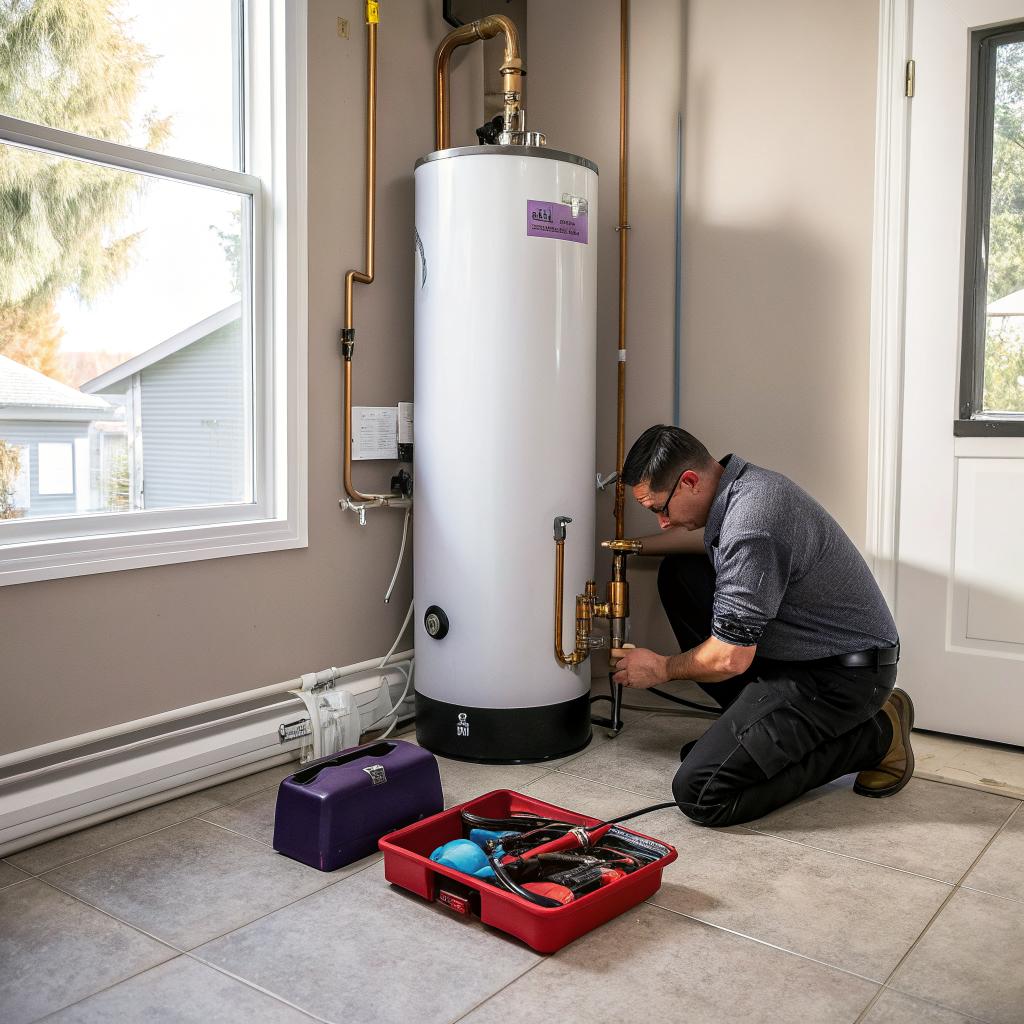

“Water heaters last 20 years, so replacing one is rare and you can just wait until it completely dies.”
That sounds nice, but it is not true. Most standard water heaters in Aurora need replacement closer to 8 to 12 years, and waiting until the tank fails completely can flood a basement, damage walls, and turn a simple job into a big, messy project. If you are already seeing leaks, rusty water, or unreliable hot water, then you are likely at the stage where you should plan a water heater replacement Aurora CO, not just another repair call.
You do not need to panic about it, though. A water heater swap is a pretty routine job for a good local plumber. But it feels like a big deal when it is your home, and your shower, and your budget. So this guide walks through how long heaters usually last in Aurora, what signs say “time to replace,” what size and type you might need, how permits and codes work here, and some honest thoughts on cost and what to expect on installation day.
I will be plain here: a new water heater is not the most exciting purchase. You do not get to show it off. Nobody comes over and says, “Nice 50 gallon! Love the relief valve.” Still, when you have no hot water, it suddenly jumps to the top of your priority list. So it helps to think through things calmly before you are taking cold showers.
You might be wondering if you should squeeze a few more years out of the old one. Or if a tankless heater will save you money. Or how much of this you can do yourself. There is no single answer for every house, and anyone who says “always do X” is not being realistic. Life, and plumbing, are not that simple.
Let us start with the basic question most people really have in their head: “Do I replace this thing now, or can I postpone it without doing something foolish?”
How long water heaters really last in Aurora
Aurora has its own mix of cold winters, varying water hardness, and older homes mixed with newer builds. All of that affects how long a heater survives.
Most standard tanks here fall into this range:
| Type of water heater | Typical life span | What often fails first |
|---|---|---|
| Gas tank (standard) | 8 to 12 years | Tank corrosion, burner issues, sediment buildup |
| Electric tank | 10 to 15 years | Heating elements, thermostat, tank corrosion |
| Tankless gas | 15 to 20 years | Mineral buildup, gas valve, sensors |
| Heat pump / hybrid electric | 10 to 15 years | Compressor, electronics, anode depletion |
These are not promises. Some heaters die at 6 years because of poor installation or harsh water. Some run 18 years because they are in a dry basement, get flushed once in a while, and the anode rod actually gets replaced.
In Aurora, the two big things that hurt water heaters are:
1. Sediment from water hardness building up in the tank
2. Cold inlet water in winter, which makes the heater work harder
If your heater is past 10 years and you have never flushed it, you probably have a thick layer of sediment at the bottom. That means more noise, less hot water, and more stress on the tank. At that point, throwing money at another repair starts to feel like keeping a very tired car on the road. It can work, but it is not always wise.
Clear signs your water heater needs replacement, not just repair
You do not need to guess. The heater usually gives you a few warning signs before it fails badly. Some are mild, some are serious.
Age of the unit
If your current tank is:
– Over 10 years old for gas
– Over 12 to 15 years old for electric
then replacement should be on your radar. You can check the label on the tank. The serial number usually includes the manufacture date. If you cannot read it, a quick photo and a search of the brand and serial number often helps you decode it.
A lot of people say, “It still works, so I will wait.” That is understandable. But once an older tank starts to leak, the decision is no longer on your schedule, it is on the tank’s schedule.
Rusty or discolored hot water
If you turn on hot water and it looks rusty or has a brown tint, that can mean internal tank corrosion. To be fair, it could also be old pipes. A simple test is to:
– Run cold water only from a faucet for a minute
– Then run hot water only
If cold is clear and hot is rusty, the heater is a suspect. If both are rusty, it may be a piping issue instead.
Strange noises from the heater
Popping, rumbling, or banging sounds often mean sediment has built up and water is boiling under the sediment layer. Flushing the tank sometimes helps, but if the unit is already older, those noises can be a sign that you are pretty far along the wear path.
Water around the base of the tank
This is a big one.
– A small drip from a valve or fitting can be fixable.
– A wet ring or small puddle forming again and again under the tank usually means the tank itself is starting to fail.
Once the steel tank is cracked or rusted through, there is no real repair. That heater is done. You might squeeze a few days out of it, but you are rolling the dice.
“If the tank itself is leaking, replacement is the only real fix. No amount of tape, epoxy, or sealant will bring a rusted tank back to life in a safe way.”
Not enough hot water
If you used to get three showers in a row without a problem and now the second one turns lukewarm, something has changed. That could be:
– Sediment taking up space in the tank
– A failing heating element (electric)
– A burner not running correctly (gas)
– A thermostat problem
A plumber can check these, but if the heater is already past its average life and you are calling for a second or third repair, that money might be better put toward a new unit.
Repair or replace: how to make a calm decision
People often ask plumbers, “Would you repair this if it was in your own house?” That is usually the right question.
There is a quick rule of thumb many techs use:
“If the repair costs more than 30 percent of a new heater, and the unit is past half its expected life, replacement usually makes more sense.”
For example:
| Heater age | Repair type | Typical repair cost range | Replace instead? |
|---|---|---|---|
| 2 to 4 years | Minor valve, thermostat | Low | Repair |
| 6 to 8 years | Gas valve, elements, anode rod | Medium | Depends on history and condition |
| 10+ years | Major leak, repeated problems | Medium to high | Usually replace |
If this is the second or third repair in a short time, that is another hint the heater is wearing out. One repair early in life is fine. Several repairs near the end can be like paying for new tires on a car with a failing engine.
I will admit, some homeowners prefer to repair until it actually fails, because they do not want an expense before it is absolutely needed. That is not crazy. It is just a tradeoff: lower cost now, higher risk later. If your heater is in a finished basement or above living space, that risk is real.
Choosing the right water heater for your Aurora home
Once you accept that replacement is coming, the next question is: what do you put in?
There are three big decisions:
1. Fuel type
2. Tank vs tankless
3. Size and recovery rate
1. Fuel type: gas vs electric
In Aurora, many homes already have gas water heaters. Some run electric, especially condos or homes without gas service.
– Gas heaters usually heat water faster and cost less to run than standard electric, if gas is already available.
– Electric heaters are simpler in some ways, but can have higher operating cost unless you go with a heat pump style.
If your home already has a gas line and vent, sticking with gas is usually the most economical move. Converting from electric to gas or the other way around can mean:
– Running new gas line
– Adding or changing venting
– Running new electrical circuits or breakers
That work can be done, but it raises the budget. For most people, staying with the same fuel type keeps things simpler.
2. Tank vs tankless
Tankless heaters get talked about a lot. People hear “endless hot water” and “energy saving” and jump to the idea that tankless is always better. It is not always that simple.
Here is a quick comparison:
| Feature | Tank water heater | Tankless water heater |
|---|---|---|
| Upfront cost | Lower | Higher |
| Life span | 8 to 12 years (gas) | 15 to 20 years |
| Hot water supply | Limited by tank size | Continuous flow within capacity |
| Energy use | Heats and stores water | Heats water only when used |
| Space needed | Needs a tank area | Smaller wall unit |
| Maintenance | Less frequent but still needed | Regular descaling, more service |
Tankless can be a nice upgrade if:
– You plan to stay in the home for years
– You have multiple bathrooms and high usage
– You want the space back that a tank takes
But tankless also usually needs:
– Larger gas line
– Strong venting
– Regular descaling in areas with hard water
Some people switch to tankless and are happy. Others find the cost and complexity more than they expected. If you are not sure, it is fine to just replace like for like. A new high efficiency tank heater is already a step up from an old worn one.
3. Getting the size right
Sizing is one of the most important parts. A heater that is too small leaves you with cold showers. One that is too big can waste money over time.
For tank heaters, plumbers often look at:
– Number of people in the home
– Number of bathrooms
– Peak usage patterns (for example, several showers in the morning, laundry at night)
Here is a rough guide for gas tanks:
| Household size | Typical tank size |
|---|---|
| 1 to 2 people | 30 to 40 gallons |
| 2 to 3 people | 40 to 50 gallons |
| 3 to 5 people | 50 to 60 gallons |
| 5+ people | 60 to 75 gallons or more |
For electric tanks, you sometimes go a bit larger because they heat more slowly.
For tankless, measuring is more about “flow rate” than gallons. The plumber will look at:
– How many fixtures might run at once (shower, sink, washer)
– The temperature rise needed, since winter groundwater in Aurora is quite cold
If you have ever had to plan showers around laundry or dishwashing, tell the plumber. Real usage matters more than brochure numbers.
Permits, codes, and Aurora specific details
Water heater replacement is not just “remove old, drop in new.” Aurora has local codes that affect:
– Venting method and size
– Earthquake strapping or bracing, depending on the situation
– Drain pan and drain line in certain locations
– Temperature and pressure relief valve piping
– Gas line connections and shutoff valves
– Combustion air for gas units
Permit requirements can change over time, but usually:
– A replacement heater should meet current code, not the code in place when the old one was installed.
– A permit and inspection are needed when changing fuel type or doing major changes to venting or gas lines.
Some homeowners skip permits to save a bit of time or money. I think that is risky. If something goes wrong, or when you sell the home, that shortcut can come back to you.
A local Aurora plumber who deals with inspectors all the time usually handles this smoothly. They know what the inspectors like to see, which helps avoid headaches for you.
Gas safety, venting, and carbon monoxide
If you have a gas heater, there is one thing that really needs to be right every time: the venting.
A poorly vented gas heater can let carbon monoxide build up in your home. You cannot see or smell it. That is why code is strict on:
– Vent size and material
– Length and slope of vent runs
– Shared venting with furnaces in some setups
Sometimes, during replacement, the plumber will find that the old vent configuration no longer meets modern code. That can feel annoying, because you just want the new heater in place. But there is a reason for the change. Safety rules often tighten after real accidents.
Electric heaters avoid combustion concerns, but they bring their own needs:
– Proper wiring size
– Correct breaker rating
– Grounding and bonding
This is one of the main arguments against DIY replacements for gas units, especially in basements or closets without much ventilation.
What a typical water heater replacement visit looks like
Knowing what will happen on the day of replacement can reduce stress. The details vary, but a pretty normal process in Aurora goes like this.
Before the plumber arrives
You can usually help by:
– Clearing a path to the heater
– Moving stored items away from the area
– Knowing where your main water shutoff is
If your heater is in a tight closet, try to remove anything stored there. The techs need room to work, and water heaters are bulky.
On site assessment
The plumber should:
– Confirm the heater type, size, and venting layout
– Check shutoff valves and gas lines
– Look for code issues that might need correction
If anything big comes up, a good plumber will explain it to you first, not surprise you on the bill later.
Draining and removal
Next steps usually are:
1. Shut off gas or power and cold water supply.
2. Connect a hose to the drain valve and empty the tank.
3. Disconnect piping, gas line, and vent.
4. Remove the old tank from the home.
Draining can take a while, especially when there is heavy sediment. Sometimes the drain valve clogs and they have to get a bit creative. This is one of those small delays that happen in real homes that you do not see in perfect how-to videos.
Installing the new heater
Once the old unit is out:
– The new heater is set in place, often on a stand or blocks in basements or garages.
– New connections are made for water lines.
– Gas flex connector or black iron pipe is attached and checked.
– Venting is assembled and secured.
– The T&P relief valve discharge line is attached and routed.
At this stage the plumber may also:
– Add a drain pan under the heater, with a drain line if required.
– Install seismic straps if required.
– Add a thermal expansion tank when needed by code or by the water system design.
Then the new heater is filled with water and checked for leaks.
Testing and startup
Finally, the tech will:
– Restore gas or power.
– Light the pilot or start the electronic ignition for gas units.
– Set the thermostat temperature, usually around 120°F for safety and comfort.
– Check for gas leaks with a leak detector or soap solution.
– Verify the vent is drafting correctly for gas heaters.
You should ask any questions you have at this point, like:
– How to relight the pilot if it goes out
– Where the shutoff valves are
– How often to flush the tank
A good plumber will walk you through it without rushing.
Cost considerations for water heater replacement in Aurora
Pricing changes over time and between companies, but there are some common factors that affect what you pay:
– Type of heater (basic tank vs higher efficiency vs tankless)
– Size of the unit
– Gas vs electric
– Difficulty of access (tight crawlspaces, attic, long carry from the home)
– Code upgrades that are needed
– Pulling permits and inspection fees
People sometimes compare the cost of a water heater from a big box store with an installed price from a plumber and wonder why the gap is so large. The store price is just the bare unit. The installed price includes:
– Labor to remove and install
– Fittings, valves, vent parts, gas connectors, drain pan, etc.
– Haul away and disposal of the old unit
– Warranty support and call back if there is an issue
– Business costs like insurance and licensing
If a quote feels too low compared to others, ask what is included and what is not. You do not want to be hit with a series of “extras” on the day of install.
“Good pricing is not always the cheapest. It is the quote that is clear, honest, and covers what your home actually needs, not just what looks attractive on paper.”
How Aurora’s climate affects your water heater choice
Aurora winters are cold. The incoming water temperature in January is much lower than in July. That means:
– Your heater works harder in winter to bring water up to your set temperature.
– Tankless heaters need enough capacity to raise temperature by a large amount.
If you are right on the edge of capacity with a tankless heater, winter can push it over that edge. Showers may feel less hot when everything is running.
For tank heaters, cold supply water reduces effective capacity. You might notice that you “run out” of hot water faster in winter. When replacing, you might want to size a bit more generously if your family uses a lot of hot water or often runs back-to-back showers.
Aurora basements can also be cooler and more humid at certain times. A heater in a damp basement might rust faster than one in a dry utility room. If you see rust starting on the outside of your current heater, mention that when planning the new one. There may be ways to improve drainage or ventilation in that area.
Simple maintenance to extend the life of your new heater
Once you have a new heater in place, a few small habits can add years to its life.
1. Annual flushing
Sediment builds up at the bottom of the tank. Flushing once a year, or even every two years, helps reduce:
– Noise
– Heat loss
– Stress on the tank bottom
You can do a basic flush yourself:
- Turn off gas or power.
- Attach a hose to the drain valve.
- Open a hot water faucet upstairs.
- Open the drain valve and let water flow until it runs clear.
If any step makes you nervous, have your plumber show you the first time.
2. Anode rod checks
The anode rod is a sacrificial metal rod inside the tank. It slowly corrodes instead of the tank. When it is used up, the tank starts to rust.
Many homeowners never touch the anode rod, and the tank still lasts a decade. But if you plan to live in the home for a long time, having a plumber check and possibly replace the anode every few years can extend tank life.
3. Temperature setting
Setting the heater too high:
– Wastes energy
– Raises scalding risk
– Can speed up tank wear
Around 120°F is a common balance. If someone in the home has a weakened immune system, a slightly higher setting may sometimes be recommended for bacteria control, but that is a more specific case that you should discuss with a professional.
DIY vs hiring a professional in Aurora
Some handy homeowners feel tempted to replace their own water heater. Online videos make it look simple. Turn a few valves, swap a few pipes, done.
Here is the honest side:
– For electric heaters, with no gas, and in easy locations, a very experienced DIY person can manage.
– For gas heaters, or where venting or code upgrades are needed, the margin for serious error is larger.
Consider these questions:
– Are you comfortable pressure testing a gas line?
– Do you understand local code on venting and T&P discharge lines?
– Are you prepared if an old shutoff valve snaps or a fitting leaks behind a wall?
For many people, the risk and stress are not worth the potential savings. Paying a qualified Aurora plumber gives you:
– Warranty on both parts and labor
– Code compliant work
– Someone to call if there is a problem after install
I might sound biased here, but I have seen enough stories where a “cheap DIY” turned into “emergency call plus water damage” that I am cautious.
Common questions about water heater replacement in Aurora
How long does a typical replacement take?
Most straightforward replacements take about 2 to 4 hours once the plumber starts work. Complicated venting changes or difficult access can push that longer. Rarely does it take more than a day unless there is structural or major plumbing work involved.
Will I be without water during the whole job?
You will be without hot water during the job. Cold water is usually only off for part of the process, mainly when lines are being disconnected and reconnected. Many plumbers try to keep overall water shutdown time as short as they can.
Do I need to replace the same size tank I have now?
Not always. Your current tank might be undersized or oversized for your household. If your family has grown, or if kids have moved out, your hot water needs may have changed. Talk through actual usage with the plumber rather than just copying the old size.
Is a tankless heater worth the higher upfront cost?
It can be, but not for everyone. Tankless tends to make the most sense if:
– You plan to stay in the home for many years
– You have high hot water demand
– You value the space saving
– Your gas line and venting can support it without huge extra work
If you plan to move soon, or usage is modest, a good quality tank heater might be more practical.
What temperature should I set my new heater to?
For most households, 120°F is a reasonable setting. It reduces scald risk and saves energy compared to higher settings. If you feel like you run out of hot water too quickly, you can try a slight increase, but be careful with very young or older family members.
My heater is 15 years old but still seems fine. Am I being paranoid thinking of replacing it now?
Not paranoid, just prepared. At that age, you are living on borrowed time. Some people choose proactive replacement to avoid a surprise failure, especially if the heater sits in a place where a leak would cause real damage. Others gamble and wait. Just be aware of the risk you are taking.
What is the most common mistake homeowners make with water heaters?
Ignoring small warning signs. A little rust on the tank, a small drip, or occasional rumbling noises often get brushed off for years. Then one morning there is no hot water, or worse, there is a big leak. Paying attention early gives you the chance to plan the replacement on your own terms instead of reacting in a hurry.
If you look at your current heater right now, what is it actually telling you?
