
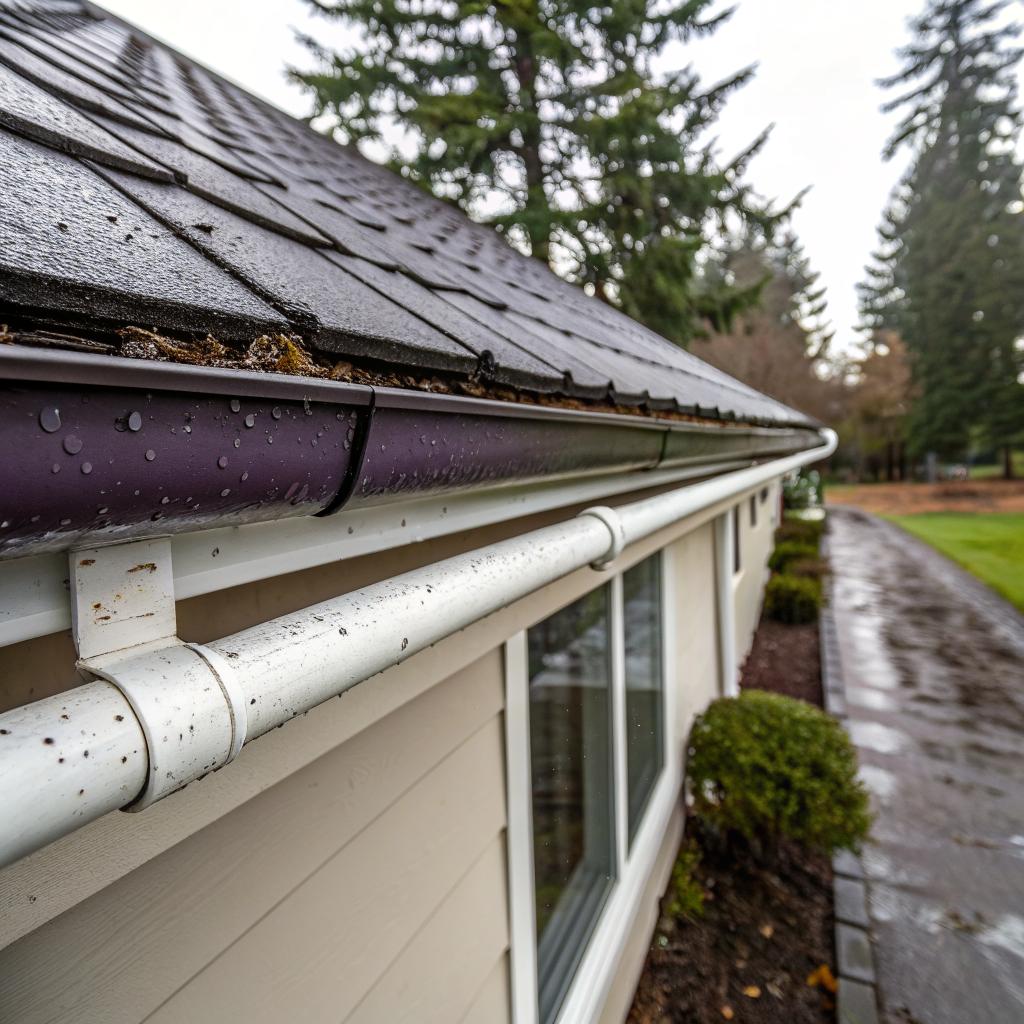

“Gutters are optional in Oregon because the rain just soaks into the ground anyway.”
That statement is false, and honestly, a little dangerous for your house. In Oregon, gutters are not a nice extra. They are one of the few things quietly keeping your siding, foundation, walkways, and even your basement or crawlspace from slow, steady water damage all year. If you own a home here and you are wondering whether general contractor Oregon really matter, the short answer is yes, they do. Gutters protect your home by catching roof runoff and sending it to a safe place, away from your foundation and wood. Without them, rain and snowmelt can cause erosion, rot, leaks, mold, and ice problems, sometimes in places you will not notice until it is expensive to fix.
I know that sounds a bit dramatic, but if you have lived through one of those long Portland winters or those surprise coastal downpours, you have seen how much water can come off a roof in a single storm. On a small house, it can be hundreds of gallons in a few hours. That water has to go somewhere. Gutters are simply your way of deciding where it goes, instead of letting gravity choose for you.
So, if you are looking at your gutters and thinking “They are kind of ugly, I might just take them down,” I would pause. It is much cheaper to keep a basic system running than to deal with sagging fascia, mossy siding, or a cracked driveway later. I have seen people skip gutters on a detached garage and then wonder why the slab cracked sooner than the one under the main house. The answer was boring: water and time.
This guide walks through how gutters work in Oregon’s climate, what materials make sense here, and how to keep them ready for every season, not only in winter. I will also go through a bit of sizing and placement, because sometimes installers rush that part and the gutters end up too small for the roof area. That is when you see overflowing corners in every heavy storm.
Gutters are not just about the edge of the roof. They are part of your whole drainage plan, from shingles to soil.
If that idea feels a bit new, do not worry. By the end, you should have a clear picture of what your system does, what shape it should be in, and what to watch for during the year.
Why gutters matter so much in Oregon’s climate
Oregon is not one single climate. You have:
– Very wet coastal areas
– Mild, wet Willamette Valley
– Snow and freeze cycles in the mountains
– Drier conditions east of the Cascades
Still, most of the populated areas share one thing: long periods of cool, wet weather. That slow, steady moisture is what gets into small gaps and wood fibers.
Here is what happens when your home has no gutters, or when they are clogged or broken:
Water falls straight off the roof in sheets. It hits the soil by your foundation and splashes mud onto your siding. Over time, that strip of soil erodes and sinks. The water then sits right against the foundation wall or footing. In heavy storms, some of it finds tiny cracks and works inside. Maybe not enough to flood, but enough to keep a crawlspace damp or add humidity to a basement.
At the same time, the constant wetting and drying of the lower siding, trim, and door frames leads to paint failure and rot. If you have wood steps or a deck right under a roof edge, you can see boards cup and crack faster there than in dry spots.
That is the slow version. There is also the fast version: winter overflow that runs behind the gutter, down fascia boards, and straight onto window sills or into soffits.
So you might ask: is this really a “year round” problem, or is it just a winter project? It is both.
– Fall brings leaves and clogs.
– Winter brings heavy rain, ice, and snow loads.
– Spring brings roof moss and debris from blooming trees.
– Summer brings UV on exposed gutters and drying on any unsealed joints.
Your gutters are in use every time it rains, and they age every time the sun comes out afterward.
How a basic gutter system should work
A simple, healthy gutter system in Oregon is not fancy. It does a small set of jobs very well:
1. Catch water as it flows off the roof edge
2. Move it along the gutter without spilling
3. Send it down a downspout that can handle the volume
4. Release it at grade where it will not run back to your foundation
Let us walk through each part.
Gutter placement and slope
Gutters sit under the edge of the shingles, not directly under the drip line. The front lip should be slightly below the line of the roof so that ice or sliding snow does not rip them off. They also need a small slope toward the downspout, often about 1/16 to 1/8 inch per foot. It does not sound like much, but it keeps water from sitting in the trough.
A common mistake is setting gutters dead level because it “looks better.” Then water pools in the middle, especially if the runs are long. In winter, those pools can freeze, add weight, and pull the fasteners out of the fascia. If you have ever seen a section sag in the center with green slime in it, that is likely what happened.
Downspout capacity and placement
Downspouts are like the drains in your sink. You can have a nice wide basin, but if the drain is tiny, it will still back up.
For Oregon roofs, especially in areas that get heavy rain events, it is usually safer to have more downspouts, not fewer. Long runs of gutter with only one downspout at one end tend to overflow at the far end during intense storms.
A simple rule of thumb many installers use is one standard downspout for about 600 to 800 square feet of roof area in rainy climates. That can vary a bit, but if you see one downspout handling a very large section of roof plus an upper roof tying into it, that is a warning sign.
Placement matters too. You want downspouts:
– Away from entry doors when possible
– Not discharging directly onto walkways that can ice over
– Not dumping right next to crawlspace vents or low windows
Again, this is not about looks. It is about where water goes in a storm at 2 a.m. while you are asleep.
Where the water finally goes
Once the water leaves the downspout, you still have one job: get it away from the foundation.
You can use:
– Splash blocks
– Short extensions on the ground
– Buried drain lines to dry wells or daylight outlets
In many older neighborhoods, you will see downspouts hooked into old underground pipes. Some of those are in bad shape now. If you notice water backing up at the base of a downspout every heavy rain, the underground part might be clogged or broken.
Any time water stands near your foundation after a storm, the gutter system is not finished with its job yet.
Common gutter materials in Oregon
There is no single “best” gutter material for every Oregon home. Each one has tradeoffs. The right choice depends on your budget, how close you are to salt air, and how much maintenance you are willing to do.
Here is a simple comparison.
| Material | Pros | Cons | Good fit for |
|---|---|---|---|
| Aluminum (seamless) | Lightweight, resists rust, works well in most of Oregon, available in many colors | Can dent, coastal salt air can shorten life if quality is low | Most single family homes and small buildings |
| Steel (galvanized or painted) | Stronger than aluminum, resists impact better | Can rust if coating is damaged, heavier, can be overkill for small homes | Areas with falling branches, taller buildings |
| Copper | Very long lasting, natural patina, looks high end | High cost, stands out visually, may not match every home | Historic homes, custom builds, owners who plan to stay long term |
| Vinyl (PVC) | Low material cost, easy to handle for DIY | Not strong in snow or ice, can crack with age, more joints to leak | Mild areas, sheds or outbuildings, tight budgets |
For much of Oregon, seamless aluminum is a practical middle ground. It handles rain well, is light enough for older fascia boards, and comes in continuous runs made on site, which means fewer leaks at joints.
If you are near the coast, with salt in the air and strong winds, you might lean toward heavier gauge aluminum or steel. Salt can be rough on thin metal. And if you have tall trees and branches fall often, steel can handle dings better than aluminum.
I sometimes hear people say vinyl gutters are “maintenance free.” They are not. The inside still fills with leaves, the joints still need checking, and UV exposure over several hot summers can make them brittle. For a small shed or an outbuilding, they can be fine, but I would think carefully before putting them on a primary house in a wet region.
K style vs half round: does shape matter here?
You will mostly see two gutter profiles:
– K style gutters, with a squared front edge
– Half round gutters, which look like a simple half circle trough
K style gutters hold a bit more water for a given width. They also sit nicely against modern fascia trim. This makes them very common on tract homes and newer construction.
Half round gutters tend to appear on older or more traditional homes. They can shed debris a bit better because of the smooth shape, but they usually need more brackets and careful installation.
Functionally, both can work in Oregon’s rain. What matters more is:
– Size (5 inch vs 6 inch)
– Slope
– Downspout sizing
In areas with heavier storms, a 6 inch gutter with 3×4 downspouts can give a bit more safety margin. It may look slightly bigger on the fascia, but if you have experienced overflow problems, upsizing the system can help.
Season by season gutter care in Oregon
Now to the part that nobody really enjoys but everyone benefits from: maintenance.
You do not need to hover over your gutters every week. But you also cannot ignore them for five years and expect them to work. The weather here is just too steady. It will slowly fill them with leaves, needles, moss, and grit from the shingles.
Here is a practical yearly rhythm that fits most Oregon homes.
Fall: the heavy lifting season
For many homes, fall is the make or break time. Leaves, fir needles, and seed pods fall in waves. If they pile up in the gutters, they hold moisture like a sponge, block downspouts, and start the winter at full capacity.
In fall, focus on:
– Cleaning gutters before the first big stretch of rain
– Checking that downspouts are clear at the top and bottom
– Looking for sags or sections pulling away from the fascia
A simple leaf blower, gutter scoop, or hose with a gutter attachment can be enough for a single story home. On taller homes, you might want to hire help. I know some people try to ignore this for safety reasons, which is fair, but then they forget to call anyone either. That is where winter problems start.
Winter: watching for overflow and ice
Winters across Oregon vary. Coastal and valley areas get more rain, while higher elevations and central / eastern parts get more snow and ice.
In winter, you are watching, not cleaning constantly:
– During heavy rain, step outside and look at your gutters for a minute
– Notice any spots where water pours over the edge
– Check the ground under the downspout; is water flowing away or pooling?
If you see water running behind the gutter, there might be a flashing or alignment issue. If you see sheets of water spilling over the front in one area, that section might be clogged or undersized.
In snow country, you also have to think about snow sliding off roofs. Large snow slides can tear gutters off if they are mounted in a way that takes the force directly. Strong brackets, correct placement, and sometimes snow guards on the roof can help share that load.
Ice dams are less common here than in some colder states, but they can appear on poorly insulated roofs. If heat from the home melts snow at the top, water runs down, refreezes at the cold eave, and builds a dam. Gutters then fill with ice and increase the weight at the edge. In those setups, the real fix is usually better attic insulation and ventilation, not only gutter repair.
Spring: inspection and small fixes
Spring in Oregon brings pollen, blossoms, and more moderate rain. This is a good time to check for damage from the winter.
Look for:
– Loose hangers or screws backing out
– Small leaks at seams or corners
– Rust spots or pitting on older metal gutters
– End caps that drip steadily after the rain stops
This is also when roof moss often shows up. Moss granules and clumps can wash into the gutters and build small dams. If you apply moss treatment on the roof, expect some of that debris to show up in the gutters and plan one extra cleaning.
Summer: painting, sealing, and upgrades
Summer is usually the easiest time to work on gutters, because things are dry and the days are long.
Tasks that fit well in summer:
– Repainting or touching up metal gutters
– Replacing damaged sections
– Upgrading downspouts or adding extensions
– Checking that buried drains are not clogged with roots
You can also add gutter screens or covers in summer if you want to reduce leaf buildup. I will talk about those in more detail next, because there is a lot of mixed information out there.
Do gutter guards make sense in Oregon?
Many homeowners in Oregon ask about gutter guards. The idea is attractive: put on a screen or cover and stop cleaning forever. In practice, it is not that simple.
There are a few types:
– Basic screens: metal or plastic mesh that sits on top
– Micro mesh covers: fine screens that keep out small debris
– Solid covers: water enters through a slot at the front edge
In a place with lots of fir needles and moss, basic screens often clog on top instead of inside the gutter. That can be both good and bad. It is easier to brush off the top than to dig inside, but you still need to get up there.
Micro mesh can handle small stuff better, but it can plug if grit from shingles and pollen stick to it. In very heavy rain, some micro mesh products struggle to keep all the water in the gutter.
Solid covers can shed a lot of larger debris, but in intense Oregon downpours, water can sometimes overshoot the edge, especially on steep roofs.
So when do guards help?
They tend to make sense if:
– You have many broadleaf trees dropping large leaves
– Your roof is not shaded and does not grow heavy moss
– You are willing to still inspect them once or twice a year
They are less helpful if:
– Your house is under big firs that drop fine needles all year
– Moss is already a constant battle on your roof
– You hope never to think about gutters again
I think of guards as a way to reduce, not remove, maintenance. They can stretch a fall cleaning to every second year for some homes. For others, they just change how the cleaning looks.
Gutter problems that Oregon homeowners see most often
After a while, the same patterns show up across many homes. Oregon has some very common gutter issues, and you can often spot the early signs before they turn into leaks inside the house.
Overflowing corners
Corners are the usual weak spots, because that is where inside miters and sealant live. If you have a downspout at a corner and an upper story also feeding into that point, the volume can be too high in storm bursts.
Signs:
– Water streaks on the siding under a corner
– Discoloration on the ground or concrete at that spot
– A dirty “tide line” stain inside the gutter at the corner
Solutions can range from cleaning and resealing the corner to adding another downspout or upsizing the gutter on that run.
Sagging runs and standing water
Gutters that bow in the middle or hold water for days are not draining well. Over time, the extra weight pulls fasteners out and opens gaps at joints.
You might notice:
– A visible sag when looking down the length of the gutter
– Green growth in that low section
– Birds actually using it as a water source
The fix is often to reinstall that run with proper slope and more hangers. Sometimes the fascia is rotten and will not hold screws anymore. In that case, the wood itself needs repair before a new gutter can hold.
Leaks at seams and end caps
Older sectional gutters and some cheaper installs will have joints every 10 feet or so. Each joint is a chance for leakage, especially after several freeze and thaw cycles.
Modern sealants are better than they were decades ago, but even good sealant eventually fails. If you see a steady drip long after rain has passed, that joint probably needs to be cleaned and resealed, not just wiped over with more product.
Peeling paint and soft fascia boards
Gutters screwed into soft or rotten fascia cannot hold well. Soft fascia usually means water has been running over the back of the gutter or getting in some other way.
Pay attention if you see:
– Paint bubbling or peeling in a strip right behind the gutter
– Nails or screws no longer biting into solid wood
– Dark streaks under the gutter line on the fascia
Sometimes people just install new gutters on top of bad wood. That works for a short time, but then the whole thing pulls out faster. Fixing fascia first takes extra time, but it is hard to skip that step and get a long lasting result.
Matching gutter size and layout to your Oregon roof
One part of gutter planning that often gets rushed is sizing. Not every roof in Oregon needs big gutters, but some do. Roof pitch, total area, and how many surfaces drain into one spot all matter.
A simple way to think about roof area
You can estimate roof area by looking at the footprint of the building and adjusting a bit for pitch. A steeper roof sheds water faster and increases the effective area feeding into the gutters.
Without going into complex math, here is the basic idea:
– Flatter roofs drain slower and put less sudden stress on gutters
– Steeper roofs send more water to the edge in less time
If you have a multi level home where upper roofs drain onto lower roofs, then into gutters, you have “stacked” drainage. The lower gutters see not only their own roof surface but also the upper ones.
In those cases, using larger gutters or multiple downspouts is safer.
Choosing downspout locations with Oregon storms in mind
Think about where the biggest sheets of water appear in storms. Valleys where two roof planes meet tend to collect more runoff. If that valley ends at a gutter, you want a downspout nearby, not at the far end of a long run.
Also think about wind. Some storms in Oregon come with side winds that blow rain in from one direction. That can push water over the back of gutters if the drip edge flashing is not set right. It can also drive rain into soffit vents. Good placement cannot stop the wind, but it can reduce the chance of constant overflow on one side.
How gutters connect to the rest of your home system
Gutters do not work alone. They interact with your roof, siding, soil, and even your heating and cooling costs if moisture gets into the structure.
Roofs and gutters
– Drip edge flashing should guide water into the gutter, not behind it
– Shingle overhang should not be so long that water jumps over the gutter
– Moss treatment on roofs will send dead moss into gutters
If your roof is near the end of its life, you might combine a re-roof with new gutters. It often costs less in the long run than putting new gutters on an old unstable edge, then redoing things later.
Siding and foundations
Gutters protect your siding by limiting how much water bounces up from the ground. That helps paint last longer and reduces mold growth on the lower walls.
They also help protect the foundation by sending water away. This is especially important in older Oregon homes that may not have modern perimeter drains. The soil type around your home plays a role too. Some clay soils hold water longer and expand and contract more, which can stress foundations.
Walkways, driveways, and steps
Water that drains onto concrete and then freezes can cause surface flaking and cracks over time. In milder parts of Oregon, this might not sound like a big deal, but those occasional freeze events catch people off guard.
Simple downspout extensions that send water into a planted area instead of onto a path can save a lot of headaches.
When to repair and when to replace gutters
Not every tired gutter system needs to be ripped off and replaced. Sometimes a few targeted repairs can add years of life. The tricky part is knowing where the line sits.
Repair makes sense when:
– The gutters are generally straight and firmly attached
– You only have a few small leaks at joints or end caps
– The material is still strong when you press on it
Replace starts to make more sense when:
– Many sections are bent, twisted, or pulling away
– Rust is showing through in many places
– The fascia behind the gutters is in poor shape
– The system is badly undersized for the roof area
If you are already planning siding, roofing, or major exterior work, it can be smart to time gutter replacement with that project. Taking gutters down and putting them back up more than once often leads to extra holes and patches in the fascia.
Simple gutter upgrades that help in Oregon
You do not always need a full redesign. Sometimes a few small upgrades can improve how your gutters handle Oregon’s weather.
Some examples:
– Upsizing key downspouts from 2×3 to 3×4 in heavy flow areas
– Adding one extra downspout on a long run
– Installing hinged downspout extensions that fold up when you mow
– Replacing loose spike and ferrule hangers with hidden hangers and screws
Hidden hangers, for instance, can give a cleaner look and better strength. They attach inside the gutter and screw into the fascia. That can help in areas that see wet, heavy snow at the edge of the roof.
Frequently asked questions about Oregon gutters
Do all homes in Oregon really need gutters?
Most do, yes. Some very old farmhouses on high slopes with deep roof overhangs can function without them, because water falls far from the foundation and the soil drains quickly. In typical neighborhoods with close spacing, basements, crawlspaces, and standard setbacks, gutters give a lot of protection for the cost.
How often should I clean gutters in Oregon?
For many homes, twice a year is a good starting point: once in late fall after the big leaf drop, and once in spring. If your home sits under tall firs or cedars, you might need three times a year. If you have almost no trees around, once a year can be enough, as long as you still walk around during big storms and look for issues.
Is it safe to clean my own gutters?
It can be, but it depends on your comfort with ladders, the height of your home, and the ground conditions. Wet soil, uneven surfaces, and two story work all add risk. If any of those make you nervous, it is usually better to hire help than to push through. A fall costs more than a cleaning.
Are gutter guards worth the money here?
They can be, in the right setting. If you have big leaf trees, a simple guard can cut down on how often you scoop out piles. If you have mostly needles, moss, and small debris, you may still be climbing up to brush off the guards themselves. I would treat guards as a helper, not a permanent fix.
Why do my gutters always overflow in one spot, even after cleaning?
That often means the layout is not matched to the roof. It could be:
– A high volume roof valley ending in a small section
– Too long a run without a downspout nearby
– Gutters that are too small for the area and roof pitch
A local installer can look at how the roof planes feed that spot and suggest either upsizing or adding another outlet.
Can I just add longer downspout extensions and skip other work?
Extensions are helpful, but they do not fix problems like sagging, leaks, or undersized gutters. Think of extensions as the last link in the chain. They only help if everything upstream is working well.
What is one simple habit that protects gutters year round?
Take five minutes during the first few big storms each season and just watch how water moves around your home. Look at the gutters, downspouts, and ground. If something looks wrong, do not push it off for months. Small fixes like clearing a blocked elbow or tightening a loose bracket are much easier than rebuilding a rotten corner later.
If you walked outside during the next Oregon rain and watched your gutters work, what is the first thing you think you would see that needs attention?
