
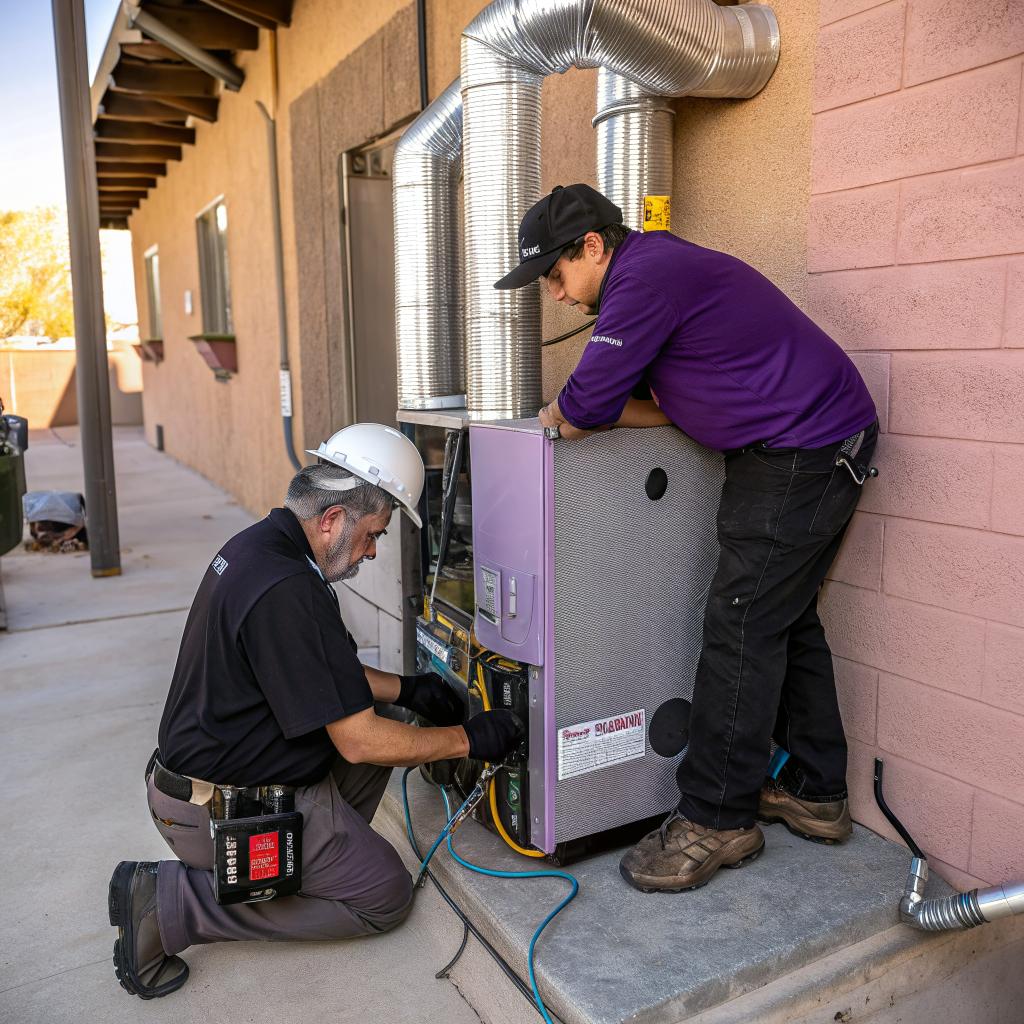

“As long as the furnace turns on, you do not need to think about replacing it.”
That sounds comforting, but it is not true. If your furnace is old, noisy, unreliable, or running up your gas and electric bills, it might be costing you more every month than a new unit would. The short answer is simple: if your system is 15 to 20 years old, needs frequent repairs, or struggles to keep your Albuquerque home warm, you should at least get a quote for furnace replacement Albuquerque NM from trusted local experts and compare it with what you are spending now.
I know that is not what most people want to hear. It feels easier to just limp along for one more winter, and then another. You tell yourself you will deal with it next year when things calm down a bit. The trouble is, furnaces do not get kinder with age. They wear, they lose performance, and sometimes they surprise you at the worst time, like during a cold snap in January when every HVAC company already has a packed schedule.
Still, replacement is a big step. It affects your budget, your comfort, and the safety of your house. So it makes sense to slow down and look at this with clear eyes. Not with fear and not with pressure, just with facts and some grounded local experience.
I want to walk through how furnace replacement really works in Albuquerque, what good local pros actually do, what it should roughly cost, and how to tell if someone is giving you solid advice or just trying to sell you the most expensive unit on the truck. I will also touch on some things that are easy to forget, like ductwork, gas lines, and building codes that are more than just red tape.
If you are already pretty sure your furnace needs to go, you can jump mentally to the sections about choosing a system and the installation process. If you are still on the fence, it might help to pause and ask a simple question: “What would it take for me to feel confident keeping this thing for five more winters?” Your honest answer to that will tell you a lot.
When does an old furnace stop making sense?
There is no single age or number that applies to every home. Still, some patterns show up again and again in Albuquerque.
Most gas furnaces last around 15 to 20 years when they are sized correctly and maintained. Some die earlier. A few stubborn ones keep running past 25 years, but usually with poor comfort and high bills.
Here are the main signals that replacement might be smarter than another repair, even if the system technically still works:
Age and repair history
A simple rule many techs use in their head is this: if your furnace is over 15 years old and a repair costs more than 20 to 25 percent of the price of a new unit, it is time to think carefully.
For example, if a new furnace installed would cost about 6,000 dollars and your repair quote is 1,500 dollars, you should not just say yes without comparing the two paths. When a system is that old, big repairs sometimes come in clusters. You fix the blower motor this year, the heat exchanger cracks the next, then the control board fails.
I have seen homeowners pour thousands into a tired furnace over three winters, then end up replacing it anyway. Looking back, they usually say they wish someone had been more blunt with them earlier.
How your home actually feels
Your comfort is as important as the mechanical side.
If you notice any of these, your furnace might be past its best days:
– Some rooms are warm while others stay chilly, even with doors open
– The furnace runs for very long cycles or very short bursts all day
– You hear loud bangs, rattles, or squeals more often
– The air feels dry and “stale” even with the same thermostat setting
Cold spots can be a duct problem, not always the furnace. But aging furnaces often lose their ability to move air evenly or keep up on windy, below-freezing nights.
Energy bills creeping up
Gas and electric rates change all the time, so it can be hard to compare year to year. A fair method is to look at usage, not just total dollars, on your bill. If your winter gas usage is climbing even though you have not changed your habits or set point, your system might be running longer to do the same job.
Older furnaces in Albuquerque are often 60 to 80 percent AFUE. Many modern ones are 90 to 97 percent AFUE. That gap can add up across a whole winter.
Safety and carbon monoxide
This is the part that people sometimes ignore until they get scared by a story on the news.
Gas furnaces create combustion fumes that need to vent outside. A cracked heat exchanger or damaged venting can allow carbon monoxide or other combustion gases into your living space. Trusted techs in Albuquerque check for this with instruments, not just a glance.
If your heat exchanger is cracked, replacement of the furnace is usually the only smart choice. Repairing or patching a heat exchanger is risky and sometimes not even allowed by code or manufacturer rules.
Any time a tech mentions a heat exchanger crack or carbon monoxide, you should ask them to show you readings or photos. Good companies expect that question and are ready for it.
Why local expertise matters in Albuquerque
A furnace in Albuquerque lives a different life than one in, say, Minnesota. We have milder winters on average, big swings between day and night, and many homes that were built with swamp coolers, then converted later.
All that shapes what a good installer needs to think about.
High desert climate and sizing
Our winter nights can drop below freezing, but daytime can be sunny and fairly warm. That means your furnace sees some heavy use at night and lighter use in the afternoon. An oversized furnace might short cycle and wear out faster. An undersized one may run non-stop on those cold nights and still not keep up.
A good local pro does not just look at square footage and guess. They should consider:
– How much insulation you have
– Window size and type
– Orientation of the home
– Whether you have done air sealing or upgrades
If someone gives you a quote in ten minutes without measuring or asking questions about the house, that is a red flag.
Mix of older and newer homes
Albuquerque has a mix of older adobe or block homes, mid-century houses, and newer construction. Some have ductwork that was patched onto older systems. Some had swamp coolers before refrigerated air was added.
Older duct systems often leak or are undersized for modern furnaces and air conditioners. A trusted local expert knows to inspect ducts, not just the furnace box. They might find issues like:
– Flex duct with kinks that choke airflow
– Return air undersized, which makes the system noisy
– Supply vents in the wrong spots for good circulation
You do not always have to replace all ducts, but sometimes small changes during a furnace replacement make a big difference.
Altitude, gas supply, and venting
At our altitude, gas appliances need to be set up correctly to burn cleanly. That means proper gas pressure, combustion tuning, and vent sizing. Local techs spend their careers working with the utilities and codes here, so they know the common pitfalls.
A furnace that is not tuned for local conditions might still run, but it can waste fuel, wear out faster, or produce more carbon monoxide. You usually cannot see this by eye. It shows up in combustion tests and efficiency checks.
If a contractor replaces your furnace without checking gas pressure, combustion, and venting, you are not really getting a complete job, no matter how shiny the new unit looks.
Repair vs replacement: running the numbers honestly
Most homeowners do not actually want either repair or replacement. They want quiet, reliable heat and acceptable bills. The work is just the path to that.
So how do you choose?
A rough way to think about it is to compare the total cost of keeping the old system alive for the next 5 to 10 years vs the cost of replacing it now and enjoying lower operating costs during that same period.
Here is a simple comparison table to make it more concrete.
| Aspect | Keep older furnace | Replace with new furnace |
|---|---|---|
| Upfront cost | Lower now, higher later as repairs add up | Higher now, lower repair costs for several years |
| Winter gas usage | Higher, often 15 to 30 percent more | Lower, thanks to higher AFUE ratings |
| Comfort level | More hot and cold spots, more noise | More even heat, quieter, better control |
| Breakdown risk | Higher, especially in peak cold snaps | Lower, especially during warranty years |
| Safety margin | Questionable if major parts are aging | Higher, with modern safety controls |
There are no perfect rules, but some general guidelines help.
Leaning toward repair makes sense when
– Your furnace is under 10 years old
– Repairs so far have been small and rare
– The new repair is modest in cost and does not involve the heat exchanger
– Your energy bills and comfort are still pretty good
In that case, a thorough repair plus a tune up can buy you more years of good use. Some techs will even give you an honest estimate of how many more winters they would expect from it.
Leaning toward replacement makes sense when
– Your furnace is 15 years or older
– You have had two or more significant repairs in the last few seasons
– The heat exchanger is cracked, or the control board and blower are failing
– You are already unhappy with comfort or noise
At that point, pouring money into the old unit often feels like patching a worn tire that already has several plugs. It might hold a bit longer, but how much do you trust it on a long drive?
What trusted local furnace experts actually do
This part matters more than brand names. You can buy a good furnace and still have problems if the installation is sloppy. On the other side, a mid-range unit installed carefully can heat your home for many years without issues.
Here is what a thorough process usually looks like when handled by a trusted Albuquerque company.
1. Assessment and right sizing
A good installer will:
– Look at your current furnace, vents, and filter setup
– Measure or at least carefully estimate your home size and layout
– Ask about cold rooms, noise, and your comfort goals
– Check gas and electric service
– Inspect the flue and combustion air
They might also suggest a load calculation, sometimes called a Manual J. It is more precise than guessing by square footage. Some homeowners think this is overkill, but in our mixed climate, sizing mistakes show up quickly in short cycling or long run times.
2. Discussing system types and features
You do not have to become an HVAC engineer, but you should understand at least the basics of your options.
Common choices include:
– Standard single stage furnace
– Two stage furnace
– Modulating furnace (more advanced control of output)
For many Albuquerque homes, a two stage furnace is a good middle ground. It runs at a lower output most of the time for quieter, more even heat, and ramps up on the coldest nights.
Trusted pros will connect these features to your specific house. For example, if your home is smaller and well insulated, a very high output unit might be a waste. If you have a large, drafty older home in the Northeast Heights, more capacity and better staging might be worth the extra cost.
3. Quoting with everything included
Full quotes should spell out:
– The model and size of the furnace
– Any work on ducts, vents, or gas lines
– New thermostat if needed
– Permits and inspection fees
– Warranty details on parts and labor
If a bid looks much cheaper than others, you should ask what is missing. Sometimes the cheaper one leaves out permit costs, vent changes, or removal of the old furnace. Those costs do not disappear, they just show up later as surprises.
4. The day of installation
A normal furnace replacement in Albuquerque usually takes most of a day, sometimes more if there is duct, vent, or electrical work.
Expect the crew to:
– Protect floors and nearby areas
– Shut off gas and power safely
– Remove the old unit carefully
– Put the new furnace in place, level and secure it
– Connect gas, venting, and drain lines (for high efficiency units)
– Tie into existing ducts, or adjust them if needed
At the end, a good installer will run the furnace through a full test cycle, check for gas leaks, and measure combustion. They should also walk you through the basics of operating the new system.
If your installer just flips the switch, says “You are all set,” and rushes off, you are not getting the full service you are paying for. Ask them to show you how to replace filters, use the thermostat, and what to watch for in the first week.
What affects furnace replacement cost in Albuquerque
People often ask for exact numbers, but prices can vary. Still, we can break down what drives cost up or down.
1. Furnace efficiency and staging
– Basic models, often 80 percent AFUE, single stage, cost less upfront
– High efficiency models, 90 to 97 percent AFUE, two stage or modulating, cost more
In a very cold climate, the high efficiency units can pay for themselves quickly. In Albuquerque, the payback is slower because our heating season is shorter. That does not mean they are a bad choice. It just means you should weigh the comfort benefits and your plans for how long you will live in the home.
2. Size of the unit
Bigger homes need more heating capacity. That usually means larger, more expensive furnaces and sometimes more work on ducts or electrical supply. But bigger is not always better. Oversizing can lead to more noise and wear.
3. Ducts and vents
If the installer finds serious duct problems, they might recommend repairs or changes at the same time as the furnace. That increases cost in the short term, but can save money and trouble in the long run.
Some older homes also need vent upgrades to meet current codes, especially when switching from low to high efficiency equipment.
4. Access and location
If your furnace sits in a tight crawlspace or a difficult attic area, labor time goes up. A garage or open utility room is usually easier.
5. Permits and inspections
In Albuquerque, gas appliances and venting changes usually require permits and inspections. Reputable companies handle this for you and include it in the quote. Skipping permits to save a few dollars can cause problems with safety, insurance, or future home sales.
Picking the right furnace for your Albuquerque home
You do not need to memorize brand catalogs. Focus on what matters from your side as a homeowner.
Step 1: Clarify your priorities
Ask yourself:
– Do I care more about lowest upfront cost or long term savings?
– How long do I plan to stay in this house?
– Am I bothered by noise from the current furnace?
– Do I struggle with hot and cold spots now?
If you plan to move in a few years, you might choose a mid level unit that balances cost and comfort. If this is your long term home, a higher efficiency, quieter two stage or modulating furnace might feel worth the investment.
Step 2: Understand the main ratings
You will hear terms like:
– AFUE: annual fuel use efficiency. Higher numbers mean more heat from the same fuel.
– BTU: heating capacity. This should match your home, not just be “bigger.”
You can ask the installer why they picked a certain size in BTUs, and how they decided on AFUE for your situation. If they cannot explain in plain language, that is not a great sign.
Step 3: Check warranties and installer support
Look for:
– Manufacturer warranty on heat exchanger and parts
– Labor warranty from the installer for at least the first year, often longer
A strong furnace warranty has more value when paired with a local company that plans to stick around. That is one reason trusted local experts are often a safer choice than a random out of town contractor with a rock bottom bid.
What trusted local experts do differently after the install
Many people think the job ends when the new furnace starts blowing warm air. Real pros see that as the halfway point.
System balancing and adjustment
During and after installation, a careful tech will:
– Check static pressure in the ducts
– Confirm temperature rise across the furnace
– Adjust blower speeds if the air feels too strong or too weak
– Make sure return and supply air are reasonably balanced
These steps help avoid noisy vents, weak airflow, or short cycling. You may not care about the technical terms, but you will feel the difference in comfort.
Education and maintenance plan
Your furnace will last longer and run better if:
– Filters are changed on time
– Yearly checkups catch problems before they grow
– Vents and intakes stay clear of clutter and dust
Ask if the company offers a maintenance plan. Some people like the convenience, others prefer to schedule tune ups on their own. Either way, skipping maintenance tends to shorten equipment life.
Support during the first heating season
Sometimes small issues show up only once you live with the new system. Maybe a particular room still feels off, or the thermostat is confusing.
Trusted local companies are usually willing to tweak settings or explain features again. If someone treats callbacks as a burden, that tells you a lot about their service culture.
Common questions about furnace replacement in Albuquerque
Do I have to replace my ducts when I replace the furnace?
Not always. Many times, existing ducts are fine with minor repairs or adjustments. But if your ducts are very leaky, undersized, or crushed, they can hold back the benefits of a new furnace. A good tech should show you real evidence, like pressure readings or photos, instead of just saying “your ducts are bad.”
Should I replace my furnace and air conditioner at the same time?
There are pros and cons.
It can make sense to replace both if:
– Both are old and near the end of life
– You want matching efficiency levels
– You want to avoid two separate installation visits
If your AC is fairly new and working well, replacing just the furnace can be fine. A trusted local contractor can explain how the new furnace will work with your existing cooling system.
Is a high efficiency furnace worth it in Albuquerque?
Sometimes yes, sometimes no. High efficiency furnaces cost more upfront but use less gas. In a colder climate, the payback is faster. Here, many homeowners choose mid to high efficiency units more for comfort and future resale value than for pure bill savings.
If you like to keep your home quite warm all winter, you are home during the day, and you plan to stay in the house for years, the higher AFUE can still be a smart choice.
How long will a new furnace last?
With proper installation and regular maintenance, many modern gas furnaces last 15 to 20 years. Some last longer. Cheap installs, poor ducts, and skipped maintenance can shorten that by several years. It sounds boring, but filter changes and yearly checkups matter.
Can I wait until my furnace completely fails before replacing it?
You can, but it is a gamble. Failures often happen during cold spells when the furnace works its hardest. That is when schedules are full and emergency rates are higher. Replacing slightly ahead of failure gives you time to compare options, pick the right system, and schedule the work on your terms.
How do I know if a local furnace contractor is trustworthy?
Look for:
– Clear, written quotes with all work listed
– Willingness to answer questions without pressure
– Good reviews that mention specific technicians or experiences
– Proof of license and insurance
– A real office presence in the Albuquerque area
And listen to your own sense. If someone talks down to you, rushes you, or will not explain, you do not have to hire them. You are inviting these people into your home and trusting them with gas and heat. It is fair to be selective.
If you stand in your hallway, hear that old furnace kick on again, and wonder “Is it time?” you are not alone. Many Albuquerque homeowners are asking the same thing. The helpful next step is usually simple: get a careful, local opinion, compare repair and replacement side by side, and choose the path that actually fits how you live and what you expect from your home.
