
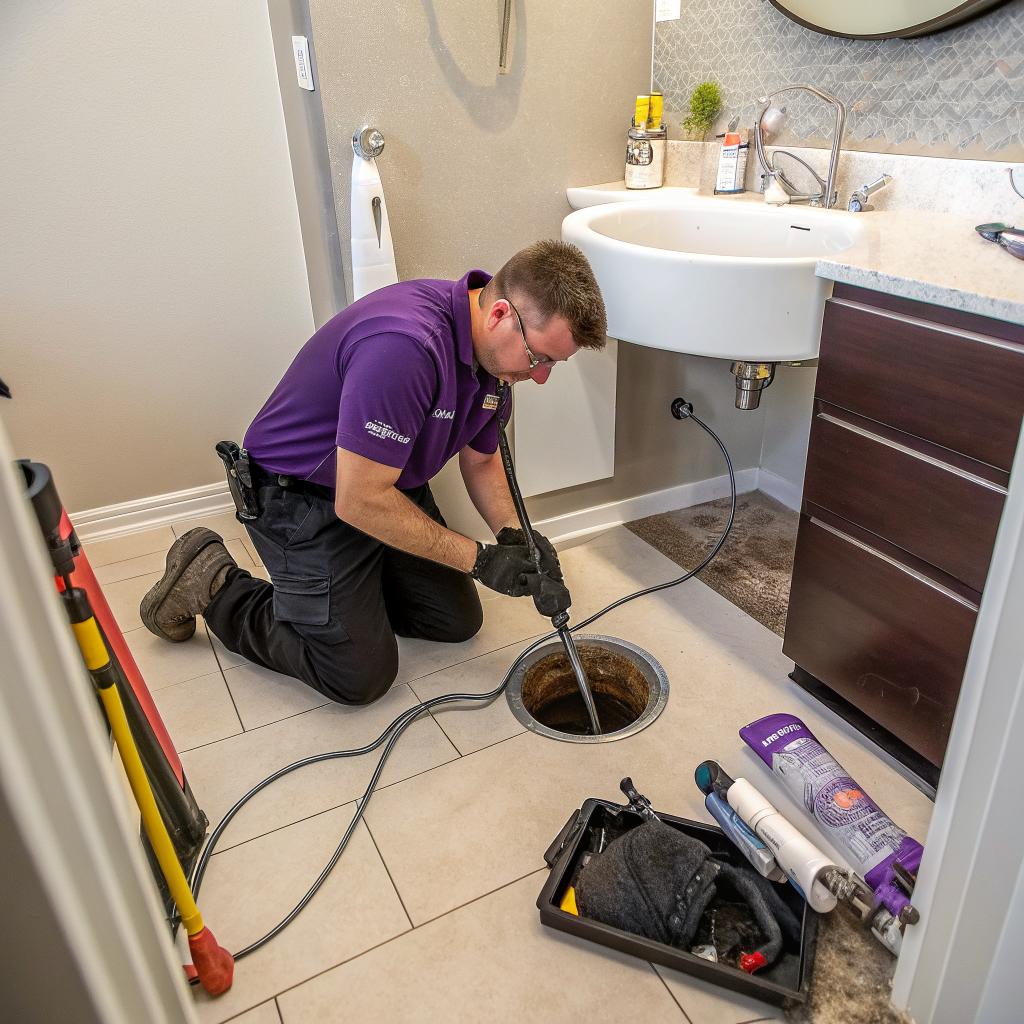

“If the water is still draining, even a little, the pipe is fine. It will fix itself.”
That statement is false, and it causes a lot of expensive damage. A slow drain almost never fixes itself. In fact, that is usually the early warning sign that you need help from a professional. If you are an Aurora homeowner and you are already searching for a drain cleaning Aurora CO residents trust, the short answer is simple: get a licensed local plumber involved as soon as your sinks, tubs, or toilets stop draining properly, before the problem spreads through the rest of your plumbing.
I know that might sound a bit quick and maybe a little dramatic. Many people want to try one more bottle of drain cleaner or one more DIY trick before calling anyone. I have done that myself. You pour something in, wait, listen for some gurgling, hope the water moves, and sometimes it does. For a while. The trouble is that what seems fixed on the surface can still be getting worse inside the pipe.
Slow drains, weird gurgling sounds, or water backing up when you run a different fixture in the house are all signs of a developing blockage. At first, it is just annoying. Then it turns into standing water, nasty smells, or a surprise overflow that ruins flooring or drywall. That jump from “mildly annoying” to “floor is soaked” can happen fast.
So if you are in Aurora, you do not just want someone who shows up someday. You want someone who understands local homes, the soil, the age of many of the neighborhoods, and how all of that affects your drains. And you probably want clear prices, real answers, and not a lot of upselling or mystery charges. It sounds obvious, but many people only find out they picked the wrong company after the tech has already left.
Let me walk through how clogged drains actually work, how local conditions in Aurora play into it, what you can realistically handle yourself, and when it is smarter to hand it to a plumber who does this kind of work all day, every day.
“If the toilet flushes, the main line is fine.”
That one is half true at best. A toilet that flushes today can still sit on top of a partial blockage that is just waiting for the right moment to fail. You might only see the first hint when the bathtub starts backing up after laundry, or when the kitchen sink bubbles while the dishwasher runs. By the time everything stops, you are already in emergency mode.
Why drains clog in Aurora homes more than people expect
I do not think most homeowners wake up thinking about plumbing. You just want water to go away when it should. So when you hear a plumber say that Aurora has some special challenges, it might sound like a sales pitch. There is some truth to it though.
Older parts of Aurora have cast iron or clay sewer lines. Newer areas might have PVC, which is smoother inside, but still not perfect. On top of that, we have:
– Tree roots looking for water in dry months
– Seasonal temperature swings that move the ground a bit
– Grease and food from busy kitchens
– Hair and soap buildup from showers
– Hard water scale that narrows pipes over time
Any one of these alone can be manageable. Together, they build layers inside your drains. At first, they just slow the water. Then they catch more hair, more paper, more residue. After a few years, a drain that had a wide open path is reduced to a narrow channel.
Here is a simple way to picture it: every time you wash plates with a little oil, or rinse the pan from bacon, a thin coat sticks to the inside of your kitchen drain line. You do not see it, so it feels like nothing is happening. But that layer gives grime and food scraps something to grab onto. Then crumbs, coffee grounds, and soap fat hold on and create a rough surface. Faster than you might think, water cannot glide through anymore and starts to pool.
Common clogged drain problems Aurora homeowners face
Different fixtures tend to have different clog triggers. Sometimes they overlap, which is why a plumber will ask a lot of questions at the start. It is not small talk; they are trying to figure out where in the system the problem lives.
Kitchen sink clogs
Kitchen drains are repeat offenders. That is not a surprise. The tricky part is that many people think the garbage disposal can handle almost anything. It cannot.
Frequent troublemakers in Aurora kitchens include:
– Cooking grease and oil that cools and hardens in the pipe
– Starchy foods like rice, pasta, and potato peels that swell in water
– Coffee grounds that stick to grease and form a sludge
– Eggshell bits that mix with fat and soap
Over time, these do not just sit in the P trap under the sink. They can build up in the branch line in the wall, or further along in the main kitchen line. When you run hot water, the drain might seem fine, which gives a false sense of security. Once the water is off and the pipe cools, everything hardens again and the slow drain returns.
Bathroom sinks and shower drains
Bathroom drains collect hair and soap film. That sounds mild, but hair acts like a net. Once it tangles, it catches more hair and lint, and the soap binds it together into a solid mat.
Signs of a bathroom drain problem include:
– Water swirling and draining slowly around your feet in the shower
– A ring around the tub because water sits longer
– Gurgling sounds as air fights to escape through a partial clog
– A faint sour smell when you run the sink or tub
This kind of clog often starts near the drain opening, where a basic hair catcher can help. But once it has been going on for months or years, the buildup extends into the pipes inside the wall where you cannot see it.
Toilet and main line backups
Toilet issues scare people the most, and for good reason. You can mop up water from a sink. Toilet overflow on a bathroom floor or into a finished basement is a much bigger problem.
Clogs in toilets can be simple, close to the bowl, or deeper in the main sewer line. Some warning signs:
– Toilet water level rising higher than normal before it finally goes down
– Bubbling in the toilet when other drains are used
– More than one fixture backing up at the same time, like a basement drain and a toilet
These are the signs plumbers take very seriously because they can point to a main sewer blockage that affects the whole house, not just one bathroom.
“If the clog is inside the house, roots are not the issue.”
That is not always correct. Tree roots usually enter through joints or cracks in your underground sewer line. The clog might appear inside the home, but the cause can be twenty, thirty, or more feet away in the yard where roots have found their way inside the pipe.
DIY clogged drain fixes: what helps and what hurts
Many Aurora homeowners want to try to solve clogs on their own first, and that makes sense. Paying for a service visit is not anyone’s hobby. The question is which home methods are reasonable and which ones create a bigger bill later.
When a plunger is enough
A simple plunger is still one of the best tools for small, close clogs. Key points:
– Use a cup plunger for sinks and tubs
– Use a flange plunger for toilets
– Make sure there is enough water to cover the rubber part
– Seal around the edge and use steady, firm pushes
If a toilet clog is from too much paper or a small object, a few good plunges might clear it. Same with a minor sink clog. If you have to plunge the same fixture every week though, that is a sign of a deeper problem that needs inspection.
The problem with chemical drain cleaners
Many people reach for a bottle of drain cleaner first. The label promises a quick fix. Sometimes it works on light organic buildup, especially in hair clogs. But there are tradeoffs that are rarely written in big letters on the front.
Issues with heavy use of chemical cleaners:
– They can weaken old metal pipes over time
– They sometimes eat a small channel through the clog, so water flows for a while, then the clog reforms
– If they fail, they leave caustic liquid in the pipe, which makes it less safe for a plumber to work on the line
– They do almost nothing against solid objects or thick roots
So while one careful use may help with a mild clog, repeated use becomes a way to delay proper cleaning. That delay is what leads to bigger blockages that reach further into the system.
Homemade mixtures and “hacks”
You can find a lot of baking soda and vinegar tips online. They bubble and fizz, which feels like progress. They can help remove minor soap film and odors, but they are not strong enough to clear serious clogs of hair, grease, or wipes.
Snaking with flimsy store bought cables can also turn bad if the cable kinks and gets stuck. I have heard more than one story of someone needing a plumber not just for the clog, but to remove the broken snake they left in the line.
If you want to try something safe before calling for service, a reasonable approach is:
– A plunger with good technique
– A basic plastic hair tool for shallow hair clogs at the shower or sink drain
– A one time, non corrosive cleaner, if you want to try it
If that does not fix it, continuing to fight the same clog often becomes a waste of time and money.
What a professional clogged drain service actually does
Many people assume that plumbers just run a big snake and leave. Good companies try to find the actual cause, so they are not just clearing a symptom.
Here is a simple table that compares typical DIY tools with what a professional service might bring:
| Approach | DIY tools | Professional tools | Best use case |
|---|---|---|---|
| Basic clearing | Plunger, small hand snake | Power auger, sectional cable machine | From fixture to main line clogs |
| Grease and sludge removal | Chemical cleaners, hot water | Hydro jetting (high pressure water) | Heavy buildup in kitchen and main lines |
| Finding the cause | Guesswork, symptoms | Video camera inspection | Roots, broken pipes, repeated clogs |
| Long term repair | Temporary patch ideas | Spot repair, pipe replacement | Collapsed or severely damaged pipes |
A professional clogged drain visit in Aurora often follows a pattern like this:
1. Ask questions about all your fixtures, not just the one that is clogged.
2. Test flushing, running water, or filling tubs to see how the system behaves.
3. Choose the right machine and cable size for the type of drain.
4. Run the cable carefully, feeling for obstructions, roots, or breaks.
5. In stubborn or repeat cases, run a camera to see the inside of the line.
Not every job needs a camera, and you should be wary if someone tries to push expensive add ons before they have done the basic work. At the same time, for older homes or chronic clogs, camera work can save a lot of guessing and repeat visits.
Choosing a clogged drain service Aurora homeowners trust
Finding a reliable local plumber is not always simple. Reviews help, but they do not tell the whole story. Different people care about different things. Some want speed above all. Others care more about a clear explanation.
Here are some traits that usually matter, based on what Aurora homeowners often say after a good experience.
Local experience with Aurora plumbing and soil
Aurora has a mix of:
– Older clay or cast iron sewer lines
– Newer PVC lines in recent developments
– Slab on grade homes
– Homes with basements that are at risk for sewage backup
A plumber who spends most of their time in this area begins to recognize patterns. For example, certain neighborhoods have frequent tree root issues, while others have more grease clog histories. Someone who has worked in Aurora for years may recognize your street and already have an idea of what they are walking into.
Clear pricing and real communication
No one likes mystery pricing. While every home is different, a good drain service should be able to give:
– A basic price range for common drain clearings
– Clarity on what is included in that visit
– Notice if extra work, like camera inspection or hydro jetting, will cost more before they do it
You should feel free to ask questions like:
– “What do you think is causing this clog?”
– “What are you actually going to do to fix it?”
– “How long should this fix last, in your opinion?”
If the person in your home gets annoyed by these questions, that is not a great sign.
Proper tools on the truck
A reliable Aurora drain cleaner does not arrive with just a plunger. Their vehicle should have a range of cable sizes, machines for small and large lines, safety gear, and if they offer it, camera and jetting equipment.
This matters because using the wrong size cable or tool can:
– Fail to clear the clog fully, causing repeat visits
– Damage older pipes that are already weak
– Miss a break or collapsed section that needs repair, not just cleaning
You do not need to become an expert on the machinery, but you can tell if someone is working with a full setup or just trying to get by with the bare minimum.
Different kinds of drain cleaning methods
Not all clogged drains are cleared the same way. The method that works for a hair clog in a bathroom sink is not right for a main sewer line full of tree roots.
Cable or auger cleaning
This is what most people think of when they picture drain clearing. A steel cable with a cutting head is fed into the pipe and turned by a motor or hand crank. It can:
– Break through blockages of paper, grease, or small roots
– Scrape the inside of the pipe to widen the path
– Reach far into the line, sometimes all the way to the city connection
Cable cleaning is the standard first step for many clogs. It is quick and effective in many cases. That said, if the pipe is already badly damaged, forcing a heavy cable through can sometimes reveal or worsen a structural issue that was already there.
Hydro jetting
Hydro jetting uses high pressure water through special nozzles to clean the inside of pipes. It does not just punch a hole in a clog; it scours the walls of the pipe to remove:
– Thick grease layers in kitchen lines
– Heavy sludge and scale in older pipes
– Roots that have been cut by a cable but left stuck to the pipe walls
This is more of a thorough cleaning than a quick punch-through. It takes more time and usually costs more, so it is not used for every small clog. It is more common in:
– Restaurants and commercial kitchens
– Homes with bad grease history
– Main sewer lines that keep clogging again and again
Camera inspections
A camera inspection involves feeding a small video camera on a flexible cable into the drain line. The plumber can see:
– Cracks, breaks, or collapsed sections
– Root intrusion points
– Sags or bellies in the line where waste collects
– Lost items, like jewelry, in some cases
In Aurora, camera inspections are especially useful for older homes that may need a partial line replacement, or when you are buying a home and want to avoid surprise sewer issues. Some buyers skip this check to save money and later wish they had not.
Preventing future clogs in your Aurora home
No one can prevent every clog forever, but you can reduce how often they happen. You do not need a complex plan. Just a few steady habits.
Kitchen habits that protect your drains
Most kitchen clogs are avoidable. Small behavior changes go a long way:
– Wipe greasy pans with a paper towel before washing
– Put food scraps in the trash or compost, not the disposal
– Use the garbage disposal for small soft bits, not as a full trash system
– Run cold water while using the disposal, then hot water afterward
If you want a simple routine, pick one day a month to run very hot water for a few minutes through the kitchen sink. It does not solve heavy grease buildup, but it helps clear light film before it turns into a solid mass.
Bathroom drain care
For showers and tubs:
– Put hair catchers in place and clean them often
– Avoid washing clumps of hair straight into the drain
– Every few weeks, run hot water to move soap film along
For toilets:
– Only flush human waste and plain toilet paper
– Do not flush wipes, even if the package says they are flushable
– Be careful with thick products like paper towels or heavy cleaning pads
This sounds basic, almost too simple, but most main line clogs that plumbers pull out contain wipes and thick paper materials mixed with regular waste.
Watching for early warning signs
Instead of waiting for a full backup, pay attention to early signals:
– Sinks that drain slower than they used to
– Odd gurgling from one drain when another is in use
– Standing water around basement floor drains
– Occasional sewage smells from lower level fixtures
If you catch these early, a standard cleaning can get things moving again before the line is fully packed. That is usually cheaper and easier than waiting until water is pouring out where it should not.
What to expect during a clogged drain visit in Aurora
Some homeowners feel uneasy about calling a plumber because they do not know what will happen. That uncertainty can lead to delay, which leads to worse clogs.
A typical visit might look like this:
1. Arrival and quick questions about what you have been seeing.
2. Visual check of the affected fixtures and nearby drains.
3. Choice of access point. Sometimes from a cleanout, sometimes from a fixture.
4. Setup of the machine with protective mats or drop cloths to avoid mess.
5. Running the cable and testing drains afterward with plenty of water.
6. Discussion of what they found and what to watch for in the future.
Well run services try to keep noise and mess to a minimum. There can be some splashing when the clog finally lets go, but it should be contained.
If the plumber suggests extra work, like camera inspection or line replacement, you can ask:
– “Is this urgent, or can it wait?”
– “What happens if we only do the cleaning today?”
– “Can you show me where the problem is on the camera?”
You do not need to agree to everything right away. A reasonable company will explain the risks and leave some decisions to you.
Clogged drain myths Aurora homeowners still hear
A few ideas keep coming up in conversations about drains. Some are half truth, some are just wrong.
“If you pour hot water with dish soap down the drain every day, you never need a plumber.”
Hot water and soap can help with light grease, but daily use will not stop roots, broken pipes, or years of buildup. It is like rinsing your teeth with water and never brushing. Slight help, but not a full solution.
Another one:
– “City lines are the city’s problem, so if your main clogs, they should fix it.”
In most cases, homeowners in Aurora are responsible for the sewer line from the house to the city connection, often at the street or alley. The city maintains only the main trunk lines. That means if a tree root breaks the line in your yard, you are usually the one paying for repair.
When is it time to stop DIY and call a clogged drain service?
This is where people often hesitate. They are not sure if they are giving up too soon or waiting too long. There is no perfect rule, but some situations strongly point toward calling a professional:
– You have tried a plunger and simple methods, and the clog returns quickly.
– More than one fixture is affected at the same time.
– You see sewage backing up in a tub, shower, or floor drain.
– You smell sewage in the house and cannot find an obvious reason.
– Water seems to improve after chemical cleaner, but slows again in days.
In those cases, the risk of waiting is higher than the cost of a service visit. Main line sewage backups can damage flooring, walls, furniture, and personal items in a basement. Cleaning and restoration after that kind of event is far more expensive than a clog clearing.
Common questions Aurora homeowners ask about clogged drains
How often should I have my drains cleaned?
For most homes, there is no strict schedule. Some never need cleaning, others with large families and heavy kitchen use need service every year or two. If you are asking this because you seem to have frequent clogs, that alone is a sign that a deeper inspection might help.
Do I always need camera inspection?
No. For a simple first time clog in a bathroom or kitchen that clears cleanly and does not return, camera work might not be necessary. It becomes more helpful when:
– The home is older with clay or cast iron lines
– You have had more than one serious backup
– You are buying a home and want to avoid hidden sewer issues
Can tree roots really break pipes that are made of hard material?
Yes. Roots do not smash pipes open in one day. They find tiny cracks or loose joints and slowly push in as they grow toward water. Over years, they widen gaps and let more soil and debris in. This can eventually cause a full blockage or even collapse.
Is hydro jetting safe for old pipes?
It depends on the condition of the pipe. A careful plumber will often run a camera first to see if the line is strong enough before using high pressure water. In some very fragile lines, jetting might be too aggressive, and a cable method or repair might be safer.
Why do my drains clog more in winter?
Colder weather can cause grease to solidify faster in pipes. People also tend to cook richer foods during holidays, and more guests use the plumbing. The mix of heavy kitchen use and more frequent toilet flushing puts extra strain on lines that were already partly blocked.
Should I replace my sewer line or keep cleaning it?
That is a big decision. If you have minor root intrusion every few years, regular cleaning may be cheaper over the long term. If you are having major clogs several times a year, or the pipe is cracked, broken, or collapsed in spots, replacement can save stress and repeated cost. Ask the plumber to show you camera footage and explain your options.
If you stand in your basement or bathroom today and watch the water swirl slowly, how much peace of mind would it give you to know that your drains are actually clear all the way to the street, not just for today, but for the next few seasons?
