
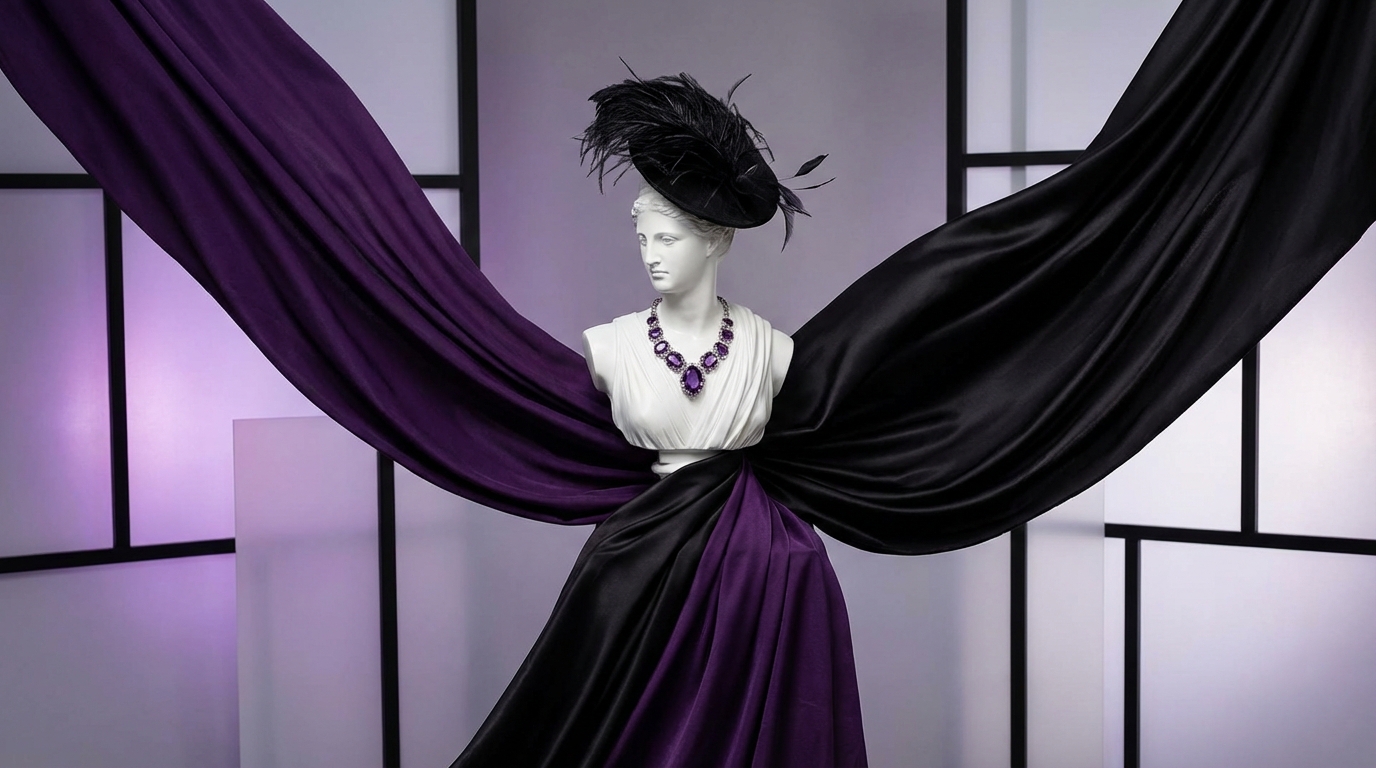

“Beauty and fashion are basically the same thing. If you fix your clothes, you fix your looks.”
That quote sounds neat, but it is false. Beauty and fashion are not the same, and one does not automatically fix the other. They work together, and when they are treated as a real combination instead of one big blur, you look better, feel clearer, and make smarter choices with your time and money. At least that’s every single sundaybestblog‘s take on this.
Beauty is your canvas, fashion is what you put on it. If you only buy more clothes without caring for your skin, hair, and body, the result feels off. If you only focus on skincare and never think about style, you can still feel invisible. The strong move is to make them support each other on purpose.
I might be wrong, but most people do not have a “beauty and fashion problem”. They have a system problem. They chase trends in both areas with no filter, then wonder why their routine feels random.
So I want to walk through how beauty and fashion can work as a powerful, practical combination, not as two never‑ending shopping lists. This is not theory. This is about decisions: what to buy, what to skip, what to wear, and what routine to keep.
“If I just find my style, my confidence will fall into place.”
I have heard that line many times from clients and readers. It sounds reasonable. The tricky part is that confidence rarely falls into place. It is built from small daily signals you send to yourself. Good skin habits. Clothes that fit. Simple grooming. All those things tell your brain, “I take care of myself.” That message is more powerful than any single outfit or product.
So no, your style alone will not fix your confidence. But your style plus a basic beauty routine, repeated, creates results that feel real.
Let us unpack this combination in a way you can use.
What Beauty Really Means in the Fashion Conversation
Most people talk about beauty as “makeup and skincare” and stop there. That is too narrow and it causes problems. Beauty lives under your clothes, behind your makeup, and before your mirror.
I like to split beauty into three layers:
Layer 1: Base Beauty (Health & Hygiene)
This is the boring part that changes everything. If you skip this, clothes and makeup end up doing damage control all the time.
Base beauty includes:
– Clean skin and hair
– Fresh breath and basic dental care
– Hydrated body (water, not just serums)
– Sleep that actually lets your skin repair
– Movement that keeps your posture and circulation alive
If this part is weak, fashion has to overcompensate. You start using heavy coverage makeup instead of treating the cause. You rely on clothes to hide fatigue or posture issues. The result looks forced.
“Good style starts with a good mirror selfie.”
That is not how it works. Good style starts with a body and face that are not screaming for help.
Layer 2: Surface Beauty (Skincare, Hair, Grooming)
This is where most “beauty” content lives. Products, routines, before‑after shots. It can get confusing fast.
Here is the question that cuts through the noise:
Does this beauty choice make fashion easier?
If a skincare product gives you calmer skin, you need less makeup. That makes fashion easier, because different colors, necklines, and fabrics work better on calm skin.
If your haircut works with your natural texture, you need less styling time. That makes fashion easier, because your hair plays nicely with more outfit types. You are not limited to “this only looks good when my hair is perfectly straight.”
This is the real test. Beauty that makes your wardrobe harder is usually a signal you are chasing trends without a plan.
Layer 3: Expressive Beauty (Makeup, Fragrance, Details)
This is where the fun usually starts, but it should come last.
Expressive beauty is things like:
– Makeup looks
– Nail color
– Fragrance
– Accessories tied to your face and body (glasses, piercings, etc.)
These details can connect directly with fashion. Think of red lipstick with a simple black dress. Or a clean, minimal face with oversized streetwear. The pairing tells a story.
The mistake many people make: they change expressive beauty every other day, but keep the same cluttered wardrobe. So the stories clash.
If you want beauty and fashion to reinforce each other, your expressive choices need some direction.
What Fashion Really Means in the Beauty Conversation
Fashion is more than trends and labels. At a basic level, fashion is the system you use to cover your body in a way that:
– Fits your lifestyle
– Flatters your body and features
– Matches how you want to be perceived
You do not need a closet full of brands. You need clothes that talk to your beauty choices instead of fighting them.
“Once I lose weight, I will buy better clothes.”
This line keeps a lot of wardrobes stuck. Fashion should not be a reward. It should serve your current body, face, and life. Waiting for a “future you” slows everything down.
Fashion as a Frame for Your Face
When people look at you, they almost always go to your face first. Clothing is a frame for that.
So ask:
– Does this neckline support my jawline and neck?
– Do these colors support my skin tone, or fight it?
– Does this silhouette balance my features or exaggerate what I do not like?
If your beauty routine aims for a soft, natural look, and your clothes are loud and busy, the frame fights the picture. If you love bold makeup, but your wardrobe is too soft or muted, the frame undercuts the impact.
Fashion and beauty need a shared direction.
Fashion as a Daily System, Not an Event
There is “event fashion” and there is “daily fashion”.
Most people plan their beauty and fashion only for special moments:
– Weddings
– Parties
– Photoshoots
– Vacations
Then they feel average during the week because their everyday system is missing.
Strong combinations come from repeatable habits, not rare events.
Your goal is not “a great outfit” or “an amazing makeup look”. Your goal is a repeatable pairing that feels like you on a Wednesday morning with limited time.
How Beauty and Fashion Boost Each Other
Here is where the combination starts to feel powerful.
When you make small, clear choices in beauty, your fashion options grow. When your wardrobe is coherent, your beauty routine becomes easier to plan.
Let us look at some practical connections.
Skin Tone and Clothing Color
Your skin tone and undertone shape which clothing colors look harmonious and which ones look slightly off.
You do not need a full color analysis to make progress. Start with observation.
– Does gold or silver jewelry look more natural on you?
– Do you look more alive in soft tones or clear, bright tones?
– Do you look fresher in cool colors (blues, cool pinks) or warm colors (olive, coral)?
Basic pattern:
| Beauty Signal | Fashion Direction |
|---|---|
| Gold jewelry flatters you | Lean slightly warmer in clothing colors (camel, rust, olive, warm white) |
| Silver jewelry flatters you | Lean slightly cooler (charcoal, navy, cool white, blue‑based reds) |
| Soft makeup looks better than stark contrast | Choose softer, blended fabrics and prints instead of strong contrast patterns |
| Graphic, sharp makeup suits you | Strong contrast outfits, crisp lines, bold prints work better |
When your clothing colors amplify your skin and makeup, you look put together with less product and less effort.
Face Shape, Hairstyle, and Necklines
Face shape guides more than your haircut. It should also guide your necklines, collars, earrings, and even hat shapes.
Some simple directions:
| Face / Neck Signal | Fashion & Beauty Choice |
|---|---|
| Shorter neck, rounder face | Open necklines (V, scoop), lighter contouring, less volume around the jaw |
| Long neck, sharp jaw | High necklines work, bolder earrings, hair can hit jawline strongly |
| Wide forehead, smaller chin | Hair volume closer to the jaw, necklines that add shape near the chest |
| Strong cheekbones | Structured collars and shoulders match the natural structure |
The idea here is not to “fix” your face. It is to let your clothes and hair agree on a shape.
If your haircut widens your face, and your neckline also widens it, the effect can feel heavy. If your haircut lengthens, and your neckline lengthens, you might look more stretched than you like.
Beauty and fashion are two levers. Pull them in the same direction with intention.
Body Shape and Fabric Choices
Body shape advice can become harsh. I do not want that. But ignoring how fabric sits on your frame does not help you either.
The link between beauty and fashion here is texture.
Ask yourself:
– Is my skin smooth or textured in certain areas?
– Does my hair have texture (waves, curls, coils) or is it straight?
– Do I feel more like “sharp lines” or “soft lines” when I look in the mirror?
Then match fabric.
| Beauty Texture Signal | Fashion Texture Direction |
|---|---|
| Sleek hair, minimal makeup, smooth skin finish | Smoother fabrics (silk, satin, crisp cotton, fine knit) |
| Curly hair, dewy skin, soft blended makeup | More textured fabrics (linen, boucle, ribbed knits, soft denim) |
| Matte skin, defined features | Structured materials (tailoring, clean denim, twill) |
| Glowy, natural look | Draped materials (jersey, viscose, flowy weaves) |
When your makeup is glossy and your clothes are too stiff, there is a clash. When everything is soft, you might feel like the look has no anchor. You need balance.
Common Beauty & Fashion Mistakes (And Better Moves)
Now I want to call out some common patterns that silently break the combination.
Mistake 1: Copying a Celebrity or Influencer 1:1
You see a person online. Their makeup looks amazing. Their outfit looks strong. You try to copy everything.
The problem: their beauty base, lifestyle, body, and budget are different from yours. What works on them can feel strange on you.
A better move:
– Copy direction, not details.
– Notice the balance of their look. Strong lip with neutral outfit. Natural hair with structured blazer. Soft skin with textured knit.
– Recreate the balance using what suits your features and closet.
Ask: “What is the main message of this look?” Then build your version.
Mistake 2: Random Shopping in Both Areas
You buy skincare because it went viral. You buy clothes because of a sale. There is no filter.
After a year, you have:
– A pile of half‑used products
– A wardrobe full of items that do not match
– A constant feeling of “nothing works”
A stronger path is to decide on a simple style theme that covers both beauty and fashion.
For example:
– “Clean, sharp, minimal”
– “Soft, warm, relaxed”
– “Bold, graphic, modern”
Then you run purchases through that filter.
If an item or product fights the theme, you pause.
Mistake 3: Treating Beauty as a Mask and Fashion as a Distraction
Many people use heavy makeup to cover skin issues with no plan for long term care. At the same time, they use clothing to hide their body instead of dressing it.
This is understandable. It is also exhausting.
You spend more time hiding than styling.
A better path:
– Use beauty to support your natural features, even if you do not love them yet.
– Use fashion to frame your body, not erase it.
This does not mean wearing tight clothes or “no makeup”. It means small shifts:
– Lighter base makeup with targeted concealing instead of full coverage always
– Clothes that skim your shape instead of sizing up multiple sizes to avoid seeing your outline
The result looks more alive. You look like a person, not a disguise.
Building a Simple Beauty & Fashion System That Works Together
I want to give you something you can actually apply. So here is a method I use with clients who feel stuck.
Step 1: Define Your Visual Identity in One Sentence
Ask yourself:
“How do I want to look, in one clear sentence, that covers both my face and my clothes?”
Examples:
– “Polished but relaxed.”
– “Natural, clean, and sharp.”
– “Soft but strong.”
– “Creative but not chaotic.”
Write it down. This is your filter.
If a beauty choice or fashion choice does not support the sentence, it is a red flag.
Step 2: Choose a Core Beauty Look for Everyday
You can have variety, but you need a go‑to.
Define:
– Skin finish: matte, natural, or dewy
– Brow style: strong, soft, or natural
– Eye focus: lashes, liner, shadow, or minimal
– Lip level: tinted, nude, bold, or bare
– Hair default: up, down, curly, straight, waved
Then write your “default recipe”.
Example:
“Natural skin, soft brows, mascara, nude lip, hair in a low bun.”
This is your baseline. You can add or subtract from it, but it anchors you.
Step 3: Build a Core Outfit Formula That Matches
Now match a clothing formula to that default beauty look.
Common outfit formulas:
– Slim top + wide bottom
– Wide top + slim bottom
– Dress + one layer (jacket, cardigan, blazer)
– Monochrome base + one contrasting piece
Take your default beauty recipe and build one matching formula.
Example:
Beauty: “Natural skin, soft brows, mascara, nude lip, hair in a low bun.”
Fashion formula: “Straight jeans, simple knit top, short jacket, minimal sneakers or flats.”
Your daily pairing is now:
– Face: calm, natural
– Clothes: structured casual
– Message: “Relaxed but thought through”
You can change colors and fabrics inside the formula, but the structure multiplies your options without chaos.
Step 4: Create a Small Table of Your Own Rules
It helps to see your own rules clearly.
Make a table like this in a note app or journal.
| Area | My Choice | What It Means for the Other Area |
|---|---|---|
| Skin finish | Natural, not overly matte or dewy | Clothing can be mixed: both structured and soft fabrics look fine |
| Hair | Mostly up in a bun/ponytail | Necklines and earrings matter more, so I prioritize those when shopping |
| Signature colors | Black, white, camel, denim blue | Makeup colors stay neutral; I skip bright shadows and very bright lips daily |
| Footwear style | Clean sneakers and low boots | Beauty stays more natural; glam full-face is only for dressy events |
This is how you avoid impulse buys that fight your system.
Step 5: Plan “Event Modes” Without Breaking Your Base
You will have moments where you want something extra. Parties, weddings, big meetings, dates.
Instead of reinventing yourself every time, keep your base and choose one dial to turn up.
Event dials you can adjust:
– Dial up eyes (liner, shadow, lashes)
– Dial up lips (strong or deeper shade)
– Dial up skin (more glow or more matte)
– Dial up hair (bigger, smoother, sleeker)
Then link that dial to clothing.
Examples:
– Strong lip -> simpler outfit, fewer colors, maybe all black or all neutral
– Smoky eye -> necklines that frame the face, not compete; avoid very busy prints near the face
– Extra glow -> avoid overly shiny fabrics on the body so you do not look oily overall
– Sleek hair -> sharper tailoring, crisp shirts, defined lines
This way, beauty and fashion rise together, instead of one overwhelming the other.
How Confidence Actually Grows From This Combination
There is a big myth that confidence appears once you “fix” your appearance.
What usually happens in real life looks more like this:
1. You choose a clear direction.
2. You build a small but coherent routine around that direction.
3. You repeat it enough that it becomes familiar and low effort.
4. Other people respond with slightly more positive signals.
5. Your brain registers the pattern and recalibrates your self‑image.
So the real value of a strong beauty + fashion combination is not the comments you get. It is the reduction of friction in your daily life.
You spend less time:
– Questioning every outfit
– Redoing your makeup
– Feeling like a stranger when you look at photos
And more time:
– Knowing what works on you
– Making fast decisions
– Showing up consistently
“Confidence is the best outfit.”
That quote shows up everywhere. I think it is half true. Confidence feels strong, but it still needs a container.
Beauty habits and fashion choices are that container. They signal to your brain that you are worth the effort. Over time, that feeling is what people read as “confidence”.
Practical Examples: Pairing Beauty and Fashion for Different Styles
To make this concrete, let me map out a few sample profiles. You can borrow parts that feel right.
Profile 1: Minimal, Modern Professional
Goal sentence: “Clean and competent.”
Beauty:
– Skin: natural to matte, low shine
– Brows: defined but not heavy
– Eyes: neutral shadow, tight liner or just mascara
– Lips: nude or soft berry
– Hair: smooth blowout or neat low bun/ponytail
Fashion:
– Colors: black, white, navy, charcoal, beige
– Shapes: tailored trousers, straight skirts, crisp shirts, simple dresses
– Shoes: loafers, low heels, simple boots
Linking choices:
– Strong lipstick only on days when outfit is very minimal.
– If hair is up, use earrings as the main accessory, keep necklaces simple.
– Avoid overly distressed or worn fabrics that clash with the clean beauty look.
Profile 2: Creative Casual
Goal sentence: “Relaxed but interesting.”
Beauty:
– Skin: fresh with a bit of glow
– Brows: soft, brushed up
– Eyes: mascara, maybe a colored liner some days
– Lips: balmy tint or sheer color
– Hair: natural texture encouraged, maybe air‑dried waves or curls
Fashion:
– Colors: mix of neutrals with one or two signature bright shades
– Shapes: loose tops with slimmer bottoms, or wide pants with fitted tops
– Pieces: graphic tees, patterned shirts, interesting jackets, sneakers
Linking choices:
– When clothing is loud (print, color), keep makeup more neutral.
– Use nail polish as a small creative element that ties outfits together.
– Let hair texture echo fabric texture: curls with knits, waves with denim, etc.
Profile 3: Soft Feminine
Goal sentence: “Gentle but present.”
Beauty:
– Skin: light glow, natural blush
– Brows: soft and rounded
– Eyes: lash focus, light shadows
– Lips: pinks, corals, or soft reds
– Hair: soft curls or waves, half‑up styles
Fashion:
– Colors: light neutrals, blush tones, soft blues or greens
– Shapes: dresses, skirts, blouses, wrapped shapes
– Fabrics: soft flows, lace, light knits
Linking choices:
– If wearing lace or ruffles, balance with cleaner makeup so the total look does not feel costume‑like.
– A defined lip can help keep sweetness from feeling too young.
– Shoes with a clean line (simple heels, ballet flats) match gentle skin and hair.
Profile 4: Strong Street Style
Goal sentence: “Bold but controlled.”
Beauty:
– Skin: natural or matte, slight contour
– Brows: strong and shaped
– Eyes: graphic liner or strong lashes
– Lips: either nude with strong eyes, or bold with cleaner eyes
– Hair: sharp cuts, braids, or sleek tied styles
Fashion:
– Colors: black, white, strong primaries, or earth tones
– Shapes: oversized jackets, hoodies, cargo pants, fitted tops, statement sneakers
– Details: logos, caps, chains used sparingly
Linking choices:
– When outfit is oversized, define features more strongly with makeup.
– Hats and hoods mean eyebrow grooming matters more.
– If sneakers are very loud, keep makeup more focused on skin and brows.
You do not have to fit neatly into one profile. The point is to notice how each pairing tells one clear story, not three at once.
When You Are Taking a Bad Approach
You asked me to tell you when you are wrong or going in a bad direction. So let me spell out a few red flags.
You are likely on a bad path if:
– You are buying more and more products, but your daily look still feels random.
– You keep saving “inspiration” images, but your mirror reflection looks nothing like any of them.
– You feel like you need a new outfit and a new makeup look for every event.
– You rely on filters or heavy editing to like your photos.
If any of that sounds familiar, you need fewer inputs, not more.
Strong style comes from subtraction:
– Fewer shades of foundation, but ones that truly match.
– Fewer cuts of jeans, but ones that fit.
– Fewer trend pieces, more core staples.
– Fewer “experimental” products, more repeatable workhorses.
Beauty and fashion become a powerful combination when they reduce chaos, not increase it.
“More products mean more options, and more options mean better style.”
This is another line that sounds smart and quietly ruins routines. More options often create decision fatigue. Then you grab whatever is nearby.
Instead, aim for:
– A small set of daily beauty products you know well
– A small set of outfit formulas that always work
– A short list of colors that flatter you
From there, you can add seasonal or trend pieces like seasoning rather than the main dish.
Bringing It All Together Every Morning
Let me finish with a simple daily flow you can adapt.
1. Start With the Day’s Role
Ask: “Who do I need to be today?” Not in a dramatic sense. Just role‑based.
Examples:
– Focused worker
– Friendly host
– Confident presenter
– Low‑key errand‑runner
This quietly guides how strong your beauty and fashion need to be.
2. Choose One Main Focus Area
Pick one:
– Skin
– Eyes
– Lips
– Hair
– Outfit silhouette
– Color
Do not try to make everything intense. If you choose strong eyes, keep clothes and lips calmer. If you choose a big, bright outfit, keep beauty more neutral.
3. Pull From Your Default Recipes
Use your default beauty recipe and outfit formula as a starting point. Add one or two tweaks based on the focus area.
Example:
– Role: focused worker
– Focus: skin (look fresh, not tired)
– Beauty: better concealing, a touch more blush, normal eyes and lips
– Outfit: your usual formula in softer colors to support freshness
This process keeps you from starting from zero every morning.
4. Quick Mirror Check: Face First, Then Outfit
When you check the mirror, do it in two passes:
1. Face and hair only. Ask: “If I wore a plain white T‑shirt right now, do I like my face and hair?”
2. Full outfit. Ask: “Is the frame helping the picture, or shouting over it?”
If something feels slightly off, change the smaller piece. Often that means changing a lip color, a necklace, or a top layer, not redoing everything.
—
Beauty and fashion become a powerful, almost perfect combination when they are treated as partners instead of separate hobbies. Your face, hair, skin, clothes, and accessories are all making statements anyway. The question is whether they are saying the same thing.
You do not need more talent or more trends. You need a clearer direction, fewer random purchases, and a simple system that you repeat until it feels like second nature.
From there, every product and every garment you add can either support that system or fight it. Choose support.
