
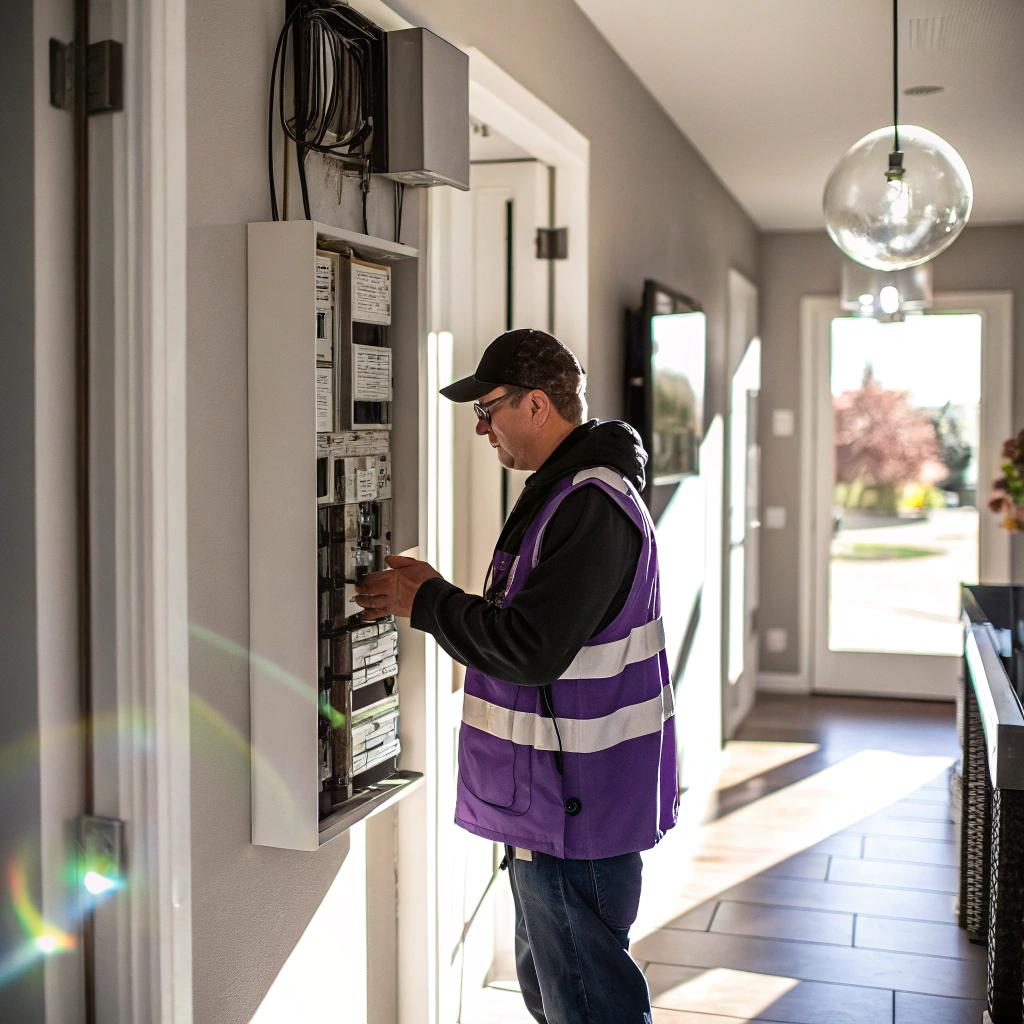

“Any licensed electrician can handle your home, they all do the same thing.”
That sounds neat and simple, but it is not really true. If you want your home to be safe, comfortable, and up to code, the electrician you choose in Indianapolis matters a lot. The right person will listen, explain, show up when they say they will, and stand behind the work. The wrong one can turn a small repair into a long, stressful problem. If you are in a hurry and just want the short answer: look for a residential-focused, licensed, insured residential electrician Indianapolis with recent local reviews, clear pricing, and experience with the exact project you need, then actually talk to them before you commit.
I know that sounds obvious. But many people skip half of that and just go with whoever calls back first. I have done that with home projects too, and it rarely feels good later. With electrical work it can be worse, because you cannot always see what is hidden behind the walls.
So if you are sitting there staring at a flickering light or an old panel and thinking, “I just need this done,” you are not alone. Most homeowners in Indianapolis only call an electrician when something goes wrong or when they are in the middle of a remodel. There is some pressure and you do not want to make ten phone calls.
Still, a bit of careful thought up front can save money, time, and a lot of irritation. And, more importantly, it can reduce the chance of a fire or shock risk in your home. That part is not dramatic, it is just reality.
Let us walk through how to pick someone in a way that feels practical, not complicated. No fancy jargon. Just what matters, what does not, and where people often get tripped up.
Why the “all electricians are the same” idea is risky
The idea that any electrician can handle any job sounds nice. It helps us feel like the decision does not matter. But homes in Indianapolis can be very different.
You might have:
– A 1950s house in Broad Ripple with old wiring
– A new construction home in Franklin Township with smart devices
– A historic place near Irvington with a tiny fuse box
– A townhouse downtown with very limited panel space
On paper, any licensed electrician could work on all of these. In real life, some prefer new builds, some focus on commercial work, and some really know older homes.
When you assume any electrician will do, you take a chance on fit: their skills, their style, and their respect for your home.
You are not shopping for a gadget. You are inviting someone into your house, sometimes into bedrooms and attics and crawl spaces. You want a person you trust to:
– Think safety first
– Respect your time and property
– Explain choices in plain language
That is why this topic is a bit more serious than just price shopping.
What makes a good residential electrician for your home
If we strip away the noise, choosing an electrician comes down to a few core things:
– Are they allowed to do the work?
– Are they good at the work?
– Will they treat you and your home well?
Everything else tends to sit under those three.
Licensing in Indiana and what it really means
Indiana handles electrical licensing at the local level. Indianapolis and Marion County follow their own rules and codes.
When an electrician says they are licensed, you want that to mean:
– They passed exams and met experience requirements
– They understand the National Electrical Code
– They know local building and permit rules
You do not need to memorize any of that. You just need to know that:
1. There is a difference between a company owner who holds the license and a helper who does not.
2. Someone licensed is supposed to supervise the work.
You can do a quick check by asking:
– “Who is the licensed person on the job?”
– “Will they be on site, or just supervising?”
If they talk in circles or get defensive about that question, that is not a good sign.
Insurance and why you should actually ask about it
Insurance feels boring, so people skip the question. I get it. You expect that any professional has it.
But imagine this:
– A worker falls off a ladder in your home.
– A wiring mistake starts a fire a week later.
You want someone else, not you, to be financially responsible for that.
Most reliable electricians carry:
– General liability insurance
– Workers compensation for their employees
You can simply ask:
– “Do you carry liability insurance and workers comp?”
– “Can you email or text proof before the work?”
Good companies are used to that question. The ones who argue or act offended are often the ones who do not have it together.
Residential vs commercial electricians in Indianapolis
There is a quiet split in the electrical world that homeowners do not always see.
Some electricians:
– Spend most of their time on homes
– Understand panel upgrades, lighting layouts, code issues in older houses, and family schedules
Others:
– Focus on businesses, warehouses, restaurants, or new construction
Both can be skilled. Still, habits from one world do not always fit the other. A crew used to large commercial jobs may not be as careful in tight finished spaces. A residential electrician is usually more tuned to:
– Cleanliness
– Working around kids, pets, and furniture
– Older wiring that does not match textbook layouts
If your project is in your home, ask direct questions like:
– “What share of your work is residential?”
– “Do you do many jobs in older Indy homes?”
– “Have you done this type of work recently?”
You are not looking for a perfect answer. You just want honest, specific replies that show they know what your kind of home is like.
Common electrical projects in Indianapolis homes
It can help to know how your project fits into the bigger picture. Some jobs are simple. Others touch many parts of your system.
Here is a quick overview of things homeowners often ask for:
| Project type | What it involves | What to ask the electrician |
|---|---|---|
| Panel upgrade | Replacing an older fuse box or small panel with a new breaker panel, sometimes adding capacity. | “How many panel upgrades have you done this year in Indy? Do you pull the permit, or do I?” |
| Old wiring repair | Fixing knob-and-tube, cloth-insulated, or aluminum wiring that may not meet current safety standards. | “Have you worked on older wiring in this area? How do you handle hidden issues in walls?” |
| Lighting upgrades | Installing recessed lights, new fixtures, under-cabinet lights, and dimmers. | “Do I need new wiring or can we use what is there? How will you patch any holes?” |
| Outdoor & garage power | Running circuits to garages, patios, hot tubs, or EV chargers. | “Have you run power for EV chargers or hot tubs? What about trenching and permits?” |
| Safety updates | Adding GFCI and AFCI protection, smoke/CO detectors, bonding and grounding corrections. | “Can you do a quick safety check while you are here? What is urgent vs nice to have?” |
You do not need all the answers yourself. But a good electrician will explain tradeoffs and not push everything as an emergency. If everything is an emergency, I tend to tune out. You probably do too.
How to check an electrician’s reputation without overthinking it
You do not need to run a full investigation. Still, spending 15 to 20 minutes on basic checks can give you a much clearer picture.
Online reviews and what they do not tell you
Most people start with Google reviews. That is fine, but ratings can be misleading.
Things to look for:
– Recent reviews from the last 6 to 12 months
– Mentions of punctuality, cleanliness, and communication
– Specific jobs that sound like yours
If a company has a few negative reviews, that can be normal. What matters more is:
– Do they respond in a calm, professional way?
– Do they explain what they did to fix the problem?
If every review is 5 stars with almost the same wording, I get a bit suspicious. Real people use slightly different language and complain about little things now and then.
Word of mouth in Indianapolis neighborhoods
People still trust neighbors and friends more than search results. If you are in a neighborhood Facebook group or chat, you have probably seen questions like:
“Does anyone know a good electrician for a panel replacement?”
The replies are often more helpful than any ad. Pay attention to:
– Names that come up more than once
– Stories where someone describes how the electrician handled a surprise problem
– Comments about price that sound reasonable, not “too good to be true”
But be careful with just taking one strong opinion. Some people love a contractor because they were cheap. Others hate the same contractor because of a single delay. Look for patterns, not just one loud voice.
Questions to ask before you say yes
This part can feel awkward for some people. You may not want to ask too many questions or sound distrustful. I think it helps to remember that clear questions make the job smoother for both sides.
Here are some topics worth covering in a short phone call or during an in-home estimate.
1. Scope of work
Try to get on the same page about what needs to be done.
You might ask:
– “What do you think is causing this problem?”
– “Are there other possible causes?”
– “Can you walk me through what you plan to do?”
If they cannot explain the job in simple terms, it does not mean they are bad. Some people just speak in technical language. Still, you should not feel lost or talked down to.
2. Pricing and estimates
Money is where most misunderstandings come from.
You want answers to:
– “Is this a flat price or by the hour?”
– “What is included in this price?”
– “What might cause the price to change?”
If they charge by the hour, ask:
– “What is your hourly rate?”
– “Do you have a minimum charge?”
If it is a flat price, try to get it in writing. Even if that is just an email that says:
“Replace panel, 200 amps, materials and labor: $X”
You do not need a long legal contract for smaller jobs, but you do need something you can refer back to.
3. Permits and inspections
In Indianapolis, some electrical work legally needs a permit and inspection. That is not just red tape. It gives you a second set of eyes on the safety side.
You can ask:
– “Does this project need a permit in Marion County?”
– “Who takes care of getting the permit?”
– “Is the inspection included in the price?”
If someone tells you permits are a waste of time or that “nobody does that,” I would be cautious. That usually means they want to cut corners or avoid oversight.
4. Scheduling and access
You need to know when they are coming, how long it should take, and what they need from you.
Ask things like:
– “What is your soonest realistic appointment for this?”
– “How long should I plan for power to be off, if at all?”
– “Do you need access to the attic, crawl space, or panel area?”
Little things matter here. Do they sound rushed? Do they give you a time window that makes sense, or something vague like “we will see”?
If the conversation feels rushed or confusing before money changes hands, it usually does not magically improve during the job.
Red flags that should make you pause
You do not have to be an expert to sense when something feels off. Trust that feeling, at least enough to ask more questions.
Some warning signs:
– They refuse to provide a written estimate, even a short one.
– They cannot clearly explain whether they are licensed and insured.
– They tell you every part of your home is a “fire hazard” after a 5 minute glance.
– They pressure you to decide on the spot for a large project.
– They want full payment in cash upfront.
Are there exceptions? Sometimes. Small one-hour jobs are often quoted at a flat visit fee with payment at the end. But when it comes to bigger projects like panel upgrades or whole-house rewiring, you should not feel rushed or pushed.
If you feel stuck, you can say:
“I want to think this over and get one more quote. Can I call you back later this week?”
Their reaction to that simple sentence tells you a lot. A professional will respect it. Someone who just wants a fast sale might become aggressive or annoyed.
Comparing quotes without driving yourself crazy
Getting more than one quote makes sense, but it can also make you feel overwhelmed.
Here is a simple way to compare:
Look beyond the bottom line
Yes, price matters. But ask:
– Does each quote include the same work?
– Are materials comparable in quality and warranty?
– Do they all include permits and inspections if needed?
If one quote is far lower than the others, there is usually a reason. It might be:
– Cheaper materials
– No permit
– Less thorough work
You can call and ask, calmly:
“Your price is quite a bit lower than another quote I got. Can you walk me through what might be different in what you are planning?”
If they give a clear answer that makes sense, great. If they dodge the question, that is useful information too.
Weighing communication and trust
This is the part that is hard to put in a table but still matters.
Ask yourself:
– Who listened best when you described the issue?
– Who explained things in a way you actually understood?
– Who made you feel comfortable asking questions?
Sometimes the best choice is not the cheapest or the most expensive. It is the one that you feel you can call again if something is not right.
Indianapolis specific quirks: older homes, weather, and codes
Every city has its own quirks. Indianapolis is no different.
Older homes and legacy wiring
Many areas of the city have homes:
– Built before modern electrical codes
– With limited outlets per room
– With older wiring methods
This can mean:
– No ground wires in some circuits
– Shared circuits that are overloaded
– Fuse boxes or very old panels
If you live in an older home, ask directly:
“Do you see any issues with my current wiring that should be addressed soon?”
A good electrician will point out:
– What is urgent for safety
– What can wait without much risk
– What is just about comfort or convenience
I think it is fair to ask them to prioritize: “If this were your house, what would you do first, second, and third?”
Storms, surges, and seasonal load
Indianapolis storms and grid issues can cause power surges. Even if your lights come back on, your electronics and appliances can suffer.
You might want to talk about:
– Whole-house surge protection at the panel
– Proper grounding and bonding
– Whether your old panel is near its limits
Surge protection is not magic, but it is one more layer between your expensive equipment and sudden spikes. A good electrician will explain what it can and cannot do without overselling it.
Local code and homeowner associations
Some neighborhoods and suburbs around Indianapolis have:
– HOA rules about exterior lighting and additions
– Requirements for where panels and meters can go
– Limits on visible conduits
Ask:
“Have you worked in this neighborhood or with this HOA before?”
If they have, you save time. If not, you just need to be a bit more careful and maybe send them your HOA rules before they start.
Preparing your home for the electrician’s visit
Once you have picked someone, you can make the visit smoother with a bit of preparation. It helps both you and them.
Things to do the day before
You do not need to do much, but consider:
– Clearing access to the electrical panel
– Moving furniture away from problem areas
– Crating or securing pets if they are anxious around strangers
– Writing down any questions you still have
It sounds simple, but being ready lets the electrician dive into the work, not move boxes or navigate around clutter.
During the visit
Walk the electrician through:
– Every light or outlet that is giving you trouble
– Any buzzing, dimming, or breaker tripping you have noticed
– Where you think they might need access (attic, crawl space, exterior)
Ask if there are any pictures or notes you should keep. For bigger work, photos of panel labels and wiring changes can be helpful later if someone else works on the system.
A short, calm conversation while the electrician is there can prevent a lot of confusion months down the road.
Safety questions that are worth asking directly
Sometimes homeowners feel shy about bringing up safety, as if it questions the electrician’s skill. I think it is the opposite. Skilled professionals usually welcome safety questions.
Here are a few you can use:
– “Is there anything here that worries you from a fire risk point of view?”
– “If this were your home, what would you fix within the next year?”
– “Is my panel near its limit for more circuits?”
– “Do you see any issues that might affect resale or a future inspection?”
These questions give the electrician space to share concerns without scaring you. You still get to decide how much to do now versus later.
Warranty, follow-up, and what happens if something goes wrong
Nobody likes to think about problems after the job. But it is much easier to talk about warranty and follow-up before you pay.
Ask:
– “Do you warranty your labor? For how long?”
– “What about parts and fixtures?”
– “If I have an issue after the job, what is the process?”
Even a small company can stand behind their work. It might be a one-year labor warranty, or something similar. The key is that they have thought about it and can explain it without hesitation.
Balancing budget with peace of mind
Electrical work is not cheap. That is just the truth. Copper wire, quality parts, license fees, permits, insurance, and skilled labor all add up.
You might be tempted to go with the lowest price, especially if money is tight. I understand that. But try to think in terms of:
– Safety
– Long-term reliability
– How often you want to repeat this job
Spending a bit more for:
– Better components
– Proper grounding
– Permits and inspections
can save hundreds or thousands later. On the flip side, there are times when a small, targeted repair is fine for now and a full upgrade can wait. A good electrician will help you see that line, not just push the biggest project every time.
Frequently asked questions about choosing an electrician in Indianapolis
How many quotes should I get for electrical work?
For small jobs under a few hundred dollars, one trusted electrician might be enough. For larger work like a panel upgrade, EV charger, or major rewiring, getting two or three quotes is reasonable. More than that usually adds stress without much benefit.
Is it safe to hire a handyman instead of an electrician?
For simple tasks like swapping a light fixture where the wiring is clearly in good shape, some handymen do decent work. For anything involving new wiring, panel changes, circuits, or issues you do not fully understand, a licensed electrician is the safer choice. Mistakes here are not just cosmetic.
How do I know if my panel needs an upgrade?
Signs that you might need an upgrade:
– Frequent breaker trips without clear cause
– Warm or buzzing panel
– Very limited open spaces for new circuits
– Old fuses instead of breakers in a modern home
Ask an electrician to assess the panel and explain what they see. You do not have to agree to an upgrade right away, but you should at least know where you stand.
Can I ask an electrician for references?
Yes. For bigger projects, it is completely fair to say:
“Do you have a past customer I can talk to about a similar job?”
Some companies will give you one or two numbers or emails. Short, honest conversations with other homeowners can help you feel more confident.
What if I hire someone and I am not happy with their work?
Start by:
– Explaining clearly what you are unhappy about
– Giving them a chance to fix it
– Putting your concerns in writing if needed
Most electricians want satisfied customers and will correct reasonable issues. If that fails, you might contact:
– The company owner, if you dealt with an employee
– Your local licensing or permitting office, if work was unsafe or unpermitted
It is better not to jump to threats or bad reviews right away, even if you are frustrated. Calm, specific complaints are more likely to lead to a good fix.
Is the cheapest electrician ever the right choice?
Sometimes. A small, newer company might charge a bit less and still do excellent work as they build a reputation. The challenge is that you will not always know which is which ahead of time.
If you choose the cheapest bid, at least make sure:
– They are licensed and insured
– They can explain their plan clearly
– The price difference has a reason you understand
If you walk through those steps and still feel comfortable, then the lowest price might be fine. If your gut keeps nudging you that something feels off, listen to it.
