

“If we need couples counseling, it probably means our relationship is already over.”
That sounds harsh, and I understand why it feels true, but it is not. Going to couples counseling Denver does not mean the relationship has failed. It usually means both of you are still trying, even if you are tired, angry, or hurt. Counseling gives you a space to slow down, say what you really feel, listen in a safer way, and build new habits together. Many couples use it to rebuild trust, reset patterns, and create a different kind of relationship than the one that has been slowly falling apart.
If you are reading this, you probably are not looking for perfect words about love. You want to know one simple thing: can we fix this? The honest answer is that some relationships do not stay together, but many do change in real, steady ways once both people commit to the work. Not overnight. Not in a movie-scene moment. Through small talks, shared facts, new rules, and sometimes very awkward conversations.
I think it helps to start by saying that feeling doubtful about counseling is normal. Plenty of people sit in the car outside a therapist’s office and think, “What if we are too late?” or “What if they take my partner’s side?” or “What if we open all of this up and it gets worse?” These are fair questions. They are also some of the exact worries you can talk about in the first session.
You do not have to feel ready. You only have to be willing to show up with some honesty. Couples counseling can hold both of those things at once: your wish to fix things and your fear that you cannot.
Why couples wait too long to get help
Most couples do not start counseling when the first problem shows up. They wait. Sometimes for years.
They tell themselves things like:
– “This is just a rough patch.”
– “Everyone fights like this.”
– “We will work on it when things calm down at work or with the kids.”
Then life never really calms down, and small problems harden into patterns. A sharp comment becomes a regular tone of voice. Silent nights become the default. One person stops reaching out, then the other stops too. It is not one big event. It is slow erosion.
I have heard many people say, “We should have done this a long time ago.” That is honest, but it can also turn into blame. You can get stuck in, “Why did we wait so long?” instead of, “What do we do now?”
Here is the simple truth: the best time to start counseling is as soon as you notice that the way you talk, argue, or withdraw leaves one or both of you feeling alone. The second-best time is now, even if part of you still thinks you should have started years ago.
Trying to save the relationship alone, with the same tools you have always had, is like trying to fix a leaking pipe with more tape each week. It might hold for a while. It rarely holds for good.
What couples counseling in Denver actually looks like
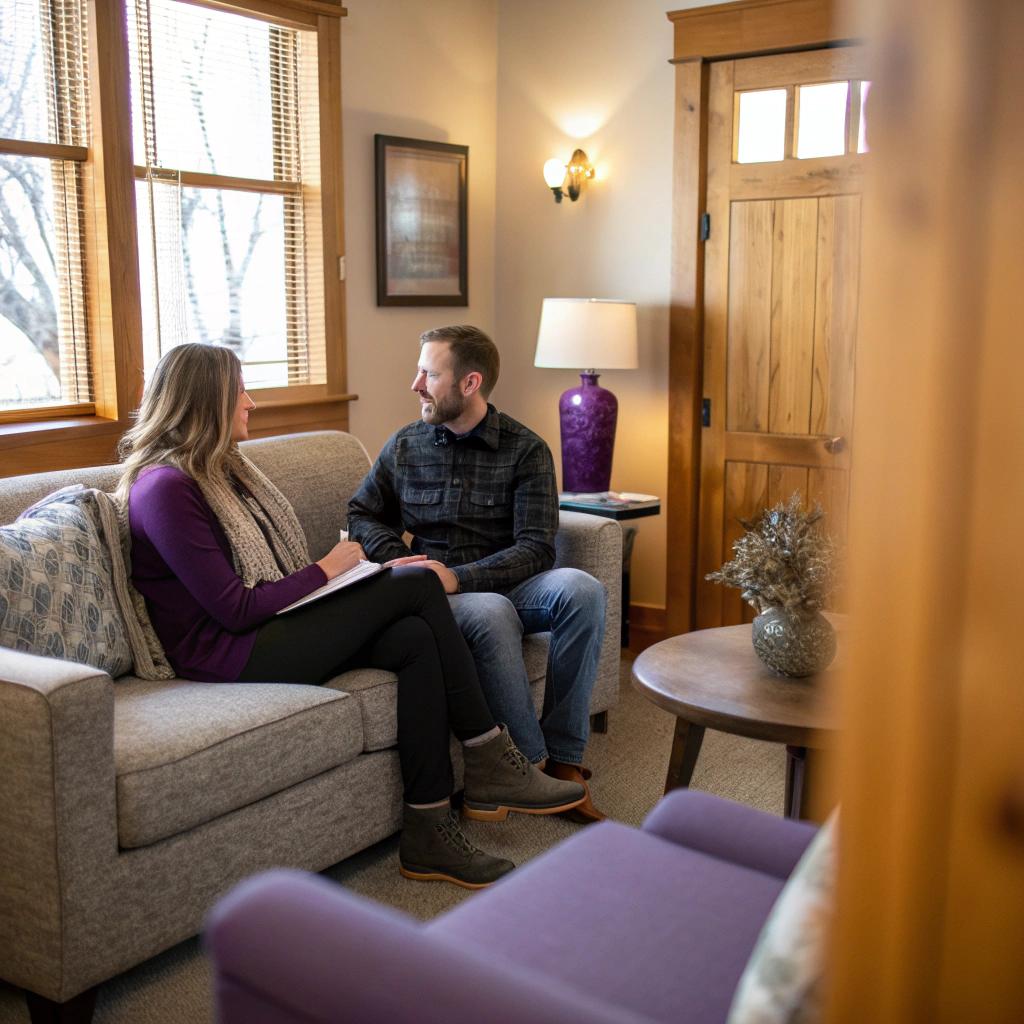
Many people imagine counseling as two people on a couch, a therapist in a chair, and someone crying for a full hour. Sometimes it looks like that. Often, it looks much more ordinary.
You sit in a room that is usually quiet and fairly simple. The therapist explains how they work. They ask each of you why you are there. No one expects you to have the “right” answer to this question. Saying something like, “I am not sure, I just know this is not working,” is enough.
Most therapists in Denver who see couples use some mix of structured methods. You might hear names such as Emotionally Focused Therapy (EFT) or Gottman Method. You do not have to memorize those. What matters is what they help you do:
– Slow arguments down so you can see what triggers them.
– Notice the emotions under the surface, not just the sharp words.
– Learn ways to repair after a conflict instead of staying cold for days.
– Build or rebuild basic trust and safety, step by step.
Therapists usually do not take sides. Do some get it wrong sometimes? Yes, they are human. And if you ever feel a strong bias for one partner and it does not shift after you bring it up, you can change therapists. You are not locked in.
Many couples in Denver mix in-person and telehealth sessions now. Traffic, snow, or childcare can make weekly visits hard. Online sessions are not perfect, but they are usually better than no support at all.
Common reasons couples in Denver seek counseling
Relationships in Denver face the same problems as anywhere else, but the local details shift a bit. Long commutes along I-25, rising housing costs, job changes, weather, and a busy social calendar can all push connection to the side.
Some of the most common reasons couples book a session are:
Growing distance and emotional disconnection
This is probably the most frequent. You might say polite things to each other, manage the house, share logistics, but you feel like roommates. Or worse, strangers.
You might catch yourself thinking, “We are not fighting that much, but we are also not close.” That gray zone is where many couples quietly get lost.
Counseling helps you:
– Notice when you started drifting.
– Name what you miss about how you used to connect.
– Create small, regular ways to turn toward each other again, even if you feel out of practice.
Repeating arguments that never resolve
You have the same fight over and over. Maybe it is about money, parenting, chores, sex, or in-laws. On the surface, the topic looks specific. Underneath, it often comes down to a few basic fears: “Do I matter to you?” “Can I trust you?” “Are you in this with me?”
What counseling does here is almost like slowing down a video to see what actually happens. When one partner raises a concern, what does the other hear? When someone withdraws, what does it trigger in the other?
Many couples think they are fighting about the topic, when they are actually fighting about the pattern.
Once you see the pattern clearly, you can change it. Not in one session, but you can learn different moves.
Affairs, broken trust, or secrets
This is one of the hardest reasons couples seek help. Sometimes it is a physical affair. Other times, it is emotional, online, or a pattern of secret texting. The details vary, but the impact is similar: the betrayed partner often feels shocked, shaky, and angry. The partner who had the affair may feel guilty, confused, defensive, or strangely relieved that the secret is out.
Some relationships end after an affair. Many stay together. A few even grow stronger, not because the affair was good, but because facing it forces a deeper honesty.
Good couples counseling will:
– Give the betrayed partner room to ask hard questions.
– Help the unfaithful partner understand why it happened without using that as an excuse.
– Help both of you decide what boundaries and changes are needed if you choose to repair.
If you are in this situation, you might be tired of people saying, “You just need to forgive,” or “Once a cheater, always a cheater.” Real healing is slower and more personal than those quick lines.
Big life changes and stress
Moving neighborhoods or from another state, having a baby, going through job loss, retiring, caring for aging parents, or living through a crisis can strain a relationship, even when you love each other.
You may start snapping over things that never mattered before. Sex might drop off. One partner might shut down while the other chases them, asking if they are okay. Neither one is wrong; you are both trying to cope.
Counseling gives you a place to talk about the stress without turning your partner into the enemy.
How to know if you and your partner are good candidates for couples counseling
You do not need to be “on the brink of divorce” to go. In fact, it often works better before things reach that level.
A few signs you are ready enough to try:
– You are both willing to attend at least a few sessions.
– You can agree to some basic ground rules, like no yelling or name-calling in the room.
– You are open, even a little, to seeing your own part in your patterns.
– You still hold at least a small hope that things could be different.
If one partner refuses to go, you can still start with individual counseling. Sometimes when one person begins to change how they respond, the pattern at home shifts. The other partner might become more open to couples work later.
What actually happens in a couples session
This varies from therapist to therapist, but here is a general flow so you have a sense of what to expect.
First session: telling your story
The therapist will ask questions such as:
– What brought you here now?
– What are the main things you argue about?
– How did you meet?
– What do you each want from counseling?
Sometimes the best part of the first session is simply hearing your partner tell the story in their own words. You might be surprised by what they focus on, or how much they still care about something you thought they had forgotten.
Therapists often give a bit of structure. They might say, “Let one person talk for a few minutes without interruption,” or, “I will stop you sometimes to slow things down.” This can feel strange at first but can also reduce the usual spiral into the same old fight.
Later sessions: working on patterns
After the first couple of sessions, the work usually shifts from “What happened?” to “What do we do now?”
You might:
– Practice using different words when you bring up a complaint.
– Learn how to pause a fight before it explodes.
– Explore what each of you learned about conflict in your families growing up.
– Identify triggers that lead to big shut-downs or blow-ups.
It is not all heavy. Many therapists in Denver bring in small moments of humor or relief. Some will give homework, like a short daily check-in or a shared activity. It should feel doable, not like a full-time job.
Good couples counseling is less about replaying every old wound and more about building new ways to respond to each other.
Rebuilding love: what “love” actually means in long-term relationships
When people say they want to “get the love back,” they usually mean a few different things:
– They want more warmth and kindness.
– They want to feel wanted again.
– They want to feel like a team.
Early love feels intense. Long-term love feels different. It is less about fireworks and more about steady signals that say, “I see you, I am with you.”
In counseling, you might talk about:
Daily connection, not just big gestures
Flowers, trips, and special dates can be nice, but they are not enough if daily life is filled with sarcasm or distance. Your therapist may help you focus on small things, like:
– Saying “good morning” and “good night” with real attention.
– Checking in once a day about how you are actually feeling, not just your schedule.
– Noticing and thanking each other for ordinary efforts, like handling the dishes or bedtime with the kids.
These sound simple. Many couples skip them for years and then feel shocked by the distance that follows.
Repairing after conflict
No couple stops fighting completely. The goal is not zero conflict. The goal is faster, more honest repair.
That might look like:
– One partner saying, “I got defensive earlier. Can we try that talk again?”
– The other saying, “I need a break right now, but I will come back in 20 minutes,” and actually doing it.
– Both of you being able, eventually, to move from “you always” and “you never” to “when this happens, I feel…”
At first, this can feel stiff. With practice, it starts to feel more natural.
Bringing back affection and intimacy
For many couples, sex and physical touch get tangled up with conflict and old hurts. You may avoid touch because you do not want to “lead someone on,” or because you worry that any kiss must end in sex.
Therapists often help couples:
– Talk openly about what each person wants and misses.
– Agree on times for non-sexual physical closeness, like holding hands or a short cuddle.
– Address any medical, hormonal, or trauma history that affects intimacy.
Sometimes one partner has a higher drive than the other. Counseling does not magically equalize this, but it can help you find agreements that leave both people more respected and less resentful.
How Denver-specific life can affect your relationship
Living in Denver has some unique twists that show up in counseling rooms more often than you might think.
Here is a simple table with common local stress points and how they might show up between you:
| Denver factor | How it can strain a relationship |
|---|---|
| High cost of living and housing | Frequent money arguments, blame about spending, pressure to work longer hours |
| Commuting and traffic | Less time and energy for each other, more irritability, fewer shared meals |
| Active, outdoors-focused culture | Resentment if one partner loves outdoor activities while the other feels left behind |
| Job changes and growth areas | Career stress, travel, or long hours creating emotional distance |
| Family living far away | Less support with childcare, more pressure on the couple to meet all needs alone |
None of these problems are unique to Denver, obviously, but the mix can hit hard. Counseling can help you see that you are not just “bad at relationships.” You might be under real strain and need better ways to team up against shared stress.
How to choose a couples counselor in Denver
Picking the right person matters. You do not have to obsess over it, but a little care helps.
Here are a few things to look at:
Training and focus
You can ask:
– Do you work often with couples, or mostly with individuals?
– What training do you have in couples therapy methods?
– How do you handle it if one partner wants to stay together and the other is unsure?
If a therapist is honest and says they only see a few couples a year, that might not be the best fit if your situation is complex.
Comfort level and fit
In the first couple of sessions, notice:
– Do you feel heard, even when your partner is talking more?
– Does the therapist interrupt when needed, or let one person dominate without question?
– Are they clear about boundaries and goals?
You might not feel relaxed right away. Counseling can be uncomfortable at first. The question is not “Do I feel great?” but “Do I feel safe enough to be honest here?”
Practical details
Ask yourself realistic questions:
– Can we afford weekly or every-other-week sessions for a while?
– Are we willing to drive across town during rush hour, or do we need online options?
– Do we need evening or weekend times?
If you ignore these, you might start strong and then drop out quickly because logistics became too hard.
How long does it take to rebuild love in counseling?
Many people secretly hope for a number here. Three sessions? Ten? A year?
The honest answer is that it varies. Some couples feel a shift after a few weeks because they finally say things they have been holding in for years. Others need months of steady work, especially if there has been betrayal, long-term resentment, or trauma.
A useful mindset is:
– After 3 to 5 sessions: you should have a clearer picture of your patterns and some basic tools.
– After 8 to 12 sessions: you may notice fights changing form and repair getting easier.
– Over longer periods: deeper issues around trust, past trauma, or family history may slowly shift.
You can also talk with your therapist about pacing. Maybe you start weekly and later move to every other week. Or you take a break after a period of strong progress, with a plan to check back if needed.
The goal is not to be in counseling forever, but to learn enough together that you can handle most future storms on your own.
What if one of you is not sure about staying together?
This is more common than people admit. One partner might be “all in,” while the other feels half-in, half-out. They may think, “I will try counseling, but I am not promising to stay.”
Some therapists offer a process often called “discernment counseling.” The idea is not to fix the relationship right away, but to help you both get clear on three basic paths:
– Stay the same
– Separate
– Commit to a period of serious work on the relationship
In those sessions, you talk about what each path would look like. You look at your contributions to the current problems, not just your partner’s. It is not easy, but for some couples, this step prevents years of limbo.
If your partner is unsure, you can say something like, “I am not asking you to promise we will stay together. I am asking you to promise to explore this honestly with me for a short period.” That is more realistic and may feel less pressured.
How to support the process between sessions
What happens in the therapy room matters, but what you do between sessions might matter even more.
Here are some low-pressure ways to help the changes stick:
Do small homework, not huge overhauls
If your therapist gives homework, keep it simple. A 10-minute check-in every other day is usually better than promising an hour-long talk every night and never doing it.
Examples of small between-session practices:
– Ask, “How are you feeling about us today?” once or twice a week.
– Share one thing you appreciated about your partner’s actions each day.
– Pause mid-argument and say, “We are doing the thing we talked about,” then try a different response.
You are not graded. The goal is practice, not perfection.
Limit rehashing sessions into more fights
It can be tempting to leave counseling and then argue in the car about what was said. Some discussion is fine, but if it always turns into another fight, consider making an agreement like:
– “We can talk about the session for 20 minutes, then we pause and do something neutral.”
That might sound rigid, but many people find it calming to have a shared rule for that sensitive time right after a session.
When counseling might not be enough on its own
There are times when couples therapy needs to be part of a larger support plan.
Active abuse or serious safety issues
If there is ongoing physical violence, real threats, or serious emotional abuse, regular couples therapy can actually be unsafe. Individual help, safety planning, and sometimes legal help may need to come first or alongside.
This does not mean the relationship has zero chance, but it does mean you cannot treat it as “just communication problems.”
Untreated addiction or severe mental health problems
If someone is in denial about heavy substance use, or living with untreated bipolar disorder, psychosis, or serious depression, couples work alone might feel stuck. In those cases, you may need:
– Individual therapy
– Psychiatric care or medication
– Recovery support, like groups
Again, this does not mean you give up on the relationship. It means you tackle the bigger issues with the right tools.
A realistic picture of hope
Hope in couples counseling is often quieter than people expect. It is rarely a huge dramatic shift in one moment. It sounds more like:
– “We still argue, but we apologize faster.”
– “I feel less alone, even when we disagree.”
– “We actually laugh again sometimes.”
– “I see my own part more clearly, and I am less focused only on what they do wrong.”
You might notice one or two of these before you feel anything close to “we are in love again.” That is normal.
Love in a long-term relationship is built more than it is found. Counseling helps you build on purpose instead of by accident.
Questions and answers about couples counseling in Denver
Q: What if my partner will not go to counseling at all?
A: You can still start with individual therapy. You can learn better ways to respond, set boundaries, and care for yourself. Sometimes, as you change, your partner becomes more open to couples work. And if they never agree, you will still be clearer about what you need and what comes next.
Q: Are we “too broken” for counseling to help?
A: That phrase “too broken” is harsh. Most couples are not broken, they are stuck. If there is basic safety and both of you can commit to honest work for a period of time, there is usually room for change. The bigger question is not “Are we too broken?” but “Are we both willing to try, even if we are scared?”
Q: How do we know when to stop couples counseling?
A: You can talk about this with your therapist. Some signs you might be ready to space out or end sessions: your conflicts are less intense and shorter, you can repair on your own, you are using skills you learned in the room at home, and both of you feel you are mostly on the same team. Ending is not failure or success by itself; it is another shared decision.
Q: What if we do the work and still decide to separate?
A: Then the work is not wasted. Many couples who end their relationship after counseling do so with more respect, more clarity, and less chaos. That can matter a lot, especially if you share children, friends, or a community. Counseling is not only about staying together. It is about living and relating with more honesty, whatever path you choose.
