
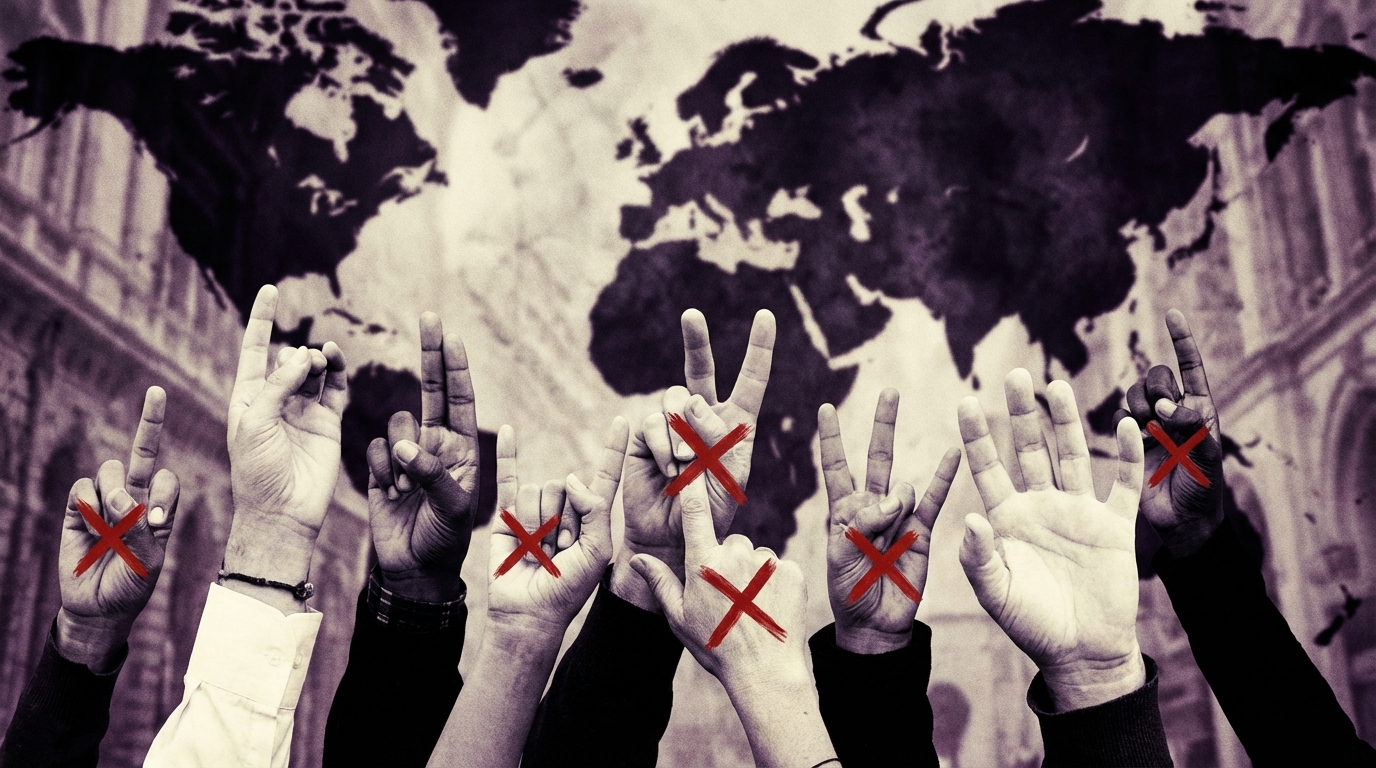

“Hand gestures are universal, so if words fail, your hands will still get the message across.”
That sounds reasonable, but it is false. Hand gestures are not universal. A gesture that feels polite or friendly at home can be rude, childish, or even offensive somewhere else. If you travel and rely on your hands the way you do with friends at home, you will confuse people at best and insult them at worst.
I might be wrong, but I think this is one of the most underestimated parts of travel. People study visa rules and hotel reviews. They skim an article about safety. Then they show up abroad and start waving, pointing, and signaling like they always do. They feel “natural”. The problem is, “natural” is different in every culture.
You do not need to memorize a long catalog of gestures for every country. That is not realistic. What you need is simple: understand which common gestures are risky, where they can cause trouble, and how to replace them with safer habits. Once you do that, your trips feel smoother. Conversations feel smoother. You look respectful without trying to be perfect.
Let me start by saying this directly: your goal is not to master local body language. Your goal is to avoid the biggest mistakes. Think of it like avoiding food your stomach cannot handle. You do not need to try everything. You just need to know what to skip.
So, if you have ever thought “I will just smile and point, people will get it,” you are taking a bad approach. Smiling usually helps. Pointing often does not. Hand gestures carry history, politics, religion, and class signals inside them. You might not care about those things, but the person in front of you might.
“If they know I am a tourist, they will not mind.”
Sometimes that helps. Often, it does not. Offense is still offense, even if the other person assumes you did not mean it. They may forgive you. They might also close off, charge you more, give you worse service, or avoid helping you when you actually need help.
So let’s walk through the most common risky gestures, where they cause issues, and how to handle this like a thoughtful traveler instead of a confused mime.
Why hand gestures become a problem abroad
Hand gestures feel “automatic” because you learned them when you were very young. You did not sit in a class and study them. You watched parents, teachers, friends. You copied. Over time, that formed your internal rulebook:
– Thumb up equals “good”.
– “OK” sign equals “fine”.
– Waving equals “hello” or “goodbye”.
The trouble is, someone in another country built a different rulebook from birth. They watched other people, in a different place, with a different history. So they see your fingers and translate them with their rules, not yours.
“If I did not mean it offensively, it is not offensive.”
Intention matters morally. Perception matters socially. Communication is not what you send. It is what the other person receives. You can be kind inside your head and still come across as rude if your hands contradict your words.
This is why awareness about gestures is practical, not just polite. You want your words and your body to say the same thing.
Thumbs up: “Good job” or insult?
For many travelers from North America, Europe, or Australia, thumbs up feels safe. It fits everywhere, right?
Not quite.
In several regions, the thumb is loaded.
Where thumbs up can be a problem
– Parts of the Middle East
– Parts of South Asia
– Some areas of West Africa
– Among older generations in Greece and surrounding areas
In these places, a strong thumbs up can feel closer to a rude gesture, almost like raising a middle finger. The meaning is not always identical, but the reaction can be similar.
In some cities, younger people who watch foreign movies and social media treat thumbs up more neutrally. That does not mean everyone does. A taxi driver in his 60s may react differently than a 20-year-old barista.
“Nobody reacted badly when I used thumbs up in that country, so it must be fine.”
That is not solid reasoning. People swallow offense all the time rather than argue with a visitor. Silence does not mean approval. It often means tolerance.
Safer alternatives to thumbs up
Use your words:
– Say “thank you” in the local language.
– Nod your head slightly and smile.
– Place your hand over your heart with a small bow in more formal cultures.
If you still want some kind of fast sign, use a small open-handed gesture: palm slightly up, fingers relaxed, close to your body. That tends to be neutral in more places.
The “OK” sign: small circle, big trouble
The index finger and thumb forming a circle with the other three fingers raised is widely understood in some places as “OK” or “perfect.” For many travelers, this is second nature.
In other places, it is rough.
Where the OK gesture is risky
– Brazil: often seen as vulgar, with a meaning similar to a strong insult related to the body.
– Parts of Mediterranean Europe: can take on a sexual meaning.
– Some regions in Latin America: treated as rude or mocking.
– Some countries: tied to far-right or extremist symbolism in recent years.
Gestures are not fixed forever. A sign can pick up political or hateful meanings over time. That makes it more sensitive, not less.
So when you flash the OK circle to a waiter in Brazil, you might not be saying what you think you are saying.
What to do instead of the OK circle
Replace it with:
– A small nod and “yes” or “ok” in the local language.
– A brief smile with eye contact.
– A short “thumbs up” only where you know it is socially safe.
If you are not sure, use words. Spoken language is less likely to be misread than a fast flash of fingers.
The “V” sign: peace or insult?
The two-finger “V” sign looks simple. Index and middle finger raised. The meaning shifts based on hand orientation and country.
Key differences in meaning
– In many countries, “V” with the palm outward means “peace” or “victory”.
– In the UK, Ireland, Australia, and New Zealand, “V” with the palm facing inward can be very rude, close to giving someone the middle finger.
If you just come from a “peace sign selfie” culture, it feels harmless to throw V signs in photos. Face the palm the wrong way in the wrong bar, and it feels different.
“Nobody cares about that anymore. People are used to tourists.”
Some people do care, especially older generations or people in more traditional settings. Cultural memory does not vanish just because social media exists.
How to stay on the safe side
– For photos, if you use the V sign, turn your palm outward.
– Around strangers, skip the V sign altogether and just smile.
– In pubs or local gatherings in the UK or Australia, avoid using the inward V altogether.
It might feel exaggerated, but it is easier than starting a trip with an argument you did not intend to start.
Pointing: more loaded than you think
Pointing feels practical: you want that item, you need that street, you are talking about that person. One finger solves it.
In many cultures, pointing straight at a person with your index finger is rude, childish, or even aggressive.
Where pointing is sensitive
– Across much of Asia, pointing at a person can feel disrespectful.
– In parts of Africa and Latin America, pointing at someone can carry a sense of blame or accusation.
– Pointing at religious items, shrines, or sacred spaces can feel improper anywhere.
Even pointing at inanimate objects can create tension when done with fast, sharp movements close to someone’s face.
Better ways to indicate objects or directions
Instead of pointing with the index finger:
– Gesture with your whole hand: palm up, fingers together, longer movement.
– Use a small nod in the direction you mean, combined with a word like “there?”
– If you have a map or phone, show the map itself rather than pointing at the person or into their personal space.
If you need to refer to someone nearby:
– Use your eyes and a gentle tilt of your head.
– If speaking to staff, say “the gentleman over there” or “the woman with the blue shirt” instead of pointing.
This feels slower at first, but within a few days your body adjusts.
Beckoning: calling someone with your palm
In some countries, curling a finger toward yourself with the palm upward is how you call a child, a friend, or a dog. Many people do not see a problem.
In other places, that same gesture is disrespectful for humans.
Where beckoning is offensive
– Much of East Asia, especially the Philippines and parts of Japan: calling a person with one finger is rude; it is strongly associated with calling animals.
– Some parts of Southeast Asia: similar association.
– In some cultures, crooked-finger beckoning can feel like an order, not a polite request.
“I only used that gesture for waiters, so it is fine.”
Waiters are not props. If a gesture is considered rude among locals, using it toward service staff does not become acceptable. It often feels worse, because it adds a class element.
Polite ways to call someone
– Raise your arm slightly, palm facing down, and gently wave your fingers or hand toward your body (where local customs allow).
– Make eye contact and give a small nod.
– Use words: “Excuse me” in the local language.
If you need constant help, walk to the staff instead of summoning them with your hands. It signals respect and gives you fewer chances to miscommunicate.
Crossed fingers and local beliefs
Crossing your index and middle finger often signals “good luck” or “I am hoping for this” in many Western countries. Sometimes it is used behind the back to cancel a promise jokingly.
The problem is, not everyone shares that code.
In some regions, crossed fingers do not communicate anything at all. That is less dangerous, more just confusing. In certain places, crossed fingers can be tied to religious symbols or be read as childish or strange in formal settings.
You might not get into deep trouble with this gesture, but there is rarely a situation where you must rely on it. Saying “I hope so” or “Good luck” verbally is clearer and less likely to raise questions.
Hands and religious sensitivities
Religion shapes body language in powerful, subtle ways. You may not see the connection, because you did not grow up with that system.
Left hand vs right hand
In many Muslim-majority countries, and in parts of South Asia and Africa, the left hand is associated with actions considered unclean. This belief can affect:
– How you pass objects.
– How you eat.
– How you give or receive money.
– How you greet people.
Using your left hand for these actions is not always “forbidden,” but it can feel careless or unclean, especially around older or more conservative people.
Safer pattern:
– Offer items (money, business cards, small gifts) with your right hand.
– When possible, eat with your right hand in contexts where locals do.
– If you are left-handed, people may understand once they notice, but starting with the right hand when you can still shows awareness.
Gestures near religious spaces and symbols
– Do not point at religious figures, paintings, or objects with a sharp finger.
– Do not pose with joking hand gestures in front of sacred buildings.
– Be calm with your hands during ceremonies or rituals; keep gestures small and close to your body.
“I am just having fun for my social media. Nobody will see it.”
People do see. Often the person whose faith is tied to that space is also the person serving you, guiding you, or granting permission for photos. You may never hear their reaction, but you still create tension.
Handshake habits and alternatives
Handshakes are not exactly “gestures,” but they are hand-based greetings, and they carry cultural weight.
Gender and contact
In many countries, handshakes between any adults are normal. In others, especially more conservative or religious settings:
– Physical contact between unrelated men and women is limited.
– A woman might not want to shake a man’s hand.
– A man might avoid initiating a handshake with a woman out of respect.
If someone does not take your hand, do not force it, do not look offended, and do not joke about it. Just withdraw your hand gently and nod.
A flexible habit is helpful:
– Wait a split second to see if the other person offers their hand.
– If they do, respond.
– If they do not, give a small bow of the head and a smile.
Grip strength and gesture size
In some cultures, a strong, firm handshake is seen as confident. In others, that same grip feels aggressive or overbearing.
Aim for:
– Short handshake.
– Medium pressure.
– Little to no pumping motion.
Combine it with soft eye contact, not a hard stare.
Country examples and common gesture pitfalls
To make this concrete, here is a table with some regions and the gestures that commonly create problems for visitors. This is not perfect or complete, but it covers frequent mistakes.
| Region / Country | Risky gesture | Why it is a problem | Safer habit |
|---|---|---|---|
| Brazil | OK sign (circle with thumb and index) | Seen as vulgar or insulting | Use words like “bom” or thumbs up with care |
| Middle East (various) | Thumbs up | Can carry a rude meaning in older usage | Smile, nod, say “shukran” or local thank you |
| UK, Ireland, Australia, New Zealand | V sign with palm inward | Insult close to middle finger | If using V, keep palm outward or skip it |
| Philippines, parts of East/Southeast Asia | Beckoning with one finger, palm up | Reserved for calling animals, rude for people | Call with palm down, or use “excuse me” |
| South Asia, parts of Africa | Passing items with left hand | Left hand seen as less clean | Use right hand when paying or giving |
| Japan | Big, sweeping gestures; pointing at people | Seen as overbearing or impolite | Keep gestures small; gesture with full hand |
| Greece (traditional contexts) | Open palm pushed toward someone (moutza) | Strong insult linked to shame | Keep palms angled down, not flat at face level |
| Thailand | Pointing at people or monks; touching heads | Disrespectful to status and spiritual beliefs | Use whole-hand gestures and keep distance |
Gesture traps: selfies, photos, and group shots
A lot of gesture trouble today does not show up in meetings. It shows up in photos.
When the camera appears, people start:
– Throwing peace signs.
– Making horn signs with the index and little finger.
– Copying signs they saw in music videos or on social media.
Some of these have political, religious, or gang-related meanings locally.
You might think it is “just a pose.” The local person behind the camera might think something very different.
Safer photo habits abroad
– Keep your hands relaxed by your side or gently folded.
– If you really want a gesture, use a small wave with palm inward, not out toward people.
– Avoid complex hand shapes that you do not understand.
If locals are doing a specific sign among themselves and invite you to copy it, that is different. They are guiding you. Even then, watch context. What is normal in a casual street photo might not be fine in front of a religious or political building.
When in doubt, shrink your gestures
A helpful mental rule:
If you do not understand the local gesture system, reduce the volume of your hands.
By “volume” I mean:
– Size: make movements smaller.
– Speed: move more slowly.
– Frequency: gesture less often.
You do not have to freeze. Just let your hands rest more often than at home. A calm, steady presence travels better than big, sharp movements.
“If I gesture less, people will think I am cold.”
Not always. In many cultures, emotional control is valued more than expressiveness. Letting your words carry more of the message can read as mature and respectful.
How to learn local etiquette without feeling awkward
You do not need to enroll in a course to avoid major hand mistakes. You just need a short, focused way of learning.
Use this simple 4-step approach
1. Before you travel, read 1 or 2 short guides on local etiquette, not just tourist attractions.
2. When you arrive, watch how locals gesture in public places: transport, markets, cafes.
3. Follow the most discreet person in the group, not the loudest. Calm people give better clues.
4. If you make a mistake and someone corrects you, thank them and adjust quickly.
You asked me to tell you when you are taking a bad approach, so let me do that here: relying only on what other tourists are doing is a weak strategy. Tourists copy each other. One wrong move gets repeated hundreds of times. Look at locals, not other visitors.
What to do if you realize you offended someone
You will get something wrong at some point. Everyone does.
What you do next matters more than the original mistake.
Practical steps
– Stop the gesture immediately.
– Relax your posture; do not loom or lean in aggressively.
– Say “Sorry” or the local equivalent. Even a simple “sorry” with a small bow goes a long way.
– Give them space to respond or wave it off.
Do not:
– Laugh it off as if their feeling does not matter.
– Say “Relax, in my country it means X.” That centers you instead of them.
– Repeat the gesture to “explain.”
Sometimes the other person will still be upset. That is their right. Your job is to show that you care enough to change.
Building a “safe gesture” toolkit
To make this practical, you can build a small set of default gestures that tend to be neutral in most places. Then rely on those until you learn local variations.
| Situation | Risky habit | Safer alternative |
|---|---|---|
| Saying hello | Big wave close to someone’s face | Small nod, short wave at chest level, soft smile |
| Thanking someone | OK sign, thumbs up in unknown region | Verbal thanks + slight head bow or hand on chest |
| Calling waiter or staff | Snapping fingers, one-finger beckon, loud whistle | Eye contact, raised hand, “excuse me” |
| Showing direction | Stabbing finger toward person or object | Open palm gesture, gentle nod toward direction |
| Posing for photos | Complex hand signs, political symbols, rude signs | Neutral hands, small wave, or simple peace sign where you know it is accepted |
| Giving money, card, or small gift | Left hand only in cultures sensitive to that | Right hand, or right hand supported by left under the wrist |
How culture, age, and context change meanings
One more nuance that gets lost in simple lists: not everyone in a country shares the same view of a gesture.
Meaning shifts along three main lines:
– Age
– Region (urban vs rural, city vs village)
– Context (street, workplace, religious site, home)
A thumb up between two teenagers in a big city might pass without a thought. The same gesture toward an older shopkeeper in a smaller town can feel disrespectful.
This is why I would not treat any travel tip as absolute truth for every person you meet. Use it as a guardrail, not a rigid rule.
When something feels off in the moment, trust that feeling. Slow down. Watch them. Are they leaning back? Frowning? Glancing at your hands? Those are small signs that your gesture did not land well.
You wanted a realistic thought process, so here is mine: I do not think you can be perfect with this. I do think you can avoid the big mistakes and then correct course as you gain experience.
Design a personal travel rulebook for your hands
To keep this from fading the moment you close this page, create three personal rules for your next trip. Something like:
1. “I will not use the OK hand sign outside my home country.”
2. “I will avoid pointing at people; I will point with a full hand or a nod.”
3. “I will call staff with words, not with finger gestures.”
You can adjust these as you travel more, but that initial rule set removes most of the common problems straight away.
If you are planning a specific trip, say to Japan, Brazil, or the Gulf states, you might need a short add-on rule, such as:
– “In X country, I will be careful with my left hand.”
– “In Y country, I will not use the V sign at all.”
This kind of simple, written commitment works better than vague ideas like “I will try to be respectful.”
Why this matters more than people think
Every time you travel, you leave a small trace in someone’s memory. It might be the taxi driver who picked you up at the airport. The server who took your order on a busy night. The family who saw you at a temple or a market.
They will not remember your passport number or your flight. They might remember how you carried yourself.
You do not control how they see you entirely. Culture, history, and personal stories all shape their view. Yet you do control your hands. You decide whether to throw out random signs or move with quiet care.
Hand gestures are not universal. They never were. Treating them as if they are is what causes trouble.
Treating them as local, fragile, and worth learning is what makes you stand out as a thoughtful guest.
