
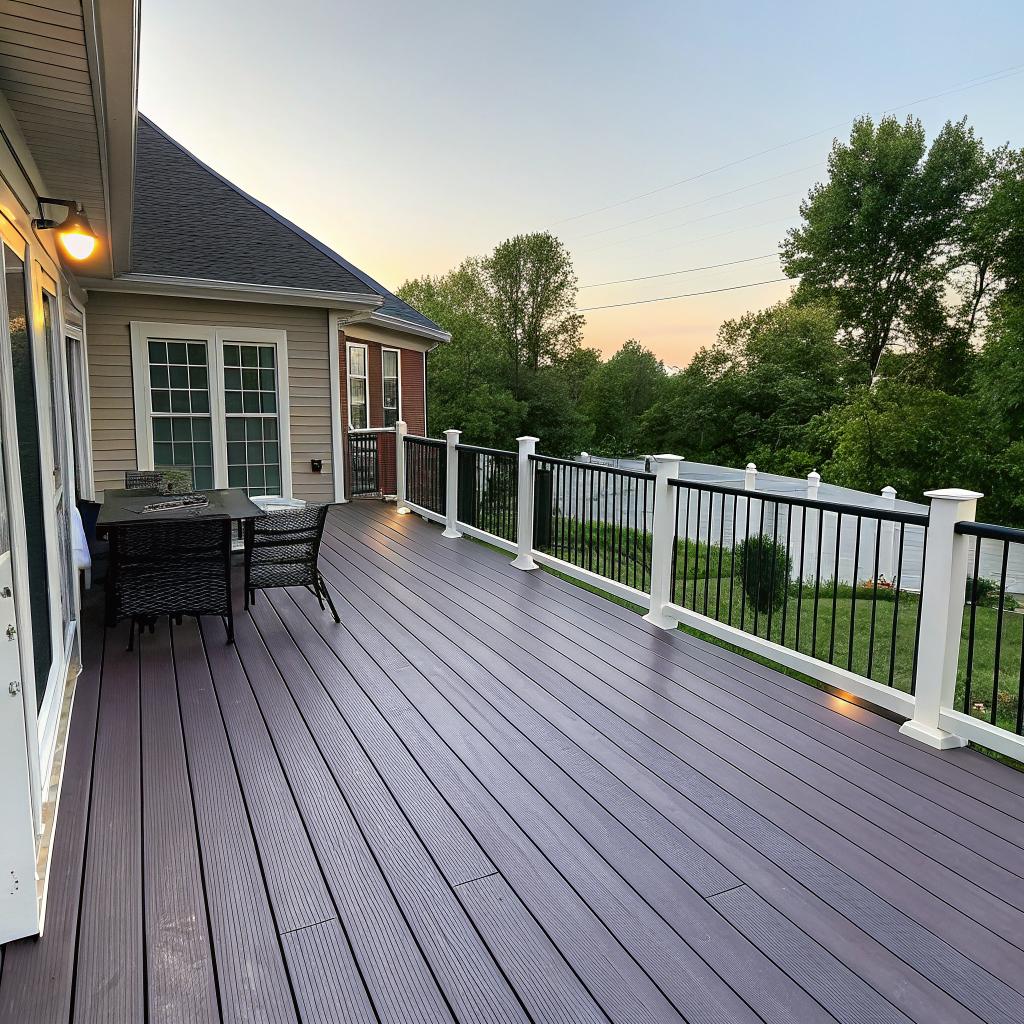

“Any deck builder can give you a great deck. It is all about price, not planning.”
That line sounds neat, but it is wrong. A dream deck in Lexington is not about grabbing the lowest bid and hoping. It comes from careful planning, clear goals, and a builder who listens more than they sell. If you pick the right team, like the ones you find when you actually research Deck or Bathroom Remodeling Lexington KY, you can get a deck that fits your yard, your budget, and how you really live, not just how a brochure looks.
I want to walk through what that actually means in plain terms. No big promises. Just what tends to separate a deck you love from one you quietly regret three summers from now.
You might already feel a bit stuck. There are so many photos online, so many materials, and so many opinions. One person says composite is the only smart option. The next tells you pressure treated lumber is fine and anything else is a waste. Somewhere in that noise is the version that fits your house.
So let us slow it down a little and treat this like a real project, not a rushed purchase. Imagine you are sitting across from a builder at your kitchen table. What do you need to know, and what should they be asking you, before anyone starts digging a footing in your yard?
What “dream deck” really means in Lexington
Dream deck is a vague phrase. For one homeowner it might be a big party space. For another it is a small, quiet platform for two chairs and a grill. If you do not define it, your builder will guess, and their guess might be wrong.
In Lexington, a good deck plan usually has to work around a few local facts:
– Humid summers, with strong sun some days and heavy rain others
– Winter freeze and thaw that can move anything not built well
– Lots of clay soil in many neighborhoods
– Local building codes and HOA rules that can feel fussy
Before you think about rail styles or color, try to answer two simple questions:
1. Who is this deck really for?
2. What do you do on a perfect evening outside?
If your real answer is “I like to sit with one friend and drink iced tea and read,” you probably do not need a huge multi-level build. If your answer is “We host 15 people for cookouts a lot,” then a narrow deck with no built-in seating might feel cramped on day one.
This sounds obvious, but I have seen several projects where someone paid for a big wraparound deck and then mostly used one tiny corner. It looked nice from the yard but did not fit their actual life.
“A deck that matches your daily habits is worth more than a bigger deck that just looks good in photos.”
How Lexington weather shapes deck decisions
Weather in central Kentucky is not extreme like some places, but it is not easy on wood either. Hot sun, heavy rain, and moisture that hangs in the air for days can stress almost any material.
So when you choose materials, you are really choosing how much time you want to spend maintaining the deck later.
Here is a simple comparison that fits Lexington pretty well:
| Material | Upfront Cost | Maintenance | Expected Lifespan* | Comments for Lexington |
|---|---|---|---|---|
| Pressure treated wood | Low | Stain or seal every 1 to 3 years | 10 to 15 years | Budget friendly, but needs regular care in humid summers |
| Cedar | Medium | Stain every 2 to 3 years | 15 to 20 years | Looks warm, handles moisture better, still needs attention |
| Composite decking | Higher | Wash a few times a year | 20 to 30 years | Great for busy owners, resists rot and insects well |
| PVC decking | Highest | Wash as needed | 25+ years | Handles moisture very well, color can fade less, cooler options needed in full sun |
*Real lifespan depends on installation quality, shade, drainage, and maintenance.
The secret most strong deck builders in Lexington will admit if you press them is that structure matters more than surface. People argue about composite vs wood, but if the footings are shallow or the ledger is not flashed, material choice will not save you.
So do not get stuck only on surface boards. We will come back to structure in a bit.
What smart deck builders in Lexington do before giving a price
A builder who walks your yard for three minutes, glances at the house, and throws out a number is not doing you a favor. They are guessing.
The deck builders who tend to build decks that last do a few things that might look slow at first.
They ask a lot of questions
If a builder sits down and starts asking:
– How many people usually sit out here?
– Do you grill often, or is this more of a quiet space?
– Are there pets or small children that will use the deck?
– Do you want shade, or do you like full sun?
– How much time do you want to spend on maintenance each year?
That is a good sign. It shows they are trying to build for you, not for some default idea in their head.
I remember one homeowner who thought they wanted a big open deck. After talking it through, they realized they really needed part of it covered, because the back of their house bakes in the late afternoon. That change did not just help comfort. It protected furniture and reduced how often they had to re-stain.
They care about how water moves
Water is not dramatic most days. It just sits there after rain, quietly, but over time it swells boards, rusts hardware, and invites rot.
A careful builder in Lexington will check:
– Where does water run off your roof now?
– Does the yard slope toward or away from the house?
– Is there any standing water after storms near where you want the deck?
They might suggest small grading changes, extra downspout extensions, or adding a drainage path under the deck. These steps are not flashy, and you may feel a little annoyed to pay for things you rarely see. Still, they are part of what keeps the deck from getting spongy in five years.
They talk about structure in plain words
You should hear terms like:
– Footing depth
– Concrete piers
– Joist size and spacing
– Beam spans
– Ledger attachment and flashing
If a builder cannot explain these in simple language, that is a red flag. You do not need an engineering lesson, but you do deserve a clear sense of how the deck will hold weight and resist movement.
A very simple test: ask, “How do you attach the deck to the house?” If they do not mention code-approved fasteners and proper flashing over the ledger, I would be cautious.
“Fancy railing will not matter if the structure underneath is weak or starts to move with each step.”
Local codes, permits, and HOA rules
This part is not fun to talk about, but skipping it can cost you real money and stress.
In Lexington and the surrounding areas, most decks that are above a certain height, attached to the house, or built with a roof need permits. There are setback rules about how close you can build to property lines. Some neighborhoods also have HOA rules about color, railing style, and height.
A solid builder will usually handle the permit process, or at least guide you through it. If someone tells you that you can just “skip all that” and no one checks, they are not doing you a favor. Maybe you get away with it for a while, then when you try to sell the house, the unpermitted deck becomes a problem.
You can simply ask:
– Do you handle permits?
– Are you familiar with Lexington codes for decks?
– Have you worked with my HOA before?
Simple questions like these tell you a lot. If they hesitate or brush it off, trust your gut.
Size, shape, and height: finding what fits your yard
People often start by saying, “I want a big deck.” Big can be nice, but bigger is not always better.
Think about:
– How far do you want to walk from the door to the table or grill?
– Will extra depth push you into a slope or tree that adds cost?
– Does a tall deck need long stairs that eat into yard space?
Sometimes a slightly smaller footprint with a better layout feels more comfortable.
Common deck layouts in Lexington yards
Here are some rough types that builders see a lot:
| Deck Type | Where it fits best | Pros | Cons |
|---|---|---|---|
| Simple rectangular deck | Flat or gently sloped yards | Cost effective, less framing, easy furniture layout | Can feel plain if very large |
| Raised deck with stairs | Homes with walk-out basements | Connects main floor to yard, view over fence lines | More rail, more stairs, more upkeep |
| Two-level deck | Sloped yards or homes with mixed use | Separate dining and lounge zones, breaks up bulk | More framing and rail, higher cost |
| Deck with landing patio | Where you want both hardscape and decking | Blends deck feel with ground-level space | Needs planning for drainage and steps |
Sometimes I like to grab a tape measure and mark a rough deck outline on the lawn with a hose or some string. Then actually stand where the table might go and pretend to walk around. It feels a little silly, but it reveals things floor plans miss, like how close a grill would be to a door or window.
Comfort details people forget to plan
When people imagine a dream deck, they think about looks first. Color, rail style, maybe built-in lights. Those matter, but comfort is often in the small choices that no one posts on social media.
Here are a few areas where the better builders in Lexington spend extra time.
Shade and sun
The back of your house might be full sun in the afternoon. That can make the deck almost unusable on hot days, especially with darker boards.
Options range from simple to more involved:
– Umbrellas or a freestanding shade sail
– A pergola with slats or fabric
– A partial roof or covered section of the deck
This is where it helps to think about how long you plan to stay in the home. If you see yourself there for a long time, building some shade into the deck plan can be worth the extra cost. If you might move in a few years, a simpler shade solution might be enough.
Privacy
In many Lexington neighborhoods, lots are not huge. Your neighbors are close. That does not mean you need to block them out, but a little privacy can help you relax.
You can add:
– A privacy screen on one side of the deck
– Lattice with climbing plants
– Taller rail sections near seating areas
– Smart placement of furniture away from exposed corners
It is easy to skip privacy in the design phase because you are focused on square footage and price. Then, once you use the deck, you realize you feel like you are sitting on a stage.
Lighting and evening use
Most people think about the deck as a daytime space, then end up using it more at dusk. Path and step lighting protect against trips. Soft lighting near seating makes the area feel calm instead of harsh.
Your builder can add:
– Riser lights on steps
– Post cap lights
– Under-rail LED strips
– A switched main light from the back door
None of these have to be fancy. Even a basic setup can change the feel of the space. Ask the builder about access to power near the deck, or simple low-voltage options.
Budget truth: where to save and where to spend
Many homeowners go into a deck project with a number in mind, but no clear sense of where that number comes from. Then, when they get a quote, they only see the total and not what drives it.
Here is a simple way to think about tradeoffs.
Good places to spend more
– Strong structure: Deeper footings, proper hardware, correct beam sizes
– Ledger and flashing: Keeps water out of your house wall
– Railing quality: Safety and daily touch feel
– Stairs: Solid, comfortable step height, good rail grip
These are the parts that affect safety and lifespan. Once the deck is built, they are hard or expensive to fix.
Places where you can scale back
– Fancy inlays or diagonal board patterns
– Very expensive rail systems with glass panels
– Complex deck shapes with many angles
– Built-in benches if portable furniture works
Sometimes a simple layout with good structure is better than a detailed design that forces the builder to cut corners in hidden areas to hit a number.
You can ask: “If we needed to trim this cost, what would you change, and what would you keep as is?” A thoughtful builder will explain tradeoffs instead of just chopping the quote without comment.
How to talk with deck builders without feeling lost
Many people feel that contractors speak a different language. That can make you feel like you should just nod and go along. I think it is better if you treat early talks as a shared planning session.
Here are a few questions that can guide the talk:
– Can you show me a past project that is similar to what I want?
– How do you handle changes if I adjust my idea after we start?
– What does your typical build schedule look like?
– Who will be on site most days?
– How do you handle rain delays in Lexington weather?
Notice none of these require technical knowledge. They just reveal how the builder thinks and works.
“You are not buying only lumber and screws. You are buying the builder’s habits, judgment, and follow-through.”
If you hear something that does not make sense, say so. A good builder will slow down and explain, not make you feel odd for asking.
Timeline and seasonal timing in Lexington
Deck building in this area often peaks in late spring and early summer. That can mean longer wait lists and sometimes higher prices.
There are a few timing points to keep in mind:
– Spring: Ground is soft, schedules are busier, nice for enjoying the deck the same year
– Summer: Hot work conditions, thunderstorms can interrupt, still fine for builds
– Fall: Cooler weather, less rush, you may not use the deck fully until next year
– Winter: Some builders still work on mild days, but concrete and finishes have limits
You do not need to overthink timing, but if you know you want the deck ready for a specific event, tell the builder upfront. Just remember that weather is not under their control. A stretch of rain can push things back a few days.
Common mistakes Lexington homeowners regret
I do not say this to scare you, just to help you avoid the ones that keep coming up.
Going only by the lowest price
Sometimes the lowest quote is fine. Sometimes it means cheaper lumber, weaker hardware, or rushed work. If one quote is far below others, ask yourself why.
Try to compare:
– Scope of work: Are they including permits, cleanup, haul away of old deck?
– Materials: Are they using the same brands, board thickness, and hardware?
– Warranty: Do they stand behind both materials and labor?
If someone cannot explain a much lower price in a clear way, be cautious.
Ignoring future maintenance
A new deck looks great in year one, almost no matter what. The test is year five.
Think about:
– Do you enjoy DIY projects like cleaning and staining?
– Do you have time to do that every couple of years?
– Would you rather pay a bit more now to have less to do later?
This is where composite or PVC can make sense, even with higher upfront cost, especially if your schedule is full or you just do not like maintenance tasks.
Underestimating furniture and grill space
People often measure the deck, not the things that go on it. Then they realize the table barely fits, and walking space is tight.
Measure:
– The table and chairs you plan to use
– Grill depth with the lid open
– Traffic paths from door to stairs and seating
You can sketch a simple layout on paper or with free software. Your builder might help you plan this too.
Working with grade, trees, and tricky yards
Not every Lexington yard is a flat rectangle. Some slope sharply. Others have trees you want to keep. That can make the project feel complex, but it can also give your deck more character.
Sloped yards
On a slope, you might:
– Build a high deck with tall posts and long stairs
– Build a mid-height deck with a lower patio
– Cut into the slope slightly and use retaining walls
Each choice has cost and look differences. Sometimes the answer is a mix, like a mid-level deck that steps down to a smaller landing.
Ask your builder to show you photos of past sloped projects, not just flat ones. That gives you a real sense of how they handle these challenges.
Trees and roots
Trees add shade and charm, but roots and low branches can conflict with footings and framing.
A careful builder will:
– Try to protect main roots while placing footings
– Plan around drip lines where possible
– Explain how close structure can go without harming the tree long term
If you care about a specific tree, say that clearly early in the process. Some roots will still get cut, but a gentle plan is better than random digging.
Safety for kids, pets, and aging in place
Safety often gets folded into code talk, but you can go a step further and think about your actual family.
Questions to consider:
– Are there small children who could slip between balusters if spacing is too wide?
– Do you have pets that might try to squeeze under railings?
– Would you or a family member benefit from wider stairs and handrails later on?
You can ask your builder for:
– Tight baluster spacing within code limits
– Gates at the top of stairs
– Non-slip treads on steps
– A landing mid-stair for easier use
These items are easier to include in the original plan than to add later.
What a “dream deck” feels like three years later
The question I like to ask people is not “How will this look the week it is finished?” but “How will this feel in three years on a random Tuesday night?”
A good deck in Lexington, built by a careful local builder, should:
– Feel solid underfoot, with no bounce
– Drain water quickly and dry reasonably fast
– Have railings that feel sturdy when you lean on them
– Still match your current lifestyle fairly well
If you walk out after a storm and water sits in big puddles, or you feel wobble in the stairs, that is a sign that something in the planning or building step went off.
So in a way, the real secret of many local deck builders is not a trick or special tool. It is a quiet focus on things that do not show up in the pretty photos: drainage, structure, careful layout, and clear talk before anyone picks up a saw.
Common questions about working with deck builders in Lexington
How long does a typical deck build take?
For a normal size deck, maybe 200 to 400 square feet, many builders in Lexington will spend about one to two weeks on site, once permits and materials are ready. Larger or more complex projects with roofs, multiple levels, or tricky terrain can take longer. Weather can add a few days here and there.
Is composite worth the higher price here?
For many homeowners, yes, especially if you do not enjoy maintenance. The humidity and sun in Lexington mean wood needs regular cleaning and staining. Composite costs more upfront but usually needs only washing. If you plan to stay put for several years, the balance often makes sense.
Do I really need a permit for a deck?
In most cases where the deck is attached to the house or above a certain height, yes. The exact rules vary, but skipping permits can cause trouble at inspection time or when selling your home. A reliable builder will not push you to skip them.
What should I prepare before meeting a deck builder?
Bring a rough idea of:
– Your budget range
– How many people you want to seat
– Any photos of styles you like
– Where the sun hits your yard at the time of day you plan to use the deck
You do not need a full plan. A good builder will help shape the details with you.
How do I know if my old deck can be reused or should be replaced?
Look for:
– Soft or rotted posts at the base
– Rusted hardware and brackets
– Loose railings or bouncy sections
– Boards that are cupping or splitting badly
A builder can inspect the framing and tell you if parts can stay or if it is safer to start fresh. Many times, old beams and posts do not meet current code, even if they look “good enough.”
If you picture yourself three summers from now, stepping out your back door in Lexington onto a deck that still feels solid, easy to use, and well matched to your routine, what small choice today would move you closer to that?
