
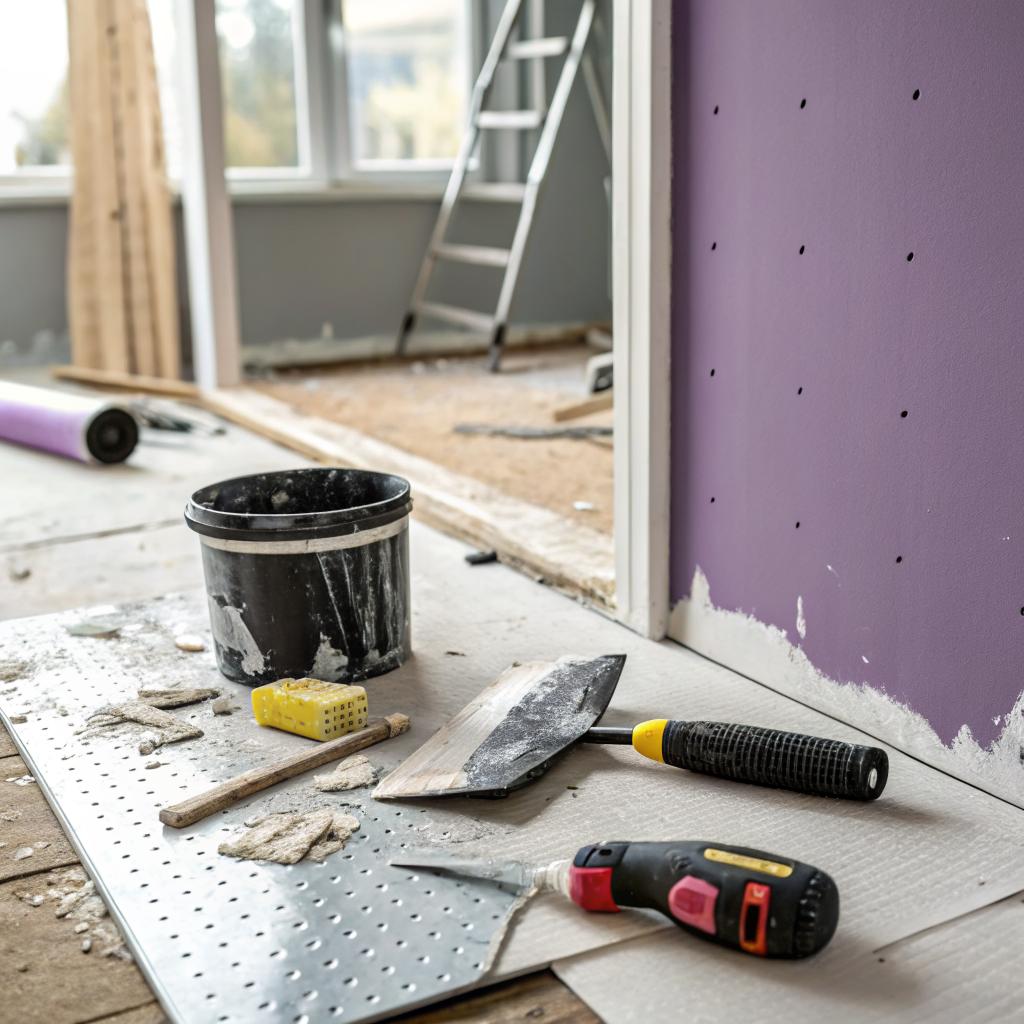

“If you just slap on some mud and sand it a bit, the paint will hide everything.”
That idea is false. Paint does not hide bad drywall repair, it usually makes flaws stand out more. If you want a patch that disappears on a sunny Denver afternoon, you have to treat drywall like a finished surface, not an afterthought. The short answer is this: a flawless finish comes from patient prep, thin coats, careful sanding, and matching the existing texture, not from heavy mud or thick paint. If you are not ready to do that, it is often smarter to call a local pro for Denver drywall repair and focus your time on something else.
I know that might sound a bit harsh, but I have seen so many walls where someone thought they did a great job until that first coat of paint dried. The seams flash, the patch sits slightly proud, or the texture looks just a little off. You do not always see it from straight on, but the moment light comes in at an angle, every shortcut shows up like a shadow. That is usually when people say something like, “The paint is cheap” or “The color is wrong,” when the real problem is the drywall underneath.
If you are still reading, then you probably want to actually get this right, not just cover it up and hope. That is good, because drywall is one of those trades where small habits matter more than fancy tools. A lot of what pros do is simple. It is just done in the right order, with the right timing, and with more patience than most of us have after work on a weekday.
I will walk through how people in Denver approach drywall repairs, what changes with our dry climate, and how you can get close to a pro level finish in your own home. I will also be honest about where DIY works well and where it starts to go sideways.
Understanding what “flawless” really means on drywall
Everyone says they want a perfect wall. The tricky part is that “perfect” is not the same for every room or every person. Before you grab a knife and joint compound, it helps to define the standard you are aiming for.
In drywall terms, a flawless finish usually means:
– You cannot see the repair from normal viewing distance.
– You cannot feel a ridge or hump when you slide your hand across the area.
– The texture and sheen match the rest of the wall or ceiling.
– The repair does not “flash” through the paint under different lighting.
This last one surprises a lot of homeowners. A patch can feel flat to the touch but still show up visually because of how light hits slightly different surfaces.
Flawless drywall is less about the spot you fixed and more about how well that spot blends into the whole wall.
This is where Denver homes add one more challenge. We have strong sunlight and dry air. Both make imperfections stand out more. Afternoon sun can rake across a wall and turn tiny dips into big shadows. Dry air can cause mud to shrink faster and crack if you rush thick coats.
So, if you are in Denver and thinking, “Why do my drywall repairs always look worse than the videos online?”, there is a good chance your house lighting is simply less forgiving than the well controlled setups you see in tutorials.
Why drywall repairs fail in Denver homes
Most bad drywall repairs come from a few repeated mistakes. Some of these are obvious, but others are easy to miss when you are tired and just want the job done.
Here are some of the main reasons repairs fall short:
1. Heavy coats instead of thin ones
It feels faster to load up the knife and fill that hole in one shot. Thick mud, thick texture, thick primer. The problem is that thick coats shrink more as they dry and they are harder to sand flat. They also crack more easily in dry air.
In Denver’s low humidity, this can be worse. The surface dries fast while the mud inside is still soft. You sand, think it is done, and the next day you see hairline cracks or a dip where the mud pulled in.
It is usually better to fill deep holes in stages. First a base fill, then one or two thinner coats that extend wider each time.
2. No feathering of edges
A lot of people stop the mud right at the edge of the patch. They get a sharp transition from old wall to new mud. That edge is almost impossible to hide.
Pros feather the mud out past the damaged area. On a small dent, this might only be a few inches. On a large patch, the feather can extend a couple of feet. The goal is to spread the transition over a wider area so the eye does not catch a sharp ridge.
3. Sanding only in the middle
If you focus sanding in the center of the patch and ignore the edges, you create a dish shape. The patch is low in the middle and high around the edge. Under low light it might look fine. Under strong daylight it looks like a faint crater.
You want the opposite. The edges should gently fade into the wall, with no noticeable step. This usually means checking with your hand as much as with your eyes.
4. Texture that does not match
Some repairs are perfectly flat but still obvious, because the texture is wrong. Denver homes are full of different textures: knockdown, orange peel, light skip trowel, heavy skip trowel, smooth, and some strange mixes from older remodels.
A smooth patch on an orange peel wall will always look wrong. A heavy knockdown spot on a light orange peel wall is just as bad.
This part is more art than science. We will get into ways you can practice texture without ruining your walls.
5. Skipping primer
Many people think they can go straight from patch to paint. The patched area usually absorbs paint differently from the rest of the wall. You end up with a dull or shiny spot, even if the color is the same.
Primer helps even out absorption and gives your topcoat a uniform base. On fresh drywall mud, primer is not optional if you want a true blend.
Planning your repair before you open the mud
It is tempting to jump right into scraping and taping, but a few minutes of planning actually saves time.
Ask yourself:
– How big is the damage?
– What texture is on the wall or ceiling?
– What lighting hits this area?
– How picky am I about the final look?
If the damage is small and in a low light spot, you might get away with a simpler repair. A tiny nail hole behind a door needs less care than a large crack over a living room window.
If the damage sits on a long wall that gets direct afternoon sun, even a “small” flaw can stand out. In that case, treat the repair as if you are finishing new drywall, not just filling a dent.
You also need to think about what you want to spend time on. Some homeowners in Denver enjoy this kind of work and are willing to do three rounds of mud and sanding. Others reach the second pass and feel sick of it. Be honest with yourself. There is no shame in saying, “This spot is at eye level in my main room. I am going to call someone and watch how they do it so I can handle smaller spots myself next time.”
Tools and materials that actually help (and what is optional)
You do not need every gadget in the store, but a few good tools make drywall repair much easier.
Core tools
- 6 inch and 10 or 12 inch drywall knives
- Joint compound (all purpose or lightweight)
- Drywall sanding sponge or sanding pole
- 120 and 220 grit sandpaper
- Dust mask and safety glasses
- Utility knife
- Drywall tape (paper or mesh, depending on the repair)
- Primer made for drywall
You might also want a small hawk or mud pan. Some people are fine just dipping the knife into the bucket, but a pan tends to keep things cleaner and encourages thinner coats.
What is optional but helpful
- LED work light to catch defects
- Shop vacuum with a drywall bag
- Spray texture in a can (for orange peel or knockdown repairs)
Drywall compound is where many people overthink things. The standard premixed all purpose mud works fine for most repairs. Lightweight compounds are easier to sand but can be more fragile on corners or high traffic areas. For a typical Denver living room wall, either one works if applied correctly.
Step by step: from damaged drywall to smooth surface
The basic process is the same whether you are in Denver or anywhere else. Prep, fill, tape if needed, build up, sand, check, and prime.
1. Prep the damage
Cut away loose paper and crumbly mud with a utility knife. Do not leave torn paper flapping around under your new compound. That paper will bubble once it gets wet.
If you have a small hole, like from a screw or small anchor, clean the edges and slightly recess the area with your knife. It is easier to fill a small depression than to flatten a bump.
For larger holes where the drywall is broken through, you might need a repair patch or a cut in piece of drywall screwed to a backing strip. At that point, you are closer to small-scale installation than a simple patch.
2. Decide if you need tape
Cracks and seams usually need tape, or they come back. The tape bridges movement and keeps the joint from opening again.
– For straight cracks: widen the crack slightly with your knife, remove loose material, and plan to embed tape.
– For small nail pops: remove the nail or screw, set a new screw next to the old spot, then fill. Tape is optional on tiny areas, but it can help if there was movement.
Mesh tape is easier to apply for beginners because it sticks by itself, though it can be a bit more prone to cracks if not covered well. Paper tape is stronger if installed correctly but can wrinkle if you are not careful.
3. First coat: embed and fill
Apply a thin bed of mud over the crack or joint, lay your tape into the mud, then gently press it down with the knife. The goal is to remove air bubbles and extra mud, not to squeeze it completely dry.
Overfill slightly, then smooth the surface without digging into the tape. On small holes or dents, you can skip tape and just apply a base fill. Keep this coat reasonably thin. Think of it as shaping, not finishing.
Let it dry fully. In Denver, this can happen faster than you expect. Still, do not rush it. If it feels cold or dark in the center, it is still damp.
4. Second coat: widen and flatten
With a wider knife, apply another coat that extends past the edges of the first one. You are not trying to cover the entire wall. You are just feathering the transition out further.
Use firm but not aggressive pressure. Try a few knife angles until you feel where the blade glides and does not chatter. The middle can be slightly raised. You will sand it later. Focus on the edges. Those edges should almost disappear into the wall.
If you are repairing a butt joint or a larger patch, this is where patience really matters. People often underestimate how wide a finished patch is. A 6 inch knife on a 12 inch wide patch usually leaves visible ridges. Do not be afraid to use a 10 or 12 inch knife and extend the mud beyond the obvious damage.
5. Light sanding and third coat if needed
After the second coat dries, sand lightly with 120 or 150 grit. You are not trying to re-shape the whole area, just knock off ridges and small lines.
Move your hand over the area with your eyes closed. You will feel problems you cannot see yet. If there are dips or notable ridges, apply a third very thin coat. This one should be wide and subtle. Think of it like blending a photo edge.
Let it dry again, then finish sanding with 150 to 220 grit. Do not polish it like a car panel. Just get it flat, smooth, and even.
Dealing with Denver textures: orange peel, knockdown, and smooth walls
Once the flat surface is good, you still have to match the texture. This is where many DIY repairs in Denver fail. The patch might be structurally fine but visually off because the texture is wrong.
Here is a basic table that can help you think about texture choices:
| Existing texture | Common in Denver? | Repair approach |
|---|---|---|
| Orange peel | Very common | Spray texture or roller techniques, then knock back lightly if needed |
| Knockdown | Common on ceilings and some walls | Spray or apply heavy texture, wait briefly, then knock down peaks with knife |
| Smooth | Common in newer remodels | Extra care with sanding and wider feathering, no texture added |
| Skip trowel / hand texture | Seen in older or custom homes | Hand work with knife or trowel to mimic pattern |
Practicing texture off the wall
Before you spray or stomp texture on your actual wall, try this:
– Use a scrap of drywall or even a piece of cardboard.
– Prime it lightly.
– Try your texture there first.
You can compare it to the real wall and adjust. Change air pressure on the can, the distance, or how hard you knock it down. I know practice materials feel like a waste, but they are much cheaper than sanding off bad texture above your couch.
Matching orange peel
Orange peel is that light, bumpy pattern that looks almost like the skin of an orange. To match it:
1. Get a can of orange peel texture that allows control of the spray level.
2. Shake very well.
3. Start with a lighter setting and spray from farther back than you think, maybe 18 to 24 inches.
4. Let it set. Do not knock it down unless your existing wall has a very soft version.
If your texture ends up heavier than the old wall, you can gently sand the top of the bumps once it dries. Be careful. Too much sanding and you flatten the pattern.
Matching knockdown
Knockdown starts with heavy texture that is then flattened slightly.
The process is:
1. Spray or apply heavy texture on the repair area.
2. Wait a few minutes until the surface loses its shine but is still soft.
3. Drag a clean drywall knife lightly across the peaks at a slight angle.
The timing is tricky. Too early and you smear everything into a mess. Too late and you chip it off instead of softening it. This is where practicing on a scrap first is very helpful.
Smooth walls in bright rooms
Smooth walls are popular in modern Denver interiors, but they are unforgiving. Any defect, no matter how small, shows up when light angles across the surface.
For smooth surfaces:
– Make your mud work nearly perfect before sanding.
– Sand with a wide motion, not just at the patch edges.
– Use a bright light held close to the wall to spot waves or ridges.
Sometimes you need a “skim coat” over a wider area to blend the repair. That means a very thin coat of mud spread over a large section, then sanded smooth. It is more work but can save you hours of chasing small defects.
How Denver’s climate changes drying, cracking, and dust
Drywall compounds are sensitive to temperature and humidity. Denver’s dry climate speeds drying but can also make mud more fragile on the surface.
Here are some practical points:
– Avoid heavy coats, because they shrink and crack more here.
– Do not force drying with direct heat on the wall. A mild increase in room temperature is fine, but do not blast a space heater at the patch.
– Keep the room ventilated, but avoid strong direct drafts on fresh mud.
– If your compound feels thick out of the bucket, you can add a small amount of water and mix thoroughly to soften it. Do not turn it into soup.
Dry sanding creates a lot of dust. In an enclosed Denver home during winter, that dust lingers. Close doors, cover nearby furniture, and consider a sanding sponge instead of loose paper. A sponge used lightly will still give a smooth finish but will drop most dust to the floor, where it is easier to vacuum up.
Blending color and sheen after drywall repair
You can do perfect drywall work and still end up disappointed if the paint does not match or flashes.
There are two main issues:
– Color match
– Sheen match
Even if you still have the original paint can, walls change over time. Sunlight, smoke from cooking, and normal aging slightly shift colors. A fresh coat from the same can can still look a bit different. In some cases, the only way to fully hide larger repairs is to repaint the entire wall corner to corner.
Sheen is just as important. A satin patch in the middle of an eggshell wall will catch the light differently. You might not notice head on, but at an angle it looks patchy.
If the repair is more than a few inches across, plan to at least repaint the whole wall, not just the patch.
Before painting, always:
– Prime patched areas with a quality drywall primer.
– Let the primer dry fully.
– Inspect the surface under similar light conditions to what the room usually has.
You might feel tempted to skip primer and “just do two coats of paint.” You can do that, but the patched spot often ends up dull or darker. Primer is cheaper than extra coats of finish paint and gives a more predictable result.
Where DIY drywall repair makes sense and where to call a pro
Not every repair needs a pro. It is reasonable to handle:
– Small nail holes
– Tiny dents or corner scuffs
– One or two cracks under a window
– Small patches in low traffic or low light areas
On the other hand, it might be smarter to bring in an expert when:
– The damaged area is bigger than a sheet of paper.
– The crack has come back more than once.
– The ceiling or wall has heavy texture you do not feel comfortable matching.
– The area sits in a main room with strong directional light.
In Denver, homes often have combinations of old and new drywall, plus patched areas from past work. A repair that looks small at first can reveal larger underlying problems, like movement at a joint or moisture damage around a window. A pro can spot these quicker and suggest whether the issue is just cosmetic or structural.
There is also a time question. If you value your evenings and weekends, spending three days on a repair that a local crew can handle in half a day might not be the best use of your energy. That is not defeat. It is just being realistic about where your skills and patience give you the best return.
Common myths about drywall repairs in Denver homes
I want to address a few ideas that come up again and again.
“The paint will hide small flaws.”
No, it will not. Paint often highlights them, especially under side lighting.
“Mesh tape is always better than paper tape.”
Mesh is easier to apply for many people, but it is not always stronger. For smooth walls and long cracks, paper tape embedded properly in mud can be more durable. Many pros in Denver still use paper for most seams.
“You only need one coat of mud for small repairs.”
Sometimes you can get away with one, but most of the time you get a better result with two or three thin passes. The extra time is small compared to the frustration of seeing a ridge in your living room every day.
“Drywall repair is just cosmetic.”
Sometimes. But recurring cracks, screws pulling out, or repeated nail pops can indicate movement or underlying framing issues. In older Denver homes that have settled over time, cracks might be a sign that something more is going on than just a surface problem.
A quick example: fixing a ceiling crack in a Denver living room
Let me walk through a realistic case. Say you have a 3 foot crack on a knockdown ceiling near a window. You see it every time you sit on the couch and it is starting to annoy you.
Here is how a careful approach might look:
1. You scrape the loose material along the crack with a utility knife. You find the crack follows a drywall joint.
2. You vacuum or wipe away dust.
3. You bed either paper or mesh tape along the joint using a 6 inch knife, keeping the coat thin.
4. Once dry, you apply a second coat with a 10 inch knife, feathering it out 4 to 6 inches from the crack on each side.
5. You let it dry again, then lightly sand and feel for ridges.
6. You test spray knockdown texture on a piece of scrap until you get something close to the existing ceiling pattern.
7. You spray the repair area, wait a few minutes, then lightly knock it down with a clean knife.
8. After drying, you prime the repaired section of the ceiling.
9. You repaint at least to natural break points, maybe to the next corner or across the whole ceiling for a uniform look.
That process might sound long, but the actual working time is not huge. Most of the time is spent waiting for mud or texture to dry. The difference in the final result compared to a single thick coat and no tape is very noticeable, especially in that direct Denver light.
Small habits that make your drywall repairs look more professional
A lot of pro level finish comes down to details:
– Clean your knife edges frequently. Dried chunks in the mud leave lines.
– Do not overload the knife. Several passes with less mud work better than one heavy pass.
– Use your hand to check for ridges at every stage, not just at the end.
– Step back and look from different angles, not just straight on.
– Keep a small bucket or pan, not the whole tub, with you. It encourages cleaner work and less waste.
These habits are not complex, but they are easy to skip when you are in a hurry. That is usually when repairs end up with uneven surfaces or stubborn lines that will not sand away easily.
Questions homeowners in Denver often ask about drywall repair
Q: Can I repair drywall and paint on the same day?
Sometimes, but results are usually better if you spread it out. Even in Denver, where mud dries fairly quickly, rushing from first coat to paint in a single day often means you only did one coat of mud and minimal sanding. For a truly clean repair, plan on at least two days. One for mud work, one for final sanding, priming, and painting.
Q: Why does my patch look fine at night but bad in the morning?
Light direction changes what you see. At night, overhead lighting mostly hits the wall from the front, which hides minor waves and ridges. Morning or afternoon sunlight that grazes the wall from the side shows every bump and dip. This is why pros often use raking light to check their finishing before calling it done.
Q: Is there any trick to reduce dust while sanding?
Two simple ones:
– Use a sanding sponge with light pressure instead of aggressive loose paper.
– Attach a vacuum to a sanding head if you have a larger job.
Also, sand with long, gentle strokes, not short, hard scrubbing. That not only keeps dust down but helps you avoid gouging the mud.
Q: My home has a mix of old and new textures. Should I smooth everything out?
You can, but that is more work than most people expect. Skim coating entire rooms and ceilings is a big project. You might be better off matching textures in each room and using careful repairs instead of trying to re-finish the whole house. If you do want a full smooth look, that is an area where many Denver homeowners choose to bring in pros, since it affects the entire feel of the space.
Q: How do I know when a crack is more than just a cosmetic issue?
If the crack:
– Keeps coming back in the same place even after proper taping and mud
– Gets wider over time
– Is accompanied by doors sticking, floors sloping, or new gaps at trim
then it might be related to movement in the structure, not just drywall. In that case, it is worth having someone look at the broader situation, not just the surface crack.
A wall that looks smooth but fails again in six months is not really fixed. A good repair deals with the cause as much as the symptom.
If you take nothing else from all this, remember three simple points: use thin coats, feather wide, and match texture and sheen. Those habits do more for a flawless finish than any special product or fancy gadget you might be offered.
