
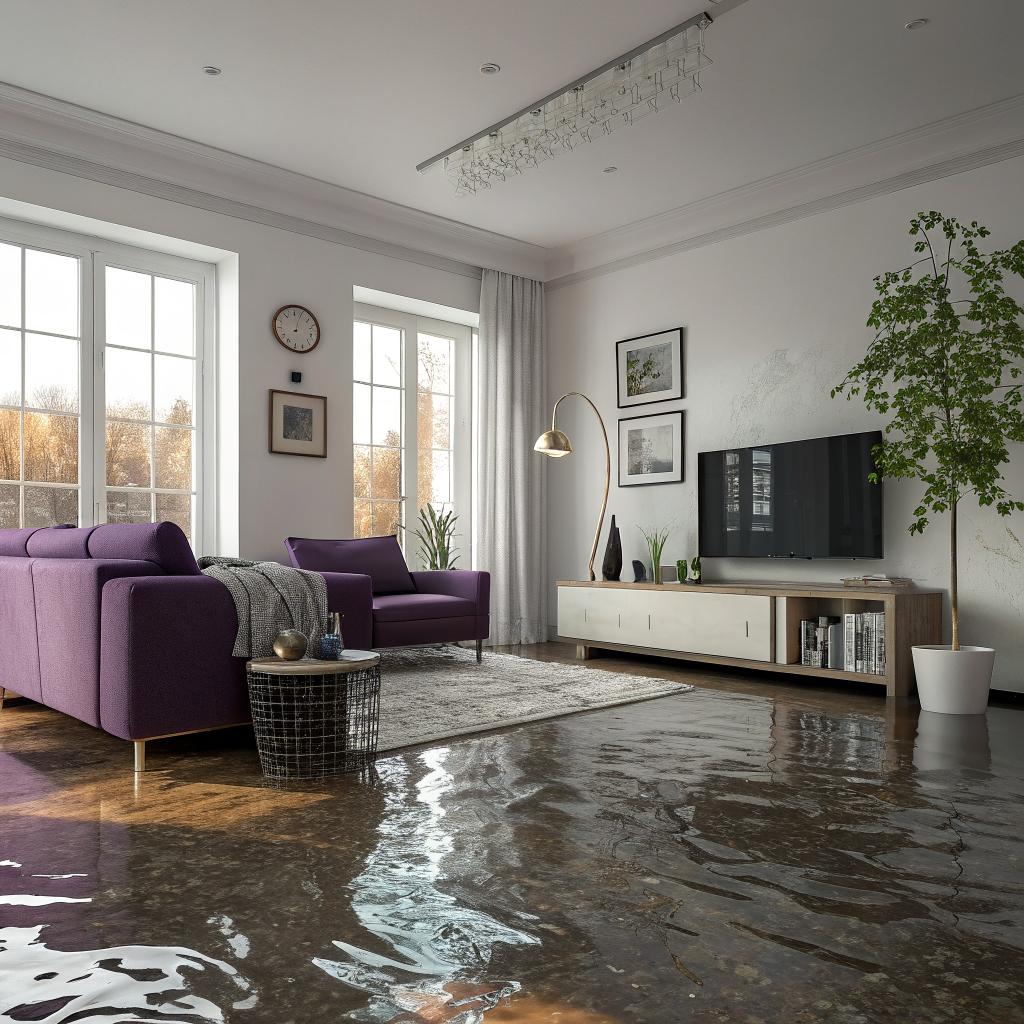

“If my basement floods, I can just dry it out with fans and a wet vac. No need to call anyone if the water is gone.”
That idea sounds simple, but it is usually wrong, especially for Salt Lake City homes. You can remove visible water with fans and a shop vac, and it might look dry on the surface, but moisture can stay inside walls, under flooring, and in insulation. That hidden moisture can cause mold, damage to your structure, and bad odors that show up weeks later. For most real indoor flooding, especially if it covers more than a small area or touches drywall, you should at least talk with a professional company that handles flood damage restoration Salt Lake City services. You still have things you can do yourself, and I will walk through those, but the short answer is simple: act fast, remove water, dry deeply, and do not trust looks alone.
You might be reading this with wet carpet under your feet right now, or you might just be planning ahead because you know our storms can switch quickly from nothing to heavy rain. Either way, staying calm helps. There is no magic fix, but there is a clear order of steps that makes the damage smaller and the repair costs lower.
I will be honest. The first time my own basement got water, I thought, “It is just a small puddle.” A week later I pulled back the carpet and found a dark ring along the base of the wall. The drywall had soaked it up like a sponge. That is usually how it works. The visible water is only part of the story.
Salt Lake City has its own twist on flood and water problems. Snowmelt, old clay sewer lines, irrigation ditches, sudden storms, and even just a neighbor overwatering their lawn can all send water where it should never go. Add our dry climate, which fools people into thinking everything dries quickly, and you have a recipe for hidden damage.
So let us walk through what actually helps, what is just wishful thinking, and how to tell when you really should get outside help.
What counts as “flood” damage in a Salt Lake City home
People use the word “flood” for almost any water problem, but not all water is the same. Where it comes from matters, because that decides how risky it is and how it should be cleaned.
Most home water damage in Salt Lake City falls into three broad types.
| Type of water | Common sources in SLC homes | Main concerns |
|---|---|---|
| Clean water | Burst supply lines, leaking water heater, broken fridge line, snowmelt seepage | Drying speed, hidden moisture in walls and floors |
| Grey water | Washing machine overflow, dishwasher, sink overflows, some foundation leaks | Bacteria, light contamination, damaged contents |
| Black water | Sewer backup, toilet overflow with solids, city line backup, floodwater from outside | Health risk, heavy cleaning needed, removal of porous materials |
“Clean” water does not stay clean for long. After about 24 to 48 hours, even a clean pipe leak can support mold growth or start to pick up bacteria from surfaces. So timing matters as much as source.
If the water came up through a floor drain, toilet, or from outside during a storm, treat it as unsafe from the start. That is not me being dramatic. That is basic hygiene.
First actions in the first hour
Those first minutes feel messy and chaotic. You might be trying to figure out where the water is coming from, who to call, and what to move first. It helps to have a small mental order, like a checklist in your head, even if you do not write it down.
Stop the water, stay safe, then start saving what you can. In that order.
If you remember only that, you are already ahead of many people.
1. Stop or slow the source if you safely can
Ask yourself one question: “Is the water still coming in?”
If the leak is from inside the house, such as a broken pipe:
– Close the nearest shutoff valve if you know where it is.
– If you cannot find it quickly, go to the main shutoff for the home. Many Salt Lake City homes have it in the basement near the front wall or by the water heater.
If the water is from outside, like storm runoff or rising groundwater, you may not be able to stop it right away. In that case, focus on redirecting it where possible. But do not stand in deep water near electrical outlets or appliances. It is not worth the risk.
2. Watch for electrical hazards
This is the one part where I would tell almost anyone to slow down. When floors are wet, do not:
– Step into water if you see sparks, broken wiring, or hear buzzing.
– Flip breakers with wet hands.
– Use corded equipment that sits in the water.
If you suspect electrical danger, stay out of the flooded area. Call an electrician or your utility company before going further.
3. Protect what is easiest to save
Once things feel safe enough, start moving items that are easy to lift and sensitive to water: boxes, small furniture, electronics, documents, fabric items.
Many Salt Lake City basements end up being storage areas with cardboard boxes on the floor. Those boxes soak up water like sponges and become hard to move. If you can move them to a dry area quickly, you might save most of the contents.
I would move in this rough order:
– Photos, documents, and keepsakes
– Electronics and small appliances
– Rugs, clothing, and bedding
– Lightweight furniture
You do not have to be perfect here. Even lifting furniture an inch or two with blocks or foil under the legs can prevent water from wicking up into the wood.
Salt Lake City specific flood risks you might not think about
Flooding in this city is not just about being close to a river. Some problems are tied to how older neighborhoods were built and how our weather behaves through the year.
1. Snowmelt and freeze-thaw cycles
We have long winters and big temperature swings. That cycle of freezing and thawing can crack foundations and drive water into small gaps. You might not see a steady leak, but during a quick melt, water can show up along the base of a wall or through a cold joint in the floor.
Sometimes a homeowner thinks, “The snow is melting outside, and my basement is dry, so I am fine.” Then a few days later, a slow trickle appears at the lowest point. Water does not always follow straight lines; it can travel along buried pipes or old drain lines.
2. Aging sewer lines and backups
Many older Salt Lake City homes still have original sewer lines. Tree roots, cracks, and shifting soil can cause backups during heavy rain or snowmelt. When that happens, water can come up through floor drains or lower level bathrooms.
This kind of water is not safe to handle without proper protection. If that kind of backup happens, do not try to clean everything yourself with basic tools. You can still do some prep, like opening windows and keeping people away from the area, but full cleaning will need professional methods.
3. Irrigation and surface drainage
Some streets and yards around the valley have quirky drainage paths. Sprinklers, canal overflows, or a neighbor directing downspouts toward your property can cause sudden water against your foundation.
If you see water entering where the wall meets the floor, look outside for:
– Downspouts that drop water right next to the house
– Sloping soil that tilts toward your foundation instead of away
– Cracked or missing caulking around windows and doors
These are more long term fixes, but they explain why many “sudden” floods are not entirely random.
How fast mold and structural damage can start
People sometimes think our dry climate buys extra time. It helps a little, but not as much as you might hope.
In a closed basement with no air flow, wet carpet and drywall can stay damp long enough for mold to start growing in 24 to 48 hours. In humid pockets, it can be faster. The problem is that you usually cannot see it from the room. It tends to grow inside wall cavities or under padding first.
Once drywall has been soaked at the bottom edge, it is often better to cut it out than to “wait and see.”
That might sound extreme, and yes, sometimes people do dry drywall successfully. But if the water line is more than a couple of inches up the wall, or if the source is dirty water, cutting and replacing is usually the safer choice.
Wood framing can handle short contact with clean water if dried quickly. The trouble comes when trapped moisture sits between insulation and wood. Over weeks, that can weaken the material and invite mold.
Drying out a flooded room: what helps and what does not
This is where a lot of myths live. Some of them are half true. Others are just plain wrong.
Fans in the wrong way can spread problems
Using fans helps, but fans alone are not enough. And if the water was dirty, strong air movement can spread contaminants and spores through the home.
Good air movement should be part of a system:
– First, remove as much standing water as you can.
– Then use fans to move air across wet surfaces.
– At the same time, run dehumidifiers to pull moisture out of the air.
If you only use fans, you might evaporate water into the air, which then condenses on cooler surfaces somewhere else.
Dehumidifiers are more useful than most people think
In Salt Lake City, people often rely on open windows because our outside air can be dry. That can help during some parts of the year. But during rain, spring melt, or high humidity days, you might just be trading indoor moisture for outdoor moisture.
A decent dehumidifier can pull several gallons of water out of your air per day. In a flooded basement, running one or more units for days can make a big difference.
If you want a simple test, this is one I like:
– Run your dehumidifier nonstop in the flooded area for 24 hours.
– Check the collection bucket or output.
– If you removed a lot of water, the room was holding more moisture than you thought.
Why professional drying equipment is different
I get that not everyone wants to call a company right away. Maybe you are worried about cost, or you hope you can manage it yourself.
Still, there is a reason professional restoration teams use:
– High volume extractors to pull water from carpet and padding
– Industrial dehumidifiers that remove more moisture and work in lower temperatures
– Air movers that create a steady airflow pattern along walls and floors
– Moisture meters to check inside walls and subfloors without opening everything up
Without those tools, you are mostly guessing. Again, that might be fine for a very small incident. For anything larger than a few square feet of damage, guessing gets risky.
What you can handle yourself vs what you should not
This is where people tend to overestimate what they can safely manage. Cleaning up a simple leak is one thing. Restoring a flooded basement is another.
Here is a rough guide. It is not perfect, and there will always be edge cases, but it gives you a starting point.
| Situation | DIY is usually okay | Call a restoration company |
|---|---|---|
| Small leak on tile floor (clean water) | Yes, mop up, run fans, monitor for musty smell | No, unless it keeps happening |
| Wet carpet in a 3 ft by 3 ft area (clean water, caught quickly) | Maybe, wet vac and strong drying, lift corner to check padding | Yes, if padding or subfloor feels wet after a day |
| Entire room carpet soaked, standing water | No, too much hidden moisture | Yes, professional extraction and drying |
| Water came through ceiling from above | Limited, catch water, move belongings | Yes, need ceiling checked and possibly opened |
| Any sewer backup or outside floodwater | No, high health risk | Always, needs special cleaning and removal |
If you are not sure, one simple question helps: “Do I know how wet the structure is behind what I can see?” If the honest answer is no, then at least get an inspection.
Working with your insurance company
This part frustrates a lot of people. Flood and water coverage is tricky, and it depends on your specific policy.
Some things that often are covered:
– Sudden pipe breaks
– Water heater failures
– Accidental overflow of sinks or tubs
Things that might not be covered:
– Repeated seepage through a foundation
– Poor maintenance, like an ignored slow leak
– Outside floodwater unless you have separate flood insurance
I cannot see your policy, so I will not guess. But I can suggest a few habits that usually help with claims.
Document early and often
Before you throw anything away or start cutting drywall, take clear photos and short videos:
– Wide shots of each room that was affected
– Close ups of damaged walls, floors, and belongings
– Any sign of where the water came from
Save receipts for what you buy, even things like fans, cleaning supplies, or storage bins. If you hire a company, keep their estimates and reports.
Talk to your insurer sooner, not later
People sometimes wait a week hoping the damage is not that bad. Then when they call, the adjuster asks, “Why did you wait?” It can look like neglect, even if your reason was simple.
If you are not sure whether something is covered, you can still ask how they handle your kind of loss in general terms. Just be honest about what happened and what you have already done.
Choosing a flood restoration company in Salt Lake City
If you decide the job is bigger than you want to handle, the next question is who to call. Salt Lake and the surrounding areas have several companies that promise quick response and clean homes. They often sound similar on their websites.
Here are a few things that matter more than a flashy logo.
1. Response time and clear contact
Flood damage does not wait for business hours. If a company claims 24/7 service, you should be able to reach a person, not just leave a message and hope.
When you call, notice:
– Do they ask you clear questions about safety and the source of water?
– Can they give a realistic window for arrival?
– Do they seem rushed or willing to explain the next steps?
It is fair to expect a calm, clear explanation while you are under stress. You do not need a sales pitch. You need facts.
2. Inspection and moisture checking
Once they arrive, a good team should not rely on guesswork. They should use moisture meters or thermal cameras to check:
– Walls, especially at the base
– Subfloors under carpet or vinyl
– Insulation in exterior walls, if accessible
If someone just looks around and says, “It will probably dry,” without any tools or measurements, that is a red flag.
3. Clear plan and estimated timeline
Flood restoration usually has phases:
– Extraction of standing water
– Removal of unsalvageable materials
– Drying and dehumidification
– Cleaning and disinfection
– Repairs and rebuild where needed
You do not need a textbook, but you deserve a simple outline: what will happen, in what order, and roughly how long each step might take. They should also explain what they expect from you, if anything, such as moving items or keeping doors closed.
Protecting your health during and after a flood
It is easy to focus only on property and forget that dirty water affects people first. Even clean water can become a problem if it supports mold.
Some simple habits can reduce health risk in a wet home:
– Keep kids and pets out of the flooded area until cleaning is finished.
– Wear gloves and, if the water is dirty, a basic mask when handling anything wet.
– Wash hands well after touching wet materials.
– Bag and remove items with sewage contact rather than trying to save everything.
After drying, if you notice ongoing musty odors, headaches, or breathing issues that seem worse at home, do not just spray air freshener. Smell is a signal that something is still damp or growing behind the scenes.
What happens during professional flood damage restoration
If you have never seen the process, it can feel a bit overwhelming. There are loud machines, plastic barriers, and workers cutting into walls and floors. It helps to know what they are trying to achieve.
Phase 1: Assessment and safety
The first visit usually includes:
– Checking where the water reached, both visibly and with meters
– Looking for structural risks, like sagging ceilings
– Identifying the water type: clean, grey, or black
– Making sure electrical and gas systems are safe to work around
At this point, they should also talk with you about what can likely be saved and what might need to be removed.
Phase 2: Water extraction
Removing liquid water is the fastest way to start drying. This can include:
– Pumping out deep standing water
– Using heavy extractors on carpet and padding
– Removing water trapped under flooring, if possible
Think of this as the “stop the bleeding” phase. The goal is to reduce the amount of water that needs to evaporate later.
Phase 3: Removal of damaged materials
This part can feel harsh, because it often means cutting and throwing things away. But it is usually what prevents bigger problems later.
Common removals include:
– The bottom section of drywall where it wicked up water
– Wet insulation
– Severely soaked carpet padding
– Some flooring materials that do not dry well, like certain laminates
The team should bag and remove these materials in a way that avoids spreading debris through the rest of the home.
Phase 4: Drying and dehumidification
Once the wettest materials are gone, they set up the drying system:
– Air movers point along walls and surfaces to speed evaporation.
– Dehumidifiers pull moisture out of the air.
– Sometimes they create contained zones with plastic sheeting to focus drying.
They should return regularly to adjust equipment and take readings. Drying can take several days, depending on how deep the water went and how saturated everything is.
Phase 5: Cleaning, disinfection, and odor control
For clean water events, cleaning may be simple: surface disinfection and HEPA vacuuming. For dirty water, the process is more involved:
– Disinfecting all hard surfaces
– Cleaning or removing porous items that contacted contaminated water
– Using air filtration to capture fine particles
Odor control should not rely only on strong perfumes. True odor control comes from removing the source of the smell, then using milder treatments to finish the job.
Phase 6: Repairs and rebuild
Finally, the property needs to be put back together. That may involve:
– Replacing drywall and baseboards
– Installing new flooring or carpet
– Painting affected rooms
Some restoration companies handle both drying and rebuild. Others focus only on the drying and cleaning, then refer you to contractors for the finish work.
How to prepare your Salt Lake City home before the next flood
We tend to think about prevention right after a disaster, then forget months later. If you have time and energy now, a few changes can reduce future damage.
Check where your stored items sit
Look at where your boxes and valuables are stored, especially in basements and lower levels.
Better options:
- Plastic bins with tight lids instead of cardboard boxes
- Shelves that keep contents several inches above the floor
- Keeping important documents and photos on higher levels, not the basement
If you have heirlooms or items that truly cannot be replaced, keep them as far from likely water entry points as possible.
Inspect gutters, downspouts, and grading
Walk around your home during a normal rain and watch where the water goes.
Ask yourself:
– Are downspouts dumping water right beside the foundation?
– Does the soil slope away from the house, or toward it?
– Are any window wells gathering water instead of draining?
Simple changes, like extensions on downspouts or regrading soil in key spots, can keep water outside where it belongs.
Know your shutoff valves and drains
If you do not already know:
– Where your main water shutoff is
– Which breaker controls outlets in your basement
– Where floor drains are located and whether they are clear
Spend ten minutes to find out now instead of during an emergency. That short bit of prep can make future floods less stressful.
Common questions Salt Lake City homeowners ask about flood damage
How long will my house take to dry after a flood?
For a typical flooded room with fast professional response, drying often takes 3 to 5 days. Larger or more complex situations can take longer. If you are drying on your own with smaller equipment, expect it to take more time.
Can I save my carpet after a flood?
Sometimes. If the water was clean, the carpet was soaked for less than about 48 hours, and the padding and subfloor can be dried, professionals can often save carpet. For grey or black water, or for carpet that stayed wet too long, replacing it is usually safer.
Is a small musty smell really a problem?
A mild musty smell is a sign that moisture or microbial growth is present somewhere. It does not always mean a severe mold problem, but it should not be ignored. If the smell lingers after visible drying, consider an inspection to find hidden damp areas.
Do I need to test for mold after a flood?
Not always. If all wet materials are removed or dried properly, and there are no ongoing odors, testing may not be necessary. If weeks later you have visible growth, strong smells, or health symptoms that improve when you leave the house, mold testing can help locate and measure the issue.
What if this happens again next year?
If you have repeated flooding in the same area, the real fix is usually outside or underneath the home: drainage, grading, or plumbing. Cleaning up each event is necessary, but long term peace of mind comes from finding and fixing the pattern. It is reasonable to ask any restoration company you work with what they think the root cause might be, even if they do not handle that type of repair.
If you had to pick one thing to change in your home this month to be better prepared for flood damage, what would it be?
