
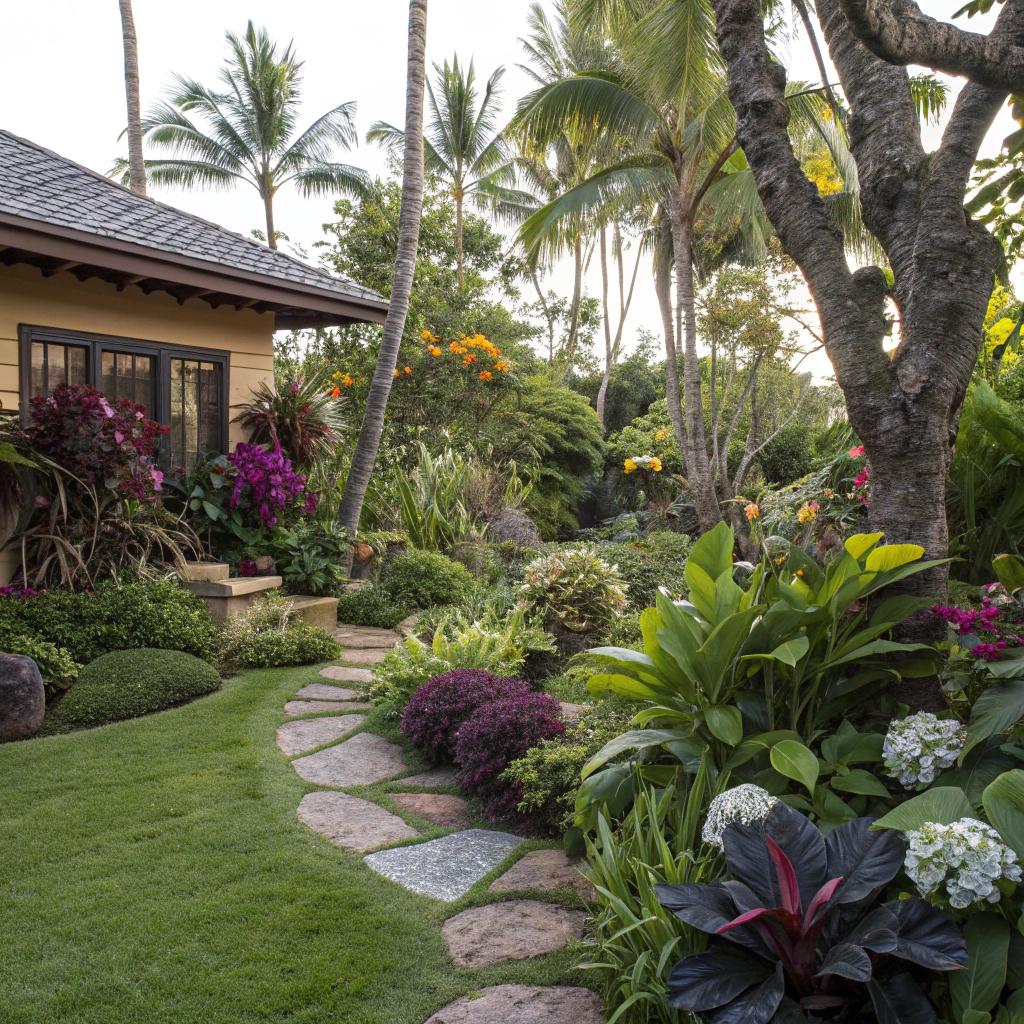

“You cannot have a lush yard in Honolulu without constant watering and expensive chemicals.”
That sounds believable, but it is false. You can have a thick, green, relaxed island yard in Honolulu without wasteful irrigation or heavy fertilizer use. The real “secret” is to work with the climate, soil, and trades, not against them. Local plants, smart watering, and a simple plan will get you closer to the yard you imagine than any flashy product or weekend shopping spree. A good local pro, like landscaping Honolulu, can help, but you can also make real progress on your own if you understand a few key ideas.
I will say this upfront so there is no confusion: if you try to re-create a mainland-style, thirsty lawn from a cooler place, you will fight the yard every single week. You can still have lawn. Just not that lawn. Honolulu has its own rhythm, and your yard does better when you accept that and lean into it a little.
You might be thinking that sounds like a compromise. It is not. A yard that fits the island often looks better, feels cooler underfoot, and needs less work once it is set up. I have seen people switch three or four plants, adjust their watering schedule, and suddenly their “problem” yard turns into the nicest one on the street within a few months. No miracle product. Just a better match between plants and place.
Let me walk through what actually matters, from soil to plants to basic layout, and where people in Honolulu often go wrong without realizing it.
Understanding Honolulu’s climate and what it does to your yard
Honolulu looks simple on paper: warm, sunny, not much temperature swing. In reality, your yard can sit in a small pocket that is wetter, drier, hotter, or windier than your neighbor’s. This microclimate is what your plants feel every day.
Here are the big things that shape how well your yard grows:
Sun, shade, and reflected heat
You might say “full sun” and picture a nice, even light. In Honolulu, “full sun” in front of a light-colored wall or next to a driveway can feel like an oven to certain plants. The concrete and stucco bounce heat back onto leaves and dry out the soil faster.
Try this simple check on a weekend:
– Stand in each part of your yard at 9 am, noon, and 3 pm.
– Notice if the sun feels soft or harsh.
– Notice if it feels hotter near walls, fences, or pavement.
You do not need gadgets. Just your own skin. If you do not like standing there at noon, a shade-loving plant will like it even less.
Tradewinds and salt
The trades are a blessing, but they also pull moisture from leaves. In some parts of Honolulu, especially closer to the coast or up on a ridge, plants are hit with both drying wind and some salt in the air.
You may have seen this: plants on the windward side of your yard look burned or ragged while the same plant on the leeward side looks just fine. That is not your imagination. The exposure can differ a lot inside one property.
So if you know the trades hit one side of your yard hard, that is where you use tougher shrubs, trees, or hedges to “shield” more sensitive plants behind them.
Soil: not all local dirt is equal
The soil under your feet might be coral fill, heavy clay, or a fairly nice mix. Sometimes all three appear in one street.
Two quick checks help:
– When you water, does the surface stay soggy for hours, or does it dry out fast and crack?
– When you dig a small hole, does the soil crumble, smear like clay, or feel rocky?
Clay tends to hold water and can suffocate roots if you keep watering on a schedule meant for sandy soil. Rocky or sandy spots shed water so fast that roots stay thirsty, even if you water often.
You do not need to “fix” the entire yard. Focus on planting areas and add compost or fine mulch into the top layer. Over time, this matters more than fancy fertilizers.
Choosing plants that actually want to live in your yard
If there is one point that deserves bold letters, it is this:
The plants you pick matter more than your fertilizer brand, sprinkler system, or tools. Wrong plant, wrong place equals constant work and frustration.
People in Honolulu often end up with high-maintenance yards because of impulse buys. A plant looks great at the store, they bring it home, and six months later it is leggy, yellowing, or covered in pests.
The plants that thrive in a warm, coastal, sometimes windy place are not always the ones that fill social media feeds. That is fine. A healthy, steady plant beats a stressed “trendy” plant every time.
Native and Polynesian-introduced plants
Plants that evolved here, or arrived long ago with early settlers, mostly handle local conditions with less drama. They often resist local pests better too.
A few groups to look up and consider:
– Groundcovers that handle sun and some salt
– Shrubs that take wind and need only light pruning
– Trees that cast soft shade without constant leaf drop
I am avoiding a long plant list, because it can get boring to read and easy to forget. What matters more is the pattern:
– Look for local or Polynesian plants first.
– Then fill gaps with other tropicals that have proven themselves over years in Honolulu, not just in store displays.
If a plant keeps showing up in older neighborhoods, there is usually a reason. Long-term survivors tell you more than any tag or ad.
Lawn choices for Honolulu
Many people move to Honolulu and expect a lush, cool-season lawn like they had in a place with winter. That type of grass does not do well here.
Warm-season grasses fit better. Some handle salt and drought better than others.
Here is a simple comparison that helps you think about tradeoffs. It is not a complete list, and that is fine. It is enough to guide you.
| Grass type | Main strengths | Main drawbacks | Good for |
|---|---|---|---|
| Zoysia | Dense, fine texture, handles foot traffic fairly well | Slow to spread, can get thatch if overfed | Front yards, family lawns with moderate use |
| Bermuda | Very tough, recovers from wear, loves sun | Can invade beds, needs regular edging | Active play areas, sunny slopes |
| Seashore paspalum | Handles salt and reclaimed water, deep green | Needs decent care to look good, hates shade | Coastal yards, areas near the ocean |
| St. Augustine | Tolerates some shade, wider leaves, soft feel | Can thatch, prone to some pests if stressed | Yards with part-day shade |
If your yard has a lot of shade from large trees or buildings, you might want less lawn and more groundcovers and stepping stones. Forcing grass into deep shade rarely works here. You will fight bare patches, mud, and fungus.
Planning the shape of your Honolulu yard
Many people start by buying plants, not by planning where they go. That is backward. You do not need a complicated CAD drawing, but you do need a rough sketch.
Ask yourself three simple questions:
1. Where do I actually walk and sit?
2. What do I want to see from my windows and lanai?
3. Where can I accept a bit of wildness, and where do I need a clean edge?
When you answer those, a basic layout appears:
– Clear circulation: obvious paths from driveway to door, house to yard, yard to side gate.
– One main “green room”: a primary area of grass or groundcover where you spend time.
– Supporting beds: places along the edges with shrubs, small trees, and color.
Micro-zones: using the yard the way the climate already works
You can think of your yard as a few different zones, each with a specific role. That sounds fancy, but in practice it is very simple.
– Hot, sunny spots next to walls: good for tough shrubs, succulents, or raised planters with herbs.
– Breezy edges: good for hedges and small trees that enjoy airflow.
– Slightly shaded corners: good for seating, ferns, and fragrant plants.
You are not forcing the yard to behave. You are accepting what it already does and placing plants and features where they feel natural.
Common layout mistakes in Honolulu yards
A few patterns show up again and again:
– Bedlines that are perfectly straight and thin, like narrow ribbons. These beds dry out fast and look flat.
– Plants placed too close to walls or each other. They grow, then need constant trimming or removal.
– Random “accent” boulders or pots that do not relate to anything. They look like someone dropped them there.
A more relaxed edge, with curves that match how you walk, tends to feel better. Give plants room to grow into their shape, not fight them with monthly pruning.
Watering in Honolulu without wasting water
Water is where many Honolulu yards go wrong. People overwater, underwater, or water at the worst time of day.
If you water a little every day, roots stay near the surface and plants stay weak. Deep, less frequent watering grows stronger roots and a more drought-tolerant yard.
This pattern holds for most lawns and shrubs here.
Basic watering guidelines
Every yard is different, but some simple habits help almost everyone:
– Water early in the morning, before the sun grows strong.
– Aim for fewer, deeper watering sessions instead of short daily bursts.
– Adjust for the season. In wetter months, turn systems down or off.
Drip lines and soaker hoses work well for beds and shrubs. Sprays or rotors can work for lawns if they are tuned and checked. What you really want to avoid is watering the street, sidewalks, or walls. That is pure waste.
If you use an automatic system, check it regularly. Zones drift, nozzles clog, and heads get knocked out of alignment by mowers and kids. Ten minutes of walking around while the system runs can save you money and keep plants healthier.
Signs you are watering wrong
Your yard tells you, if you pay attention:
– Mushy spots in the lawn, often with fungus or mushrooms, suggest too much water.
– Dry, crusted soil and curled leaves suggest not enough water or water applied at the wrong time.
– Runoff into the street means the soil cannot absorb water at the rate you are applying it.
You might feel tempted to blame the soil or the weather first, but your schedule is easier to adjust than either of those.
Feeding your yard: less product, more balance
Honolulu yards do not need constant heavy feeding. In many cases, they need consistent light feeding and good organic matter.
Think of fertilizer as a small nudge, not a miracle cure. If the plant and place do not match, no amount of product will fix the mismatch.
Using compost and mulch
Two simple materials can change your soil over time:
– Compost: adds life and structure to the topsoil.
– Mulch: protects the soil surface, keeps roots cooler, and reduces evaporation.
A two to three inch layer of mulch in beds helps a lot. Do not pile it against tree trunks or plant stems. That can invite rot and pests.
Compost can be worked into the top few inches before planting, or spread on the surface and allowed to work in slowly through worms and microbes.
Fertilizer and Honolulu conditions
Any fertilizer that washes off into storm drains ends up in the ocean. That is not just an environmental concern; it is also money you are throwing away.
If you choose to feed:
– Use slow-release products where possible.
– Feed during the main growing season, not right before heavy rain.
– Aim for modest amounts spread out over time, not heavy single doses.
If your lawn is mostly brown or yellow even with water, it might not be the right grass type for that spot. Feeding a stressed, wrong-type lawn often brings more weeds than improvement.
Managing pests and weeds without going chemical-heavy
Tropical climates invite insects, fungus, and fast-growing weeds. That is just life near the equator. You do not need to respond with harsh chemicals every time you see a bug or spot.
Building a tougher yard from the ground up
Healthy yards fight back on their own. Strong plants resist pests better than weak ones.
So before you reach for a spray, ask:
– Is this plant in the wrong spot?
– Is it getting too much or too little water?
– Is the soil compacted or poor?
Fixing those can often reduce pest pressure.
Mixed plantings also help. If every plant in a bed is the same type and one pest finds it tasty, the whole bed can suffer. A mix of species and heights makes it harder for any single problem to take over.
Handling weeds in Honolulu
Weeds take advantage of bare soil and thin, stressed turf. So the first defense is to:
– Keep lawn reasonably dense.
– Cover bare soil in beds with mulch or groundcovers.
Hand pulling still works for many areas, especially near pathways and in smaller yards. It sounds simple, but doing fifteen minutes once a week is often better than a big, harsh cleanup once every few months.
If you use weed killers, spot-treat, do not spray entire areas without reason. Overuse can damage nearby plants and soil life.
Design touches that make a Honolulu yard feel lush and “island”
People often chase a vague idea of “tropical” and end up with something messy or oddly empty. A lush island yard is not just about cramming in lots of plants. It is about where you place them and how you move through them.
Layering height and texture
In many successful Honolulu yards, you see:
– Taller trees and palms forming a high ceiling.
– Medium shrubs filling the middle layer.
– Smaller plants, groundcovers, and low accent plants along paths.
Your eye moves from near to far, from low to high. This creates a feeling of depth even in small yards.
Texture matters too. Wide, bold leaves contrast well with fine, feathery foliage. You do not need every color of the rainbow. A few strong greens, with some controlled spots of color, usually look better.
Shaded seating and simple focal points
A yard that no one uses is just work. In Honolulu’s weather, a shaded corner, a bench, or a simple stone slab can turn a green space into a place you actually want to sit.
Think about:
– A seating spot that gets late afternoon shade.
– A view line from that seat toward one strong feature.
That feature might be:
– A favorite tree or palm.
– A simple water bowl or low fountain.
– A group of pots in a corner.
Try not to scatter focal points everywhere. One or two clear “stars” feel better than ten competing objects.
Working with Honolulu professionals without losing control of your yard
Not everyone wants to handle all of this alone. There is no shame in that. A good local landscaper can help shape a plan, install key elements, and guide maintenance.
But you still want to stay in charge of what your yard becomes.
Here are questions that can keep the process grounded:
– “Which plants on your list are proven in Honolulu, not just tropical in general?”
– “What will this look like in three years, not just next month?”
– “How often will this area need trimming to stay the size you are showing me?”
A thoughtful pro will welcome these questions. If someone seems more interested in quick installation than in how your yard will live and function, that is a red flag.
Sometimes the best use of professional help is a one-time consult and a simple master plan, then you phase the work yourself over time. That often costs less and gives you time to see how the yard responds before you commit to more.
Seasonal rhythm: how a Honolulu yard changes through the year
At first glance, it feels like the seasons do not change much. They do, but more in terms of rain patterns, growth speed, and pest cycles than temperature.
Roughly, you can pay attention to three kinds of shifts:
Wetter periods
When the rain increases:
– Soil can stay moist longer, so you reduce irrigation.
– Fungal issues can rise, especially in lawns and dense shrubs.
– Plants may flush with new growth, which is a good time for light shaping.
You do not need to fight every leaf spot. Many clear up when conditions dry.
Drier stretches
During dry spells:
– Deep watering habits matter more.
– Mulch helps retain moisture.
– New plantings need closer watching, as they have not rooted deeply yet.
Resist the urge to plant a lot right before a long dry period unless you are ready to water carefully.
Storm and wind events
Honolulu can see strong winds and heavy rain in a short time. You can prepare by:
– Keeping large trees pruned responsibly, not topped.
– Avoiding heavy pots or decor where they can blow over easily.
– Choosing flexible plants in exposed areas, not brittle ones.
After a storm, give plants some time before you remove them. Many recover from bent stems or leaf loss.
Small changes that bring a yard back to life
Sometimes the whole topic feels large, and it is easy to get stuck and do nothing. If that is where you are, choose one small project. Do it well. Watch what happens.
Here are a few “starter” changes that often create visible improvement:
1. Fix one edge
Find a messy bed along a path or driveway.
– Redraw the edge with a simple curve that feels natural to walk next to.
– Remove weeds and tired plants.
– Add a few strong, reliable shrubs and a groundcover.
– Finish with mulch.
This small area often changes how the whole front of the house feels.
2. Create one shaded retreat
Pick a corner with afternoon shade or potential for shade.
– Add a small tree or taller shrub if needed.
– Place a bench, simple chair, or low wall.
– Plant a few fragrant or soft-textured plants nearby.
Suddenly, you have a place that invites you outside, not just a yard you look at through glass.
3. Reset your watering
Spend one week paying attention only to water.
– Walk the yard each day.
– Look at soil, not just leaves.
– Adjust your schedule based on what you see.
Often, just correcting overwatering or underwatering brings color back without any new plants.
Questions people often ask about Honolulu yards
Q: Is it realistic to have a lush, green yard in Honolulu without wasting water?
A: Yes, if you choose the right plants, set up deep but infrequent watering, and improve your soil with compost and mulch. A yard that matches the climate will look lush with less water than a yard fighting the climate.
Q: Do I need a professional landscaper, or can I do this myself?
A: You can do a lot yourself if you are willing to learn and move step by step. A professional can help you avoid big mistakes and speed things up, but you do not have to hand over all decisions. Many people get the best results by using a pro for planning and key work, then handling the everyday care themselves.
Q: What is the biggest mistake people make with yards in Honolulu?
A: Trying to copy a mainland yard without adjusting for local sun, wind, soil, and water. The second biggest mistake is ignoring how the yard is actually used. If you match plants to climate and layout to your real life, your yard has a much better chance to feel lush, relaxed, and easy to live with.
