
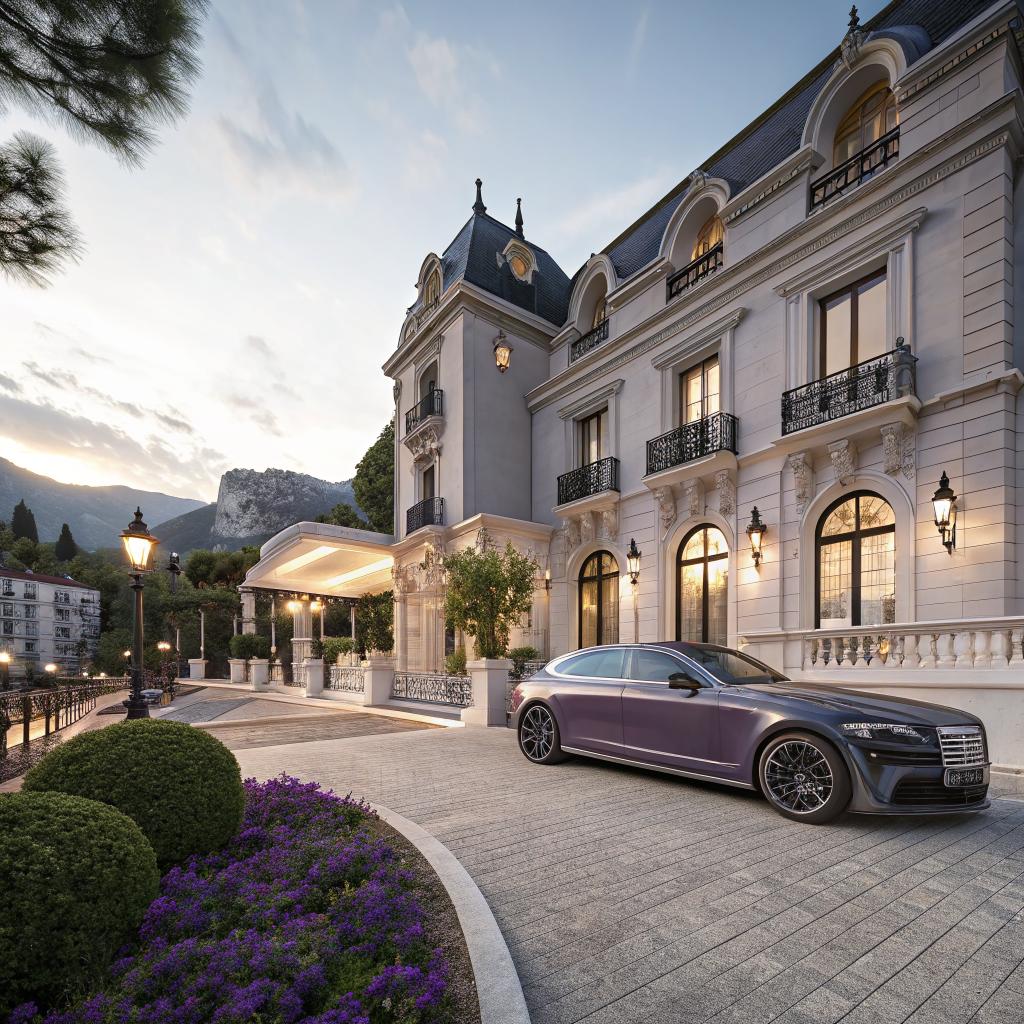

“There is no real property for sale in Monaco anymore. Everything is taken, and unless you are a billionaire or royalty, you have no chance.”
That statement sounds dramatic, but it is not true. It is hard to buy in Monaco, and prices are very high, yes, but there is still real choice if you are prepared, realistic, and a bit patient. If you are looking for property for sale in Monaco, you can still find it, from compact studios to sky-high penthouses and rare villas. The key is to understand how this small market works, what kind of budget you need, and how you can move fast enough without making rushed mistakes.
I will not pretend the process is simple. Monaco is tiny. New buildings are rare. Owners are in no hurry to sell, because holding property here is attractive in itself. But I have seen people who thought they were “priced out” end up buying a smart one bedroom apartment, and others who chased the “perfect” penthouse for two years before finding something better than they expected. So if you are open to a bit of compromise, you have more options than that quote suggests.
You are probably asking yourself some of the same questions most buyers have: how much do I really need; where in Monaco should I look; is it still worth buying at these levels; and how different is this market from any other high-end city? We can walk through those one by one, without hype. Just facts, some experience, and a bit of opinion.
Monaco is expensive, but it is also very structured. Once you understand the rules, the buying process is often more straightforward than in larger countries.
I will focus here on real, practical things: what prices look like in 2025, what you can expect by budget range, how the buying process works, and a few traps you want to avoid. I will also touch on rentals, because many buyers use a “rent first, buy later” strategy while they wait for the right property. And yes, there is a right and a wrong way to do this, even if your budget is very high.
You do not need to be a billionaire to enter this market. But you do need to think like a professional buyer, even if this is your first purchase in Monaco. That means clear criteria, proof of funds ready, and a good understanding of how fast you must move once you see something that fits.
Why Monaco property is different from almost anywhere else
People often compare Monaco with London, Paris, or Hong Kong. The truth is, it behaves differently. The country is smaller, the tax rules are special, and the buyer profile is very specific.
A few simple facts help frame the whole conversation:
| Factor | Monaco | Typical big city (example: Paris) |
|---|---|---|
| Size of country | About 2.1 km² | Over 100 km² |
| Population | Roughly 38,000 residents | Millions |
| Average property price per m² (high-end) | Often 45,000 to 70,000+ EUR | 15,000 to 25,000 EUR in prime areas |
| Taxes on personal income for residents | Effectively none for most nationalities | Usually present, sometimes high |
| New development supply | Very limited, long lead times | Regular in most districts |
The mix of small territory and favorable tax environment leads to one simple outcome: permanent demand outstrips supply. People are not just buying an apartment. They are buying entry into a country with specific rules, security, and a certain way of life.
This is also why you see such a range of buyers:
– Entrepreneurs who have sold companies and want a stable home base
– Families looking for security, schools, and a calm place for children
– Retirees who prefer a safe, well serviced place by the sea
– Investors who see Monaco real estate as a store of value
Some stay year round. Others spend only a few months per year but keep a permanent base.
What does “luxury property” really mean in Monaco?
In many cities, “luxury” is vague. It might mean a nice apartment, a good address, and marble in the bathroom. In Monaco, almost everything is already at a high standard compared with most markets, so the word can lose meaning.
You could think of it along three simple lines.
Location
Every part of Monaco is fairly central, because the country is so small, but there are still big differences street by street.
A few areas people often ask about:
– Monte Carlo / Carré d’Or: close to the Casino, high street shopping, major hotels. Prices tend to be among the highest, and properties are often more formal in style.
– Larvotto: sea views, beaches, some newer developments. Good for those who want water views and a bit more open feeling.
– Fontvieille: reclaimed land with a more “residential” feel, marina views, and a bit more space.
– La Condamine and Port Hercule: near the port, many restaurants, F1 track views in some buildings. Can feel lively, sometimes a bit noisy.
Monaco is going through steady renovation and development, which means an older building in a prime spot can still be classed as luxury if the apartment is large, well kept, and has a strong view or terrace.
Building and services
Luxury in Monaco often comes down to:
– Concierge and security presence
– Parking, which is more rare than many newcomers expect
– Pool, spa, or gym facilities
– Quality of finishes in common areas
– View: sea, port, casino, or open city views
A well serviced residence with discreet security can add a lot of value, especially for owners who travel often.
Apartment or villa quality
Because space is scarce, large apartments or true villas are rare and often priced at a level that surprises even experienced buyers.
Luxury in this context often means:
– Large terraces or wraparound balconies
– High ceilings, large windows, and good natural light
– Clever layouts without wasted corridors
– Quiet interiors despite central locations
You will also see full floor penthouses with private pools or roof gardens. These are in a different price league, but they exist, and they sell.
A small but well renovated one bedroom in a strong building can be more “luxury” in daily life than a larger but dark, noisy apartment in a weaker location.
That is why your personal priorities matter more than the marketing label attached to a listing.
Monaco property prices in 2025: what you need to know
You will see many numbers online. Some are out of date, some are averages that hide large variations, and some are influenced by a few very large sales.
To keep it clear, think in ranges rather than fixed points. These are broad guides, not exact rules.
Average price ranges by type
| Property type | Typical range per m² (EUR) | Comments |
|---|---|---|
| Studio / small 1 bedroom | 40,000 to 60,000 | Higher end of range in top locations or new buildings |
| Standard 1–2 bedroom | 45,000 to 70,000 | Sea view, high floors, and terraces push prices up |
| Large 3–4 bedroom apartment | 50,000 to 80,000+ | Prime buildings and penthouses go well above this |
| Villas / townhouses | Price by case | Very rare, often confidential negotiations |
Again, these are orientations. You might see a newly renovated, high floor 2 bedroom in the Carré d’Or that stretches beyond typical limits. Sometimes people pay for the address first and the apartment second.
What that means in total budget terms
To help you translate into total purchase amounts, here are rough examples:
| Approximate size | Area example | Indicative price bracket |
|---|---|---|
| 35–45 m² studio / 1 bedroom | Central but not top tier | 1.8 to 3 million EUR |
| 60–80 m² 1–2 bedroom | Good building, mid to high floor | 3 to 6 million EUR |
| 100–150 m² 2–3 bedroom | Prime area, partial sea view | 6 to 15 million EUR |
| 200 m²+ large apartment / penthouse | Top residence | 15 million EUR and above |
These numbers quickly raise the question: why would anyone pay this much?
The answer for most buyers is a mix of lifestyle, security, long term value protection, and the fact that Monaco tends to move differently from broader markets. There can be slower years, but you do not see the same cycles as in larger, more speculative cities.
Who is Monaco right for as a buyer?
This is where I might disagree a bit with some agents. Monaco is not right for everyone. You should not buy here only because “prices always go up” or because a friend did it.
It tends to fit:
– People who plan to spend regular time here, not just a week per year
– Families or individuals who value security and structure
– Buyers who already have property elsewhere and want diversity
– Entrepreneurs or professionals who can benefit from Monaco residence rules
If you want a big house with a garden, a pool, and silence, at a “reasonable” budget, you may be happier on the French Riviera just outside Monaco. There are very beautiful villas in Cap d’Ail, Roquebrune, or Beaulieu for less per m². The trade-off is you give up Monaco residency, at least from a property point of view, and you deal with a different tax and administrative environment.
Monaco districts: where to focus your search
It is easy to get lost in names and micro areas. Many buyers end up liking areas they did not expect, and the reverse. Here is a plain overview.
Monte Carlo and Carré d’Or
This is what most people picture first: Casino Square, luxury boutiques, classic hotels. Property here is often expensive and more formal, yet some side streets are surprisingly calm.
You might like it if:
– You want to walk to the Casino, restaurants, and shops
– You enjoy a certain atmosphere around you
– You want good resale appeal across most market cycles
It may not suit you if you prefer a quiet, “neighborhood” feel and you do not care about the Casino at all.
Larvotto
Larvotto runs along the sea and includes the beach area and new developments behind it.
You might like it if:
– Sea views matter a lot to you
– You enjoy walking or running by the water
– You want newer buildings, often with modern layouts
Some apartments here can be affected by seasonal noise or events, so visiting at different times of day is wise.
Fontvieille
Fontvieille is on reclaimed land and often draws families or people who want a more relaxed day to day life. It has a marina, a shopping center, and many services.
You might like it if:
– You want a practical place with supermarkets, parks, and parking
– You are looking for a “residential” feel rather than a luxury hotel atmosphere
– You might want a bit more space for a given budget
Views vary from rock, gardens, and marina to wide open sea.
La Condamine and Port Hercule
This area wraps around the main port and has a mix of older and newer buildings.
You might like it if:
– You enjoy markets, local shops, and a more “lived in” feel
– You want to watch the Grand Prix from your balcony
– You like being in the middle of things
Noise during events or busy evenings is a real factor, so that should be part of your decision.
Types of luxury property you can buy in Monaco
Monaco is known for apartments, but within that category, there is a lot of variety.
Studios and one bedroom apartments
These are the entry point for many buyers. A well placed, well renovated studio or one bedroom can serve as:
– A base for residency
– A second home for weekends and events
– A rental investment during periods you are away
The key trade-offs here are usually size vs location vs view. For example, a small apartment with a sea view in a prime spot might attract you more than a larger one on a lower floor with little light. It depends on how you plan to use it.
Two and three bedroom apartments
This is where many families or couples with frequent guests focus.
You typically look for:
– At least one parking space, ideally more for larger units
– A terrace with enough depth to sit and eat outside
– Separate sleeping and living areas
These apartments vary a lot in style. Some older buildings have large rooms but less storage. Newer ones often have better insulation, lifts, and services, but sometimes more compact dimensions.
Penthouses and full floor apartments
A Monaco penthouse is often what people imagine when they think of “luxury property” here. Roof terraces, private pools, panoramic views.
They are rare and can be structured in different ways:
– Duplex or triplex layouts with internal staircases
– Entire top floors with wraparound terraces
– Sometimes a mix of indoor and outdoor kitchens or lounge areas
These properties often trade more quietly, sometimes off-market through specialist agents. If your search is in this range, being discreet and clear about your real budget helps agents take you seriously and show you their best stock.
Villas and townhouses
Monaco has far fewer villas than people think. Those that exist are often tightly held and rarely appear on public portals.
Villas can be:
– Classic houses on the rock or in quiet side streets
– Townhouses with small gardens or courtyards
– Large, custom properties in specific zones
They can carry a premium not just for space but for privacy, since many buildings in Monaco are vertical and densely placed.
The buying process in Monaco, step by step
The process is more structured than in many countries, which can be a relief.
Here is a typical path.
1. Define your criteria and budget clearly
This sounds basic, but it is where most people waste months. Before you fall in love with views and terraces, try to write down:
– Minimum and ideal size (m² and number of bedrooms)
– Preferred areas and areas you want to avoid
– Need for parking, storage, and building facilities
– Expected use: full time, part time, or mainly rental
On budget, be honest with yourself. Include purchase costs, which often reach around 6–7 percent of the price when you factor in registration fees and notary fees. This means a 5 million EUR purchase might need around 5.3 to 5.35 million EUR in total cash if you are buying without financing.
2. Talk to one or two good agents, not ten
Monaco is a small market. Many properties are shared between agencies. If you jump between too many, everyone knows, and you end up seeing the same apartments again and again.
Working with one or two motivated, serious agents allows you to:
– Access both on-market and off-market options
– Build trust so they warn you early about new listings
– Avoid being treated like a tourist who just wants to visit for fun
You should feel comfortable asking direct questions: real m², real charges, realistic rental value, noise sources, expected renovation needs.
3. Property visits and first selection
Here, it helps to be a bit methodical. After each visit, note down:
– What you liked: light, view, layout, building
– What bothered you: noise, smell, corridor length, lift size
– Any doubts: structural questions, renovation scope, building rules
If you are visiting with a partner or family member, you might notice that you focus on different things. This is normal. Try to separate “taste” (easier to adjust with decoration) from hard constraints (view, ceiling height, location).
4. Making an offer
When you are ready, your agent prepares a written offer, usually with:
– Your proposed price
– Your timeline and any conditions (like obtaining financing)
– Proof of funds or bank letter
In Monaco, sellers sometimes price ambitiously, but there is not always a large margin to negotiate. For rare properties you might face competition from other buyers. Then time and clarity matter more than trying to secure a big discount.
5. The preliminary contract
Once your offer is accepted, you usually sign a “compromis de vente” or similar preliminary contract at the notary. At this stage you pay a deposit, often around 10 percent of the price, held by the notary.
The notary then runs all legal checks on title, charges, and building rules. Their role is central and protects both parties.
6. Final signature and transfer
After checks are complete and any conditions (like loan approval) are met, you sign the final deed at the notary. At this point:
– The balance of funds is transferred
– Ownership passes to you
– Keys are handed over
If you are buying through a company or special structure, the notary and your advisors will guide you through the correct format.
One of the strengths of the Monaco system is that notaries are neutral. Their job is not to push the deal through at any cost, but to make sure it is properly done.
Financing and banking for Monaco purchases
Many buyers pay cash or a mix of cash and portfolio-backed loans. Traditional high loan-to-value mortgages are less common than in some countries, but they exist.
A few points to keep in mind:
– Banks will often require a relationship, which can mean assets under management
– Rates and terms vary depending on your profile and the bank’s view of your risk
– Having financing pre-arranged strengthens your position when you make an offer
If you need financing, speak with banks early. Do not wait until you find “the one” to start this conversation, as it can lead to delays that cost you the deal.
Residency, taxes, and practical life
Many buyers are interested in Monaco not only as an investment but also as a place to live and structure their financial life.
A few short points, without going into legal advice:
– Monaco residents, in most cases, do not pay income tax to Monaco
– Your personal situation, nationality, and past tax residence can still affect your obligations to other countries
– Reaching residency usually means showing accommodation, enough financial resources, and passing through administrative steps with local authorities
On a day to day level, life here is quite practical:
– Everything is within short reach by car, scooter, or walking
– Security presence is strong but low key
– Schools, healthcare, and services are of high quality
Still, you should spend time here before buying if possible. Renting for a few months in the area you are considering can give you a real sense of traffic patterns, light, noise, and daily habits.
New developments vs older buildings
Many buyers face a choice: pay a premium for a new or very recent development, or accept an older building with stronger character but possible renovation.
Benefits of new developments
– Modern layouts that use space more efficiently
– Latest standards in insulation, air conditioning, and lifts
– Often better parking and storage
– Facilities such as gyms, pools, and high level security
They can sometimes have a more “international hotel” feel, which some like and others find a bit impersonal.
Benefits of older buildings
– Higher ceilings and larger room sizes in some cases
– Unique facades and architectural character
– Sometimes lower price per m² for similar location
The trade-off is usually the need for renovation, which raises questions:
– How extensive is the work
– How long will it take
– Are there building rules about timelines and types of work
If you are not on the ground often, a good project manager or architect is almost necessary. Many buyers underestimate the time and mental energy renovation can require.
Investment view: is Monaco still a good buy in 2025?
This is where opinions vary. Some say Monaco prices are “too high” and must fall. Others say the small size and special status mean demand will always be strong.
Both have a point, but I think the better question is: what role do you want this property to play in your life and in your broader assets?
If you are aiming mainly for rental yield, Monaco may not be ideal. Yields are often modest relative to price, especially in prime segments. If you want long term capital protection combined with the option to live in a stable, attractive place, it starts to make more sense.
Historical data shows that:
– Short term fluctuations happen, especially during global shocks
– Over longer periods, quality properties in Monaco have tended to hold or increase value
– The extremely limited supply of land acts as a structural support
None of this means there is zero risk. It simply means this market behaves differently from large, more elastic markets where big developments can quickly change supply.
Common mistakes buyers make in Monaco
Even seasoned investors get things wrong here, especially in their first purchase.
A few patterns come up often:
1. Chasing perfection too long
People spend two or three years searching for the “perfect” apartment. In a market that trends upward over time, this can be costly. Often, a 90 percent match that you can buy today is better than a hypothetical 100 percent match that may never appear.
2. Ignoring building quality and rules
Some focus only on the apartment and forget about:
– Quality of neighbors and building management
– Rules on rentals or renovation work
– Internal noise or smell issues that affect long term comfort
A cheaper m² in a problematic building can turn into expensive regret.
3. Underestimating transaction and renovation costs
Purchase costs, ongoing charges, and renovation bills add up. For high quality renovations in Monaco, costs per m² can surprise even experienced buyers, especially if they want top tier materials and contractors.
Planning a realistic post-purchase budget keeps stress low.
4. Moving too slowly when the right property appears
Good properties at fair prices move fast. If you need three weeks to decide or to arrange financing, someone ready will often step in ahead of you.
This is why clarity on budget, criteria, and bank support before you start serious visits is not just a detail. It is central to your chances of success.
Renting vs buying: which path should you take first?
Some people arrive in Monaco and want to buy immediately. Others prefer to rent for 6 to 12 months and then buy.
Each path has trade-offs.
Starting with rental
Pros:
– You get to know districts and buildings from the inside
– You can wait for a property that really fits
– You avoid rushing into a large commitment
Cons:
– You might pay high rent without building equity
– If prices rise during your rental period, your eventual purchase may cost more
Buying directly
Pros:
– You fix your entry price at today’s level
– You can renovate and settle into a stable home
– If you later change your mind, rentals are often in demand
Cons:
– You might later discover that another district fits you better
– You tie up significant capital from day one
My personal view is simple: if you are very new to Monaco and plan to live here full time, a short rental phase can save many mistakes. If you already know the country well, or you spend a lot of time here, going straight to a purchase can make sense.
Practical tips for your search in 2025
To make all of this more concrete, here are a few focused suggestions.
Clarify what is non-negotiable
For example:
– You must have two parking spaces
– You must be walking distance to a particular school
– You cannot accept any traffic noise
Write these on one side of a page. On the other side, list “nice to have” items. Balcony depth, high floor, guest bedroom, and so on. You will see quickly where you have room to be flexible.
Visit at different times of day
Light and noise can change a lot between morning and evening. If you are serious about a property, try to see it twice. Ask yourself silently during the visit: can I picture my daily routine here?
Pay attention to small details
Things like:
– Lift size and quality
– Smell in corridors and garages
– Condition of mailboxes and common areas
They sound minor, but they show you how the building is really run, which affects your long term sense of comfort and value.
Use professionals where needed
Not just agents but:
– Notaries
– Tax advisors familiar with Monaco and your home country
– Architects and engineers if you plan changes
Trying to “save” on professional advice in this price range often means taking on hidden risks you do not see.
Questions buyers often ask about Monaco property
Is it too late to buy in Monaco at a reasonable price?
It is late if you are comparing to prices from 15 years ago, but in reality people ask this in every market cycle. The better question is: does the level today still make sense for your goals and your life? If living or holding assets in Monaco matters to you, and your finances are strong, then the answer is usually that it is not too late, it is just expensive.
Can I find anything under 2 million EUR?
There are still small units and special cases under that level, but they are limited and often come with trade-offs like low floor, little light, or less central positions. If you aim for quality and a bit of future proofing, a budget between 2 and 3 million EUR is often a more realistic entry point for something you will be happy to keep.
Will I be able to resell if my plans change?
In general, yes, if you choose a good property in a decent building and do not overpay wildly. Liquidity in Monaco is stronger at “middle” price brackets than at very extreme levels, but even large properties trade when correctly priced. Having an exit in mind is healthy: think about who your future buyer might be when you choose the area and layout.
Is it possible to buy quietly without everyone knowing?
Yes. Many high profile buyers use more discreet routes, either through trusted agents or through limited marketing. Notaries and professionals in Monaco are used to working with privacy in mind. If confidentiality matters to you, state it early and keep your circle of discussion small.
What is the single most useful first step if I am serious about buying in Monaco this year?
Honestly, it is to sit down, write your real budget and your three non-negotiable criteria, and then speak with one strong, well connected agent who understands both the public and quieter sides of the market. Everything else flows more naturally once those first two pieces are clear.
