
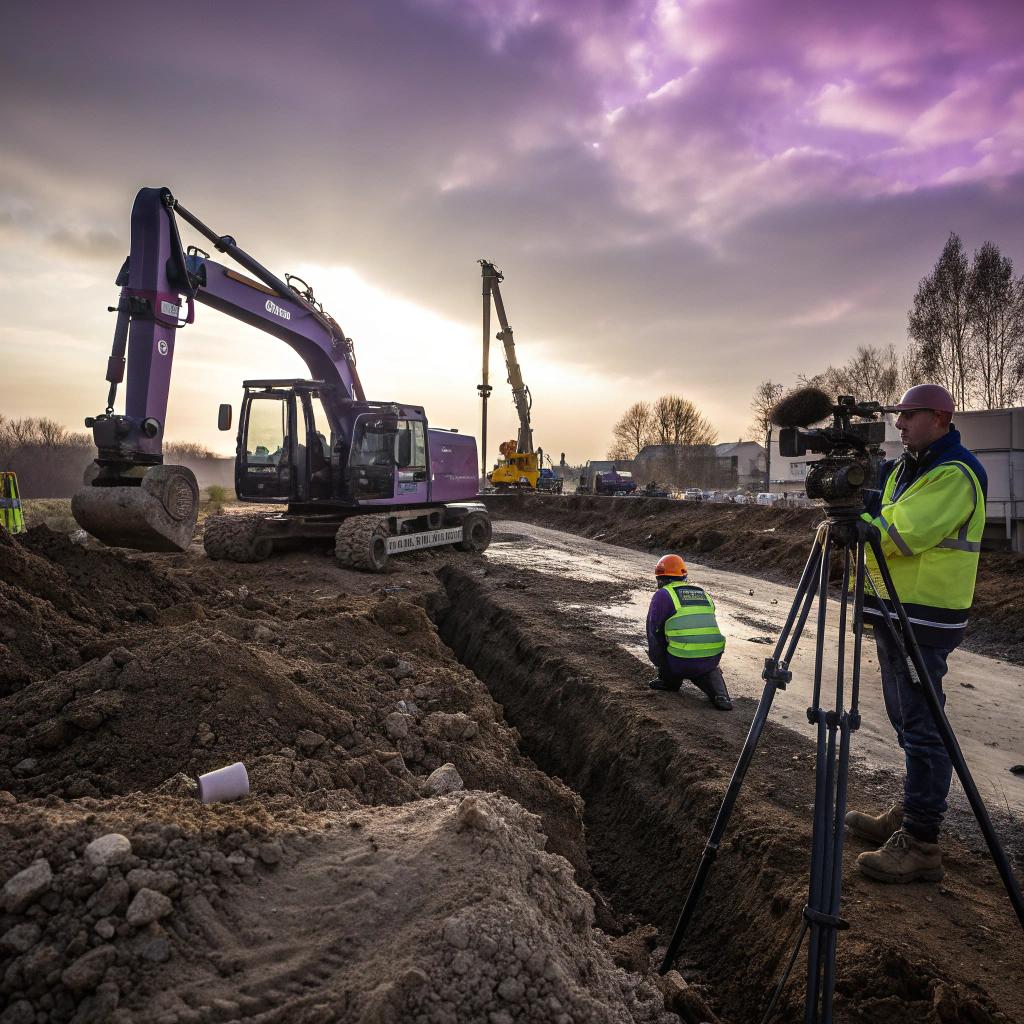

“All commercial excavation companies are basically the same. Dirt is dirt, a hole is a hole, just pick the cheapest one and move on.”
That sounds simple, but it is not true at all. If you remember one thing from this article, let it be this: choosing the right commercial excavation company can save you a lot of money, avoid legal trouble, protect your schedule, and reduce risk on your site. The safest starting point is to research a handful of trusted commercial excavation companies that have clear experience with projects like yours, proper insurance, strong references, and honest communication, then compare them on more than just price.
I know that might feel like the opposite of what you want when you are already juggling drawings, permits, and budget stress. It is tempting to call the first contractor who answers the phone, or the one someone mentioned in a quick email, and just get it off your plate.
But excavation is not a small line item. It affects foundations, utilities, paving, drainage, and sometimes future maintenance costs. One bad cut or a missed utility mark can delay the whole project and cause a chain of phone calls nobody wants.
So, if you are trying to figure out who you can actually trust, this is where it helps to slow down for a moment and look at how the good companies work, and what separates them from the ones that just move dirt around.
I am going to walk through:
– What makes a commercial excavation company actually trustworthy
– How to check if a company is qualified for your type of project
– Signs you are dealing with a risky contractor
– How to compare bids in a way that is fair and less confusing
– Questions to ask before you sign anything
I will also mention a few kinds of companies and project types along the way, not as a “top 10” list, but more like examples of what to look for and what to avoid. Some of this might feel obvious, some of it might not. That is fine. Real projects are messy, and the decision rarely comes down to one perfect factor.
What “trust” really means with commercial excavation companies
People use the word “trust” in a vague way. On a construction site, it is much more concrete.
A commercial excavation company you can trust will usually:
– Show up when they say they will
– Do what is in the contract without constant arguments
– Own their mistakes and fix them
– Communicate problems early instead of hiding them
That sounds simple, but it depends on a few deeper things.
Experience with your specific project type
Not all excavation work is equal. A contractor who is great at small residential pads might struggle with:
– Large retail sites with complex grading and drainage
– Medical facilities that require strict control of vibration near existing buildings
– Urban projects with tight access, night work, and constant traffic control
– Industrial plants with heavy utilities, pits, and environmental rules
Commercial work often has tighter schedules and more people involved. There are architects, engineers, inspectors, utility companies, sometimes multiple GC teams, and maybe a developer who is watching every change order.
A trustworthy excavation company knows how to work inside that environment without constant drama. If they only show you house pads and farm ponds in their portfolio, and you are planning a 150,000 square foot warehouse, that gap should bother you.
Proper licensing, insurance, and bonding
You probably do not enjoy paperwork. Most people do not. Still, in excavation, this part matters more than many people expect.
At a minimum, a commercial excavation company should be able to show:
– Correct contractor license for their trade and state
– General liability insurance at a level that matches your project size
– Workers compensation coverage for their crew
– Bonding capacity if your project or client requires it
Ask for documents, not just “yeah, we have that” on the phone. A solid company will not be offended. If they seem defensive or vague, that is a red flag.
“If an excavation contractor is annoyed that you asked about insurance, imagine how they will react when there is an actual problem on site.”
Safety record and culture
Excavation is not a gentle trade. You have:
– Deep cuts and trench walls
– Heavy equipment moving all day
– Underground utilities that might not be mapped correctly
– Trucks and public traffic nearby
A company you can trust takes this seriously. Not in a glossy brochure way, but practically.
Signs of a healthy safety approach:
– Foremen can explain their safety process in plain language
– They hold toolbox talks regularly and can show logs
– They enforce trench safety, shoring, and access ladders
– They are willing to adjust methods if conditions on site change
If you visit a site they are working on and see workers in a deep trench with no protection, do not ignore that. That attitude usually shows up in other shortcuts too, like rushed compaction or poor utility bedding.
How to vet commercial excavation companies before you commit
This is where many people get stuck. You have some names. They all say they are qualified. Their websites look similar. Their trucks look clean enough. Now what.
Here is a process that tends to work in real life without taking weeks of your time.
1. Start with basic background checks
Before you get into long meetings, do a quick filter.
Check:
– License status on your state contractor board site
– Any public complaints or major violations
– Basic online presence, including photos of recent work
– How long they have been in business under the current name
A newer company is not automatically bad, but if they are brand new, have no photos, and no one can vouch for them, that is a risk. Some contractors rebrand frequently to escape a bad history, and that can be hard to spot if you do not look.
2. Ask for project examples that match your scope
Instead of “What projects have you done?” try asking:
– “Can you show me two or three jobs similar in size and type to mine?”
– “Were you the prime excavation contractor, or a sub under another company?”
– “What went wrong on those jobs, and how did you handle it?”
That last question is very revealing. If they say “Nothing went wrong” on every job, I would be cautious. Things go wrong in construction. You want someone honest enough to admit it and explain how they handled it.
3. Talk to references in a focused way
Most contractors will give references who already like them. Still, you can learn a lot by asking the right questions.
Instead of “Were they good?” you can ask:
– “Did they finish their part on schedule?”
– “How did they handle changes or surprises underground?”
– “Did you have any disputes about extra costs or quality?”
– “Would you hire them again for a project like this?”
If a reference hesitates and gives a polite but vague answer, listen to that. Sometimes the tone tells you more than the words.
Comparing excavation bids without getting misled
This part can make or break a project. Many people line up three bids, see one low number, and think they just got lucky. Maybe. But usually, that low number comes from missing scope, weak allowances, or assumptions that will cost you later.
“A low excavation bid can feel like savings in the moment, but it often turns into the most expensive option once the soil starts moving.”
Why excavation numbers vary so much
Excavation bids can swing widely for reasons like:
– Different assumptions about rock, groundwater, or unsuitable soils
– Different haul distances or dump fees
– Inclusion or exclusion of utility trenching, backfill, and compaction
– Different approach to shoring, dewatering, or access roads
Two bids that look far apart might actually be similar once you align the scope. Or a “middle” bid might secretly be the least clear.
A simple comparison table approach
One practical method is to set up a small comparison table. Nothing fancy, just enough to see what each company is really pricing.
| Item | Company A | Company B | Company C |
|---|---|---|---|
| Rough grading included? | Yes, whole site | Building pad only | Yes, whole site |
| Over-excavation & recompaction | Allowance 2 ft | Not included | Included if soils report requires |
| Export of excess soil | Included, up to 1,000 CY | By owner | Time & materials |
| Utility trenching & backfill | Included | Not included | Included, except fire line |
| Rock excavation or hammering | Allowance only | Unit price per hour | Excluded |
Once you lay things out like this, the number that looked “cheapest” on the surface may not be cheap at all when you adjust for what is missing.
Watch for unclear exclusions and allowances
Most excavation contracts will have a section for exclusions and allowances. Read this section carefully.
Common trouble spots:
– Unknown rock conditions
– Groundwater and dewatering systems
– Offsite disposal of contaminated soils
– Import of structural fill
– Traffic control and flagging
Ask them to explain how they handle those items if they come up. If their answer is basically “We will cross that bridge when we get there,” that usually means “You will pay extra later.”
Key traits of commercial excavation companies you can trust
There is no magic checklist that guarantees a perfect contractor, but certain traits come up again and again with the better companies.
Clear communication, even when the news is bad
Good excavation teams:
– Call you before a problem blows up, not after
– Put change conditions in writing, with photos if needed
– Explain their plan in plain language instead of hiding behind jargon
If an estimator is responsive and clear before the contract is signed, that is a good sign. If they are slow, chaotic, or confusing during the bid stage, that usually does not improve once equipment hits the ground.
Realistic schedules instead of wishful thinking
A trustworthy contractor will:
– Give you a schedule that fits weather, access, and crew size
– Tell you when your overall timeline is too tight for the work involved
– Avoid promising impossible start dates just to win the job
Honestly, this can be frustrating to hear. No one enjoys being told that their schedule is not realistic. But I would rather have a contractor push back gently on timing in a meeting than watch a schedule fall apart halfway through excavation.
Respect for coordination with other trades
Excavation does not happen in a vacuum. It has to sync with:
– Surveying and layout
– Concrete and foundation work
– Underground plumbing, electrical, and fire
– Site utilities, paving, and sometimes landscaping
Trustworthy excavation companies work with this in mind. They coordinate access paths, staging areas, and phasing, so they are not blocking everyone else or getting blocked themselves. Contractors who ignore this usually create traffic jams on site that turn into schedule problems.
Different types of commercial excavation work and what they require
The word “excavation” covers a lot. A company that is outstanding in one area might be mediocre in another. It helps to match the contractor to the kind of work you need.
1. Site grading for commercial buildings
This covers:
– Cutting and filling the site to design grades
– Building pads prepared to geotechnical specs
– Parking lot subgrade
– Swales, retention basins, and drainage channels
For grading-heavy jobs, you want a company with:
– Modern GPS or laser-controlled equipment
– Good relationship with survey crews
– Proven method for handling unsuitable soils
Even small differences in grade can affect drainage, ADA access, and paving performance later. A crew that treats it as “close enough” can create problems that show up long after you finish.
2. Deep excavation and shoring
Projects like basements, underground parking, or large tanks bring extra risk.
You want to ask:
– How do they design or coordinate shoring systems?
– Do they have engineers they work with regularly?
– How do they monitor adjacent structures for movement or cracking?
If your project is in a tight urban area near existing buildings, this is not something to leave to a contractor who mostly digs shallow pads in open fields.
3. Utility trenching and underground infrastructure
Many commercial excavation companies handle:
– Storm drains and catch basins
– Sanitary sewer lines and manholes
– Water lines, fire lines, and hydrants
– Conduits and duct banks
Here the details matter: bedding, compaction, proper slopes, and coordination with inspectors.
Problems tend to show up later in the form of settlement, backups, or leaks. You want a contractor with a track record of passing inspections without a constant cycle of rework.
4. Demolition and excavation on the same site
Some projects combine:
– Building demolition
– Hauling of debris
– Excavation for new foundations on the same parcel
This can be helpful, because one company controls the sequence and site logistics. But only if they actually know both trades.
If a company claims to handle both demolition and excavation, ask:
– What percentage of their work is demolition vs excavation?
– Do they have experience separating recyclable materials?
– How do they handle hazardous materials or suspect soils?
A company that cut its teeth on demolition might be strong at fast removal but weaker on precise subgrade work. The reverse can be true as well. It helps to understand which side is their real strength.
Common red flags with excavation contractors
Trust is not just about positives. It is also about spotting trouble before you are locked in.
Here are some signs that make many project owners and GCs nervous.
Very low price with very vague scope
If one bid is far lower than the others, and the scope is described in just a few lines, you are probably looking at missing items. Sometimes that is by accident. Sometimes it is a tactic to win the job and make profit on change orders.
You can respond by asking them to clarify each major item in writing. If they refuse or drag their feet, that tells you what you need to know.
Poor response to questions
During bidding and preconstruction, pay attention to how quickly and clearly they answer:
– RFIs
– Clarification emails
– Phone calls about conflicts in the plans
If it takes multiple reminders just to get a basic answer, imagine what will happen when you are in the middle of a critical pour and need a fast decision.
Unwillingness to discuss problems honestly
If a contractor cannot talk about:
– Past schedule slips
– Change orders that created friction
– Lessons they learned from mistakes
they might be hiding a pattern. No contractor has a perfect history. The honest ones are usually more comfortable talking about difficult jobs, because they have already done the hard work of fixing their process.
Balancing local knowledge with scale
There is sometimes a quiet debate in construction: do you trust a large, regional excavation firm, or a smaller local company that “knows the soil”?
Both options have tradeoffs.
A larger commercial excavation company may offer:
– More equipment and crews
– Stronger safety program
– More bonding capacity
But you might feel more like a number if your project is modest in size compared to their usual work.
A smaller local company might offer:
– Closer involvement from the owner or senior superintendent
– Better familiarity with local inspectors and soil conditions
– More flexible thinking on unusual sites
But they might struggle with very tight schedules or large volume surges.
Sometimes the right answer is not purely one or the other, but a company that has grown enough to handle volume while still treating each job with individual attention. This is where references and recent project examples matter more than any marketing slogan.
How to work with your excavation company once they are on board
Choosing the right contractor is only half of it. The way you work with them can either build trust or quietly erode it.
Share information early, not at the last minute
Excavation companies do better when they understand:
– Your critical milestone dates
– Other trades that depend on their work
– Any known soil or environmental history
– Long-term plans for future phases on the same site
If your geotechnical report has bad news, hiding it never helps. A good contractor can often suggest ways to manage costs if they know the truth early.
Walk the site together
A short site walk with the superintendent before major phases begin can save days later. Look at:
– Access points for trucks
– Staging areas for stockpiles
– Areas that must remain open for other trades or the public
– Any sensitive neighboring structures or utilities
Sometimes you will catch things that none of you saw on the drawings. A light pole in the wrong place, a fence that was not shown, or a steeper slope than expected.
Document changes clearly, but stay flexible
Change is normal in excavation. Hidden debris, unknown utilities, extra over-excavation, weather. The key is how you all handle it.
A healthy pattern is:
– Field condition identified, with photos
– Short written description of the change
– Rough order of magnitude cost and time effect
– Quick decision, so work does not stall
You do not need to turn every small issue into a full negotiation. At the same time, letting everything stay verbal leads to arguments later. Find a middle ground where both sides feel protected and respected.
“The best excavation projects feel less like a fight over every cubic yard and more like a joint effort to keep the site moving and safe.”
Questions to ask before you sign with any commercial excavation company
To keep all of this practical, here is a set of direct questions you can bring to your next meeting or call. You do not need to ask every single one, but picking from these will help you see how open and prepared a company really is.
Project experience and scope
– What are the three most similar projects you have completed in the last five years?
– Can you walk me through one job that went well and one that was difficult?
– Who will be your superintendent or foreman on this project, and what is their background?
Technical approach
– How do you plan to handle access and traffic on a busy or constrained site?
– What is your approach to unknown utilities or conflicts in the field?
– How do you coordinate with survey crews and verify grades?
Risk and cost control
– Which items in your bid carry the most uncertainty?
– How will you handle extra rock, groundwater, or unsuitable soils if we encounter more than expected?
– Are there any assumptions you made that we should talk through now?
Schedule and staffing
– How many other jobs will your crew be handling at the same time as ours?
– What does a typical day on site look like for your team?
– What would cause you to fall behind schedule, and how do you usually recover?
Communication and accountability
– Who is my single point of contact for questions during the job?
– How do you prefer to handle small field changes: email, text, formal change order?
– Can you share an example of a dispute you resolved with a client and how it ended?
The way a contractor answers these, in tone and detail, often matters as much as the content. You are not just gathering facts. You are also testing how they think, how they handle pressure, and whether you feel you can work with them for several months without constant strain.
Frequently asked questions about choosing a commercial excavation company
How many bids should I get for commercial excavation?
Usually two or three solid, comparable bids are enough. More than that can create confusion and a lot of extra work without much added clarity. The key is to make sure each bidder is looking at the same scope and drawing set.
Is the cheapest excavation bid ever the right choice?
Sometimes, but not often by accident. The cheapest bid can be fine if:
– The scope is clearly defined and matches the others
– The contractor has strong references and relevant experience
– Their exclusions and allowances are reasonable and transparent
If you do pick the lowest bid, do it because you understand why it is low, not just because the number looks attractive.
Should I separate demolition and excavation, or keep them with one company?
It depends on the project. For small to mid-size sites, one contractor handling both can simplify coordination and staging. For very large or complex structures, it can be better to use a specialist for each trade. Ask each company where their real strength lies, and verify that with past project photos and references.
How do I know if an excavation company is big enough for my project?
Look at:
– Size and variety of their equipment fleet
– Number of active crews they can run at once
– The largest project value they have handled in the last few years
If your job would be their largest project by far, that does not automatically mean they will fail, but it raises fair questions about schedule, cash flow, and staffing.
What is the single most useful sign that I can trust a commercial excavation company?
There is no single sign that works for every situation, but if you want one practical test, here it is:
Ask them to describe a job where they lost money or had serious trouble, and what they changed afterward. A company that can answer that plainly, without blaming everyone else, is usually one that takes responsibility seriously. And in excavation, that habit of taking responsibility is what protects your project when the ground does not match the plans.
