
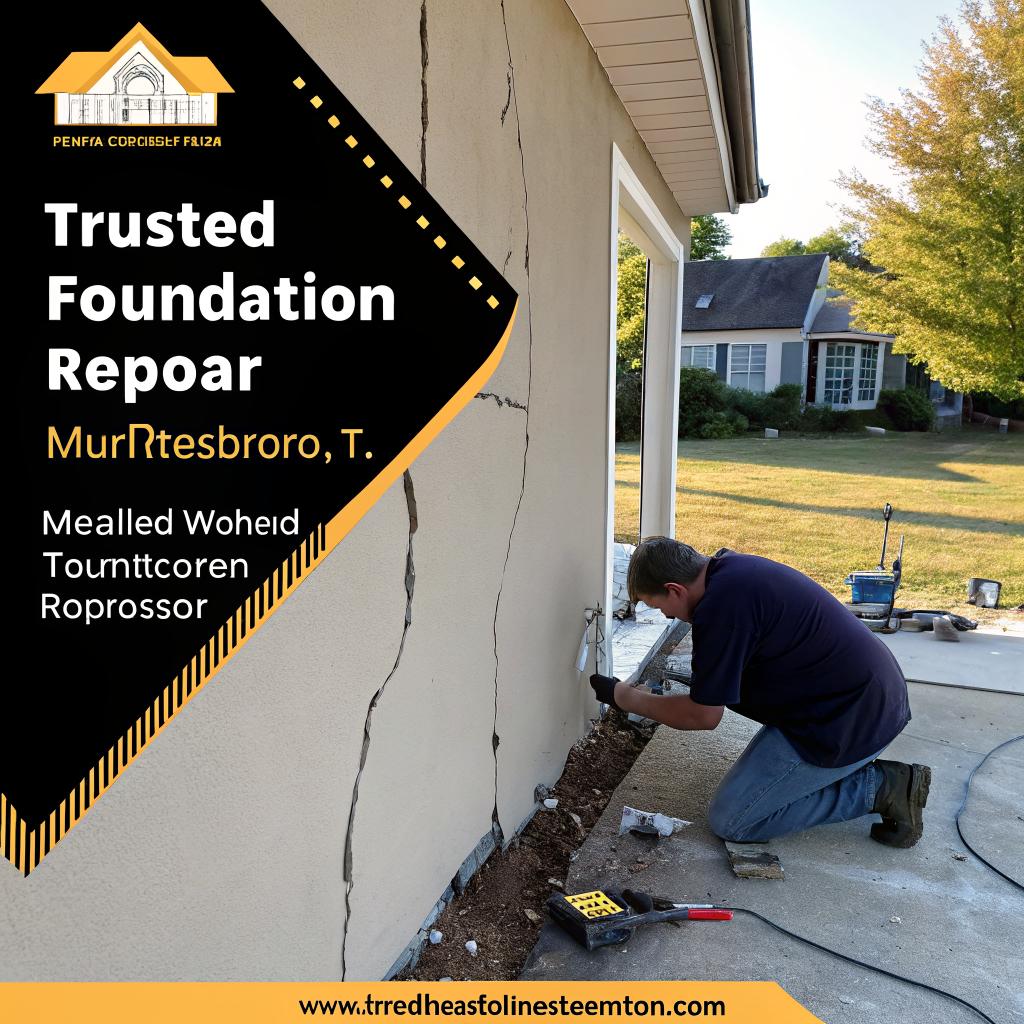

“Foundation cracks are just a cosmetic issue. If the house is still standing, you do not need to worry about it.”
That statement is false, and it causes a lot of expensive problems in Murfreesboro. Small cracks can be cosmetic, but when your doors start sticking, your floors feel uneven, or you see gaps around windows, those are warning signs. You should talk with trusted foundation repair Murfreesboro TN experts before the damage spreads and the repair cost climbs. Many homeowners wait because they hope it will go away on its own. It almost never does. The short answer is simple: if you see movement, separation, or recurring cracks, you need a professional to inspect your foundation.
Most people in Murfreesboro only think about their foundation when something looks wrong. That is normal. You are busy, you have work, kids, maybe school events, and the last thing on your mind is concrete under your feet. Until the first rainy week when water creeps into the crawl space, or a hairline crack that used to be neat and thin suddenly widens. Then you start to wonder if it is serious, and you end up searching for local experts late at night, probably with a bit of worry.
I have talked to homeowners who said they ignored a crack for years because the house “felt fine.” They only called someone after a home inspector flagged it when they wanted to sell. At that point, the fix was not a quick patch. It involved structural work, and the schedule of the buyer, and negotiations. All things that could have been less stressful with an earlier call.
So if you are in Murfreesboro and you are trying to figure out who to trust with your foundation, you are already doing the right thing by researching before you pick up the phone. The company you choose matters more than any product, pier, foam, or fancy equipment. A good crew can work with average tools and still deliver solid results. A careless crew can ruin a project with the best technology in the world.
When you hire someone to repair a foundation, you are not only paying for concrete and steel, you are paying for judgment and honesty.
That is why I think it helps to look at how foundation repair works in Murfreesboro, what real experts actually do, and how you can tell if a contractor is serious or just reading from a script.
Why Foundations Struggle In Murfreesboro
Before you can judge a repair plan, it helps to know what your house is fighting against.
Murfreesboro has a mix of soil types. In many neighborhoods, you see clay that swells when wet and shrinks when dry. That constant change puts pressure on concrete and block walls. Then you add heavy rains, hot summers, and periods of drought. The soil moves, water flows where gravity sends it, and your foundation reacts.
You might notice:
– Cracks on interior drywall
– Doors that rub the frame or do not latch
– Gaps opening at trim or crown molding
– Floors that feel like they slope a bit
One of those on its own may not be an emergency. A small crack that has not changed in ten years is different from one that doubled in size last year. But when several signs show up together, the structure might be shifting.
Murfreesboro homes also range from older crawl space houses to newer slab-on-grade builds. Each type has its own weak spots.
Crawl Space Foundations
A lot of older Murfreesboro homes sit on crawl spaces. Moisture under the house, poor drainage, and weak or rotted support beams can pull the floors out of level. You might feel a dip in the hallway or see tile grout opening up.
Crawl spaces are often “out of sight, out of mind.” People store a few boxes there, or never go under at all. That is why the damage sometimes looks sudden, even though it took years to get there.
Slab Foundations
Many newer homes use concrete slabs. These are easier to finish and feel solid for a long time, but they are not perfect. Poor compaction during construction, washout from broken pipes, or expanding clay under the slab can cause parts of the slab to sink or heave.
When a slab moves, you often see cracks in the slab itself, tile popping loose, or brick veneer cracking outside.
Once you know what is happening under the house, you can look at repair options with clearer eyes.
Common Foundation Problems Murfreesboro Experts See
Some issues come up so often in Murfreesboro that experienced contractors can almost guess the neighborhood and soil conditions once they see photos.
Here are a few of the big ones.
Settlement and Sinking Corners
One corner of a house often settles more than the others. Maybe the soil there was filled in during construction. Maybe there is a gutter downspout that dumps water at that spot. Over time, the corner drops.
You may see:
– Cracks radiating from the corner of windows or doors
– A gap between roofline and brick
– Brick stair-step cracks near that corner
– Interior diagonal cracks above doors
In some cases, lifting that corner with piers and stabilizing the soil can stop the problem from getting worse. You may not get a “perfect” cosmetic fix, but you stop the movement, which is the real goal.
Horizontal Cracks in Basement or Crawl Space Walls
Horizontal cracks in block or poured walls are more serious than small vertical hairline cracks. They can show that the wall is bowing under outside soil pressure.
Signs include:
– A crack that runs sideways along a block line
– Wall leaning in slightly
– Water seepage or damp spots on the crack
This kind of issue calls for quick attention, because the wall carries a lot of load. Real experts will measure the movement and propose reinforcement, not just a surface patch.
Moisture and Mold Under the House
Murfreesboro humidity and poor drainage combine to create crawl spaces that are damp most of the year. Standing water after rain, or high humidity under the house, can rot wood and weaken support beams.
If your floors feel bouncy, there might be a moisture problem under you. Some companies jump straight to selling vapor barriers or dehumidifiers. Those can help, but if the real problem is outside drainage, you want that addressed first.
Repair Methods Trusted Pros Actually Use
You might have seen ads that claim a single system can fix every foundation. That is not realistic. A good contractor will look at the type of problem, the soil, and the budget, then suggest a mix of methods.
Here are some of the most common approaches in Murfreesboro and when they make sense.
Steel or Concrete Piers
Piers transfer the load of your house from unstable soil near the surface to stronger soil or rock deeper underground.
Typical uses:
– Lifting and stabilizing sinking corners
– Preventing further settlement along one side of the house
– Supporting heavy areas like chimneys or room additions
There are different pier designs, but the core idea is the same. Install the pier down to a stable layer, attach it to the foundation, and gradually lift where possible.
The right crew checks:
– Bearing capacity of the deeper layer
– How much lift is safe for the structure
– Spacing of piers based on load
A bad pier job can cause more cracking. A good one will stop settlement and often close some cracks naturally.
Helical Piers
Helical piers are screw-like steel shafts that twist into the ground. They are useful in areas where you need support but heavy equipment access is limited.
In Murfreesboro, helical piers often help:
– Support porches
– Stabilize light structures or additions
– Assist with repairs where traditional driven piers are harder to install
The installer tracks torque as they drive the pier. That torque relates to the strength of the soil. Real experts know the right targets and will explain them if you ask.
Slab Jacking / Poly Foam Injection
For sinking concrete slabs, such as garage floors or small patio slabs, contractors may pump grout or high-density foam under the slab to lift and support it.
This method:
– Fills voids under the slab
– Lifts sunken sections
– Reduces trip hazards
It is not right for every situation. If the slab is heavily cracked or the soil is washing away from a drainage problem, lifting alone will not fix the cause.
Crawl Space Repairs
Crawl space work in Murfreesboro might include:
– Replacing rotted beams or joists
– Adding new support columns or adjustable jacks
– Installing drainage and sump pumps
– Encapsulating the crawl with a vapor barrier and sealing vents
– Adding dehumidification after drainage is corrected
This is one area where homeowners sometimes overpay for shiny products. A plain, well installed drain and proper grading might do more for your foundation than the prettiest white plastic on the walls. An honest expert will walk you through priorities instead of pushing the biggest package first.
Water Management
Water is the silent enemy of most foundations. If you can control where water goes, you solve half the battle.
Trusted Murfreesboro contractors often suggest:
– Regrading soil to slope away from the house
– Extending gutter downspouts
– Installing French drains along problem areas
– Adding interior drains and a sump pump in basements
These fixes are not as glamorous as big structural work, but they protect your foundation and make any structural repair last longer.
How To Recognize True “Trusted Experts”
Many companies claim to be trusted or experienced. Those words alone do not mean much. You have to look at behavior, not slogans.
Here are questions and checks that help separate real pros from smooth talkers.
Do They Start By Listening?
When you call or schedule an inspection, pay attention to how the conversation begins. Does the inspector:
– Ask about the history of the problem
– Listen to your concerns
– Walk through the house before jumping under it
– Look for patterns in the cracks
Or do they arrive already ready to sell one system, no matter what you say?
If they cannot repeat your main concerns back to you in plain language, they probably do not understand them well.
Do They Explain The Cause, Not Just The Product?
You should walk away from the inspection with a basic story of what is happening to your house. It does not need to be an engineering lecture, but it should feel clear and logical.
For example:
– “The back right corner is settling because the soil is softer there and water from your gutter collects in that area.”
– “The horizontal crack in this wall shows pressure from outside soil. We see bowing here and here, and that is why we suggest reinforcement.”
If you only hear about “our exclusive system” or long warranty terms, and not much about cause and effect, that is a red flag.
Do They Offer More Than One Option?
Sometimes there is a single correct fix. A severely bowed wall, for example, might only be safe with full structural reinforcement.
But many situations have levels of response:
– Stop further movement now, then watch and plan cosmetic repairs later.
– Do a full lift and stabilization with more piers.
– Combine drainage work and limited structural repair.
A real expert will often show you a “good, better” kind of range, with costs and tradeoffs explained.
If every problem, big or small, leads to the same very expensive package, you are probably dealing with a salesperson, not a consultant.
Do They Put Details In Writing?
You should receive a written proposal that includes:
– Clear description of the problem areas
– Exact number and location of piers or supports
– What lifting or stabilization is expected
– What is and is not covered in the warranty
– Total cost with any possible extra charges spelled out
Avoid vague lines like “as needed” without limits. If more work might be needed once they open up the area, that can be honest, but it should have a clear price structure.
Do Past Customers Sound Real?
Online reviews are not perfect, but they can still share patterns. Look for reviews that mention:
– The crew showing up on time and cleaning up
– The company coming back to adjust something if needed
– Clear communication during the project
If all the reviews sound like they came from the same script, or if there are many complaints about surprise charges, that tells you something.
What A Foundation Inspection Should Look Like
If you have never had a foundation inspection, the idea might feel a bit vague. Here is how a typical visit from serious Murfreesboro experts usually goes.
1. Initial Walkthrough
They start inside the house:
– Look at doors and windows
– Test how they open and close
– Check cracks in drywall and ceilings
– Walk across floors to feel for slopes
The point is to understand how the structure behaves, not only chase visible cracks.
2. Exterior Check
Outside, they:
– Look at brick or siding for cracks or separation
– Check gutter and downspout placement
– Note any low spots where water may pool
– Inspect visible parts of the foundation
Good inspectors will often take photos and sometimes use a level to check elevations.
3. Crawl Space or Basement Review
In crawl spaces, expect them to:
– Check support posts and beams
– Look for water stains, mold, or rot
– Note soil conditions and moisture level
In basements:
– Look for bowing or cracking walls
– Check for water entry
– Inspect joints where floor meets walls
If they refuse to go into the crawl space or only peek in from the door, that is not a full inspection.
4. Measurements
Some companies use tools like laser levels or elevation readings across the house. This helps map how much different parts of the floor have moved.
Measurements:
– Provide a baseline if more movement happens later
– Help decide where piers or supports go
– Reduce guesswork
5. Discussion And Proposal
Before they leave, they should:
– Explain what they saw
– Answer your questions in simple language
– Give you an idea of options and ballpark cost range
A detailed written proposal may come the same day or within a short time. If you feel rushed to sign on the spot “or lose a discount,” pause. A day to think rarely hurts.
Common Myths About Foundation Repair
There are a few repeated claims that do not quite match reality. Let me push back on some of them.
“Every Crack Means You Need Expensive Work”
Not true. Concrete almost always cracks a bit. Hairline cracks with no displacement that have not changed for years may need monitoring, not heavy repair.
Serious concerns include:
– Cracks wider than a quarter inch
– Cracks that grow over a short period
– Cracks combined with sticking doors or sloping floors
– Horizontal cracks in block or poured walls
If a contractor tries to sell thousands of dollars in work for one isolated hairline crack that has not changed, ask more questions or get another opinion.
“You Can Fix Any Foundation Problem With Simple Surface Patches”
Also not true. Cosmetic patching alone will not solve active movement. You might hide the crack for a year, but if the soil is still moving, the crack will come back, and sometimes worse.
Real repair focuses first on stopping movement. Cosmetic work comes after.
“All Companies Use The Same Methods, So Just Pick The Cheapest”
I think this is one of the most expensive myths. On paper, two bids might both mention “piers” and “drainage.” But details like pier depth, material quality, spacing, and method of installation make a real difference.
The cheapest bid can cost more long term if the repair fails or needs redo. On the other hand, the most expensive bid is not automatically the best either. You want value, not just price.
Estimated Costs And Timeframes In Murfreesboro
Prices change with time and each project is unique, but it helps to have rough ranges to reduce the shock.
Here is a simple comparison to give context. These are broad examples, not quotes.
| Type of Work | Typical Scope | Approximate Cost Range | Typical Time Needed |
|---|---|---|---|
| Minor crack repair | Epoxy / seal small, non-structural cracks | $300 – $1,000 | Several hours |
| Pier installation (per pier) | Steel or concrete pier for settlement | $1,000 – $2,500 per pier | Several piers in 1 to 3 days |
| Crawl space support | New posts, jacks, limited beam work | $2,000 – $8,000+ | 1 to 3 days |
| Drainage improvements | French drain, downspout extensions | $1,500 – $7,000+ | 1 to 4 days |
| Basement wall reinforcement | Steel beams, anchors, or similar | $4,000 – $15,000+ | 2 to 5 days |
Cost alone should not guide your decision, but if a bid is far outside these ranges without a clear reason, ask why.
Questions To Ask Before Hiring A Murfreesboro Foundation Contractor
Here are some practical questions you can use. You do not need to ask every one, but picking a few can reveal a lot.
About Experience And Local Knowledge
– How long have you worked on foundations in Murfreesboro or Middle Tennessee?
– Have you worked on houses in my neighborhood or with similar soil conditions?
– Can you explain how the local soil type is affecting my house?
Local experience matters, because soil in one part of town can behave very differently from soil in another.
About The Proposed Repair
– Why did you pick this method instead of other available methods?
– What happens if I wait a year before doing this work?
– Are you lifting my house, just stabilizing it, or both?
– What changes should I expect in doors, cracks, or floors after the repair?
Good experts answer these directly. If the answers feel vague, that may reflect the quality of thinking behind the plan.
About Warranty And Follow-Up
– What does your warranty cover exactly, and for how long?
– Is the warranty transferable if I sell the house?
– If a problem comes back, what is the process for getting service?
A clear, written warranty that someone can explain in plain language is worth more than a fancy promise you do not really understand.
How To Prepare Your Home For Foundation Work
Once you pick a contractor, you can make the job smoother by preparing a bit.
Inside The House
– Move furniture away from walls with major cracks or doors that will be adjusted.
– Take fragile items off shelves and walls. Lifting may shift things.
– Make sure the crew has a clear path to areas they need to reach.
You do not have to empty the whole house, but reducing obstacles helps.
Outside The House
– Clear plants or decorations where piers or drains will go.
– Park vehicles out of the work area.
– If pets use the yard, plan where they will stay during work hours.
Most crews keep a tidy site, but heavy equipment and open holes are not safe play spaces for kids or pets.
What To Expect During And After Repair
The actual repair days can feel disruptive, but knowing what is normal helps you stay calm.
Noise, Vibration, And Dust
Pier installation and excavation involve:
– Noise from equipment
– Some vibration as piers are driven
– Dust and soil movement
This is usually limited to work hours and a few days. Many homeowners stay in the house during the process, but if you work from home and need quiet, plan for that.
Visible Changes
After lifting or reinforcement, you might see:
– Some cracks closing partway or fully
– New small cracks as the structure settles into the corrected position
– Doors and windows operating more smoothly
A good contractor will often return to adjust doors or do minor touch-ups as part of the job, or at least explain what you should handle through a painter or carpenter.
Monitoring Over Time
You can keep a simple log after the work:
– Take photos of key cracks every few months.
– Note any new sticking doors.
– Watch for new water issues after storms.
If something concerns you, you have records. That makes any warranty call easier and more factual.
Practical Maintenance To Protect Your Foundation
Foundation repair is not a one-time magic reset. Your house still sits on the same property, in the same climate. A few simple habits can reduce the chance of new problems.
Control Water Around The House
– Keep gutters clean so water does not overflow next to the foundation.
– Run downspouts several feet away from the house.
– Watch for low spots where water pools and fill or regrade them.
This might sound basic, but ignoring it is one of the fastest ways to stress a foundation.
Watch Changes, Not Isolated Flaws
You do not need to panic at every hairline crack. Instead:
– Mark the ends of a crack with a pencil and date.
– Check it every few months.
– If it grows, widens, or branches, call for a visit.
This approach keeps you from overreacting but still catches real movement early.
Be Careful With Major Landscaping
Trees and large shrubs near foundations can affect moisture levels in the soil. Sometimes roots create movement, especially with certain species.
Before planting large trees close to the house, ask how big they will get and how far the roots may spread. Moving a tree is harder than making a good choice at the start.
When To Get A Second Opinion
There is nothing wrong with getting more than one estimate. In fact, for major work, it is smart.
Think about a second opinion if:
– Two companies give completely different explanations of the cause.
– The suggested fix is much more aggressive than you expected with little explanation.
– You feel pushed to sign before you can think.
A trusted expert will not object if you say, “I want to compare this with another bid.” If they react badly, that tells you what you need to know.
Short Q&A To Wrap Things Up
Q: How do I know if a crack in my Murfreesboro home is serious?
A: Watch size and change. Cracks wider than a quarter inch, cracks that grow, or cracks near doors and windows that also stick are more serious. Horizontal cracks in basement or crawl space walls should be checked quickly. If in doubt, get a professional inspection.
Q: Will foundation repair ruin my yard?
A: There will be disturbance where piers or drains go. Soil is removed and then replaced, and some grass or plants may be affected. A good crew will minimize damage and clean up, but you might need some basic yard repair afterward.
Q: Can I wait and “see what happens” before calling an expert?
A: You can, but you take a risk. If the problem is minor and stable, waiting might be fine. If the structure is moving, waiting usually makes the repair larger and more costly. A visit from a trusted Murfreesboro expert gives you real information instead of guesswork.
Q: Do all foundation repairs come with a lifetime warranty?
A: No. Some do, some do not. And “lifetime” can mean different things, depending on the fine print. Ask who backs the warranty, what is covered, and whether it transfers to a new owner.
Q: Is every foundation problem fixable?
A: Many are, but not all in the way owners might hope. Some houses can be lifted close to original position, others can only be stabilized to prevent worse movement. Honest experts in Murfreesboro will tell you what is realistic for your specific home, even if that answer is a bit uncomfortable.
