
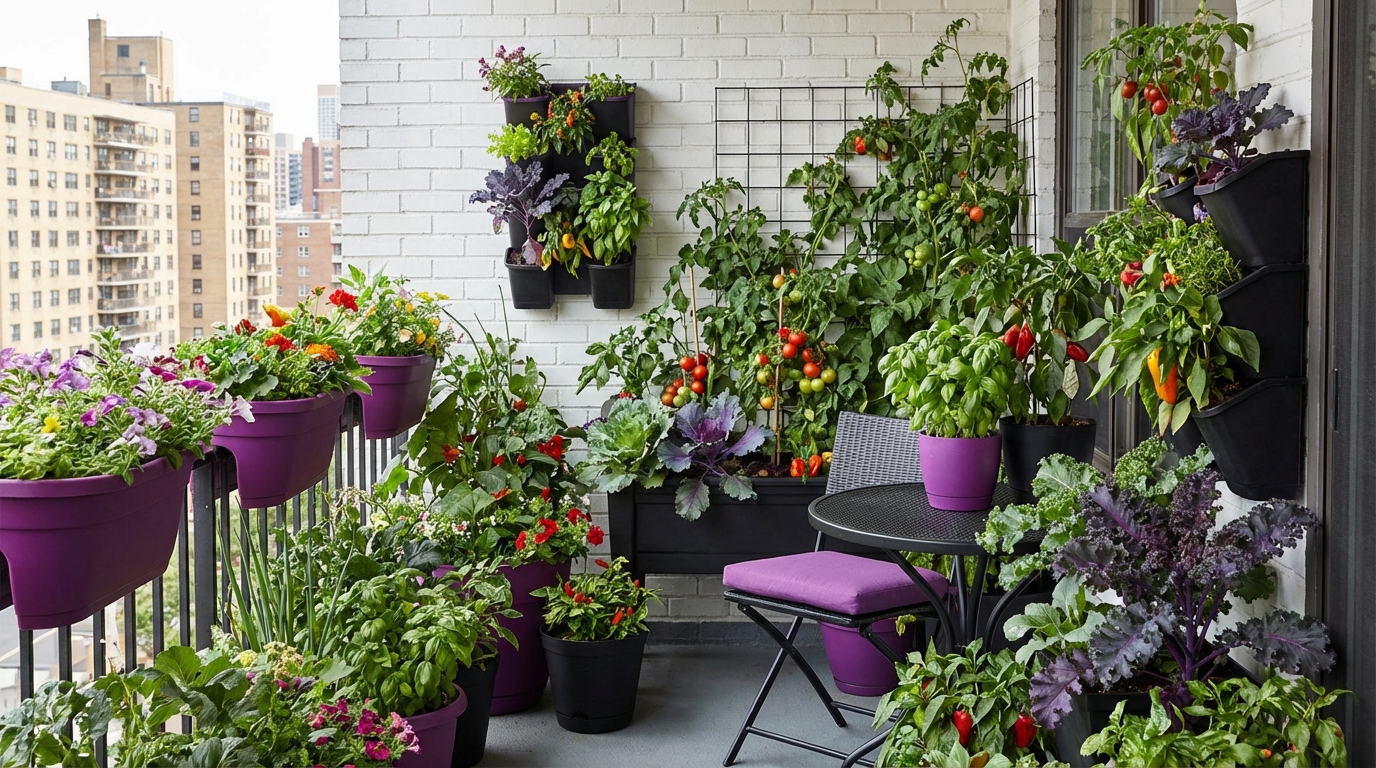

“You need a backyard and a lot of space if you want to grow your own food.”
That statement is false. You can grow a surprising amount of food on a small balcony, even if you live in the middle of a big city. I might be wrong about the exact number of plants you can fit, but I have seen people pull off full salads, herbs for daily cooking, and even small fruit harvests from spaces that barely fit a small table and two chairs.
The real question is not “Can you grow food on a balcony?” but “What can you grow well, and how do you make it work without wasting time and money?” Balcony gardening has limits. Light, weight, wind, neighbors, building rules. When you work with those, not against them, the whole thing feels a lot more practical and a lot less like a Pinterest fantasy.
You do not need perfection. You do not need designer planters. You need a small plan, some consistent habits, and realistic expectations. Think “fresh herbs every week” before you think “self-sufficient urban farm.” The second goal might come later, but if you start there, you are setting yourself up to quit early.
Understanding your balcony before you buy a single plant
Most people fail at balcony gardening before they even start. They buy random plants that look good at the store and only later ask a basic question: “Does my balcony actually give these plants what they need?”
“If the plant is sold at my local store, it will grow on my balcony.”
That one trips up a lot of beginners. Stores sell what people want to buy, not what works for your exact space. Your balcony is its own small environment. It has its own light, wind, and temperature pattern. Treat it like that and things get easier.
Light: the deal-breaker for balcony gardens
Sunlight is the main factor that decides what you can grow. Not your enthusiasm. Not your budget.
You do not need fancy tools to measure light. An honest look at your balcony during the day is enough for a decent starting point.
Ask yourself three questions:
1. When does the sun first hit the balcony floor or railing?
2. When does it stop?
3. Is anything blocking the sun, like another building, big tree, or deep roof overhang?
The rough categories most gardeners use:
| Light level | Hours of direct sun | What usually grows best |
|---|---|---|
| Full sun | 6+ hours | Tomatoes, peppers, strawberries, most herbs, bush beans |
| Partial sun / partial shade | 3 to 5 hours | Lettuce, spinach, chard, green onions, some herbs, peas |
| Bright shade | Little to no direct sun, but lots of ambient light | Leafy greens, mint, parsley, some Asian greens |
If you only remember one thing from this whole section, make it this: match the plant to your light, not your dream. If you have a north-facing balcony in a dense city core, tomatoes will probably disappoint you. Lettuce and herbs might thrive.
“I will just put a grow light outside and fix the sun problem.”
Outdoor grow lights on a balcony bring other problems: power access, weather, neighbors, and building rules. For most people, natural light is the main path. Grow lights are more realistic indoors.
Wind, heat, and microclimates
Balconies can be strange. They might be windy on one side, hot and still on the other. One corner gets baked by reflected heat from a glass building, another stays cool and damp.
Look for clues:
– Do small objects blow over often?
– Does the balcony feel like a wind tunnel when there is a storm?
– Does the railing or wall get hot to the touch on sunny afternoons?
These details matter. Constant wind dries out pots, stresses plants, and breaks stems. Very hot corners can cook roots in dark containers.
You can use this to your advantage. Heat lovers near the warm wall. Lettuce and greens toward the cooler, shadier section. Taller pots or small barriers to slow wind where needed.
Weight and building rules
This part is less fun but you cannot ignore it.
Most modern buildings can handle some containers, soil, and water. Still, extremely heavy setups like large wooden raised beds or big ceramic pots full of wet soil might push limits, especially on older balconies.
If you do not know your building’s rules, ask. Some buildings restrict:
– Drilling into walls or railings
– Hanging planters outside the railing
– Large containers that block drainage
– Water outlets and hoses
Ignoring rules can get your garden removed after you have already invested time, and that feels terrible. A short email to your landlord or building manager can save you that headache.
Choosing what to grow on a balcony
One of the biggest mistakes is trying to grow everything at once. A better way is to focus on what you actually eat often and what makes sense for your conditions.
“I should start with tomatoes. That is what real gardeners grow.”
Tomatoes are not a must. For many balconies they are a poor first choice. They need a lot of light, deep pots, support, and consistent watering. They are rewarding, but they are not the easiest starter crop.
Let us look at common balcony crops and how they fit in.
Herbs: the highest impact plants for small balconies
Herbs are where most people should begin. They do not need much space, and the flavor upgrade in your cooking is very clear.
Good options:
– Basil: Loves warmth and sun. Hates cold nights and soggy soil.
– Mint: Tolerates partial shade and some neglect. Spreads fast, so give it its own pot.
– Parsley: Handles partial sun and cooler conditions. Slow to start, steady later.
– Chives: Perennial in many climates. Simple, survives some rough treatment.
– Thyme, oregano, rosemary: Prefer sun and well-drained soil. Perfect for small clay pots.
Table for quick herb reference:
| Herb | Light preference | Pot depth | Notes |
|---|---|---|---|
| Basil | Full sun | 20+ cm | Protect from cold; pinch flowers to keep leaves coming |
| Mint | Partial sun | 20+ cm | Keep in its own container or it will spread everywhere |
| Parsley | Partial sun | 20+ cm | Slow to germinate; be patient |
| Chives | Sun to partial sun | 15+ cm | Cut and it grows back; great for long-term use |
| Rosemary | Full sun | 25+ cm | Hates constantly wet soil; good drainage is key |
If you are unsure where to start, pick three herbs you cook with every week. Grow those first. Once you see success there, add more.
Leafy greens: fast results and forgiving growth
Leafy greens are great for balconies that do not have full sun all day. They grow fast, and you can harvest multiple times.
Greens that work on many balconies:
– Lettuce: Loose leaf types are easier than big heading types.
– Spinach: Likes cooler weather; may bolt in hot summers.
– Arugula: Strong flavor, grows quickly from seed.
– Asian greens (pak choi, tatsoi, etc.): Many handle partial shade well.
– Swiss chard: More light tolerant, but still handles partial sun.
One nice thing about greens: you can grow them in shallow, long planters along the balcony edge. They do not need very deep soil compared to fruiting plants.
Fruiting plants: tomatoes, peppers, and strawberries
This is where expectations can get unrealistic. You can grow these on a balcony, but the setup matters.
Tomatoes:
– Need at least 6 hours of direct sun for decent yield.
– Prefer large containers, around 30 cm deep or more.
– Need support (stakes, cages, or trellis).
If you have less sun, “patio” or “balcony” varieties bred for containers might still work, though yields drop as light drops.
Peppers:
– Need warmth and good sun, but usually less support than tomatoes.
– Compact chili varieties can do quite well in pots.
– Often slower in cooler climates.
Strawberries:
– Work well in hanging baskets or railing planters.
– Need decent sun and regular watering.
– Plants can last several years, though yield can decline over time.
Fruiting plants often demand more attention. If you want them, keep the total number small at first. One or two tomato plants, not six.
Root crops on a balcony
Some roots grow fine in containers:
– Radishes: Very fast, good for shallow pots.
– Carrots: Need deeper, loose soil and steady moisture.
– Green onions / scallions: Simple, light feeders, good in small pots.
Large root crops like big potatoes or full-size beets can work but need deeper containers. For a small balcony, many people find herbs and greens more practical.
Choosing containers and soil for balcony gardening
Container choice feels cosmetic at first, but it affects plant health more than many people expect.
“Any old pot with some dirt is fine. Soil is soil.”
Soil in the ground and mix in a container act very differently. Containers drain faster, heat up more, and run out of nutrients sooner.
Types of containers
Common options:
– Plastic pots: Light, cheap, keep moisture longer. Can overheat in very dark colors under full sun.
– Fabric grow bags: Light, good drainage, roots get air. Dry out faster; need more frequent watering.
– Ceramic or terracotta pots: Look nice, heavier, more stable in wind. Terracotta dries out faster.
– Railing planters: Use vertical space, great for herbs and greens. Check that they attach securely.
– Vertical pockets or towers: Save floor space. Work best for herbs, greens, and strawberries.
For balconies, weight and safety matter. A heavy ceramic pot falling from a railing is not a risk you want. Keep very heavy items on the floor, not attached high up.
Volume matters more than fancy features. Bigger containers give plants more stable moisture and root space. That almost always means healthier growth.
Drainage: non‑negotiable
Every container needs drainage holes. Without them, water collects at the bottom, roots suffocate, and plants decline slowly.
If your container has no holes and cannot be drilled, use it as a decorative cover pot. Place a plastic pot with holes inside it, with some space at the bottom for drainage.
You can add a thin layer of small stones at the bottom, but do not count on that to fix a lack of holes. It does not solve the basic issue of water having nowhere to go.
Soil: what to put in your containers
Skip regular garden soil from the ground. It tends to compact in containers, hold water strangely, and may bring pests.
Look for “potting mix” or “container mix” on the bag. These mixes are usually lighter, with ingredients like peat, coir, perlite, and compost.
Basic container mix approach:
– Base: commercial potting mix.
– Extra drainage: perlite or coarse sand for heavy, wet climates.
– Extra water holding: compost or coconut coir for hot, dry balconies.
If you want a simple rule: use a quality all-purpose potting mix and add 10 to 20 percent compost. Do not overthink it at first.
| Component | Role | When to add more |
|---|---|---|
| Potting mix | Main structure for roots, base material | Always; this is your foundation |
| Compost | Nutrients, water retention, soil life | If plants pale or soil dries too quickly |
| Perlite / sand | Improves drainage, reduces compaction | If pots stay soggy for a long time |
| Coco coir / peat | Holds water without becoming heavy | If your climate is hot and dry |
Planning your balcony garden layout
Even a small balcony benefits from a simple layout plan. You are working with vertical and horizontal space, sunlight angles, and your own movement.
“I will just put pots wherever they fit and adjust later.”
You can do that, but constant moving becomes tiring. Plants also dislike frequent relocation, especially once they are bigger.
Principles for arranging pots on a balcony
Think about:
– Light: Tall plants can shade shorter ones. Put tall pots at the back, shorter ones in front.
– Access: You need to reach every plant to water and harvest without stepping over pots.
– Safety: Keep heavy containers away from the balcony edge.
– Wind: Put wind-sensitive plants in more sheltered spots.
A simple layout approach:
1. Mark where the best light hits for the longest time.
2. Reserve that zone for sun lovers: tomatoes, peppers, basil.
3. Use side areas or slightly shadier spots for greens and herbs that accept less sun.
4. Add vertical elements like shelves or a ladder rack on one side to hold small pots.
Using vertical space
Vertical gardening is where balcony gardening starts to feel powerful. You are not stuck with just the floor.
Options:
– Shelving units rated for outdoor use.
– Ladder shelves against a wall.
– Wall-mounted planters (if allowed).
– Hanging baskets from overhead structures or hooks.
Use higher shelves for sun-loving herbs. Lower shelves often get shade from upper ones, which can fit greens that tolerate less light.
Watering and feeding balcony plants
Container plants rely entirely on you for water and nutrients. Once you accept that, your garden becomes more predictable.
How often to water
Watering frequency depends on:
– Pot size
– Material (fabric and terracotta dry faster)
– Weather
– Plant size
A rough rule many balcony gardeners use: check soil moisture daily with your finger for the first few weeks. Push a finger 2 to 3 cm into the soil.
– If it feels dry at that depth, water.
– If it still feels moist, wait.
In heat waves, small pots may need water twice a day. Large pots may need it every day or every second day.
Try to water the soil, not the leaves. This reduces fungal issues and wasted water.
Simple watering systems for busy days
If you travel or have irregular schedules, one of these can help:
– Self-watering planters with a water reservoir.
– Drip irrigation kits that connect to a small timer.
– Watering spikes attached to bottles.
You do not have to buy something complex. Even grouping pots close together reduces evaporation and makes manual watering quicker.
Feeding balcony plants
Because water drains through containers, nutrients wash out over time. That means you have to feed the plants more regularly than you might in a ground garden.
Two simple feeding options:
– Slow-release fertilizer: Mixed into the soil at planting, then topped up every few months.
– Liquid fertilizer: Diluted in water, used every 1 to 2 weeks during active growth.
Organic options like fish emulsion or seaweed extract work, but they can smell a bit at first. Synthetic versions are more neutral but some gardeners prefer organic sources. I might be biased toward organic inputs, but I have also seen very healthy balcony setups with synthetic products used carefully.
Do not overfeed. More is not always better. Follow package directions and watch plant leaves. Dark green, strong growth usually means you are near the right range.
Dealing with common balcony gardening problems
Problems on a balcony look different from problems in a big backyard. You have limited space, neighbors close by, and often less airflow.
Pests on a balcony
People assume a high balcony means no pests. That is not always true. Aphids, spider mites, and whiteflies can show up, carried by wind or on new plants you buy.
Signs to watch:
– Sticky residue on leaves.
– Fine webbing on the underside of leaves.
– Small holes or curling leaves.
Simple responses:
– Spray leaves with a strong jet of water to knock off soft-bodied insects.
– Use insecticidal soap as directed on the label.
– Remove heavily infested leaves early to stop spread.
Bringing in beneficial insects like ladybugs can work, but they often fly away quickly in open balcony situations. So they might not be the most practical option.
Diseases: mostly a moisture and airflow issue
Fungal diseases love constant moisture on leaves and poor air movement between plants.
Avoid packed plantings where leaves from several pots are always touching. Give space for air to move. Water the soil, not the plant tops. Try to water in the morning so surfaces dry before night.
Remove any leaf that looks badly infected and do not compost it in a small balcony compost system. Bag and throw it out.
Overcrowding and overplanting
It is tempting to fill every container to the maximum, but too many plants in one pot compete for the same limited water and nutrients.
Each plant has a spacing need. For example:
– One tomato per large pot.
– Several lettuce plants in a long, wide planter.
– A few herbs in one medium pot, if they have similar needs.
If plants start looking thin, pale, and leggy, you might have packed too many into a space. Thinning them out feels harsh at first, but the remaining plants will be stronger.
Seasonal planning for balcony gardening
Balcony gardens change with the seasons. Treating them like a fixed decoration keeps you from getting consistent harvests.
Cool season vs warm season crops
Most climates have crops that prefer cooler conditions and others that want heat.
Cool season crops for many regions:
– Lettuce
– Spinach
– Peas
– Radishes
– Parsley
– Cilantro
Warm season crops:
– Tomatoes
– Peppers
– Basil
– Cucumbers
– Eggplant (in enough heat)
On a balcony, heat can build faster in late spring. You can use that to get a head start on warm crops in containers placed near warm walls. Just keep an eye on extreme heat, which can stress plants too.
Rotating crops in containers
Rotation in a full sense is complex in small spaces, but a simple habit helps: do not grow the same heavy feeder in the same container mix year after year without refreshing it.
For example:
– Year 1 in a big pot: tomatoes.
– Year 2: leafy greens or herbs, plus added compost to the mix.
Every year or two, fully empty and refresh at least part of your potting mix. Old mix can be renewed with fresh potting mix and compost in a separate bin and then reused.
Making your balcony garden practical and sustainable
Balcony gardening can turn into either a rewarding habit or a constant chore. The line between the two is thin.
Start smaller than you think you should
If you are just starting, this is where many people go wrong. They buy 15 pots, a full set of tools, and 20 different seed packets. After a few weeks, watering alone feels like a job.
A more manageable start:
– 3 to 5 containers.
– 2 or 3 herbs.
– 1 or 2 leafy greens.
– Optional: 1 fruiting plant if you have the right light.
Give yourself one or two growing seasons to prove you can keep that alive with your real schedule. Then scale up slowly.
Set a simple garden routine
Consistency beats intensity.
A light routine many balcony gardeners find helpful:
– Daily: quick visual check while drinking coffee or after work.
– Every 2 to 3 days: soil moisture check and watering as needed.
– Weekly: remove dead leaves, check for pests, light pruning.
– Monthly: light feeding with a liquid fertilizer if needed.
You do not need perfection. Plants are more forgiving than many people think, especially herbs and greens. Some weeks you will miss a task. That is fine. Just do not ignore problems for long stretches.
Tools for a balcony gardener
You do not need a shed full of gear. A small set goes a long way:
– Hand trowel.
– Small pruning shears or scissors.
– Watering can or lightweight hose attachment.
– A small brush or cloth to clean surfaces.
Optional but helpful:
– Moisture meter if you dislike using your finger.
– Lightweight kneeling pad if you have low pots.
Keep tools close to the balcony so using them feels easy. If you have to walk across the building with a big watering can, you will be tempted to skip days.
Realistic expectations for harvests
Balcony gardening will not fully replace grocery shopping for most people. It can reduce some purchases and change how you cook.
“If I cannot grow all my vegetables, it is not worth starting.”
That thinking blocks a lot of small, real gains. Fresh herbs alone can upgrade your meals and reduce waste. You cut what you need, when you need it, instead of watching store-bought bundles wilt in the fridge.
What you might expect in a good growing season with a modest balcony setup:
– Enough basil, mint, parsley, and similar herbs for regular cooking.
– Frequent small salads from lettuce and greens.
– Occasional bowls of cherry tomatoes or peppers if you have good sun.
– Regular radishes or green onions from small pots.
The goal is not self-sufficiency. The goal is fresher ingredients, a closer link to what you eat, and a habit that can grow with your skills.
Common mistakes in balcony gardening (and better choices)
You asked me to tell you when you are taking a bad approach, so here are a few patterns that usually cause problems.
Mistake 1: Ignoring light, then blaming your skills
If you have low light and try to grow high-light crops, they will struggle no matter how much you care. That is not a personal failure.
Better choice: choose plants that match your light and treat any success with more demanding crops as a bonus, not a baseline.
Mistake 2: Overcomplicating the setup
Complex irrigation systems, smart sensors, rare varieties, and custom soil recipes can be fun later. At the start, they can just add confusion.
Better choice: start with simple containers, a basic potting mix, and hand watering. Add complexity after you have a feel for your space.
Mistake 3: Chasing perfection instead of consistency
Waiting to start until you have the perfect shelf, perfect planter color, or perfect layout delays the learning that only comes from doing.
Better choice: begin with a few functional containers, then improve the look and layout over time as you see what actually works.
Mistake 4: Treating plants like furniture
Plants change. They need trimming, feeding, and sometimes replacing. Treating them like static decorative objects leads to neglect.
Better choice: accept that plants on a balcony are part of a living system that shifts through the year. That mindset helps you react early when something looks off.
Example balcony garden setups
To make this more concrete, here are a few example setups based on light levels and goals.
Setup A: Sunny balcony, beginner, cooking-focused
Conditions: 6+ hours of sun, small to medium space.
Possible layout:
– 1 large pot with a compact tomato variety in the sunniest corner.
– 1 medium pot with mixed herbs (thyme, oregano, chives).
– 1 separate pot for basil near the front edge.
– 1 long rectangular planter with loose leaf lettuce along the railing.
– 1 small pot with mint in the shadiest corner to prevent it from drying out too fast.
Routine: daily check, water when top few centimeters of soil are dry, liquid feed every 2 weeks during peak growth.
Setup B: Part-shade balcony, salad and herbs
Conditions: 3 to 4 hours of direct sun, rest bright shade.
Possible layout:
– 2 long planters with lettuce, spinach, and arugula.
– 1 pot for parsley.
– 1 pot for chives.
– 1 fabric grow bag for Swiss chard.
No tomatoes here, because light might not support strong fruiting. Focus is on frequent salads and garnish herbs.
Setup C: Small balcony, vertical focus
Conditions: Mixed light, limited floor space.
Possible layout:
– Narrow ladder shelf against one wall with 3 or 4 levels of small herb pots.
– 1 or 2 hanging planters with strawberries or trailing herbs.
– 1 medium pot on the floor with a compact pepper or dwarf tomato.
This setup leaves some floor area open for chairs while still giving space for plants.
Bringing it all together
Urban gardening on a balcony is less about copying an ideal image and more about working with what you actually have: your light, your time, your building rules, and your eating habits.
If you remember these core points, you are on solid ground:
– Match plants to your light and climate.
– Use containers with good drainage and enough volume.
– Water and feed consistently, not perfectly.
– Start small, then expand based on real experience.
– Expect modest harvests that upgrade your meals, not a full replacement for the market.
You will make mistakes. Everyone does. A plant might die. A crop might fail. That is normal. Adjust, swap the plant, tweak the routine. Over a season or two, your balcony stops being just a small outdoor space and becomes a steady source of fresh food, tailored to the way you live.
