
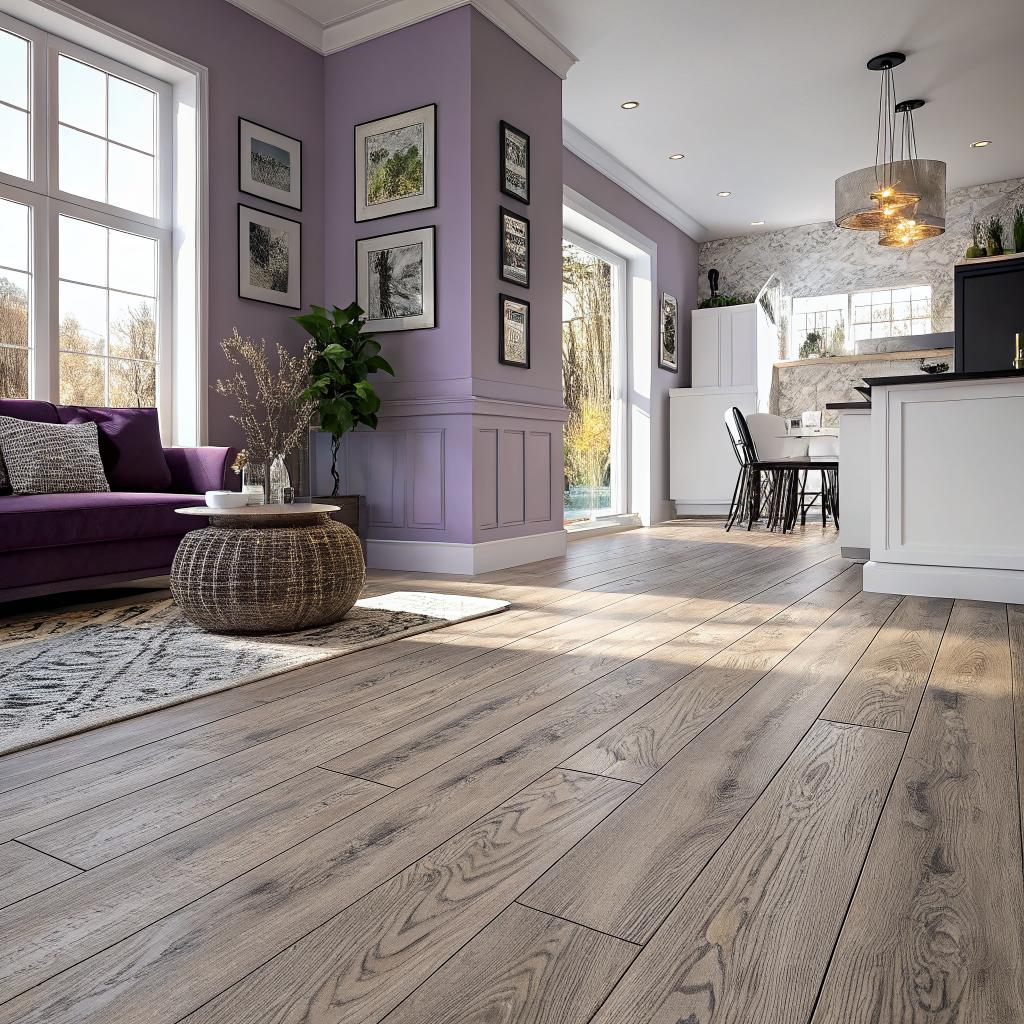

“Vinyl floors always look cheap and never last very long, so you are better off paying more for real wood.”
That claim used to be closer to the truth, but it is not accurate anymore. Modern vinyl, especially luxury vinyl plank and tile, can look remarkably close to hardwood or stone, and with proper vinyl flooring installation Denver homeowners can trust, it can last many years in a busy house. The key is not only the product you pick, but how well it is prepared, installed, and cared for in Denver’s dry, sometimes harsh climate.
I have walked into homes where I honestly thought I was standing on oak or hickory, only to find out it was vinyl. And on the flip side, I have seen wavy, peeling vinyl that looked tired after two winters. So the material itself is not the full story. The process, the subfloor, and the installer matter just as much.
If you are trying to figure out whether vinyl is right for your Denver home, the short answer is this: it can be a smart, durable, and good-looking choice, but only if you treat it as a serious flooring project, not a quick weekend job you rush through. Let us walk through what that actually means in real terms, not marketing language.
Why Denver homeowners look at vinyl flooring in the first place
Vinyl flooring has changed a lot. It is not the thin sheet your grandparents had in the kitchen. Luxury vinyl plank (LVP) and luxury vinyl tile (LVT) have thicker cores, textured surfaces, and more realistic patterns.
In Denver, there are a few simple reasons people keep coming back to vinyl:
You have big temperature swings. Hot summers. Cold winters. Floors that handle expansion and contraction without cracking or warping make sense here.
You often track in snow, salt, and dirt. That is tough on hardwood and carpet. Vinyl can take more abuse without staining as easily.
You might have pets or kids. Scratches, spills, and accidents are very common. A good vinyl floor forgives more of that.
So if you are looking for something that looks good, is easier to clean, and does not make you panic when a glass of juice hits the floor, vinyl is a practical option.
Good vinyl flooring in Denver is less about brand hype and more about matching the right product to the right room and installing it on the right subfloor.
Some homeowners still see vinyl as a “cheap replacement” for wood. Others see it as a strategic choice that fits how they actually live. That shift in mindset changes everything about how you plan the project.
Types of vinyl flooring you will see in Denver homes
You will probably run into three main categories when you talk to a flooring company or browse a showroom.
Luxury vinyl plank (LVP)
This is the style most people mean when they say “vinyl wood look.” It comes in planks that resemble hardwood boards.
Common traits:
– Wood patterns: oak, maple, hickory, walnut, and more
– Multiple widths and lengths
– Textured surfaces that match the printed grain
– Click-lock or glue-down installation
In Denver homes, LVP often goes into living rooms, basements, hallways, and even bedrooms. Many owners pick it as a way to get a wood look without worrying as much about water or dogs.
Luxury vinyl tile (LVT)
Same idea as LVP, but shaped and printed like tile or stone.
You will see:
– Square or rectangular tiles
– Stone or ceramic looks
– Can be grouted with special products for a more “tile-like” feel in some systems
People often put this in bathrooms, laundry rooms, and kitchens where they want the look of tile but with a warmer, softer surface underfoot. In a cold climate like Denver, the warmth underfoot is not a small detail. Standing on tile in January can feel rough.
Sheet vinyl
This is the more traditional form: wide rolls that are cut and glued to the floor in large sections.
Pros:
– Very few seams, which is nice for moisture resistance
– Often the most budget friendly
Cons:
– Less realistic visuals than good LVP/LVT
– Harder to repair a small damaged area
Sheet vinyl still has a place in utility rooms, rental units, or spaces where cost is a main concern. If you are focused on resale and design, LVP and LVT tend to get more attention.
How Denver’s climate affects vinyl flooring
Denver is not the same as a coastal, humid city. The air is drier, the altitude is higher, and the temperature swings faster. That matters for flooring, including vinyl.
Here are a few practical ways the local climate comes into play:
Temperature swings and expansion gaps
Most vinyl products expand and contract a bit as temperatures rise and drop. That is normal. But in Denver, those shifts can be more extreme.
This means:
– You need proper expansion gaps around the room perimeter.
– You should respect the maximum room size guidelines from the manufacturer.
– Transitions between rooms help break up large spaces and control movement.
If an installer pushes the planks too tight against the wall, the floor can buckle or click apart when it expands in warm months.
Dry air and indoor conditions
Denver’s dry air is usually more of a problem for hardwood, but it still matters with vinyl:
– Planks and tiles need to acclimate to the room before installation.
– The subfloor moisture needs to be checked. Dry climate does not always mean dry slab.
– Large swings in humidity can stress adhesives in glue-down systems.
Some people skip acclimation because they think vinyl is “flexible enough.” That is a mistake. The product still reacts to its environment.
Snow, salt, and entryways
Track in snow, salt, and sand all winter and you can damage any floor.
With vinyl:
– Grit can scratch the wear layer over time.
– Salt and de-icer can leave a film if not cleaned regularly.
– Water pooling around entry doors can weaken some adhesives.
A simple mat system by each exterior door and quick cleaning habits go a long way. It sounds trivial, but in a real Denver winter, it adds years to the floor.
Click lock vs glue down vinyl in Denver homes
One of the first choices you face is how the vinyl is attached to the floor.
Here is a simple table to compare two of the most common methods you will hear about.
| Feature | Click-lock (floating) | Glue-down |
|---|---|---|
| How it holds | Planks lock together and “float” over underlayment | Planks/tile glued directly to subfloor |
| Subfloor prep | Needs flat surface, minor flaws more forgiving | Needs very smooth, clean surface for good bond |
| Feel underfoot | Slightly softer and warmer with underlayment | Firmer, more solid feel |
| Repairs | Easier to replace planks in some systems | Repairs can be trickier, often more complex |
| Large temperature swings | Needs careful expansion gaps and transitions | Less movement, but glue must be suitable for conditions |
| Basements | Works well with proper moisture barrier | More sensitive to slab moisture and prep |
For many Denver homeowners, click-lock floating vinyl is the more flexible choice, especially over existing subfloors that are in decent shape. Glue-down is often used in commercial spaces or where a firm, very stable surface is a priority.
I have seen both work well here, but when glue-down fails because moisture or prep was ignored, it tends to fail badly. That is not something you want to discover a year after you finish a remodel.
What “good installation” really means, step by step
People sometimes think vinyl is simple. That you just snap pieces together and call it a day. The truth is, the visible part might look simple, but the important work often happens before any plank is laid.
1. Subfloor inspection and prep
Every good vinyl job in Denver starts with a careful look at the subfloor.
You want to know:
– Is it concrete, plywood, OSB, or something else?
– Are there dips, humps, or soft spots?
– Any signs of moisture problems or past water damage?
Concrete floors may need:
– Moisture testing
– Crack repair
– Leveling compounds in low areas
Wood subfloors may need:
– Loose spots screwed down
– High seams sanded
– Damaged sections replaced
This step is not glamorous. It also often decides how long your floor will last.
Most of the “mystery problems” people blame on vinyl are actually subfloor issues that were never solved before the planks went down.
2. Acclimation and layout planning
Good installers let the material sit in the space for a while, usually at least a day or two, so temperature and humidity stabilize.
During that time, they:
– Check room measurements
– Decide starting walls and plank direction
– Calculate plank cuts so you do not end up with a tiny sliver at the far wall
If you skip the layout step, you might end up with joints that look awkward or repeats of patterns that appear in obvious rows.
In a long hallway in a Denver ranch home, for example, the direction of the planks can either make the space feel open or like a narrow tunnel.
3. Underlayment and moisture control
Not all vinyl needs a separate underlayment. Some planks have it attached already. Others require a specific type or forbid certain products.
In Denver, you want to think about:
– Moisture barriers over concrete slabs, especially in basements
– Sound control if you are in a multi-level home or condo
– Thermal comfort in rooms over unconditioned spaces
Blindly adding a thick, soft underlayment can actually cause joint problems with some click-lock systems. Following the product instructions here is not being picky, it is being smart.
4. Cutting and fitting around real-life obstacles
Most rooms are not perfect rectangles. You have:
– Doorways
– Vents
– Staircase posts
– Floor registers
– Built-in cabinets
These areas separate a clean job from a sloppy one. Clean, tight cuts around door jambs and transitions are what you stare at every time you walk through a room.
I once saw a job where every doorway had huge gaps filled with blobs of caulk. The vinyl itself was good quality, but all I could focus on were those messy edges. A skilled installer takes time in these spots.
5. Transitions and finish details
When vinyl meets another surface, like carpet or tile, you need a proper transition piece.
Examples:
– Reducer strips to meet thinner flooring
– T-molding between similar height floors
– End caps at sliding doors
In Denver homes with mixed surfaces, these transitions can be everywhere. A walk from the entry to the kitchen might cross two or three different materials.
Good transitions:
– Help hide expansion gaps
– Reduce trip hazards
– Make the project look like one complete design, not a patchwork
Common mistakes with vinyl flooring in Denver
It can help to look at what often goes wrong, so you can avoid it.
Skipping moisture checks on concrete
People hear “dry climate” and assume slabs are always safe. That is not true. Moisture can still move up from below, especially in older basements or areas with poor drainage.
Problems that can follow:
– Adhesive failure on glue-down floors
– Mold under floating floors if water seeps in and never dries
– Cupping or gapping at the edges of planks
Spotting these issues up front is much cheaper than ripping out a floor later.
Not leaving enough expansion space
If the planks are pushed tight against walls, pipes, or cabinets with no gap, the floor has nowhere to go when it expands during a warm season.
Results can include:
– Buckling in the middle of the room
– Planks popping apart at joints
– Noisy, creaky areas where planks rub against obstacles
Proper baseboards or quarter round cover the gap so it is not visible.
Installing vinyl directly over “soft” existing flooring
Laying vinyl over cushioned vinyl, old floating laminate, or thick soft underlayment can cause extra flex. In time, joints stress and fail.
A better path is often:
– Remove soft materials
– Flatten or fix the subfloor underneath
– Install vinyl on something stable
It takes more effort up front, but it avoids a bouncy floor that feels cheap.
Neglecting protection during other construction
Sometimes vinyl goes in before cabinets, trim, or painting. If heavy tools or ladders drop on it, you can gouge planks. Paint can drip and cure on the surface.
Simple floor protection during the rest of the remodel stage avoids those scars. I think many people underestimate how much traffic a job site floor gets.
How to choose vinyl that fits your Denver home
You do not need to know every technical detail, but a few key choices will help you narrow options.
Wear layer and thickness
The wear layer is the clear top surface that takes the abuse. Thicker layers handle scratches and wear better.
As a rough guide:
– Light use bedrooms: lower wear layer can be ok
– Busy families with pets: aim higher
– Rental property: you probably want something more durable
Overall plank thickness matters too, especially for sound, feel, and transition heights. Just remember that a thick plank with a weak wear layer is not a good trade.
Core type: SPC, WPC, or flexible
Some vinyl has a rigid stone-plastic core (SPC). Others use a wood-plastic core (WPC). Older products are more flexible.
In Denver:
– SPC is very stable and handles temperature changes well, but feels firmer.
– WPC has some softness and warmth but may dent more under heavy furniture.
– Flexible vinyl can be fine for certain spaces but usually needs a well prepared surface.
Talk in plain terms with your installer about how the floor will feel and what conditions it will face.
Color and pattern choices for Denver homes
Style is personal, but climate plays a role here too.
Light colors:
– Show less dust and pet hair
– Reflect more light in rooms with smaller windows
– Can make scratches less visible
Very dark floors:
– Show dust and footprints more quickly
– Look sharp, but sometimes feel “heavier” in smaller rooms
Busy patterns can hide dirt but may feel too busy in open layouts. In Denver’s strong natural light, very glossy finishes might show more reflections and smudges than you expect.
DIY vs professional installation in Denver
Many vinyl products market themselves as “DIY friendly.” There is some truth to that. If you are patient, handy, and willing to learn, you can get a nice result in a simple space.
Still, it might help to ask yourself a few honest questions:
– Is the subfloor straightforward, or are there cracks, dips, and old materials to solve?
– Are there lots of doorways, stairs, and transitions?
– Are you comfortable with saws and precise cuts?
In a small rectangular bedroom on a wood subfloor, a careful homeowner can probably handle LVP installation. In a large open concept main floor with a mix of concrete, old tile, and wood, hiring an experienced crew usually makes sense.
If the part that worries you most is not cutting planks, but solving subfloor and moisture issues, that is often a sign a professional installer is worth it.
Another thing to think about is time. Pulling up flooring, leveling, and installing is tiring. If the project stretches for weeks, that can be stressful to live through.
Care and maintenance for vinyl floors in Denver
Vinyl is not maintenance free, but it is manageable. A simple routine keeps it presentable for years.
Daily or weekly habits
– Sweep or vacuum regularly with a hard floor setting.
– Wipe up spills as soon as you notice them.
– Use mats at entry doors to catch grit and melted snow.
If you stay ahead of dirt, you reduce micro-scratches and scuffing.
Cleaning products to use and avoid
Use:
– Clean water and a mild cleaner approved for vinyl
– A damp mop, not a soaking wet one
Avoid:
– Steam mops that force hot moisture into joints
– Harsh chemicals like ammonia or abrasive powders
– Wax or polish meant for other surfaces
Manufacturers usually list what is safe. Following their instructions is not overkill; it protects your warranty and your floor.
Protection from furniture and sun
Furniture:
– Add felt pads on chair and table legs.
– Use wider pads for heavy items to reduce pressure points.
Sun:
– Direct UV can fade some floors over years.
– Blinds, curtains, or film on large south-facing windows can help.
– Rotating rugs occasionally avoids uneven color changes.
In Denver’s bright sun, this is not just theory. You can see the difference in rooms where one area sat in strong light all year.
Vinyl flooring in different Denver spaces
Every room asks for something slightly different from your floor.
Kitchens
Kitchens in Denver often act as the center of the home. Vinyl works well here because:
– It shrugs off minor spills.
– It is more forgiving on your feet and back than tile.
– Dropped dishes have a slightly better chance of surviving.
Look for products with good stain resistance and a wear layer that can handle chairs sliding in and out daily.
Basements
Basements are tricky. They can feel cold, and moisture is always a concern.
Vinyl is often a smart choice if:
– The slab is tested and treated for moisture where needed.
– A proper underlayment or barrier is used.
– You accept that if you get a major flood, any floor may have to come up.
Compared to carpet on a slab, vinyl tends to handle minor moisture events better and does not hold odors the same way.
Bathrooms and laundry rooms
These spaces see a lot of water on the floor.
Vinyl helps because:
– Planks or tiles are water resistant from the top.
– You avoid cold, hard tile while still getting a cleanable surface.
Attention to seams, edges at tubs, and toilets is key. Caulking or sealing those small areas correctly makes a big difference.
Living rooms and bedrooms
Some people prefer carpet in bedrooms. Others like carrying one floor type through much of the home.
Vinyl in these rooms gives:
– Easier cleanup of allergies, dust, and pet hair.
– A consistent look with the rest of the house.
– A surface that works with area rugs to soften things up.
If you are worried about it feeling hard, choose a product with a bit of resilience and pair it with a good rug where you sit or stand the most.
What to ask your vinyl flooring installer in Denver
If you decide to hire an installer, a few focused questions can tell you a lot about how they work.
Experience and process
You might ask:
– How many vinyl installations have you done in the last year?
– Who handles the subfloor prep and moisture testing?
– Do you remove and dispose of old flooring?
If they gloss over subfloor and moisture topics, that is a red flag. If they can explain their process in clear terms, that is encouraging.
Product choices and warranties
Good companies are usually familiar with multiple brands and lines. They can tell you:
– Which products they trust in Denver’s climate
– What the manufacturer warranty covers
– What their own labor warranty includes
You do not need them to agree with everything you say. A professional who gently pushes back and explains why a certain product is not right for a specific basement or sunroom is often doing you a favor.
Timing and disruption
Ask how long:
– Removal and prep will take
– Installation itself will last
– You need to stay off the floor for curing, if glue is involved
Clear timing helps you plan around pets, kids, and furniture.
Is vinyl flooring the right choice for your Denver home?
There is no perfect floor type. Hardwood, tile, carpet, and vinyl all have tradeoffs.
Vinyl tends to be a strong fit if:
– You want something that handles water and daily life without constant stress.
– You like the look of wood or tile but prefer a softer feel and easier maintenance.
– You are trying to balance cost, appearance, and durability.
It might not be ideal if:
– You strongly prefer natural materials and care about that above all else.
– You expect a floor to look exactly the same under heavy abuse for decades with zero visible wear.
– You are not willing to invest in proper prep, even when the subfloor has serious issues.
Sometimes, a mix works best. For example, hardwood in main living areas and vinyl in the basement and baths. Or vinyl throughout a rental and hardwood in your primary home. There is no rule saying one material has to cover every room.
Answering a common question: “Will vinyl floors hurt my home’s resale value in Denver?”
Many people quietly worry about this but do not ask it out loud. So let us tackle it.
Buyers in Denver do tend to love hardwood. That has not changed. But the reaction to vinyl depends mostly on quality and execution.
Buyers usually respond well when:
– The floor looks intentional and fits the home’s style.
– Transitions, trim, and details are done cleanly.
– The product looks and feels solid, not flimsy.
Buyers may react poorly when:
– Vinyl is laid sloppily over old, uneven floors.
– Patterns look obviously fake or repeat too often.
– The floor is already scratching and lifting.
So, can high quality vinyl with good installation be a selling point? In many cases, yes, especially when buyers see low maintenance and kid or pet friendly surfaces. Will it impress the same buyer who only wants original hardwood in a historic home? Probably not. And that is fine.
If you are planning to sell soon and are torn between the two, talking to a local real estate agent or appraiser who knows your neighborhood can help you weigh the tradeoffs with your specific house.
At the end of the day, the better question might be:
“Will this floor help me live more comfortably in my home right now, without creating headaches later?”
If vinyl flooring, installed carefully for Denver’s climate, checks that box for you, then it is a strong option to take seriously.
