
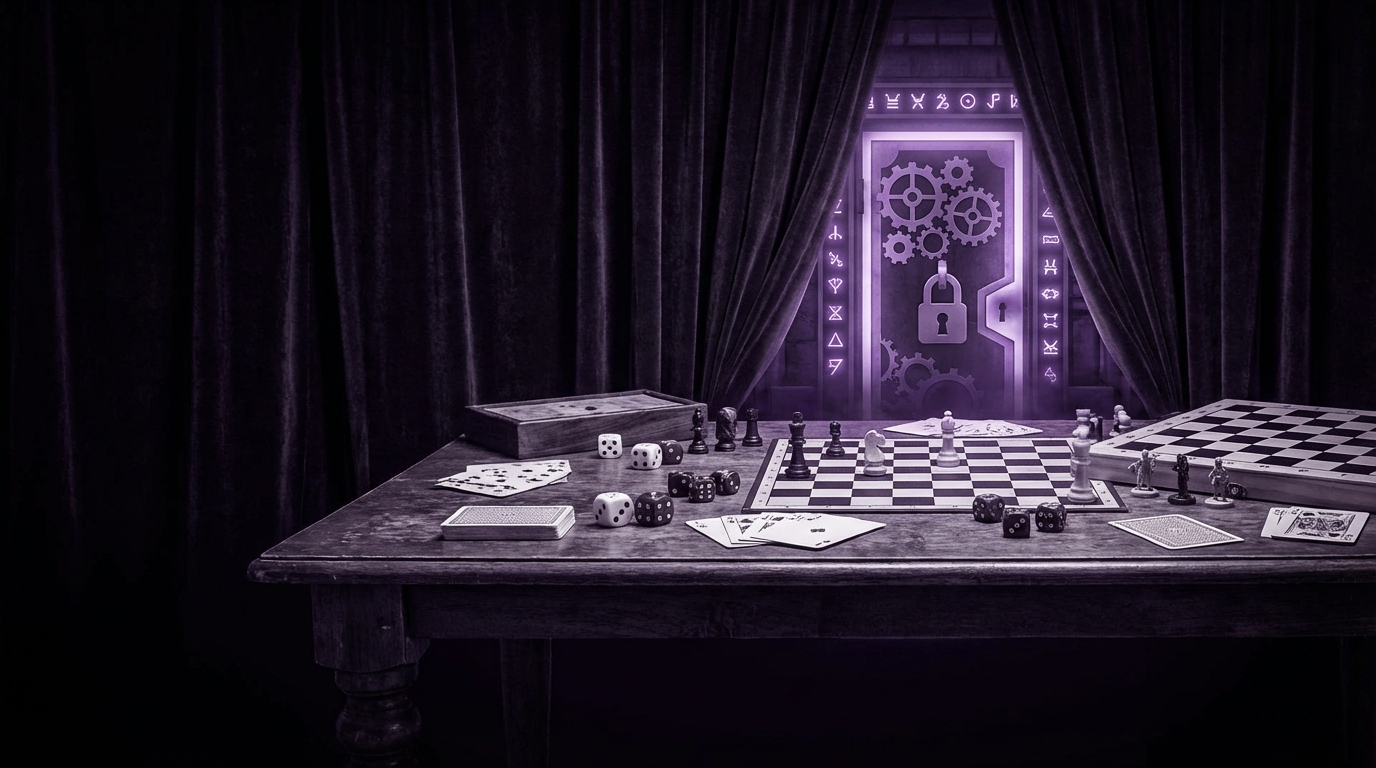

“Board games are dead. Everyone just stares at their phone now.”
That line sounds confident, but it is wrong. Board games are not dead. They are growing. Fast. And they are quietly linked to the same trend that made escape rooms explode. People are tired of shallow digital time. They want shared, focused experiences that feel real, even if they happen around cardboard and plastic.
I might be wrong, but it seems to me that what we are seeing is not “nostalgia for Monopoly.” It is a reaction to constant screens. People do not only want entertainment; they want structure around how they spend time together. That is where board games and escape rooms overlap in a big way.
You can see it in the numbers if you look at crowdfunding campaigns and retail shelves. You can feel it if you walk into any game cafe on a weekend. Tables are full. People are talking, arguing over rules, laughing at mistakes, leaning over maps and puzzles. It is not background activity. It is the main event.
“Board games are just for kids and hardcore nerds.”
That used to be closer to the truth. Now you have strategy games on coffee tables in apartments that never owned a console. You have escape-room-in-a-box games in mainstream bookstores. You have corporate events built around puzzle games, not just bowling or dinner. When companies copy a trend, it usually means the trend has moved into the middle of the bell curve.
At the same time, escape rooms did something subtle. They trained people to enjoy a specific kind of challenge: time-boxed, cooperative, puzzle-heavy, story-backed. You lock a group into a room, give them a clear goal and a ticking clock. They focus. They feel clever. They celebrate. That feeling does not stay at the door when they leave. Many of them go looking for more of it at home. That is where modern board games walk in.
“If you want social interaction, you just go out. Board games are a cheap substitute.”
Not quite. And if you are building content, products, or experiences in this space, treating games as “cheap substitutes” will push you in the wrong direction. People are not picking board games instead of going out. They are using them to shape how they spend time out. Think about game cafes, bars with game shelves, or escape-room venues that also sell board games at the front desk. The line between “night out” and “game night” is blurred on purpose.
Why board games are surging again
Let me clear up one thing early: this is not just about nostalgia. Yes, some people love the comfort of cardboard because they grew up with it. But nostalgia alone cannot explain the growth in complex strategy games, legacy campaigns, and puzzle-heavy escape-room boxes.
There are a few big drivers that keep showing up when you talk to players, store owners, and creators.
1. Screen fatigue and the desire for focused time
We are overloaded with content. Short clips, endless feeds, constant alerts. Most digital experiences are built to pull attention away, not gather it. Board games move in the opposite direction. They pull a small group into a contained world for 30 to 120 minutes.
You sit down. You clear the table. You read rules. You agree on a goal. During that time, the game gives everyone a shared language. People talk to each other instead of the timeline.
Phones do not work well at the table. Every time you pick one up, you miss a turn, forget a rule, or slow the game for everyone. That natural friction is part of the appeal. The structure of the game fights distraction without anyone having to nag.
Escape rooms ride the same wave. No phones. One goal. A time limit. The room creates a permission slip to ignore everything outside. When people find that feeling in an escape room, many of them want a version at home that does not need a booking or a drive across town. That is where board games step in.
2. The rise of cooperative and story-driven play
Older mass-market games often focused on direct competition. One winner. Several losers. Long sessions where someone gets knocked out early and then just sits there.
Modern board game design moved a different way. Cooperative games put everyone on the same side. Story games build long arcs that unfold over several sessions. Escape-room-in-a-box games mimic the structure of a physical escape room and give it to you on your dining table.
Here is a simple table showing how these different experiences overlap:
| Experience type | Main goal | Player relationship | Typical duration | Replayability |
|---|---|---|---|---|
| Classic competitive board game | Beat other players | Head-to-head | 60-120 min | High |
| Modern cooperative board game | Beat the system | Allies vs rules | 45-90 min | Medium to high |
| Escape room (physical) | Escape before timer ends | Allies vs puzzles | 45-70 min | Low (once per room) |
| Escape-room-in-a-box game | Solve the scenario | Allies vs puzzles | 60-120 min | Low to medium |
The link is pretty direct. People who enjoy the cooperation and pressure in escape rooms often shift toward cooperative tabletop games. The skills carry over: pattern spotting, communication, time management, stress control.
3. Social spaces centered on games
Game cafes, bars with game libraries, community game nights in coworking spaces or churches, board game sections in escape room venues: these are not fringe any more.
These spaces lower the barrier to entry. You do not need to buy games, learn rules alone, or hunt for players. Staff teach you. Friends discover games they never would have picked from a shelf. For owners, it also creates a clear upsell path:
| Business type | Primary offer | Linked offer | How board games fit |
|---|---|---|---|
| Game cafe | Food & drink | Table charges, events | Games keep guests longer and prompt repeat visits |
| Escape room | Room bookings | Board game sales, lobby play | Games extend the visit before/after the room |
| Retail bookshop | Books | Games, events | Board games attract groups and families |
| Cowork space | Desks & offices | Community events | Game nights strengthen member ties |
Escape rooms were early proof that people will pay for scheduled play together. Board game spaces extend that idea to more casual time, smaller budgets, and repeat visits.
The psychological link between board games and escape rooms
If you strip away the theme and decor, both formats are built on a few shared psychological triggers. If you are creating content or products here and you ignore these, your stuff will feel flat.
1. Clear goals and rules
“Escape before the time runs out.”
“Score the most points by building the best table.”
“Work together to stop the disease from spreading.”
The exact wording changes, but games and escape rooms both rely on sharp goals and clear boundaries. Life is messy. Work projects drift. Phone use eats evenings without anyone deciding. When you place a game or an escape room on the schedule, you trade that uncertainty for structure.
This structure is one reason people feel less stressed in play than during passive entertainment. Expectations are known. The cost of failure is low. You can reset and try again or pick another game.
2. Shared tension and release
Good games and rooms do not feel flat. They build tension and then release it. A bad die roll. A wrong clue. A twist in the story. People talk about those beats later.
Escape rooms ramp the pressure through the clock on the wall, hints, and surprise reveals. Board games do it through resource scarcity, random draws, scoring moments, or plot turns in campaign games.
The key part here is that the tension is shared. You are not alone with your stress. That feeling is part of what makes both formats more satisfying than solo mobile games. You complain together. You celebrate together.
3. A safe place to practice communication
You can treat both board games and escape rooms as training grounds for group skills without framing them that way.
You have to:
– Explain your thinking under time pressure
– Listen to others and merge ideas
– Deal with disagreement without blowing up the group
– Switch leaders based on who has the right knowledge
That is why many companies use escape rooms and cooperative games for team building. It is one of the rare group activities where “too many leaders” is clearly visible in the outcome. Either you move as a group or the clock wins.
If you create content around games, showing this side is powerful. Not “games will fix your team,” that would be a stretch. More like “this is a low risk lab to see how you actually work together.”
Why this comeback is different from past board game waves
You might think, “We had a board game boom before. Then video games took over. Why is this time different?” You are not wrong that games come in waves. I would push back on the idea that this one is the same pattern.
There are a few new ingredients.
1. Crowdfunding and niche audiences
Crowdfunding platforms changed how games reach players. You no longer need a major toy company to print your idea. Designers pitch straight to the people who care about their specific theme or style.
That leads to:
– Games for tiny, focused groups (for example, games about a very specific historical event).
– Risky or experimental mechanics that a large publisher might have rejected.
– Stronger links between escape room fans and tabletop fans, because designers can build hybrid products and pitch them directly.
Escape-room-inspired games with hidden envelopes, online components, or staged reveals would have been hard to explain in a toy catalog. On a crowdfunding page with video, story, and comments from early playtesters, they make sense.
2. Professional escape room designers entering board games
Many escape room owners and designers learned puzzle design, narrative structuring, and set flow by building real rooms. Some of them are now moving into board games and print-at-home escape experiences.
They bring:
– Tight puzzle design that feels like a room.
– Knowledge of group behavior under time pressure.
– An eye for how clues are discovered, not just how they are solved.
That cross-pollination is one big reason so many escape-room-in-a-box games feel richer than early puzzle games. The skill sets are linked.
3. Hybrid experiences and transmedia stories
You now see games that:
– Start in a board game, continue with an online search, and end with a real-world artifact.
– Use companion apps for audio, narration, or timed events.
– Tie into physical escape rooms as prequels or sequels.
This keeps people inside the same world across different formats. If someone loves a particular escape room theme, they can take home a box that expands the story. If they love a story game on the table, they can book a room in the same world.
Here is how the format mix often looks:
| Format | Where it happens | Group size | Cost per session (approx.) | Link to others |
|---|---|---|---|---|
| Board game (boxed) | Home / cafe | 2-6 | Low to medium (one-off purchase) | Can lead to rooms, apps, expansions |
| Escape room (physical) | Venue | 2-8 | Medium to high (per booking) | Can lead to merch, sequels, boxes |
| Print-and-play escape game | Home / office | 2-8 | Low (download) | Good entry point to rooms and boxes |
| Companion app | Phone / tablet | Varies | Low | Connects physical products and updates |
When you blend formats well, you do not compete with yourself. You build a ladder of engagement.
How escape rooms fuel board game interest (and the other way around)
If you run an escape room or a game-centered venue and you are not leaning into this link, you are leaving money and attention on the table.
Here is the link broken down from both directions.
From escape rooms to board games
Someone books a room. They bring friends, family, or coworkers. They enjoy the puzzle solving, the rush of almost missing the timer, the group high five at the end.
Afterward, three things often happen:
1. They talk about it for days.
2. They look for similar experiences online.
3. They want to share that feeling with other groups without booking another room right away.
If you have curated board games in your lobby or on your website, you can guide that energy.
You do not need hundreds of titles. In fact, too much choice can freeze people. A small, clear set with good signage works much better.
From board games to escape rooms
Now flip it. You have groups who play cooperative or puzzle board games at home or in cafes. They already:
– Enjoy reading rules.
– Like planning under constraints.
– Are used to small failures on the way to a win.
These groups are ideal escape room visitors. They already share hobbies that map to your format. Your marketing language can talk directly to them: puzzles, cooperation, narrative, time pressure.
If you focus only on “date night” or “birthday party” messaging, you miss a group of ready players who might book rooms regularly.
Practical ways to link board games and escape rooms
Here is where I might be wrong about your specific case, and you should push back if your audience behaves differently. But for most general audiences around games, some patterns repeat.
If you run an escape room venue
You can use board games to extend your brand, attract repeat visits, and smooth your revenue between bookings.
Some steps that work well:
1. Offer short filler games in the lobby
These are for groups waiting to start or waiting for friends to arrive. Think 10 to 20 minute titles that are easy to explain in two sentences.
2. Curate escape-style games for sale
Pick a small range of games that match your room style: puzzle-heavy boxes, mystery stories, cooperative adventures. Place them where groups pay or exit, not in a dark corner.
3. Design “room prequels” in board game form
If you have a very popular room, create a small-box game that tells what happened before the events of the room. You can sell it to players who want more of that world. If you do not have design skills in-house, partner with a local designer.
4. Host board game nights on off-peak days
Weeknights that are slow for bookings can become local game nights. Charge a small table fee or minimum spend on snacks. Offer a small booking discount to players who attend. Over time, some of these regulars will become your most loyal room customers.
If you run a board game cafe or store
Your traffic is already there. Many of your regulars are ideal escape room fans. Some steps for you:
1. Partner with local escape rooms
Set up cross-promotion: your visitors get a small room discount; their players get a small discount or free table time. Display each other’s flyers or QR codes in visible spots.
2. Run “escape night” events
Pick one evening per month where you focus on escape-room-style games in the cafe. Highlight puzzle games, hold timed challenges, maybe bring in an escape room owner to talk about how rooms are designed.
3. Create an “escape experience” shelf
Group all escape-style games in one clear section, with small tags such as “Room-like puzzles” or “Great after your first escape room.” This reduces friction for customers who already know they like that style.
Design lessons shared by both formats
If you care about making better experiences, the shared design lessons between board games and escape rooms are useful.
1. Teach the experience fast
Groups lose interest if setup drags and rules feel heavy. Good modern board games teach through play, not lectures. Good escape rooms teach through early, obvious puzzles that explain how the world works without a long speech.
Ask yourself:
– Does your game or room have a simple first goal that anyone can attempt without prior knowledge?
– Do early puzzles feel forgiving, to build confidence?
– Do you reward curiosity in the first few minutes?
If the answer is no, you are asking for trust that many groups will not give.
2. Respect different player types
In group experiences, you often see:
– The leader who wants to organize the group.
– The analyst who wants to sit and think.
– The explorer who wants to touch everything.
– The observer who prefers to watch and chime in.
Both board games and escape rooms work better when they give each type a role. Rooms with only word puzzles punish the tactile explorer. Games with only math punish the storyteller.
Mix puzzle types, roles, and decision styles. That mix is one reason some games cross over to large audiences while others stay niche.
3. Use scarcity carefully
Time, turns, resources, and information are all types of scarcity. They create tension. Too much and the group feels stuck. Too little and the experience becomes flat.
Escape rooms play with time and information. Board games play with turns and resources more often. But the principle is the same: let people feel the pinch without choking them.
One rule of thumb many good designers use: stress near the end, clarity near the start. That arc keeps people inside the experience instead of checking out.
Common mistakes people make when thinking about this trend
You asked me to tell you when you are wrong, so here are some common ideas that usually mislead creators and marketers around this space.
“Board games will replace digital games.”
They will not. Different needs, different contexts. Many people who love board games also play digital games. The surge in tabletop is not a full rejection of digital; it is a correction from constant solo scrolling to balanced group time.
If you base your strategy on “digital is dying,” you will miss useful crossovers like companion apps or online communities around your physical game.
“Escape rooms are a fad, board games are timeless.”
Physical escape rooms can fade if owners stop refreshing rooms and stories. Board games can fade if designers repeat the same ideas. Neither is guaranteed. Both need care and updates.
If you assume board games are safe forever, you might ignore shifts in taste. For example, longer complex games had a surge, but many players now prefer shorter, tight designs with less downtime. You want to watch behavior, not rely on the label “board game” as a safety blanket.
“Any board game will help my escape room business.”
That is not true. A random mix of games that do not fit your brand confuses visitors.
If your rooms are serious mystery stories, selling silly party games at the front desk will not support the mood. If your brand is light family fun, ultra-heavy war simulations on your shelf will only gather dust.
Curate with intent. Put your brand, your story tone, and your audience first, then pick games that extend that line.
Where this is likely heading next
I cannot predict every twist, but there are some signals that seem clear.
1. More legacy and campaign experiences
Legacy board games change over time. You put stickers on the board, tear up cards, unlock secret boxes. The game remembers what you did across sessions. Escape rooms already use one-shot, non-repeatable structures. That mindset is creeping further into tabletop too.
Expect more:
– Games tied to a long-running story where your choices matter.
– Escape venues offering multi-room arcs with shared characters.
– Hybrid products where you play one chapter at home and one as a booked room.
2. More accessible designs
The core hobby space knows many complex games. But most people entering through escape rooms or casual cafes will not sit for three-hour rule teaches.
Designers are already responding with:
– Shorter, clearer games that still feel deep.
– Tutorial modes that ease you in.
– App-supported rules that reduce rulebook reading time.
If you create or curate games tied to escape rooms, watch this trend. Choose or make experiences that respect new players and their time.
3. More remote and print-based escape formats
Events over video calls, print-and-play kits for at-home teams, mailed puzzle boxes: these grew strongly when face-to-face groups were limited and they have not gone away.
Board games fit into that shift well, because they are already consumable at home without a venue. Escape rooms that ignore this are stuck with only physical capacity. Escape businesses that pair rooms with at-home kits or remote-friendly puzzles reach more groups.
Bringing it back to your content or project
If you are working on a blog, product, or service around this topic, be careful about one thing: treating board games and escape rooms as two unrelated hobbies.
They share audience, design principles, and growth patterns. People rarely sit in one camp only. Many slide between them based on budget, schedule, and group size.
Practical angles you can cover or build around:
– Guides that help escape room fans pick their first cooperative board game.
– Reviews of escape-box games from the perspective of room designers.
– Interviews with creators who work in both spaces.
– Case studies of venues that added board game cafes to their escape businesses.
If you ignore the link, your content will feel narrow. If you lean into it with clear, grounded examples, you will speak to how people actually play now: a mix of screens, rooms, and tables, all driven by the same desire for shared, focused time that feels real.
