
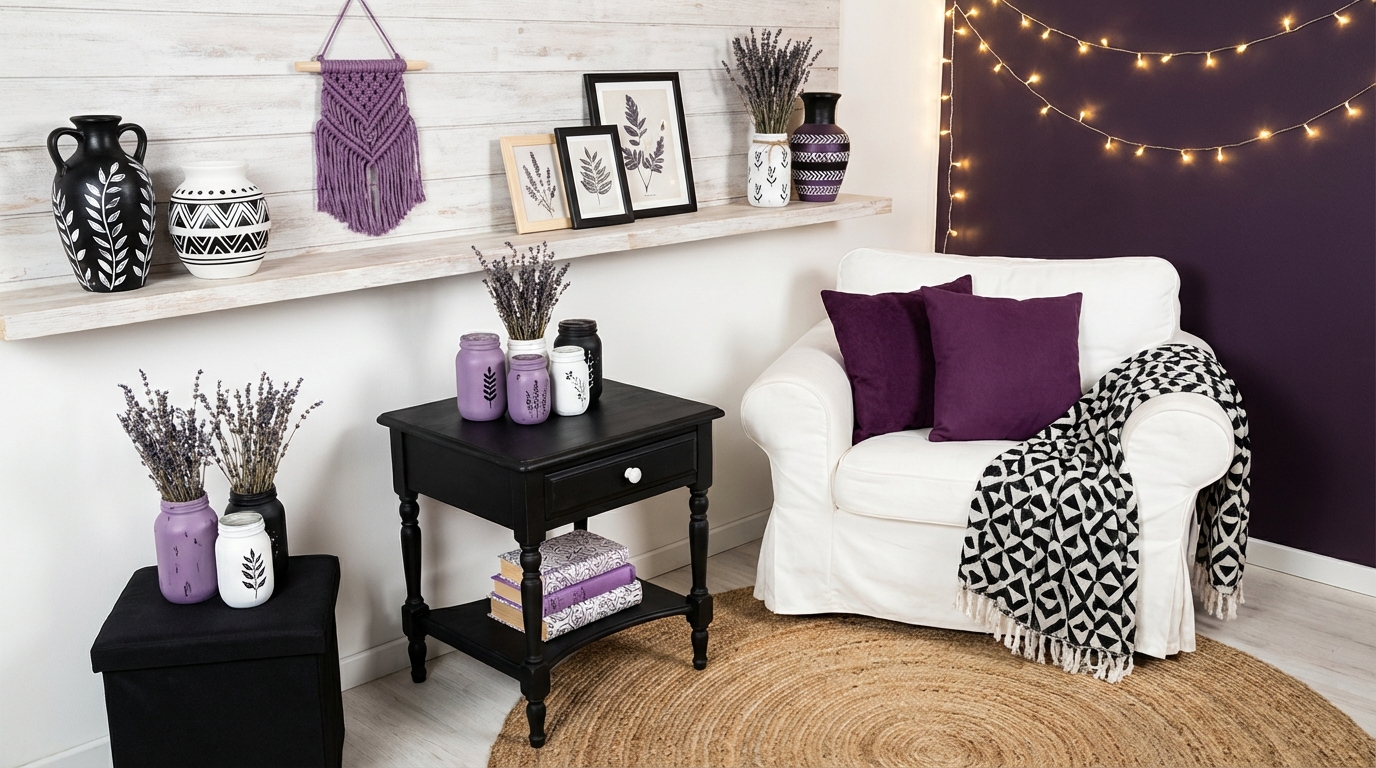

“You need a big budget and an interior designer if you want your home to look good.”
That line keeps people stuck. It sounds reasonable, but it is false. You can create a home that feels calm, personal, and pulled together with a small budget, simple materials, and some focused DIY projects. On Sunday Best Blog I talk a lot about this idea: most homes do not need more stuff, they need better choices and a bit of creativity.
I might be wrong, but I think most people are not looking for a magazine-perfect living room. They want a space that feels like them, without draining their savings. A place where a friend can drop by, sit on the couch, and feel at ease. The good news is that you do not need fancy tools, and you do not need to be “crafty” in some special way. You just need clear ideas, simple steps, and a weekend here and there.
Before we walk through these 20 budget friendly DIY home decor ideas, I want to set a small goal for you. Pick only one space in your home. Not the whole house. Maybe your entry, your bedroom, or that awkward corner next to the sofa. As you read, imagine how each idea might change that one spot. When you commit to a single area, you save money and energy, and you are more likely to finish.
There is another trap you want to avoid: copying every trend you see on social media. That often leads to random projects that do not work together. A painted wall here. A shelf there. A sign with a quote you do not even like. It feels busy, not better. So as you read, keep asking: “Would I still like this a year from now?” If the answer feels shaky, skip it.
You might also worry that DIY projects always look “DIY.” Crooked. Messy. Like a school craft. That happens when people rush, skip prep work, or choose the wrong scale. We will talk about ways to avoid that. Things like choosing the right brush, testing paint on a sample board, or using painter’s tape in smart ways. Small habits that make your projects look clean and intentional.
One more thing before we get into the ideas. Talk to your budget like it is real. Decide a number and write it down. If you have 100 dollars, that is your playground. If you have 30, that still works. You are not trying to redo a whole kitchen here. You are trying to make your space feel fresher and more like home, with what you have plus a few upgrades.
“DIY decor is only for people who are naturally creative.”
That statement pushes a lot of people away from projects they could easily handle. Most of the ideas here follow simple patterns: repeat shapes, repeat colors, keep lines clean. If you can measure, tape, and paint inside the lines, you can do most of this. The rest comes down to practice, not talent.
“Cheap decor always looks cheap.”
That is not quite right. Cheap materials can look cheap, but thoughtful design can lift the whole space. A thrifted frame with a clean mat can look better than an expensive art print hung too high. A five dollar plant in a simple clay pot can bring more life to a room than a big, trendy sculpture. Price does not decide everything. Choices do.
“If I cannot redo the whole room, there is no point starting.”
This belief keeps rooms stuck for years. You do not need a huge reveal. You need progress. A better corner. A wall that makes you feel more calm. One project finished is better than ten saved pins.
Now let’s break down the 20 ideas and how to pull them off without stress or a big bill.
1. Paint One Accent Wall With Intention
A single painted wall can shift the mood of an entire room. The trick is to choose the right wall and the right color.
Pick the wall your eye hits first when you walk into the room. Often that is behind the sofa, behind the bed, or the wall with the TV. Stay away from very bright or neon tones if you want a space you can live with long term. Mid-tone colors usually work well: soft blues, warm greige, or muted green.
Steps:
1. Clean the wall with a damp cloth.
2. Patch any holes and sand lightly.
3. Tape edges carefully and cover the floor.
4. Use a primer if the old color is strong or glossy.
5. Roll on two thin coats of paint.
Keep the finish matte or eggshell for most living spaces. Gloss shows imperfections. If the wall has many dings, flatter finishes are more forgiving.
Sample accent wall color ideas
| Room | Color family | Effect |
|---|---|---|
| Bedroom | Soft blue / blue-gray | Calming, restful |
| Living room | Warm greige / taupe | Cozy, flexible with decor |
| Home office | Muted green | Grounded, focused |
2. Create DIY Art From Simple Shapes
You do not need to paint portraits. Art made from simple shapes can look clean and modern.
Use thick paper or canvas panels. Pick two or three colors that match your room. Paint large circles, arches, or blocks. Leave enough white space so the piece can breathe. Hang as a pair or trio above a sofa or console.
If drawing freehand feels stressful, use painter’s tape to mark areas or trace around plates and bowls to get clean circles. Imperfections actually add character here, so do not chase perfect edges.
3. Frame Fabric, Scarves, or Gift Wrap
Art prints get pricey. Framed fabric or patterned paper can give you color and pattern for far less.
Find:
– A scarf with a print you like
– Leftover wallpaper
– Gift wrap with a simple pattern
– Vintage fabric from a thrift shop
Cut it to fit inside an existing frame. Use tape or spray adhesive to attach it to a neutral backing. Add a white mat if you want a more polished look.
Good sources for frame-worthy textiles
| Source | What to look for | Budget range |
|---|---|---|
| Thrift stores | Scarves, table linens | Very low |
| Your closet | Old scarves, bandanas | No extra cost |
| Craft stores | Fat quarters, remnants | Low |
4. Upgrade Old Frames With Fresh Paint
If you already have frames, use them. A quick coat of spray paint or brush-on paint can bring them together.
Group different sizes, but keep the color of the frames consistent. Black, white, or natural wood finishes tend to age well. Lay them out on the floor before you nail anything up. Take a photo of the layout to guide you when you hang them.
For a gallery wall, keep gaps between frames somewhat even. About two inches is a good starting point. Use painter’s tape to mark your layout on the wall first if you want more control.
5. Add Peel-and-Stick Wallpaper or Decals
Peel-and-stick products let you try patterns without a big commitment. Use them on small areas instead of entire rooms.
Some strong candidates:
– The back panel of a bookcase
– Inside a closet or pantry
– A headboard-sized section behind your bed
– A strip along a hallway
Measure carefully and order a bit extra to allow for mistakes. Start from the top, peel backing slowly, and smooth bubbles with a clean cloth. Cut edges with a sharp utility knife.
6. Style Open Shelves With Everyday Objects
You do not need designer pieces to style shelves. Use what you already have, but edit it.
Group books by color or remove busy dust jackets. Stack some horizontally and some vertically. Add a few objects with interesting shapes, like a small bowl, a framed photo, or a plant.
Leave empty space on purpose. Shelves packed from end to end feel heavy. Think in clusters, with 2 to 5 items per section, then a bit of breathing room.
Simple shelf styling formula
| Element | Examples | Why it helps |
|---|---|---|
| Vertical | Books standing, tall vase | Adds height |
| Horizontal | Book stacks, trays | Balances tall items |
| Organic | Plants, shells, natural wood | Softens the look |
7. Paint Old Furniture Instead of Replacing It
That dated dresser or side table can change a room once painted.
Steps:
1. Clean with soapy water and dry.
2. Lightly sand the surface.
3. Wipe off dust.
4. Apply primer suited to the material.
5. Paint with a small foam roller for flat areas and a brush for edges.
Choose neutral colors if you want the piece to work in other rooms later. If you feel brave, paint just the drawer fronts or the legs for a gentle upgrade. Swap in new hardware for a quick extra lift.
8. Create a Photo Ledge Wall
Photo ledges are shallow shelves that hold frames. They let you layer art without making many holes.
You can:
– Buy ready-made ledges
– Cut and paint simple boards and attach them with brackets
Hang two or three ledges above a sofa, bed, or console table. Mix art, family photos, and small objects. You can update the display over time without new nails.
9. Make Your Own Throw Pillow Covers
Throw pillows change the mood of a sofa or bed. Covers cost less than new pillows and store easily.
If you sew:
– Use simple envelope-style covers
– Choose sturdy cotton or linen-blend fabric
If you do not sew, use fabric glue or iron-on adhesive tape. Keep patterns simple and repeat a color from your rug, art, or accent wall. That repetition pulls the room together.
Budget comparison: store-bought vs DIY pillow covers
| Option | Approx. cost per cover | Notes |
|---|---|---|
| Retail decorative cover | $15 – $40 | Varies by brand |
| DIY from fabric remnant | $4 – $10 | Cost drops with bulk fabric |
| DIY from old curtain or sheet | Near $0 | Reuses what you own |
10. Hang Curtains High and Wide
Curtains change how a room feels more than most people expect. They frame windows and soften hard lines.
If your rods sit just above the window frame, raise them closer to the ceiling and extend them wider than the window. This makes the window appear larger and lets more light in when curtains are open.
Buy budget-friendly plain panels and use iron-on hem tape to get the right length. The bottom should just touch the floor or slightly break on it. Short curtains often make ceilings feel lower.
11. Create a Simple Entry Drop Zone
A tidy entry sets the tone when you walk in. You do not need built-ins.
You can:
– Add a small bench or a sturdy stool
– Mount a row of hooks
– Place a tray or shallow basket for keys and mail
Use what you already have first. A spare dining chair can act as a place to put a bag. A bowl on a small table can hold spare change and keys. The goal is to give every item a clear home so surfaces stay clear.
12. Use Mirrors To Brighten Dark Corners
Mirrors reflect light and make spaces feel more open. Place a mirror opposite a window to bounce light deeper into the room.
If you find a cheap mirror with an unattractive frame, paint the frame or wrap it with jute rope or wood trim. For renters, lean a large mirror against a wall instead of mounting it.
Be careful not to place mirrors where they reflect clutter. You want them to double the good parts of the room, not the mess.
13. Style a Coffee Table With a Simple Formula
A coffee table often turns into a dumping ground. A simple arrangement can shift that.
Use a tray as a base. Add:
– One stack of books
– One object with shape (a bowl, candle, or sculpture)
– One natural element (small plant, branches, or flowers)
Keep items low enough so they do not block the view across the table. Leave room to set down drinks or a laptop.
Basic coffee table styling layout
| Table shape | Placement | Notes |
|---|---|---|
| Rectangular | Group items in one third of the table | Leave other space open |
| Square | Center tray, offset stack of books | Create gentle asymmetry |
| Round | Single tray with all items | Keep arrangement compact |
14. Build a Simple Floating Shelf
Floating shelves do not require complex carpentry. A board, brackets, and screws can be enough.
For a clean look:
1. Measure the wall and decide length.
2. Buy or cut a board to size.
3. Sand edges and paint or stain.
4. Attach small brackets to the wall into studs or with anchors.
5. Place the board and secure from below.
Use floating shelves:
– Above a desk
– In a bathroom for towels and jars
– Over a radiator or console
Do not overload them. A few books, a plant, and a candle often look better than a full row of objects.
15. Use Paint To Fake Architectural Details
If your home lacks moldings or woodwork, paint can suggest more structure.
Some ideas:
– Paint a rectangle behind your bed as a “headboard”
– Paint a vertical band behind a floor lamp
– Create a two-color wall with a chair-rail height line
Use painter’s tape and a level to mark clean lines. Keep contrast moderate if you want a calm look. High contrast edges feel striking and can work, but think about how that will age.
16. Refresh Old Lamps With New Shades
Lamps often look dated because of their shades, not the base.
Check thrift stores for solid lamp bases with good shape. Clean them and pair with simple drum shades in white, off-white, or a soft color that ties into your room.
You can also:
– Wrap a plain shade with fabric using fabric glue
– Add narrow ribbon along the top and bottom edges
Use warm white bulbs with a consistent color temperature across the room. Mixed bulb colors can make a space feel disjointed.
17. Create a Bedroom Focal Point With a DIY Headboard
You do not need a full bed frame to anchor a bedroom. A simple headboard can do a lot.
Easy options:
– Padded headboard: Wrap foam and fabric around a piece of plywood and staple on the back.
– Painted headboard: Tape a large arch or rectangle on the wall and paint it.
– Upholstered panels: Cover several rectangular boards and mount them side by side.
Pick fabrics that feel good to the touch and are not too thin. Busy patterns near your face can get tiring, so many people prefer solid or subtle textures here.
18. Bring in Plants With DIY Planters
Plants add life to rooms and soften edges. You do not need fancy pots.
DIY planter ideas:
– Paint simple terracotta pots with stripes or color blocks
– Wrap cans or jars with twine or rope
– Place plastic grow pots inside woven baskets
If you worry about keeping plants alive, start with low-maintenance ones like pothos, snake plant, or ZZ plant. Or use real branches in a vase, which look good even as they dry.
Good starter plants for low-light rooms
| Plant | Light level | Care difficulty |
|---|---|---|
| Snake plant | Low to medium | Very low |
| ZZ plant | Low to medium | Low |
| Pothos | Low to bright indirect | Low |
19. Refresh a Rug or Create a Faux Rug Zone
Rugs help define zones in open rooms. If a new rug is not in the budget, you have options.
Ideas:
– Layer a small patterned rug over a larger plain one
– Paint a simple pattern on a plain flat-woven rug using fabric paint
– Use carpet tiles to form a simple area under a table or desk
Make sure the front legs of your sofa or chairs rest on the rug so the seating area feels connected. Tiny rugs in large rooms often feel out of place.
20. Curate a “One Shelf Story” in Every Room
This last idea is more about editing than buying. Choose one surface in each room that tells a small story about you.
For example:
– Travel mementos
– Books you actually read
– A photo that means something paired with an object from that moment
Keep this shelf intentional. Remove random receipts, chargers, and clutter. When guests look around, they will notice this spot first, and even if the rest of the room is not perfect, that one shelf will carry a lot of impact.
How To Choose Which DIY Decor Idea To Start With
If you try to tackle all 20 ideas, you will probably stall. So narrow it down.
Ask yourself:
– Which room do I use most?
– What bothers me in that room right now?
– What is my total budget for this month?
Then match the problem to a project.
Matching common room problems to DIY decor ideas
| Problem | Suggested ideas | Budget level |
|---|---|---|
| Room feels dark | Mirrors, lighter curtains, new lamp shades | Low to medium |
| Walls feel empty | DIY art, framed fabric, photo ledges | Low |
| Space feels messy | Entry drop zone, shelf styling, one shelf story | Very low |
| Furniture looks dated | Painted furniture, new hardware, DIY headboard | Medium |
| No clear focal point | Accent wall, headboard, coffee table styling | Low to medium |
If your current approach is to keep saving images without choosing, that is a weak strategy. It feels busy but leads nowhere. Pick one idea that solves one clear problem in one room. Then give yourself a deadline, like this weekend or next.
Common Mistakes That Make DIY Decor Look Cheap
Since you asked for honest guidance, I want to point out a few patterns that hold many people back.
1. Skipping prep work
People often jump right into painting without cleaning, sanding, or taping. This saves a few minutes and costs you a lot in the final look. Prep is boring, but it matters.
2. Using too many small items
Tiny frames, knickknacks, and mini plants scattered everywhere make a room feel cluttered. Bigger, fewer items often look more calm and more intentional.
3. Ignoring scale
A small rug under a big sofa or a tiny piece of art on a large wall will look off, even if each object is nice. Measure before you buy or build.
4. Chasing every trend
If your decor changes every few months, your home can feel unstable. Pick a base that feels steady, then layer trends in small doses, like pillows or small art.
5. Not finishing projects
Half-painted walls, unhemmed curtains, or unframed art will drag your rooms down. It is better to finish one small project fully than to start five and leave them hanging.
If you see yourself in any of these, that does not mean you lack taste. It means you need a clearer process and smaller steps.
Building a Budget and Timeline for Your DIY Decor
To keep your projects on track and your spending under control, break your plan into three parts.
1. Set a realistic budget per room
Instead of thinking “I will decorate my whole home for cheap,” assign a number to each space. For example:
| Room | Sample budget | Priority projects |
|---|---|---|
| Living room | $150 | Accent wall, curtains, pillows |
| Bedroom | $100 | DIY headboard, art, lamps |
| Entry | $50 | Hooks, bench, mirror |
Adjust those numbers to what works for you. The idea is clarity, not some ideal figure.
2. Plan projects by weekend
Each project should fit a time slot you can commit to.
Examples:
– 1-2 hours: Shelf styling, one shelf story, coffee table styling
– Half day: Throw pillow covers, framing fabric, entry drop zone
– Full day: Accent wall, painted furniture, DIY headboard
Write these in your calendar. Treat them like appointments with your future home.
3. Shop your home before you buy
Before spending money, walk through your home with a box and gather items that might fit your new plan. Extra frames, leftover paint, baskets, unused lamps.
This step alone can cut your spending sharply. Many people buy duplicates without realizing they already own something that works.
Putting It All Together
A budget friendly DIY home decor plan does not live in your head or on a mood board. It lives in small, finished projects that match your life and your budget.
Pick:
– One room
– One problem in that room
– One project from this list that can help
Then commit to finishing that project fully. No half-painted corners, no missing curtain rods, no unmounted art leaning in the hallway.
If you catch yourself waiting for the “perfect” idea or the “perfect” time, that is usually a sign of fear, not strategy. Start smaller if needed, but start.
Your home will change not when you read about decor, but when you take an afternoon to paint a wall, hang a mirror, or build that first floating shelf.
