
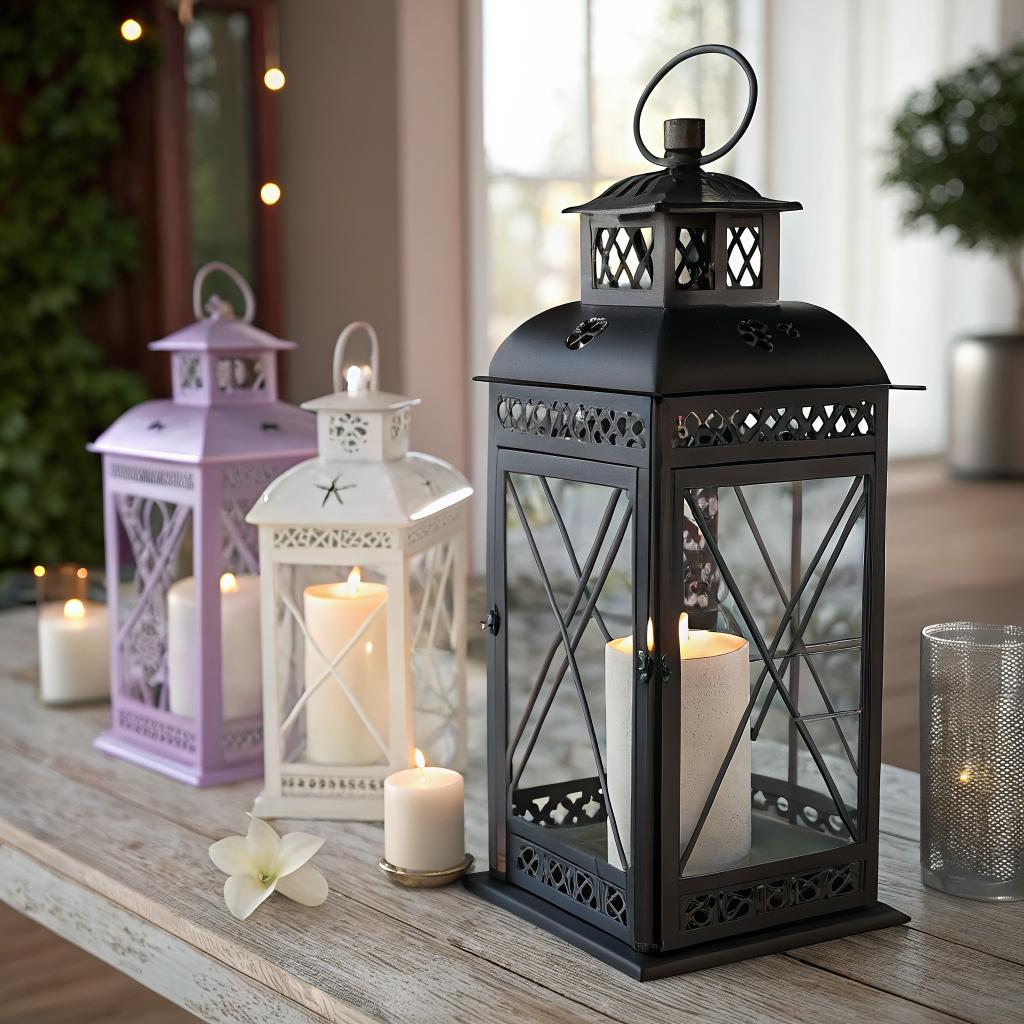

“Candle lanterns are just for rustic patios and power cuts, right?”
That sounds confident, but it is wrong. Candle lanterns can change the feel of almost any room in a few minutes, not just a porch or a campsite. If you pick the right style, place it in the right spot, and think a little about height and reflection, you can turn a plain corner, shelf, table, or even a bathroom into something that feels calm and a bit special. This is why so many people quietly keep adding Candle lanterns to their homes over time, often without really planning to collect them.
I used to think a regular candle on its own did the same job. Light is light, I thought. Then I bought one metal lantern for a balcony, and the way the light spilled through the sides and onto the floor made the whole place feel different. It was not just brightness. It was how the light was framed. Contained, but still soft. That is the main reason lanterns work so well: they control light in a way a naked candle never does.
You already know that candles bring warmth. There is nothing new there. The part that surprises people is how quickly a lantern shifts the mood of a room that feels flat or cold. You do not need a full redesign. You do not need a dozen accessories. One or two lanterns can give you a focal point, a sense of depth, and a quieter pace in the room. It sounds a bit dramatic when you read it, but if you have ever walked into a restaurant where the tables are lit only by candle lanterns, you know it feels different at once.
Let us look at how this works in practice, and how you can use it in your own space without turning your living room into a fake medieval hall.
How candle lanterns change a room in minutes
Candle lanterns do three key things that regular candles often fail to do.
They shape the light, they add height, and they add structure.
On their own, candles give a soft glow, but the light spreads out in every direction. A lantern has sides, a roof, sometimes glass, sometimes cutouts. This shapes the beam of light. It sends patterns across the wall, focuses the glow into one area, and reduces glare in another. That control makes the room feel more deliberate.
The height part is simple but powerful. A tall lantern on the floor, or a slim one on a console table, brings the light closer to your eye line. You notice it even when you are not looking directly at it. Taller pieces also make a space feel more layered instead of flat.
Structure is the frame itself. A black metal lantern, a woven rattan one, or a glass box with simple lines all act like small pieces of furniture. They give your eye something to land on. In a very plain room, that alone already feels like a big improvement.
The trick is not more light. It is more intention behind where the light sits and how it looks when it falls.
Types of candle lanterns and where they work best
There is no single “right” style. The best choice depends on where you live, how you decorate, and how much you care about cleaning wax. Below is a simple table to help map lantern types to use cases.
| Lantern type | Best for | Look and feel | Practical notes |
|---|---|---|---|
| Metal lantern with glass sides | Living rooms, entryways, patios | Crisp, framed, slightly classic | Easy to move; glass needs wiping now and then |
| Open metal cutout lantern | Walls near corners, side tables | Patterned light, more decorative | Throws strong shadows; works well with plain walls |
| Wood and glass lantern | Scandi or coastal rooms, bedrooms | Soft, relaxed, warm | Keep away from splashes and very damp areas |
| Rattan or woven lantern | Balconies, sunrooms, casual living spaces | Natural, airy, informal | Look for tall shapes; dust can collect in weave |
| Hanging lantern | Above small tables, in corners, hallways | Cozy, intimate, slightly dramatic | Needs a secure hook; think about ceiling height |
| Mini lanterns / tea light holders | Dining tables, bathroom shelves | Subtle, scattered glow | Better in groups; candles burn fairly quickly |
How to place candle lanterns so they actually change the space
Lanterns can look underwhelming if they sit in the wrong place. You light the candle, stand back, and wonder what the fuss is about. Usually it is not the lantern that is the issue. It is the position.
Here are some practical placement ideas that work in real homes, not just in staged photos.
1. Corners that feel “dead”
Every home has one corner that collects dust and maybe a plant that is not doing well. Instead of fighting that corner, you can turn it into a small feature.
Place a tall lantern on the floor, a little away from the wall. Light a pillar candle inside and let the glow hit both walls. The crossed light instantly gives the corner depth. If you have a second smaller lantern, set it beside the taller one, slightly forward. That simple pair can make the corner feel like a nook instead of a leftover gap.
If you paint, you may have noticed how adding a bit of shadow makes an object look more real. Lantern light does the same thing to a corner. It gives it shape at night.
2. Entryways that feel cold
Hallways and entry spaces often feel like a walkway, not a part of the home. There is usually one strong overhead light and not much else.
Try a mid height lantern on a console table or shoe cabinet. When you come home in the evening and that soft light is on, the space feels like it belongs to you, not just a rental hallway or a passage. If you entertain, that first glow sets the tone before anyone sees your living room.
You do not need a huge piece here. Something about 12 to 18 inches tall often works well. If the surface is narrow, pick a lantern with simple lines so it does not feel bulky.
3. Living room, without replacing all your lamps
It is tempting to overdo it and switch every light off, leaving only candles. That can be nice in short bursts, but for daily life you probably want balance.
Think of a lantern as a “second layer” of light. Keep a floor lamp or table lamp on a low level, then add a lantern in the background. It might sit near the TV cabinet, by the balcony door, or beside an armchair.
This layered approach helps in two ways:
– You reduce harsh contrast from screens and overhead lights.
– You add a focal point that is not the television.
If you like to read on the sofa, a lantern on a nearby shelf can frame that area as a quiet corner, even when the rest of the room is not fully dark.
4. Dining table that feels flat
A single bare bulb over the table can make dinner feel more like a workspace. On the other hand, too many candles in flimsy holders can feel messy.
One solid lantern in the center, or two smaller ones spaced along the table, creates a clean line. You can still place dishes and glasses around them. The glass sides keep the flame protected and reduce the risk of accidents with sleeves and napkins.
If you use strong colors in your plates or napkins, a simple metal or glass lantern in black, white, or clear lets that color shine without competing for attention.
5. Bathroom as a small retreat
This is the place many people forget. A small or medium lantern beside the tub, or on a safe shelf, can turn a very normal bathroom into something closer to a spa for an evening.
You do not want clutter in a bathroom. One or two pieces are enough. Place the lantern so the light reflects in the tiles or mirror. The indirect glow is often nicer than looking at the flame directly.
If you only have room or budget for one lantern, put it where you relax the most: near the bath, by your favorite chair, or on the surface you look at every night.
Choosing the right candle for your lantern
The candle you use inside matters almost as much as the lantern itself. The wrong candle can drip, smoke, or disappear in an hour. The right one burns clean and matches how you use the light.
Pillar vs tea light vs LED
Each type has its own role.
| Candle type | Good for | Pros | Cons |
|---|---|---|---|
| Pillar candle | Medium to large lanterns | Long burn time, steady flame, strong presence | Can leave wax at the base if not sized well |
| Tea light | Small lanterns, groups of mini lanterns | Cheap, easy to replace, low profile | Short burn time, weaker visual impact |
| Votive candle in glass cup | Lanterns where you want a taller flame | Contained wax, easy cleanup | Need correct holder size; glass can heat up |
| LED candle | Hard to reach spots, homes with kids or pets | Safe, many have timers, good for nightly use | Light is less rich; some look very fake |
If you care about scent, you can go for scented pillars or jars, but keep in mind that lantern walls may trap some of the fragrance. For strong scents, an open style lantern works better. If your lantern has glass sides with only small vents, a light or moderate scent is more comfortable.
Sometimes I like unscented candles in lanterns and one scented candle elsewhere in the room. That way the visual atmosphere and the smell are not fighting each other.
Matching lanterns to your style without copying a catalog
There is a risk with decor that you start copying a showroom without meaning to. With lanterns, this often shows up as a cluster of identical pieces on every surface. It can feel staged.
It helps to think of lanterns like you think of shoes. You do not need ten pairs of the same sneaker. You pick a few different shapes for different uses.
If your style is simple and modern
You might worry that lanterns are too “decorative” for you. In that case, look for designs with:
– Straight lines
– One material, or two at most
– Neutral colors like black, white, clear glass, or brushed steel
Place them where the geometry of the lantern adds to the room. For example, a tall narrow lantern beside a low, wide sofa creates a quiet contrast.
Skip heavy patterns and ornate cutouts, at least at first. Let the shape do the work.
If your style is more relaxed or natural
Wood, rattan, or aged metal sit well in this kind of space. These materials soften the look of the candle and blend in with plants, woven baskets, and soft textiles.
Be careful not to overload the room with too many textures, though. If you already have a strong jute rug and a lot of visible grain in your furniture, a very busy lantern can feel like one texture too many. In that case, a clear glass lantern with a wooden handle can strike a nice balance.
If your style is more classic or traditional
You might like lanterns with small details: cross bars, finials on top, soft curves. Brass and dark bronze finishes often suit these rooms.
For a slightly updated feel, pair one classic lantern with a very simple one nearby. The mix keeps the room from slipping into a theme park version of the past. This is not something you must do, but I have seen it make older rooms feel fresher without a full change of everything.
Indoor vs outdoor: what changes and what stays the same
Many people first meet candle lanterns outside. They see them on a restaurant terrace or in a garden. Outdoor use has its own small rules, but the core idea stays the same: place, height, and reflection.
Using lanterns outdoors
On a balcony or patio, wind is your main challenge. Lanterns help protect the flame, but some shapes are better suited than others.
– Choose lanterns with glass sides for windy spots.
– Pick wider bases so they do not tip over easily.
– Look for carry handles if you move them in and out often.
On outdoor tables, one medium lantern is usually enough. If the table is long, two placed near each end give better balance than a row of many small ones.
On steps or along a path, matching lanterns lined up can look charming. Just be careful not to turn it into a runway. Leave space between each one so the light feels like a gentle guide, not a border.
Bringing outdoor lanterns inside
You can use many outdoor lanterns indoors, but sometimes the scale feels off. Very large patio lanterns can overwhelm a small living room. When that happens, try placing them on the floor instead of on furniture. Floor lanterns look intentional in corners, beside a large plant, or near a fireplace.
Also, outdoor lanterns may have more wear and weathering. That can add character, or it can just look dirty. A quick clean and perhaps a change of candle size can help them blend in.
Creating small “zones” in open spaces
If you live in an open plan home or studio, it is easy for everything to bleed together: the sofa, the desk, the dining table. Nothing feels separate.
Candle lanterns help draw soft lines between areas.
– One lantern near the sofa says: “this is the resting area.”
– Another near the dining table marks “this is where we eat or talk.”
– A small one on a desk can signal “this is personal time” when work is done.
You do not need bright light for zoning. You just need repeated points of warm glow in the spots that matter to you. It is a quiet way of dividing the room without putting up walls.
I once stayed in a small studio where the owner used three lanterns like this. During the day it all blended together. At night, when she lit them, the room suddenly broke into three clear zones without moving a single piece of furniture. That simple habit made the place feel far more organized.
Combining candle lanterns with other lighting
If you rely only on candles, you will have nights when you cannot see what you are doing. On the other hand, if you only use overhead lights, you miss all the softness and depth candles bring.
You can think in three layers:
1. Base light: ceiling lights or bright floor lamps.
2. Task light: reading lamps, under cabinet lights in the kitchen.
3. Atmosphere light: candle lanterns, small accent lamps.
Lanterns live in that third group. They are not there to help you chop vegetables. They are there to change how the room feels once the practical work is done.
A good rule is this:
Use lanterns when you are not in a rush.
If you are trying to finish emails or cook for 10 guests, you need full brightness. When you are winding down, talking, watching a film, taking a bath, or reading slowly, that is when lantern light makes the biggest difference.
Common mistakes with candle lanterns and how to avoid them
Everyone makes at least one of these at some point. None of them are serious, but they can make lanterns feel underwhelming.
Lanterns that are too small for the room
A tiny lantern in a large living room can disappear. In bigger spaces, do one of the following:
– Go taller with the lantern itself.
– Use a group of two or three, at slightly different heights.
– Place the lantern closer to where you sit or walk, not far away in a corner.
In small rooms, small lanterns are fine, but make sure they are still visible from where you spend most of your time.
Wrong candle size inside
A thin candle in a wide lantern looks lost. A giant candle in a narrow lantern can smoke or get messy.
Aim for:
– Pillar candles that leave about 1 to 2 centimeters of space to the glass or metal on all sides.
– Tea lights in holders that keep them centered.
If you are not sure, test during the day first. See how the candle burns for an hour before you rely on it for an evening.
Lanterns placed where you never look
It sounds obvious, but sometimes we place decor where there is space, not where our eyes naturally go.
Visual check points:
– From the sofa, do you see at least one lantern without turning your head?
– From the bed, can you see some soft light if you want to?
– From the kitchen counter, do you notice any candle glow in the evening?
If the answer is no, move your lanterns so they enter your main lines of sight. Otherwise, you might forget to light them at all.
Cleaning and care without turning it into a chore
No one wants another high maintenance item in the home. The good thing is that lanterns are quite forgiving if you keep a few simple habits.
– Wipe glass panels with a soft cloth now and then. This keeps the light clear.
– Remove leftover wax from bases before it builds up. Warm water and a blunt tool often do the job.
– Check any hinges or clasps. If they start to stick, a tiny drop of oil on a cloth can help.
Metal finishes may darken slightly over time. Some people like that. If you do not, pick powder coated finishes in black or white. They tend to stay more consistent.
For outdoor lanterns, bring them in during heavy rain or strong storms if you can. This is not a strict rule, but it extends their life quite a bit.
Do candle lanterns still matter when we have smart lighting?
You might wonder if all this focus on candles makes sense when you can change your ceiling lights to any color with your phone. It is a fair question.
Smart bulbs are flexible. They let you dim, change color, and set schedules. They cover the practical side of mood lighting very well.
What they cannot easily copy is the living movement of a real flame. That very small flicker, the way the shadows tremble a little, the way the light bounces on nearby surfaces, all of that is hard for a static bulb to imitate.
You do not have to choose one or the other. Many people use both. They keep smart lights for day to day brightness and set them lower at night, then let candle lanterns bring in that organic, shifting glow.
There is also a mental side. The act of lighting a candle, of taking that extra second, tells your brain that the pace is changing. It is time to slow down. A voice command to a smart speaker does not quite have the same effect, at least for most people.
Quick Q&A to help you decide what to try next
Q: If I only get one lantern, where should I put it?
A: Put it where you relax most often in the evening. For many people that is near the sofa or beside the bed. You want to see it often, not only when guests come over.
Q: Do I need matching lanterns?
A: Not really. Matching pairs look nice in more formal spaces, like on a mantel or on each side of a doorway. In relaxed rooms, a mix of sizes and finishes can feel more natural. Try to keep one common thread, like similar color or material, so they still feel related.
Q: Are LED candles worth it?
A: If you have pets, children, or you like to leave lights on for hours without thinking, then yes, they are practical. Look for ones with a warm white color and a gentle flicker, not a harsh white light. Some have timers, which helps create a nightly ritual without much effort.
Q: How many lanterns is too many?
A: When they start to compete with each other. If your eye jumps around the room and does not know where to rest, you might have gone too far. Try turning some off and see if the space feels calmer. You want a few steady points of glow, not a field of lights.
Q: Can candle lanterns really transform a space instantly?
A: Yes, within reason. You will not fix bad furniture layout with one candle, but you can change how a room feels to be in. The shift from flat, bright light to layered, warm, framed light is quick and very noticeable. You can try it tonight: lower your main lights, light one or two lanterns, and see how your own space responds.
