

“If the lights are still on, it is not a real electrical emergency.”
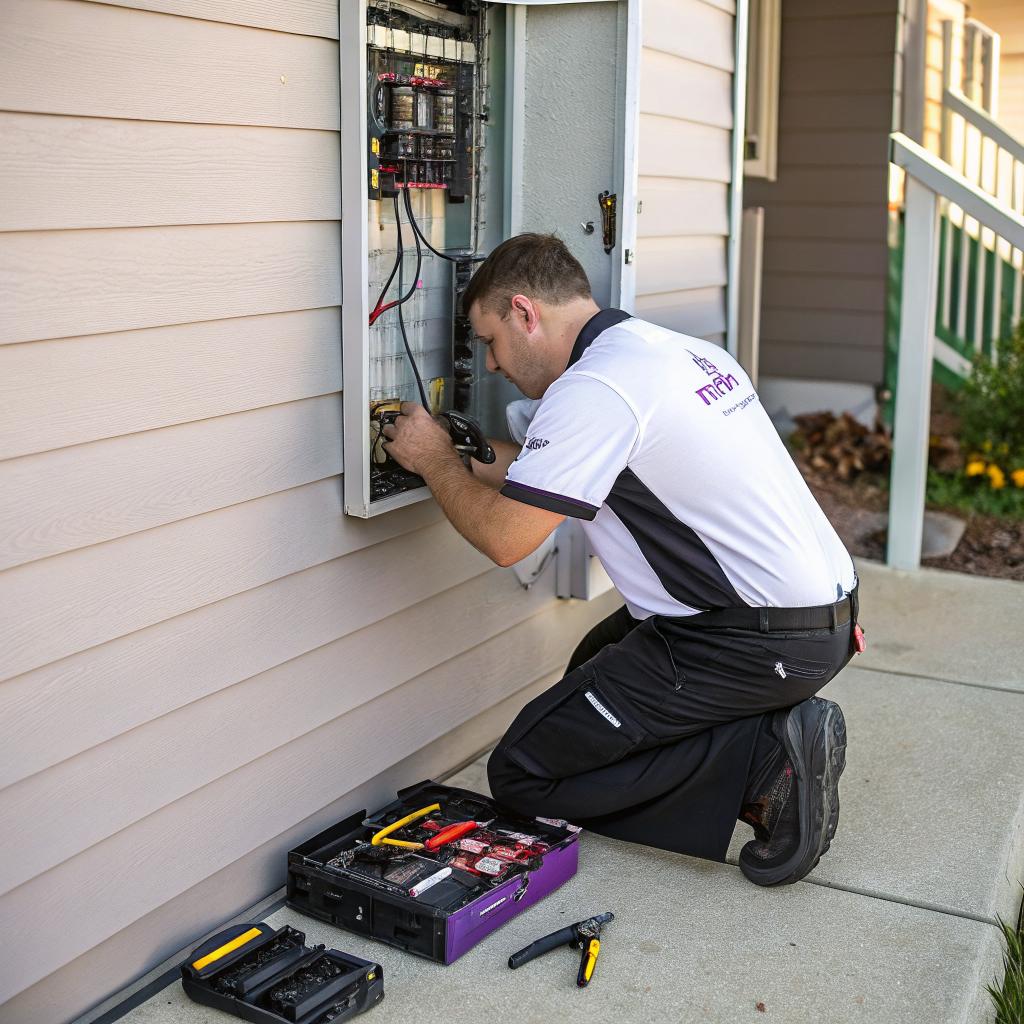
That statement is false, and a little risky. A real emergency is anything that can shock you, start a fire, or leave you unsafe, even if your lights still work. If you smell burning around an outlet, see sparks when you plug something in, lose power in half your home, or your breaker will not reset, you need a Greensboro emergency electrician right away. In simple terms: if your gut says “this does not feel safe,” call a professional, do not wait. If you are in the Triad and want a local option, you can reach out to a Greensboro emergency electrician instead of trying to fix it yourself in the dark.
I want to be very clear on this, because I think many people try to downplay electrical problems. You might tell yourself, “I will just check it on the weekend,” or “It has done that for months, it is fine.” That is exactly how small issues turn into real trouble. You do not have to panic, but you do need to take potential hazards seriously.
You are probably not reading about emergency electricians for fun. Something has already gone wrong, or you are worried it might. Maybe you heard a pop in the panel. Maybe a breaker keeps tripping and you are tired of resetting it. Or you just want to know what to do if things go bad so you are not frantically searching on your phone at 2 a.m.
I will walk through how to tell what is a real emergency, what a trustworthy electrician in Greensboro should actually do for you, what you can safely do on your own, and what you should never touch. I am not going to pretend you need a professional for every burned-out bulb. You do not. But for many problems, guessing is not worth the risk.
There is also this weird thing where people trust plumbers, HVAC techs, mechanics, but feel more suspicious of electricians. I have heard plenty of stories about someone being quoted for a full home rewire when they only needed a bad breaker replaced. That happens. Some companies push more work than you really need. That is exactly why “you can trust” should actually mean something, not just be another bit of marketing copy.
So when I talk about trust here, I mean a few simple things: clear pricing, real communication, and the electrician treating your problem like a safety issue, not a sales pitch. I also mean telling you “you do not need this” when that is the truth, even if it means less money for them.
Let us start with the basics, because everything else builds on that.
A real electrical emergency is anything that feels unsafe, smells wrong, or behaves unpredictably, even if the power is still on.
What counts as an electrical emergency in Greensboro?
Not all electrical problems are equal. Some can wait. Some cannot.
If you try to group everything into “panic now” or “ignore it,” you miss the middle ground where a calm, fast response prevents damage.
Here are common situations that usually count as emergencies:
1. Burning smell or hot electrical parts
If you smell burning plastic, or something like hot metal near a panel, outlet, or switch, treat it as urgent.
A few practical signs to pay attention to:
– A light switch plate that feels hot to the touch
– An outlet that is discolored or looks brown around the slots
– A faint sizzling or crackling sound when a device runs
Even if the smell goes away, it is not “fixed.” Something overheated. That should not happen in a healthy electrical system.
I have seen people spray air freshener instead of calling someone. That does nothing. You can be cautious and still act. Turn off power to that circuit if you can do it safely, unplug devices, and then call an electrician.
2. Frequent breaker trips that start happening suddenly
Every home blows a breaker once in a while. That on its own is not a crisis.
What worries me is a pattern that appears out of nowhere. A breaker that never tripped before now trips every time the microwave and toaster run together. Or a bedroom circuit goes off three times in one day.
Breakers trip for a reason. They are trying to protect the wiring. Ignoring that is like putting tape over a warning light in your car.
If this happens once, you might test it. If it happens again, or starts to get more frequent, that moves into “call now” territory, not “sometime in the future.”
3. Partial loss of power in your home
If half your house is out and the other half works, there could be:
– A problem with the main panel
– A loose connection
– An issue on the utility side
You should not guess here. A loose service connection can overheat and start a fire. It can also damage sensitive electronics because of unstable voltage.
If your neighbors still have power and your home does not, or you have strange dimming and flickering across different rooms, you should treat it as urgent.
4. Sparks, arcs, or shocks
If you see a visible arc when plugging in a device, or sparks from a receptacle, do not keep using it.
Small blue “snaps” when plugging in a high-draw device once in a rare while might happen, but repeated arcs, bright sparks, or any shock sensation when you touch a device or metal cover are red flags.
If you feel a shock from a regular outlet, stop using it immediately and do not assume it was “just static.”
In older Greensboro homes with aging wiring, these warning signs are even more serious, because the system may not be grounded correctly.
5. Water and electricity in the same place
Water around outlets, panels, or extension cords is not something to test casually.
Examples:
– A basement panel in an area that has flooded
– Ceiling lights under a roof leak
– An outlet that got soaked during a plumbing leak
If an electrical part has been wet, you want a licensed electrician to inspect it. Sometimes things can be dried and protected. Sometimes parts must be replaced. Guessing is dangerous.
What a trusted Greensboro emergency electrician should actually do
The word “trusted” gets thrown around a lot. So it helps to be concrete about what that looks like in practice.
Clear communication before they arrive
When you call, you should not have to fight for basic answers. A reliable company will:
– Ask specific questions about what is happening
– Tell you if this sounds like a true emergency or a same-day but not 2 a.m. issue
– Explain the service call fee, if there is one
– Give you a rough arrival window, not just “sometime today”
If the person on the phone is cagey about costs, or will not say anything about minimum charges, that is a warning sign. They do not need to quote the full job, but they should tell you the basic structure.
Respect for safety the moment they step in
A good electrician does not walk straight to the panel and start flipping things at random.
They should:
– Ask you what happened, in your own words
– Look at the affected areas first
– Check for fire hazards, smoke, or water
– Decide quickly if power needs to be shut off to part or all of the home
If they seem impatient when you explain what you saw, that is a bad start. Your description is actually useful, even if you do not know technical terms.
Diagnostic work before selling big fixes
You want someone who tests first, recommends second.
Typical diagnostic steps might include:
– Checking breakers and connections for heat or burning
– Testing voltage at the panel and at problem circuits
– Looking at the age and type of your wiring
– Opening suspect outlets or switches to inspect connections
Only after that should they offer repair options.
If the first thing you hear is “you need a full rewire” without any testing, that is suspicious, especially in a home that was working fine yesterday.
Transparent pricing and options
Emergency work often costs more than regular scheduled visits. That part is normal. But it should not be a surprise.
You should expect:
– A clear explanation of the service call or emergency fee
– An estimate for the repair before work starts
– A short explanation of what happens if they find more damage
In many cases, the electrician can give you two or three paths:
– Short term fix to make it safe now, then plan a larger project later
– Full repair now, including upgrades
– In rare cases, a “do nothing” option if the problem turns out to be small or not actually dangerous
You should not be forced into the most expensive choice to solve an immediate risk.
Written documentation of the work
After the repair, a trustworthy electrician leaves you with:
– A simple description of the problem
– What was done to fix it
– Any remaining risks or future recommendations
You should not need a degree to read it. It should be plain and honest. Something like “Replaced burned receptacle, found loose connection, recommend checking other outlets on same circuit within 3 months” is clear and useful.
Common emergency calls in Greensboro homes
Every city has its own patterns. In Greensboro, there are many older homes, plus a lot of remodeling and additions. That mix leads to some recurring issues.
Older wiring and partial updates
A house might have:
– Original fabric-insulated or knob-and-tube wiring in one section
– Newer copper wiring in an addition
– A panel that was replaced 15 years ago
– A few GFCI outlets in bathrooms, but nowhere else
That patchwork does not automatically make your home unsafe. But it does make things more complex in an emergency.
A heater plugged into an old, ungrounded outlet can overload a circuit that was never designed for modern loads. A trusted electrician looks at context, not just the one outlet that failed.
DIY fixes from past owners
This is more common than many people expect. You take off a switch cover and find:
– Wire nuts missing
– Loose connections wrapped with tape
– Multiple wires crammed into a device not rated for that
These homemade fixes may work for years and then suddenly turn into a hazard. When they fail, they often show up as:
– Flickering lights
– Hot switches
– Intermittent power loss in one room
A good emergency electrician will repair the immediate hazard, but they should also tell you if they suspect similar work is hidden in other parts of the house. You might not want to hear that, but it is honest.
Overloaded extension cords and power strips
This is one of the easiest problems to prevent, but it still causes many calls.
People run:
– Space heaters on long, thin extension cords
– Multiple heaters on one cheap power strip
– Window AC units on shared bedroom circuits already loaded with devices
If something melts or burns, it is not always the product’s fault. The wiring behind it is often not rated for that load.
Again, a trustworthy electrician will not just fix the burnt outlet. They will explain that the heater needs its own dedicated circuit or at least its own outlet on a properly wired circuit.
Storm damage and power surges
Thunderstorms and outages can cause:
– Surges that damage electronics
– Breakers that refuse to reset afterward
– Outdoor outlets or fixtures that short out because of water intrusion
In these cases, a quick emergency visit can make your system safe. You might also talk about adding surge protection or improving grounding, but that part can usually be scheduled later.
What you can safely do before the electrician arrives
There are a few steps you can take that are reasonable and safe, as long as you feel comfortable.
1. Shut off power to the affected area
If you know which circuit controls the problem area, turn that breaker off.
For example:
– If there is a burning smell at the dishwasher outlet, turn off the kitchen small appliance and dishwasher circuits, if labeled.
– If a single bedroom outlet is sparking, turn off the bedroom circuit.
Do not stand in water. Do not touch the panel if there is any sign of smoke or heat around it. If you feel unsure, leave it alone and wait outside if needed.
2. Unplug devices from suspect outlets
If it is safe to do so, unplug electronics or appliances from any outlet that made noise, sparked, or felt hot.
Do not keep turning devices back on “to test” the outlet.
3. Take simple photos
If you see anything unusual, take a quick picture:
– Burn marks
– Melted plastic
– A tripped breaker that will not reset
This can help you explain the situation on the phone and help the electrician prepare before arriving.
4. Make a quick note of what happened before the problem
Ask yourself:
– What were you doing right before it happened?
– Which devices were in use?
– Has anything like this happened before?
You do not need a full report, just a simple timeline. This improves troubleshooting and may even reduce the time on site.
What you should never try on your own in an emergency
Some tasks cross the line from handy into unsafe.
Do not open the main electrical panel cover
Flipping breakers is one thing. Removing the panel cover is another.
Behind that metal plate are live parts that stay energized, even when most breakers are off. One slip of a screwdriver can cause severe shock or an arc fault.
In a true emergency, leave that work to a licensed electrician.
Do not keep resetting a breaker that trips instantly
If a breaker trips the moment you reset it, it is doing its job. Forcing it back on repeatedly heats up the internal mechanism and the wires it protects.
Reset once, if you think it was a fluke. If it trips again right away, stop. You have a short or another serious fault that needs a technician.
Do not bypass safety devices
Never:
– Tape a breaker on
– Replace a breaker with a larger one just so it “stops tripping”
– Swap a two-prong outlet for a three-prong one without proper grounding
These shortcuts might seem clever in the moment. They also remove the safety margin that keeps your wiring from overheating.
How to evaluate if an emergency electrician is trustworthy
Trust is not only about feeling comfortable. There are some real-world signs you can look for.
Licensing and insurance
In North Carolina, electrical work in homes must be done by licensed electricians or by apprentices working under supervision.
You can ask:
– Are you licensed in North Carolina?
– Do you carry liability insurance?
If they get defensive, that is a bad sign. A genuine professional will answer calmly and clearly.
Clear scope of work
Before starting, the electrician should tell you:
– What they are going to check first
– What they expect the problem might be
– What the next step will be if they find something worse
If the situation changes during the job, they should pause and explain. For example, “We came to fix a melted outlet, but the wiring feeding it is also damaged. Here are your choices.”
Realistic recommendations, not fear tactics
A trustworthy electrician may recommend upgrades for genuine safety reasons, like:
– Adding GFCI protection in kitchens, bathrooms, and outdoors
– Replacing very old, deteriorating wiring
– Upgrading an overloaded panel
That is normal. What you want to watch for is emotional pressure.
Phrases like:
– “Your whole house is a ticking time bomb”
– “If you do not do this full rewire today, you are putting your family at risk”
Those are red flags. Safety can be serious without being exaggerated. A good electrician explains the risk, the timeline, and lets you decide.
Respect for your budget
Sometimes money is tight. You might not be able to afford every recommended upgrade.
A decent electrician can:
– Prioritize what must be done now for safety
– Separate urgent repairs from “good idea when you can”
– Help you plan future work without guilt or pressure
That balance is a strong sign of someone you can trust over the long term.
Typical emergency issues and how they are usually solved
Below is a simple table with common problems and what often happens during a visit. It is not every case, but it might give you a sense of what to expect.
| Problem | What you might notice | What the electrician often does |
|---|---|---|
| Burning smell at outlet | Hot cover plate, discoloration, faint smoke | Shut off circuit, open box, replace damaged outlet and wiring, test circuit |
| Breaker trips repeatedly | Cannot run usual devices without losing power | Test load and wiring, find short or overload, repair fault, sometimes split circuit or add new one |
| Partial power loss | Some rooms dark, others fine, lights dim or flicker | Check panel connections, test voltage, repair loose or damaged service connections, sometimes coordinate with power company |
| Water near electrical parts | Wet outlets, panel in damp area, leak stains around fixtures | Shut off affected circuits, inspect for corrosion or shorts, replace damaged devices, may recommend relocation or better protection |
| Shock from appliance or outlet | Tingling when touching metal parts, especially near sinks | Test grounding and GFCI, fix reversed polarity or missing ground, add proper GFCI protection |
How fast should a Greensboro emergency electrician respond?
There is no single rule, but for real hazards, same-day service is normal, and for active fire risk or major power issues, you should expect someone to prioritize you.
Here is a rough sense of timing:
Immediate: call now, not later
– Burning smell from panel or outlets
– Visible smoke
– Repeated sparks or arcs
– Water entering the panel
In these cases, turn off what you can safely, and get an electrician out as soon as possible. If you see active fire, call the fire department first.
Urgent same-day, but not 2 a.m. level
– Frequent breaker trips that started recently
– Loss of power in parts of the house
– Shock from an outlet or appliance
If you can shut off the affected circuits and avoid the area, you might wait a few hours or schedule for daytime, but do not push it off for weeks.
Can usually wait for a planned visit
– One outlet that stopped working with no other symptoms
– A buzzing dimmer that only makes noise at certain settings
– Lights that flicker occasionally only when a major appliance turns on
These can still be annoying or concerning, but they are often not urgent emergencies. A trusted electrician will tell you when something belongs in this category rather than treating everything as a crisis.
What “you can trust” should feel like, from your side
Imagine you wake up at midnight and smell something hot in the hallway. Your bedroom light flickers. The breaker trips when you reset it. Your heart rate goes up. You do not know what is going on.
In that moment, a trustworthy electrician does not just fix wires. They lower the stress.
You should feel:
– Heard when you describe the problem
– Informed about what is happening and why
– Able to ask “Is this really needed?” without getting a sales pitch
– Better when they leave than when they arrived, both in safety and peace of mind
If you feel more confused after they explain things, or if you sense they are annoyed by your questions, something is off.
One small sign of a good technician is how they handle small talk around the work. If they are open to explaining, do not rush every sentence, and are willing to say “I am not sure yet, I need to test that,” that honesty is usually also present in the quality of their decisions.
Questions to ask your Greensboro emergency electrician
You do not need a script, but having a few simple questions ready can help.
Before or during the visit
– “What do you think is the most likely cause right now?”
– “Is there any immediate danger if we leave things as they are for a few hours?”
– “What are the short term and long term options?”
About cost
– “What is the minimum charge for this visit?”
– “Can you give me a range before we start the repair?”
– “If you find more damage, will you stop and talk to me before going further?”
About your home in general
– “Are there other areas you are worried about after seeing this?”
– “If this were your home, what would you fix now, and what would you plan later?”
– “How often would you recommend having an electrical safety check?”
You do not have to ask all of these. But even one or two can make the whole experience clearer.
Simple habits to reduce your chances of an electrical emergency
You cannot prevent every problem, especially in an older house, but you can lower the odds.
Do not ignore mild, recurring issues
If you notice:
– The same breaker tripping every week
– Lights that dim when something turns on
– Outlets that feel a bit loose when you plug something in
Treat those as signals, not background noise. Mention them during a regular service call before they turn into a 1 a.m. crisis.
Use the right devices for the right loads
Some quick rules:
– Plug space heaters directly into wall outlets, never into power strips
– Avoid daisy-chaining multiple power strips
– For major appliances, use dedicated, properly rated circuits
These sound obvious, but many emergencies start with “I only did it this once.”
Consider a periodic electrical safety visit
Not as a sales trick, but as a real checkup, especially if:
– Your home is more than 30 or 40 years old
– You have had multiple small electrical issues over the years
– You have done major renovations or additions
A short inspection every few years can catch aging parts before they fail under stress.
Common fears and honest answers
To wrap this up in a useful way, let me go through a few questions people often have when they think about calling an emergency electrician.
Q: Am I overreacting if I call for something small?
A: Most people actually wait too long, not the other way around. If you smell burning, see sparks, or feel a shock, calling is sensible. If the electrician arrives and finds out it is minor, that is good news. You are paying for peace of mind and safety, not just for parts.
Q: Will they try to sell me a full rewire no matter what?
A: Some companies push big projects. Others do not. This is why your questions matter. Ask them to explain exactly why they recommend larger work and what happens if you do not do it. If their reasons are vague or rely mostly on fear, be cautious.
Q: Can I just watch a few videos and fix it myself?
A: For changing light fixtures or swapping a basic switch, videos can help, if you are careful and turn off the correct breaker. For emergencies involving heat, burning smells, repeated trips, shocks, or panel issues, the risk is higher than many tutorials admit. The cost of one mistake can be far more than a service visit.
Q: How do I know if my home is “safe enough” after an emergency repair?
A: Ask the electrician directly: “Are you comfortable with how things are now, or is there anything you would be worried about if you lived here?” If they are honest, they will tell you. They might say, “It is safe now, but I recommend upgrading this part within a year.” That kind of answer is actually a good sign.
If you had to call someone out once already, would you feel better having a trusted Greensboro emergency electrician saved in your contacts before the next surprise, instead of searching in a panic while the power flickers?
