

“Kitting is just putting products in a box. Any warehouse can do it, so it will not really change your costs or delivery times.”
That statement sounds logical at first, but it is false. When kitting is handled by experienced kitting companies, it can lower your per‑order cost, reduce mistakes, and cut days off delivery. The gap between a basic warehouse tossing items into a carton and a focused kitting operation is much bigger than most people expect.
I have seen this play out a few times. A brand starts by packing orders in‑house. It feels simple enough. Then order volume rises, they add new SKUs, a few more bundle types, some seasonal kits. At some point, the packing area turns into controlled chaos. Extra labor, rush shipments, rework. Once they shift those same orders into a well‑run kitting program, the chaos drops and, almost quietly, both cost and delivery time improve.
So how do top kitting providers actually do this? It is not magic. It is a lot of small, practical decisions about layout, process, people, and data. Some of it is a bit boring, honestly. But that is where most of the savings hide.
You might be wondering if any of this really applies to your business. If you only ship a few dozen orders a week, maybe not. If you sell a small product line with almost no bundles, you might be fine as you are. But once you have hundreds of SKUs, regular promotions, or subscription boxes, you are dealing with a different level of complexity. At that stage, small errors multiply.
What many companies get wrong is that they focus only on the visible costs. They look at the pick and pack fee, or at the hourly wage of a warehouse worker, and stop there. They ignore the lost time when someone has to hunt for parts, fix a mis‑pack, or repack damaged items. They ignore how a late shipment might turn into a support ticket or a refund.
Let us walk through how top kitting providers approach this. Not with theory, but with the boring details that actually move numbers on a P&L.
What “kitting” really means in practice
Kitting sounds simple: take several items, combine them, ship as one. In reality, there are at least three different kinds of work hiding under that term.
1. Pre‑build vs on‑demand kits
Some companies pre‑assemble kits in advance. For example, a monthly subscription box, or a starter kit with fixed contents. Those kits are built in batches and stored as a single SKU.
Others assemble kits on demand. A customer picks size, color, and an add‑on. The kit is built only after the order arrives.
The choice affects:
– Storage layout
– How many touches each item gets
– How you forecast labor and materials
Top operators do not guess here. They run the numbers. If a kit sells steadily and rarely changes, they pre‑build to save time per order. If a kit has many custom options, they keep components loose but group them in a way that still keeps picking short and simple.
2. Where the work happens in the warehouse
Some warehouses try to build kits directly in the pick path. A worker walks the aisles, picks all components, and packs them in the same trip. It looks efficient, but it often leads to congestion, errors, and slow training.
Kitting specialists usually separate:
– Component picking
– Kitting assembly
– Final packing and labeling
This separation lets them train people for each step and adjust staffing by area. If demand spikes, they can pull extra people into kitting, without slowing down receiving or shipping.
3. Standard vs promotional kits
Standard kits change rarely. Promotional kits change often. A “Back to School bundle” might only exist for six weeks.
Good kitting operations plan for both. They give long‑running kits a permanent space and clear work instructions. Short‑term promos get a more flexible setup, sometimes even a temporary work cell. That way, frequent changes do not disrupt stable, long‑term work.
How kitting companies reduce handling time
A big reason top kitting providers cut costs is that they reduce touches. Every touch is another chance for an error and another slice of labor.
The fastest kit is the one that moves the least inside the building.
This sounds obvious. Still, if you walk around many warehouses, you see kits moving from table to table, cart to cart, area to area. Each handoff costs time.
Here are some of the ways experienced teams cut that down.
Smart layout and dedicated kitting cells
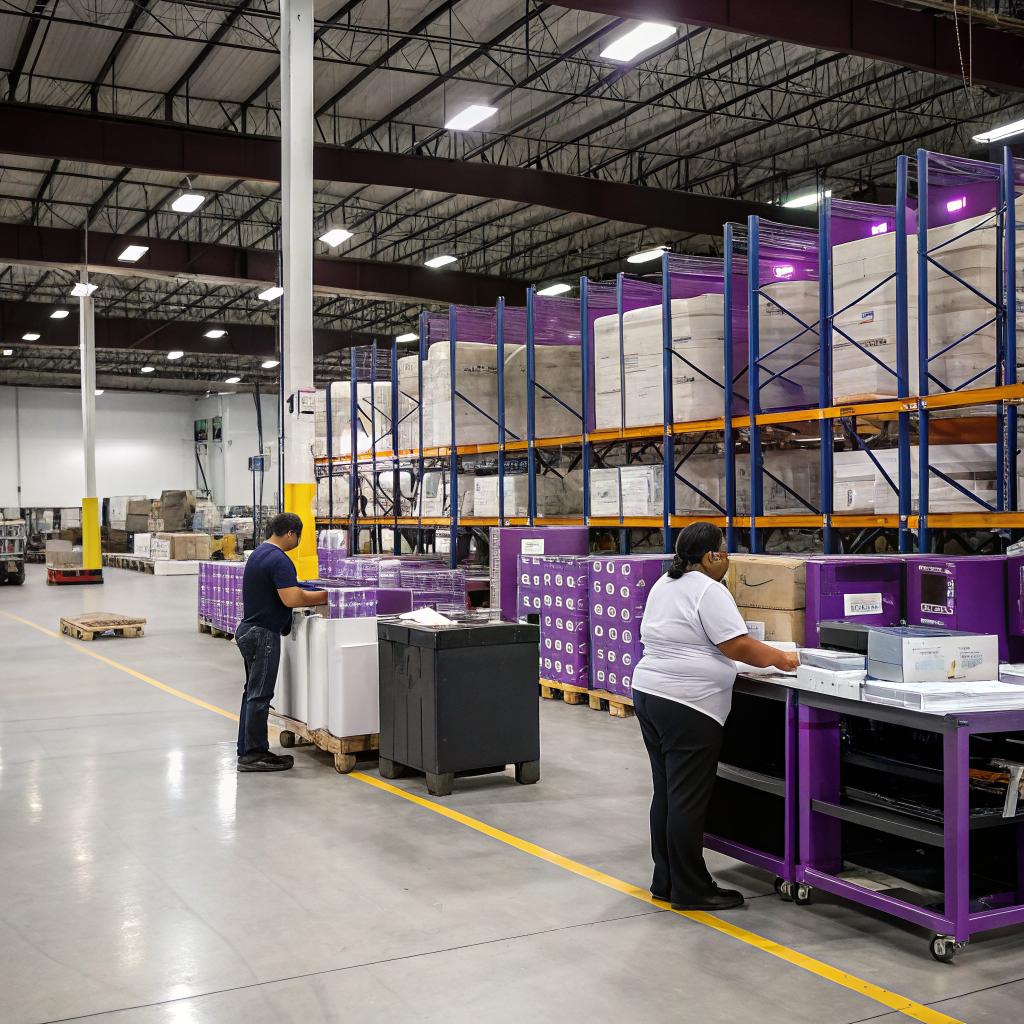
Good kitting setups look almost boring. A clean work table, racks of parts at arm’s reach, labels and tools arranged consistently. The goal is that the packer does not need to walk much, or think too hard about where things are.
Key elements:
– Parts arranged in the order they are picked
– Clear visual labels on each bin
– Limited SKU variety at each station
If a station handles too many kit types, the worker spends time reading, searching, and double‑checking. That is slow. High‑volume kitting companies usually assign each cell to a small group of kits so the routine becomes muscle memory.
Batching based on real demand
Top providers build kits in batches that match actual order patterns. For example, if 500 orders of a standard kit ship each week, they might pre‑build 300 early in the week, then smaller batches for the rest.
Batching saves time because:
– Setup is done once for many units
– Workers handle the same motion repeatedly
– Quality checks can be done on sample units from the batch
But not every kit should be batched in advance. Pre‑building something with uncertain demand risks sitting on dead stock or having to rework kits when one component changes. The good providers are careful here. They pay attention to real data over several weeks, not just a single busy day.
Tools that actually match the work
Some warehouses throw software at the problem. Scanners, tablets, flashy dashboards. That can help, but only if it reflects how people actually move and think in that space.
Effective kitting setups often use a mix of:
– Simple printed instructions with images
– Barcode scans for component confirmation
– Light indicators or simple displays to guide quantities
If you walk into a station and see workers constantly stopping to scroll a tablet or to tap through five screens, something is off. The tech should stay in the background. The work itself should feel simple.
How they control error rates and rework
Mis‑packed kits do more damage than many managers expect. You lose the product, the shipping cost, some labor to fix it, and sometimes the customer.
Top kitting operations take a pretty strict view of errors.
“A 1 percent error rate” sounds small until you ship 10,000 kits and 100 of them are wrong.
To keep that number low, they use a few habits that are not very glamorous, but they work.
Clear, boring instructions
Complex kits need unambiguous directions. Not a paragraph of text, but:
– One picture of the finished kit
– A simple bill of materials with part codes and counts
– Any exceptions called out plainly
For example, if a kit has three variants that differ only by a small item, the instruction sheet highlights that part and its code. Workers do not have to guess.
Top teams also keep instructions close to the station and up to date. If marketing swaps one sample item for another, the instruction sheet changes the same day, not a week later.
Verification without slowing everything down
If you check every single kit manually, you will slow throughput. If you never check, quality will slip. Experienced providers find a middle ground:
– Barcode scans to confirm high‑risk components
– Random audits per batch
– Extra checks for new or recently changed kits
When a new kit is launched, they might check 100 percent for the first week, then switch to random audits once the process is stable.
Feedback loops that reach the right people
When something goes wrong, the worst outcome is that it just gets fixed quietly and no one learns from it.
Good kitting companies track:
– Which station built the kit
– Which worker handled it
– Which shift it was on
If a pattern appears, they can change the setup, update instructions, or retrain. This is not about blame. It is about making the next batch smoother.
Where the cost savings really come from
Let us talk about money more directly. Kitting affects a few major cost buckets.
1. Labor cost per order
Labor is usually the largest part of 3PL warehouse costs. It is also the most flexible. A better kitting layout can reduce labor per order without any change in hourly rates.
Rough example:
| Scenario | Touches per kit | Time per kit | Kits per hour |
|---|---|---|---|
| Basic in‑house kitting | 6 | 4 minutes | 15 |
| Focused kitting cell | 3 | 2 minutes | 30 |
If your cost per labor hour is fixed, doubling kits per hour cuts your labor cost per kit roughly in half. When volumes are in the thousands, this adds up quickly.
2. Packaging and material cost
Top providers look closely at:
– Carton sizes
– Inserts and void fill
– Labels and print runs
If a kit uses several loose items and custom packaging, a specialist might suggest a minor redesign. For example, shifting to a standard carton size that matches their existing inventory. That avoids custom box purchases and reduces waste.
Another common area is inserts. Instead of three separate leaflets, they might help you combine them into one, or print them in runs that match your forecast. Fewer SKUs in packaging supplies simplifies both storage and picking.
3. Storage and inventory carrying cost
Kits affect how many SKUs you have in your system. If you pre‑build everything, your kit count increases. If you build everything on demand, your component inventory can balloon to support any possible combination.
Specialists try to find a balance:
– Pre‑build high volume, stable kits
– Keep components ready for low volume or experimental kits
– Retire slow kits quickly to free space
If you are paying for pallet positions or bin locations, this matters. A few slow kits taking up prime rack space can quietly increase your 3PL warehouse costs without anyone noticing.
4. Cost of mistakes and delays
There is also the soft side of cost. Support tickets, refunds, re‑shipments, and customer churn. They can be hard to trace back to a specific kitting issue, but the connection is there.
Every mis‑packed kit that leads to a refund is basically negative margin. When you fix the kitting process, some of those costs vanish in the background. You might not celebrate them with a big report, but they show up as healthier profit.
How kitting companies speed up delivery
Lower cost is only one part. The other big benefit is speed. Getting a kit out the door faster is not just about happy customers. It reduces the number of open orders in your system and frees up working capital sooner.
Fast fulfillment is not just about shipping speed. It starts with how fast the order can move through your own four walls.
Here is what top providers focus on.
Shorter internal processing time
If a kit is pre‑built and in stock as a single SKU, it can move through the warehouse like any other finished product. Picking is quicker. Packing is simpler. That can turn a same‑day shipping promise from a struggle into a routine.
For on‑demand kits, the goal is to keep the build step short and predictable. That usually means:
– Clear cut‑off times by region or carrier
– Labor planning by hour, not just by day
– Avoiding big spikes by spreading promotional sends
Some companies get burned when marketing runs a flash sale on a popular kit without warning the warehouse. The result is a 3‑day backlog. Mature kitting providers insist on better communication so they can schedule labor ahead.
Better use of carrier cut‑offs
If your internal processing is slow or unpredictable, you miss carrier cut‑off times and lose a full day. Fast kitting operations work backward from these cut‑offs.
Example:
– Carrier A picks up at 4:00 pm
– Internal target: all kits for that carrier picked and packed by 3:00 pm
– Kitting team focuses on those orders earlier in the day
You might think this is obvious. In many warehouses, though, orders are just worked in the sequence they arrive. That approach often leaves a pile of near‑finished orders that miss the truck by 20 minutes.
Reducing rework and second touches
Every time a kit gets pulled off a truck to fix a label, swap a part, or rebox damaged goods, you lose time.
Top kitting companies put protective steps earlier in the process. For example:
– Checking fragile assemblies right after kitting
– Using packaging that matches the weight and fragility of the kit
– Applying labels in a way that avoids scanning problems at the carrier
These details keep orders from bouncing back into the workflow, which keeps the overall cycle time short.
Common mistakes brands make with kitting
It might help to look at a few patterns where companies lose both time and money. I have seen these repeat in many forms.
1. Treating kitting as an afterthought
Some brands design kits around marketing ideas only. They pick a nice printed box, add small items for “unboxing value”, and ignore how all of that will work on a real table with a real worker.
You end up with:
– Fragile items that break during normal handling
– Components that look too similar to each other
– Kits that require constant measuring or alignment
If you involve your kitting provider earlier, they can push back on some of these choices. Not to kill the idea, but to adjust it so assembly is practical.
2. Underestimating SKU complexity
A kit that comes in four sizes, three colors, and two add‑on options is not one kit. It is 24 variants. That explosion hits your:
– Inventory tracking
– Locations in the warehouse
– Training and instructions
Some brands only realize this when they see a spike in mis‑packs. A good kitting company will flag these combinations early and help you find a more manageable way to offer choice.
3. Measuring only unit cost, not total impact
You might see a slightly higher per‑kit fee from a specialist and think they are too expensive. But if their process cuts your returns by half and improves your delivery promise, the math changes.
It can be helpful to look at:
– Cost per shipped order, including rework
– Support cost per order
– Cancelation rate on backordered kits
This broader view often shows that a more skilled kitting setup pays for itself.
What to look for in a kitting partner
If you are trying to choose a kitting provider, you do not need to become a logistics expert. But there are a few questions that can tell you a lot about how they work.
Questions about process
Ask them:
– How they design a new kitting process from scratch
– How they handle promotional or seasonal kits
– How they adjusts staffing when order volume spikes
Listen for concrete examples, not vague claims. If they can describe how they laid out a recent kitting cell or how they learned from a failed setup, that is usually a good sign.
Questions about quality and data
Good operators can show you:
– Error rates for kits vs single‑item orders
– How they track rework and why it happens
– How quickly they update instructions after a change
If they do not measure any of this, they are guessing about quality.
Questions about collaboration with your team
You will need to work together on:
– Kit design
– Material sourcing
– Forecasting
A partner who asks you questions, sometimes pushes back, and offers concrete suggestions is more useful than someone who just says yes to every idea. I know it can feel easier when a vendor is always agreeable, but that often hides problems until they are costly.
How kitting affects 3PL warehouse costs long term
Once kitting is running smoothly, it starts to influence your broader 3PL spend.
Better forecasting and smoother labor curves
Pre‑building predictable kits lets your provider level labor across the week. Instead of wild swings, they can keep a more consistent crew. That stability can support better pricing for you over time.
When your forecasts are reliable, your provider might also be more willing to adjust fees or storage pricing. Uncertainty often shows up as a risk premium in contracts. Reducing surprise is one of the quiet ways kitting helps.
Consolidated shipping and fewer parcels
If kitting lets you ship one well‑packed carton instead of two or three smaller ones, your shipping spend can drop. Carriers usually charge more for multiple parcels going to the same address, especially if they move across zones.
Also, a single sturdy parcel often gets fewer damages than several smaller ones. That protects margin and keeps recovery work low.
Better use of warehouse space
Once kits are stable and predictable, you can place them in locations that match their speed. Fast movers near packing. Slower kits higher or deeper in the racks.
This type of slotting means you are not paying premium, easy‑access space for aging kits that only ship a few times a month.
Realistic expectations: what kitting can and cannot fix
Kitting is powerful, but it is not a cure for every logistics issue. It helps a lot with complexity inside the warehouse. It does not change carrier service levels, customs delays, or how often your suppliers are late.
It also comes with trade‑offs:
– Pre‑building kits can tie up inventory
– Complex kits still take longer than single‑item orders
– Some product lines are simply not well suited to kitting
If your kit has temperature‑sensitive items, for example, or products with wildly different shelf lives, the setup gets tricky. A good provider will tell you honestly when kitting will not help much or when the risk is higher than the gain.
You might also find that the first version of a kit is not ideal. That is normal. Many brands run one season with a new kit, gather data on time, cost, and error rates, then tweak the design. Maybe they reduce the number of items, change the packaging, or adjust the branding. Over a few cycles, the kit becomes easier and cheaper to build.
Bringing it all together with a simple example
Let us imagine a brand that sells a “Home Office Starter Kit”: a lamp, a notebook, a pen set, a mouse pad, and a small plant.
At first, they ship each item separately and hope customers buy all five. Over time, they notice many customers order three or more of the same set of items. So they create a bundle and ask a kitting provider to handle it.
Here is what changes:
Before kitting
– Five separate picks per order
– Standard cartons that are slightly too big or too small
– More void fill to stop items from moving
– Higher damage rate on the plant and the lamp
After kitting with a specialist
– Pre‑built kits stored as one SKU
– Custom, but standard‑for‑them, carton that fits all items well
– One pick per order
– Inserts that hold the plant and lamp firmly
They now ship more orders as kits, with:
– Lower labor per order
– Fewer damaged items
– Faster packing
– Simpler packaging material inventory
Over a few months, they might even adjust the selection. Maybe the original pen set was hard to source in steady quantities. They swap it for a similar item that is easier to forecast and pack. That small change can stabilize the kit build and avoid last‑minute substitutions.
So the kit is not just a marketing idea anymore. It is a product designed together with the people who assemble and ship it.
Q & A: Is kitting worth it for your business?
Q: When does kitting actually start to make sense?
A: It tends to help once you see recurring orders with the same groups of items, or when your average order has three or more lines that often repeat. If most orders are one single product, kitting is less useful. Volume matters too. A few dozen bundles per month do not justify much process work. Hundreds or thousands do.
Q: Can kitting hurt my flexibility?
A: It can, if you pre‑build too much. If you turn every possible combination into a pre‑built kit, you end up with a huge SKU list and stuck inventory. The better approach is to pre‑build stable, predictable kits and keep the rest as on‑demand builds.
Q: How fast should a good kitting provider be able to launch a new kit?
A: It varies by complexity, but for a simple kit with clear components already in stock, a few days is realistic for a basic setup. Very complex or regulated kits can take longer. The key is that they have a repeatable process: layout design, instructions, tests, and then scale up.
Q: Does kitting always lower 3PL warehouse costs?
A: Not always. If your kits are rare, extremely custom, or very low volume, the extra setup might not pay off. The right provider should be willing to run a small analysis with you and say “this one is not worth kitting” when that is the case.
Q: If I only change one thing about my kitting today, what should it be?
A: Start tracking the time and error rate for each kit. It sounds simple, but many teams do not do it consistently. Once you can see which kits are slow or error‑prone, you can focus your effort where it will have the biggest impact on both cost and delivery speed.
