
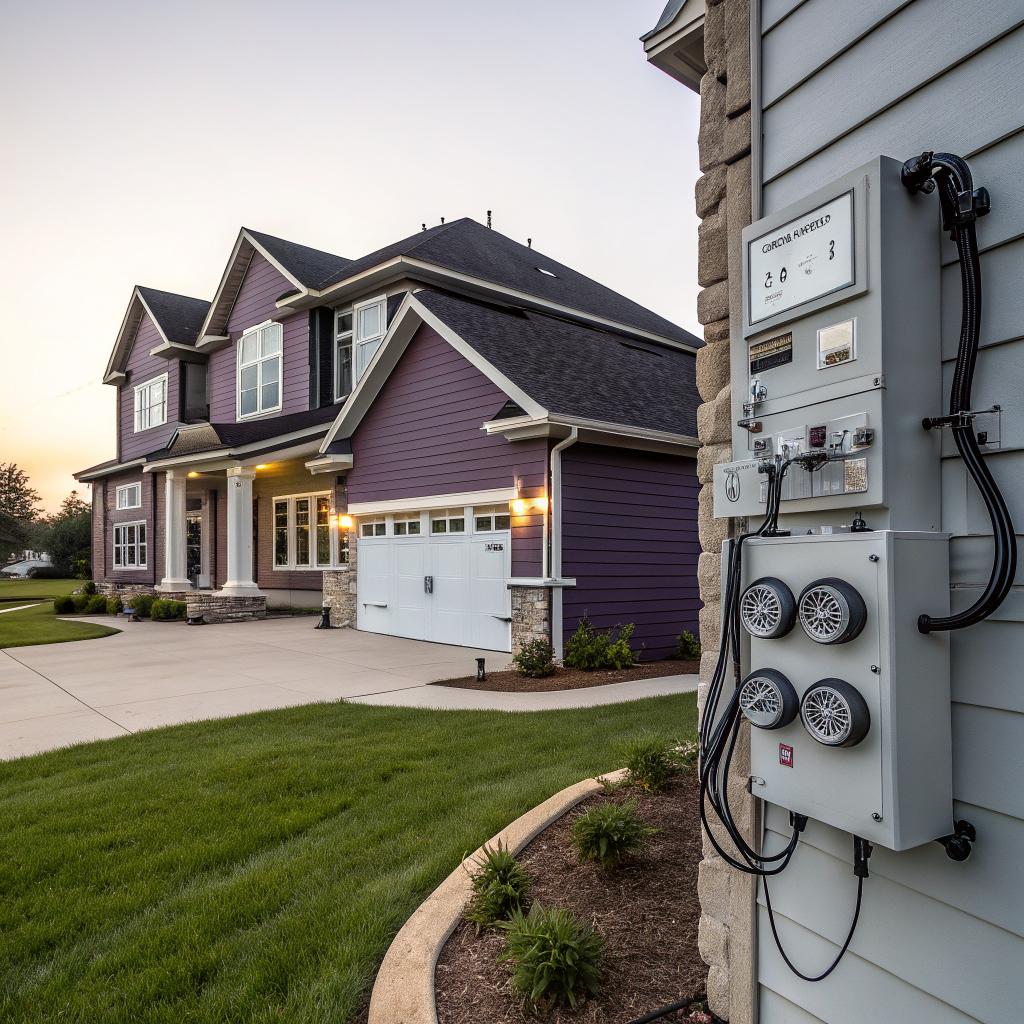

“If the lights turn on and the outlets work, my home’s electrical system is fine. I do not need any upgrades.”
That sounds reasonable on the surface, but it is usually not true, especially for homes in West Des Moines that are 15, 20, or 40 years old. Even if everything still “works,” you probably need at least a few targeted upgrades to stay safe, protect appliances, and keep up with how much electricity your home uses now. The short answer is this: the top electrical upgrades West Des Moines IA homeowners need are panel improvements, more circuits for kitchens and laundry, better lighting, whole home surge protection, and safety devices like GFCI and AFCI breakers. If you do nothing else, handle those. And if you want to dig into what that means in real life, and what is worth your money, keep reading. If you need a place to start or talk with a pro, this page on electrical upgrades West Des Moines IA might help.
I will be honest. I used to think electrical work was mostly about “fixing what is broken.” Flickering light, dead outlet, tripping breaker. Call an electrician, check it off, done.
But most real problems that cost money or put families at risk do not show up that clearly. They sit in the background. An undersized panel that never quite trips but runs hot. An old aluminum splice that is “fine” until one winter morning. Extension cords under rugs because there are not enough outlets. None of that feels like an emergency, until it suddenly is.
So, if you live in West Des Moines and you are trying to figure out where to start, it helps to look at electrical upgrades as you would look at roof work or replacing a furnace. Not very interesting, but part of taking care of a home that has to handle modern life: more electronics, more charging, more lighting, and more comfort equipment.
You do not have to redo everything at once. In fact, I think that is usually a bad idea unless you are already remodeling. Instead, it makes more sense to understand the key upgrade areas, decide what fits your house and your budget, and then move step by step.
Let us walk through the main upgrades that tend to matter most in West Des Moines homes, and why some of them are more urgent than they look at first glance.
Why “working” is not the same as “safe” or “up to date”
It is easy to assume that if breakers are not tripping, everything is okay. That assumption is wrong more often than people realize.
Here are a few quiet warning signs that your home is probably behind on electrical upgrades, even if things seem fine when you flip a switch:
- Your home was built before the early 2000s and has not had major electrical work since.
- You use power strips and extension cords all the time, especially in bedrooms, living rooms, or home offices.
- The kitchen only has one or two countertop circuits, and they trip if you run more than one big appliance.
- The panel still has fuses, or the breakers feel loose, rusty, or warm.
- Lights dim when the AC starts or when you run the microwave.
- There are two prong outlets or no GFCI outlets near sinks or in the garage.
None of those automatically mean you are in danger. But together, they usually tell a simple story: the house was built for a different time.
Think about how many things you plug in now compared to 20 years ago. Multiple TVs, game consoles, chargers, laptop power supplies, smart speakers, security cameras, EV chargers, bigger fridges, tankless heaters in some homes. Then add outdoor lighting, hot tubs, or backyard entertainment if you have them.
Electrical systems age in two ways:
1. The wiring and equipment physically wear out.
2. The original design no longer fits how we use power.
That is why the same few upgrades keep coming up in West Des Moines: they target both age and new demand at the same time.
Main service and electrical panel upgrades
If you only take on one big electrical project in the next 10 years, it will probably involve the panel or main service.
What the panel really does
Your main panel does more than just hold breakers. It is the control center for how electricity is split and protected through your whole house. It affects:
- How many circuits you can add for kitchens, EVs, hot tubs, and more.
- How stable your voltage is when big loads kick in.
- How well your home meets current safety standards.
Older homes in West Des Moines often have:
- 60 amp or 100 amp service that struggles with modern loads.
- Panels with no open breaker spaces.
- Old brands with known issues, like certain Federal Pacific or Zinsco panels.
If you feel your panel is “just old,” it is worth checking whether it is only older or actually a weak point.
Common panel upgrade paths
Here is a simple table to make sense of what might fit your house.
| Current situation | Typical upgrade | What it allows |
|---|---|---|
| 60 amp or small fuse box | Upgrade to 100 or 200 amp breaker panel | Central AC, electric range, dryer, future EV charging |
| 100 amp panel, no free spaces | New larger panel or subpanel | More circuits for kitchen, basement, garage, outdoor |
| Known problem brand panel | Full panel replacement | Better protection, lower fire risk, easier future work |
| Panel inside finished closet or tight spot | Relocation and upgrade | Safer access, code compliant working space |
I know panel work is not cheap. It is not fun or decorative either. But if your main service is maxed out, every new project later becomes harder and more expensive.
Think of a panel upgrade as the base that lets every other electrical improvement fit neatly, instead of as a constant workaround.
A good local electrician can also tell you if 100 amps is still plenty for your home, or if 200 amps makes more sense for long term plans.
Kitchen and laundry circuit improvements
Kitchens in older West Des Moines homes were not built with air fryers, espresso machines, and big microwaves in mind. Yet people plug them all into one small circuit and hope for the best.
Why kitchens trip breakers so often
Appliances like:
- Microwaves
- Toasters and toaster ovens
- Air fryers
- Crockpots and pressure cookers
- Coffee machines
all draw a good amount of power. When several share the same 15 amp circuit, you hit the limit fast. Tripping breakers is not just annoying. Repeated tripping can point to wiring that is right at the edge, sometimes for years.
Modern standards call for:
- Two or more small appliance circuits for countertop outlets.
- Dedicated circuits for dishwashers, disposals, microwaves, and sometimes fridges.
If your entire kitchen seems to run off one or two breakers, that is a clear sign an upgrade will help.
Laundry areas are similar. A gas dryer still needs a decent circuit for the washer and gas dryer controls. An electric dryer uses a large 240 volt circuit. If you share that space with a freezer, dehumidifier, or ironing station, you might be putting too much on that area without realizing it.
Upgrading kitchen and laundry circuits may include:
- Adding more dedicated lines from the panel.
- Adding new outlets where you actually use appliances.
- Making sure GFCI protection is present near sinks.
It is not glamorous work, but it affects your daily routine every single day.
Lighting upgrades that make a bigger difference than people expect
Lighting upgrades are often the first electrical projects homeowners actually feel excited about. They show. They feel nice. They also lower energy use without much effort.
Switching to LED the smart way
You have probably already heard about LED, so I will not repeat the basics. Instead, here is where I think people go wrong:
- They mix color temperatures in the same room, so the space feels off.
- They buy the cheapest bulbs, then complain about flicker or poor color.
- They add LED to old dimmers that are not compatible.
Try this simple approach:
- Pick a main color temperature for most of your home, usually “soft white” (around 2700K to 3000K).
- Use “neutral” or “cool” light in work areas if you prefer, like offices or garages, but be consistent within each space.
- Ask an electrician to check dimmers and replace old ones with LED rated dimmers where needed.
Over time, full LED conversion reduces heat in fixtures and cuts a real amount from your electric bill. Even more in homes that run lights a lot in winter.
Recessed lighting and layout fixes
Many West Des Moines homes have either:
- One lonely ceiling light in the living room, or
- Can lights spaced so poorly that the corners are dark and the middle is too bright.
A lighting plan upgrade can include:
- New recessed fixtures spaced correctly.
- Separate lighting zones on different switches.
- Dimmers to fine tune brightness.
The difference in how a space feels can be huge. It is not about making it look like a showroom, just about making it pleasant to actually live in and work in.
Exterior lighting and security
Outdoor lighting upgrades often cover:
- Better porch and entry lighting.
- Path lights for walkways.
- Motion lights on garage and back yard.
Some of this can be low voltage landscape lighting. Some needs proper 120 volt circuits in conduit. Having a pro plan that out matters, especially in Iowa weather where moisture and freezing temps are common.
Whole home surge protection
There is a quiet risk many people ignore until they lose a big TV or their furnace board: surges.
Power surges can come from:
- Lightning in the area, not even a direct hit.
- Utility switching on the grid.
- Large motors starting and stopping, like AC compressors.
Those little plug in surge strips help, but they do not catch everything and they often wear out without any clear sign.
A whole home surge protector is usually installed at the main panel. It is not magic. It does not protect against every possible event. But it removes a huge chunk of the risk before it reaches your circuits.
A good whole home surge device is a fairly small investment compared to the cost of a furnace board, fridge control module, TVs, and all the electronics we now plug in everywhere.
Some units also show when they have taken a serious hit and need replacing. That small indicator alone can save guessing.
If you live in an area that sees storms, or your neighborhood has frequent power blips, this upgrade moves up the priority list.
GFCI, AFCI, and outlet safety upgrades
You know how some outlets have the “test” and “reset” buttons on them? Those are GFCI outlets. They help protect people from shock, especially near water.
Where GFCIs belong
Current standards call for GFCI protection in:
- Kitchens (countertop areas)
- Bathrooms
- Laundry areas
- Garages
- Unfinished basements
- Outdoor outlets
If you still see plain outlets in these spots, that is one of the simplest safety upgrades to tackle.
You can add GFCI either:
- At the outlets themselves, or
- In the panel using GFCI breakers, which then protect the whole circuit.
GFCIs sometimes nuisance trip if miswired or old, but when installed correctly they just sit quietly until they catch something bad.
AFCI protection
AFCI (arc fault circuit interrupter) devices help catch dangerous arcing in wiring that can start fires inside walls. They are more about fire risk than shock.
Modern codes call for AFCI protection in many living spaces, especially bedrooms and main living areas. Older homes rarely have them unless they have been updated.
These devices usually live in the panel as AFCI breakers. There are also some combination GFCI/AFCI breakers.
People sometimes get frustrated with AFCI breakers if they trip, but often that reveals real issues, like:
- Loose connections in outlets or switches.
- Old cords that arc when moved.
- Damaged conductors in the wall.
So there is some extra tuning at first, but the extra layer of protection is real.
Replacing worn and outdated outlets
If outlets:
- Feel loose when you plug something in
- Spark or crackle
- Have yellowed or cracked faces
- Are still two prong without ground
they are overdue for replacement. You can also take that chance to:
- Add USB combination outlets where they make sense.
- Shift outlet positions to match how you actually use rooms now.
Replacing outlets and switches is not glamorous, but it clears a lot of hidden wear and tear from daily use.
Grounding and bonding corrections
Grounding is one of those topics people skip because it feels abstract. Yet poor grounding can make every other safety device less effective.
Older West Des Moines homes sometimes have:
- No real ground connection at the panel.
- Old metallic water pipes used as the only ground, then changed to plastic later.
- Ground wires that are undersized or loose.
Good grounding helps:
- Trip breakers faster during faults.
- Give surges a safer path to dissipate.
- Reduce shock risk from equipment faults.
A pro can test and update your grounding system by:
- Adding ground rods outside.
- Properly bonding water and gas pipes.
- Correcting ground and neutral connections at the panel.
It is the type of upgrade you do once, then forget about, but it supports almost everything else.
Basement, garage, and outdoor power upgrades
In West Des Moines, basements and garages often turn into half workshop, half storage, half gym. That is three halves, but that is what ends up happening.
Basement circuits and lighting
If you have a finished or partly finished basement, take a quick look at:
- How many circuits actually serve that area.
- Whether lights are bright and evenly spaced.
- Whether there are enough outlets for TV, treadmills, dehumidifiers, etc.
Finishing or remodeling a basement without upgrading the electrical can trap you later. You end up popping breakers anytime you use a heater or larger device.
Adding a basement subpanel sometimes makes sense. It keeps runs short and leaves your main panel less crowded.
Garage power
Garages used to be for cars and a couple of tools. Now they often hold:
- EV chargers or at least future plans for one.
- Freezers and fridges.
- Air compressors and heavier tools.
- Electric heaters in winter.
Common garage upgrades include:
- Dedicated 20 amp circuits for tools and freezers.
- 240 volt circuits for larger equipment or future EVs.
- Better lighting and switched outlets on the ceiling.
If you ever see lights dim when you start a tool, that is a hint your circuits are near their comfort level.
Outdoor circuits
Outdoor outlets and circuits need to handle:
- Moisture
- Temperature swings
- Physical damage risk
So they should have:
- Weather resistant covers.
- GFCI protection.
- Conduit where exposed.
If you run orange extension cords out a window for holiday lights or for a backyard project, that is a sign you could use more permanent outdoor power.
Preparing for EV charging and future loads
Even if you do not own an electric car yet, it is worth thinking about. EVs are moving into more driveways every year, and West Des Moines is no exception.
Basic EV charging options at home
Most homeowners end up with one of two setups:
- Standard 120 volt outlet charging. Slow, often overnight multi day charging.
- 240 volt Level 2 charger. Much faster and more practical for daily driving.
Level 2 chargers usually need a dedicated 240 volt circuit, often 40 to 60 amps. That is where panel capacity suddenly matters.
Even if you are not ready for the car yet, you can:
- Have your panel checked for future EV capacity.
- Rough in conduit to the garage while you are doing another project.
- Plan space in the panel so the circuit is easy to add later.
A little planning around EV charging now can save you from expensive, awkward rerouting later when you finally decide the gas pump can wait.
Some homeowners also plan for future electric ranges, heat pumps, or tankless water heaters at the same time, so the whole load picture stays balanced.
Smart home and control upgrades that actually help
“Smart” devices often come in waves of hype. Some are handy. Some are more trouble than they are worth.
If you want to avoid the clutter and still get useful control, focus on a few key areas:
Smart switches and dimmers
Instead of filling every outlet with a wifi plug, replacing a few key switches can:
- Give you control over main lights from your phone.
- Allow schedules for porch or security lighting.
- Work with voice assistants without weird workarounds.
Smart switches are often safer than stacking cheap plug in devices, since they are wired properly into the circuit and rated for the load.
Smart thermostats and HVAC controls
Not fully an “electrical” upgrade, but they tie into your system. Many older homes need a common wire pulled to the thermostat or the furnace wiring cleaned up to support modern units.
A good electrician or HVAC tech can sort that out quickly. After that, control is more stable and you are not relying on battery only stats.
Whole home monitors
Some homeowners like energy monitors installed in the panel. These can:
- Show which circuits use the most power.
- Alert you if a circuit behaves strangely.
They are not for everyone, but if you like data and want to track usage, integrating them during panel work can be convenient.
Signs your West Des Moines home needs electrical attention soon
Sometimes it is hard to know when to move from “I should look into upgrades one day” to “I need to call someone.”
Here are signs that should not be ignored:
- Frequent breaker trips on the same circuits.
- Burning or hot plastic smell near outlets, switches, or the panel.
- Outlets that are warm to the touch when lightly loaded.
- Flickering lights not tied to a single known bad bulb or fixture.
- Sparking when plugging devices in, more than a tiny static snap.
- Buzzing sounds from the panel or from switches.
If you see any of those, inspection and repair now is usually cheaper and safer than waiting.
For more borderline situations, like an older panel or limited outlets, you can plan work across a couple of years:
- Year 1: Safety items first. GFCI, AFCI where possible, fix obvious weak spots.
- Year 2: Panel and service upgrade, surge protection, grounding corrections.
- Year 3: Comfort and convenience. New lighting, extra outlets, garage or outdoor circuits.
You do not have to follow that exactly, but thinking in stages helps it feel manageable.
How to talk with an electrician about upgrades
One mistake I see people make is calling an electrician and saying, “What should I do?” without any clear goals. That can lead to scattered work or upsells that do not match what you care about most.
Try this instead:
1. Walk your home and make a simple list
Before anyone comes out, walk room by room and note:
- Areas where you constantly use power strips or extension cords.
- Outlets that feel loose or unreliable.
- Spaces that feel poorly lit.
- Any breaker names that confuse you in the panel.
Also list your plans, even rough ones:
- Possible EV in the next 3 to 7 years.
- Future basement finishing.
- Kitchen or bath remodel ideas.
2. Share priorities, not just problems
When the electrician arrives, say something like:
- “My first concern is safety.”
- “After that, I want fewer tripped breakers in the kitchen and better lighting here.”
This helps them design upgrades in layers.
3. Ask for options, not a single path
You can say:
- “If I only did the most urgent items this year, what would those be?”
- “What would be the next tier of work if I can budget more later?”
This kind of talk often leads to a more honest, practical plan instead of an all or nothing quote.
Common questions West Des Moines homeowners ask
Q: My home is from the 1990s. It feels “new enough.” Do I still need upgrades?
A: Maybe. Homes from the 1990s often have better wiring than much older ones, but they still may lack modern GFCI/AFCI coverage, whole home surge protection, and enough circuits for current kitchen loads or EVs. A quick inspection can reveal whether your system is strong or just barely keeping up.
Q: Are panel upgrades really worth the cost, or can I just add subpanels?
A: Subpanels are useful, but if your main service is small or your existing panel is an older problem type, you can end up stacking temporary fixes on a weak base. In many cases, a main panel and service upgrade gives you a cleaner, safer platform, then subpanels can extend from that if needed.
Q: Do I need smart devices to have a “modern” electrical system?
A: No. A solid modern system is about safe wiring, right sized circuits, proper grounding, surge protection, and enough capacity for your loads. Smart switches and similar gear are optional layers on top. They are nice when they solve actual problems, like bad access or scheduling, not when they are added just for the label.
Q: Where should I start if my budget is limited?
A: Start with safety and capacity. That usually means:
- Fix anything that looks or smells unsafe.
- Add GFCI where required and reasonable.
- Address obvious panel or main service issues.
After that, prioritize the rooms you use the most, often kitchen, main living area, and bedrooms.
Q: How often should I have my electrical system checked?
A: For most homes, a detailed check every 8 to 12 years is reasonable, or any time you plan a major remodel or add a large new load like an EV, hot tub, or big workshop. If your home is older than 40 years and has had lots of piecemeal work, more frequent checks can help catch hidden problems.
Electrical upgrades are not about making your house fancy. They are about making it safe, comfortable, and ready for how you actually live, now and in the next decade.
If you look around your home right now, what is the one electrical change that would make the biggest difference to your daily life?
