

“You need a big budget and an interior designer if you want your home to look impressive.”
That line keeps a lot of people stuck. It sounds reasonable, but it is false. You can create a home that feels welcoming, stylish, and personal without spending much at all. In fact, many of the best ideas are almost free. If you want proof, just look at how many simple, repeatable tricks we share over on Sunday Best Blog that start with what you already own and only then add low-cost tweaks. The real secret is not money. It is attention, intention, and a bit of courage to try things, move stuff, and live with it for a few days before judging it.
I might be wrong, but most people do not have a “decor problem”. They have a “decision problem”. Rooms stay half finished. Art never gets hung. Furniture stays where the movers dropped it. Then the house feels off, and the budget gets blamed. So this guide walks through practical ways to dress your home on a budget, and it sticks to what you can actually do this week, not someday when you have thousands to spend.
You will see that style often comes from restraint. Editing. Saying no to the fifth throw pillow and yes to clear surfaces, good light, and a few strong pieces that tell your story. The good news: restraint happens to be very friendly to your wallet.
Rethinking “Decor” So Your Budget Works Harder
“Once I buy enough decor items, my home will finally feel finished.”
That approach is backwards. A house that feels pulled together tends to follow a simple order:
1. Layout
2. Light
3. Color
4. Texture
5. Small decor
Most people start at number 5 and stay stuck there, shuffling small items without fixing the big levers.
If you focus your limited budget on the top of that list, almost every room in your home will feel better, even if you never buy another candle or vase again.
Step 1: Shop Your Own Home First
Before you open a shopping app, walk through your home with fresh eyes. No cart. No wallet.
Look at each room and ask:
– Is there anything here that I love but barely notice anymore?
– Is there anything here that adds visual noise, not value?
– Is there something in another room that would work better here?
I might be wrong, but most homes already have enough decor for two houses. It is just scattered and competing with itself.
“New decor is almost always the answer.”
Usually, the answer is rearranging what you have.
Move a chair from the bedroom into the living room. Steal a lamp from the entry for your desk. Shift artwork from the hallway to above the sofa. Rotate pillows and throws between rooms. These changes cost nothing, yet often look like a makeover.
Here is a simple way to look at it:
| Current Situation | Low-Cost Move | Budget Impact |
|---|---|---|
| Cluttered surfaces with lots of small decor | Remove half, store or donate, keep only favorites | $0, room instantly feels calmer |
| Art hung too high and spaced out | Lower art to eye level and group pieces | $0, walls feel intentional |
| Multiple mismatched lamps | Group best two or three in key areas | $0, better light where you live most |
| Random furniture placements | Rearrange around one focal point | $0, room feels larger and more useful |
Do this “shop your home” pass before setting any decor budget. You might cut your planned spending in half, because you finally see what you already own.
Layout: The Free Decor Upgrade
If your furniture layout does not work, no amount of decor will save the room. This is where Neil Patel’s way of thinking applies: fix the structure first, then tweak.
Define the Focal Point
Every room needs one main focal point. Not three. Just one clear “anchor” that the rest of the room supports.
Common focal points:
– A sofa wall with art
– A fireplace
– A TV wall
– A bed in a bedroom
– A large window
Ask yourself, “If someone walked in here, where should their eye land first?” That is your focal point. Your budget decor should exaggerate and support that view, not compete with it.
Group Furniture for Conversation
Push-everything-against-the-wall is one of the fastest ways to make a room feel cold, even if the decor is nice.
Try this instead:
– Pull the sofa off the wall by at least a few inches.
– Create a U or L shape with seating facing the focal point.
– Add a small side table or second chair to complete a conversation area.
You might feel like you are making the room “smaller” at first. You are not. You are making it more usable. Empty middle space that no one uses is not helpful. Grouping furniture creates little pockets of comfort.
Size of Decor vs Size of Room
Another budget trap: lots of tiny decor items trying to fill a large space. Many cheap pieces do not add up to the feeling you want. One or two larger items often look stronger and more thought-through.
For example:
| Area | Common Budget Mistake | Better Low-Cost Move |
|---|---|---|
| Coffee table | Many small trinkets and coasters everywhere | One tray with a plant, a candle, and a book |
| Sofa wall | Several small, spaced-out frames | One larger piece of art or a tight gallery cluster |
| Entry table | Keys, mail, and random items | One bowl for keys, one lamp, and one framed photo |
Try decluttering first, then add larger, more intentional items over time. Less but stronger is cheaper than lots of filler.
Color Choices That Help Your Budget
“To decorate on a budget, just go neutral and avoid color.”
Not quite. Very neutral spaces can start to feel flat, which then pushes you to buy more decor to bring them to life. Color, used with care, can save you money because it does more of the heavy lifting with fewer items.
Create a Simple Color Story
Pick:
– 1 main neutral (white, beige, grey, or warm tan)
– 1 or 2 accent colors that repeat across the room
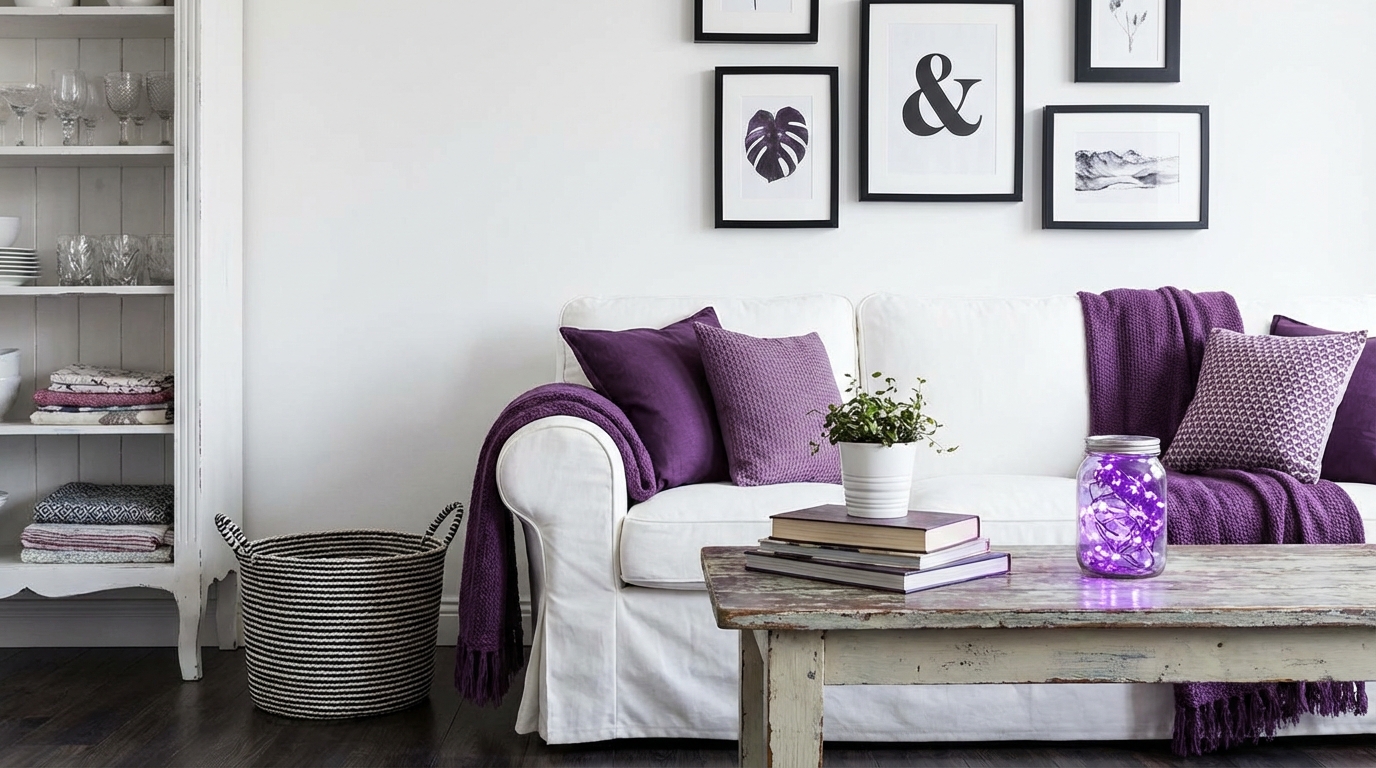
Then repeat those colors in textiles, art, and small decor. Repetition gives everything a pulled-together feel, even if things came from thrift stores or clearance bins.
For a budget home, work with:
– Your existing sofa color
– Your flooring color
– The largest rug you have
Use those as your starting point instead of starting from a blank Pinterest board. If your sofa is a deep blue, let blue show up again in pillows, a throw, or a piece of art. That echo effect tricks the eye into seeing cohesion.
Low-Cost Color Changes
Here are decor upgrades that give strong visual impact for less money than furniture:
| Change | Effort | Approximate Cost | Impact |
|---|---|---|---|
| Paint one accent wall | Weekend project | Low to moderate | Sets mood, anchors room |
| Add a thrifted rug | Light work | Low to moderate | Defines area, adds pattern and warmth |
| Swap pillow covers | Very easy | Low | Fast color refresh across seasons |
| Paint existing furniture | Moderate | Low | Fresh look from pieces you own |
If you need to cut your decor budget, keep textiles and paint. Those give the most visual return for the least money.
Textiles: The Budget Decor Power Move
Textiles do three big jobs: they add color, soften hard lines, and absorb sound. All on a smaller budget than new furniture.
Upgrade Pillow Covers, Not Pillows
Buying new pillows over and over gets expensive and takes storage space. A better route:
– Buy a few good pillow inserts once.
– Build a small “wardrobe” of covers you can swap through the year.
Look for zippered covers in sizes that match your inserts. This way, you update color and pattern for a fraction of the cost.
A simple rule that keeps things from feeling busy:
– Mix up to 3 pillow patterns:
– 1 solid
– 1 small scale pattern
– 1 larger, bolder pattern
Repeat colors so the mix feels like it belongs together.
Rethink Curtains
Curtains are often either missing or an afterthought, yet they change the entire feel of a room:
– Hang them high and wide to make windows look larger.
– Choose simple, light fabrics to brighten the room.
– Use the same curtains across open spaces so rooms feel connected.
If your budget is tight, buy plain panels and add personality with clip-on curtain rings, simple trim, or tiebacks made from leftover ribbon or fabric.
Throw Blankets as Decor Tools
Throws do more than keep you warm:
– Fold over the arm of a chair to break up a block of color.
– Layer at the foot of the bed for a hotel feel on a budget.
– Drape across the back of a sofa to echo a color from a rug or art.
Just one or two throws in your chosen accent color can visually connect multiple areas of a room.
Wall Decor On a Budget
“Real art is too expensive, so I will just leave my walls blank.”
Blank walls can feel clean, but if every wall is empty, a home often feels temporary, like you just moved in.
You do not need original gallery pieces to solve this. You need personal pieces, framed or displayed well.
Use What You Already Have
Ideas that cost almost nothing:
– Frame postcards or greeting cards that mean something to you.
– Print a few favorite phone photos in black and white.
– Use kids’ drawings in simple frames for a hallway or playroom.
– Frame pages from old books or magazines with interesting typography.
Keep frames simple and similar if your pieces vary. The consistency of frames ties everything together.
Create a Gallery Wall the Smart Way
A gallery wall can look expensive but be built on a budget from thrifted or secondhand frames.
Steps:
1. Gather all potential frames in one spot.
2. Spray paint them the same color if they clash.
3. Lay them out on the floor until the arrangement feels balanced.
4. Use paper templates on the wall to plan placement before drilling.
You get a large, impressive focal point for less than the cost of one big piece of store-bought art.
Alternative Wall Decor Ideas
If traditional art is not your style or budget, try:
– A simple floating shelf with a few leaning frames and a plant.
– A fabric wall hanging from an inexpensive blanket or scarf.
– A grid of clipboards or bulldog clips holding photos or prints.
– A mirror to reflect light and make the room feel larger.
Just avoid covering every inch of wall. Give your eye some calm spaces between grouped art.
Lighting: Where Budget Decor Meets Function
Lighting is like layout: a core element that shapes how decor feels. A room with one harsh overhead light will make even expensive decor look flat.
Think in three layers:
1. Ambient light: general room light.
2. Task light: reading lamps, desk lamps, under-cabinet lights.
3. Accent light: small lamps, string lights, candles.
Budget-Friendly Lighting Moves
Low-cost adjustments:
| Lighting Upgrade | Cost Range | Tips |
|---|---|---|
| Swap light bulbs | Low | Use warm white bulbs for living areas and bedrooms |
| Add a floor lamp | Low to moderate | Place in dark corners, not in the middle of the room |
| Use plug-in wall sconces | Low to moderate | Great next to beds or sofas without hardwiring |
| Use candles or LED candles | Very low | Create pockets of soft light in the evening |
If you have to pick just one investment for a room on a tight budget, a good lamp in the right spot usually beats another decor piece.
Decorating Each Room On a Budget
Sometimes broad advice feels vague. So let us go room by room and keep it very practical.
Living Room Decor On a Budget
Focus on:
– One strong focal point (sofa wall, TV, or window).
– A rug that fits under at least the front legs of your main seating.
– Textiles that repeat a simple color story.
– Lighting at different heights.
A simple path:
1. Clear every surface. Remove all decor.
2. Re-arrange furniture for conversation around the focal point.
3. Add back only items that serve a purpose (lamp, tray, a plant).
4. Layer in a few decor pieces that support your chosen colors.
If your coffee table becomes a clutter magnet, add one tray or basket. Everything must live in or on that tray. When the tray is full, something must go.
Bedroom Decor On a Budget
The bed is the star. Decor the rest of the room around it.
Low-cost wins:
– A simple headboard or even a painted rectangle behind the bed.
– Matching or coordinating lamps, even if the side tables do not match.
– One piece of art centered over the bed.
– A clean nightstand with only 3 items: lamp, book, and small personal item.
You do not need 12 pillows. Two sleeping pillows, two shams, and one or two accent pillows often look better and are easier to manage.
For a quick refresh without buying furniture:
– Change pillowcases.
– Add a throw at the foot of the bed.
– Tidy cords, chargers, and clutter.
Kitchen & Dining Decor On a Budget
These spaces collect stuff. So decor should support cooking and eating, not fight them.
Try:
– Clear counters except for daily items and one or two decor pieces.
– Add a small plant or herb pot near the sink.
– Use a tray or board as a base for grouped items: oil, salt, pepper.
For the dining area:
– Use a runner or placemats to add color.
– Keep the table mostly clear so it is always ready.
– Use a simple centerpiece: a bowl of fruit, a vase with greenery, or a candle cluster.
One mistake many people make is buying many small kitchen decor signs or objects. They crowd the space visually and do not help you cook or eat. One strong piece of art or a single shelf with well-chosen items tends to look cleaner and calmer.
Bathroom Decor On a Budget
Bathrooms are small, so decor has to earn its place.
Low-cost ideas:
– Swap old towels for two good ones in a strong color.
– Use matching dispensers for soap and lotion.
– Add a plant if there is enough light, even a tiny one.
– Hang one simple piece of art or a framed photo.
Most bathrooms look better after a decluttering session than after a shopping trip.
Thrifting and Secondhand Decor
“Secondhand decor will make my home look cheap.”
This is where I think many people have it backwards. A room full of new, lower-quality items often looks cheaper than a space with a few older, solid pieces that have character.
When you shop secondhand:
– Look for shape and structure first, not color. You can paint or reupholster later.
– Check for solid wood, sturdy frames, and good proportions.
– Collect items that feel consistent with each other, not random.
Here are common secondhand scores that work well in budget decor:
| Item | Why It Works | Simple Upgrade |
|---|---|---|
| Frames | Build low-cost gallery walls | Spray paint all one color |
| Side tables | Add surfaces for lamps and decor | Sand and paint or stain |
| Lamps | New shades make them look current | Swap shade and bulb |
| Mirrors | Reflect light and open small spaces | Paint frame, hang at eye level |
| Textiles | Vintage blankets, tablecloths, or scarves | Wash well, use as throws or wall hangings |
If something feels almost right but not quite, ask yourself, “Could paint, new hardware, or a new shade fix this?” Often the answer is yes, for much less than buying new.
DIY Decor That Does Not Look Like a Craft Project
DIY can save money, but sometimes it looks messy in person, even if photos online make it look impressive. I might be wrong, but the safest DIY projects for a polished look tend to involve simple lines and neutral colors.
Here are some ideas that usually work:
Painted Furniture
– Use sanding and primer for a smoother finish.
– Stick to neutral or classic colors for large pieces.
– Change hardware to lift old dressers or cabinets.
Simple Abstract Art
You do not have to be an artist. A few tips:
– Use one or two colors from your room.
– Paint simple, large shapes on canvas or heavy paper.
– Frame with a clean, minimal frame.
Because you picked the colors, the art will automatically feel tailored to the space.
Floating Shelves
Use them for:
– Books with covers that fit your color scheme.
– A small plant.
– One framed picture.
Do not overcrowd. Empty space around objects is part of the decor.
Editing: The Cheapest Decor Skill
Sometimes the bravest decor choice is removing items.
A simple editing method:
1. Take everything off a table, shelf, or mantel.
2. Wipe it clean.
3. Add back only what you really enjoy looking at or using.
4. Step back and remove at least one more item.
You should be able to explain why each object is there. “I had it” is not enough. “I love the color,” “It holds my keys,” or “It reminds me of a trip” are better reasons.
If a room still feels off after buying decor, the problem might be that there is too much, not too little.
Budget Planning for Home Decor
If you spend small amounts randomly, the total usually ends up higher than expected, and the impact is low. A basic plan helps.
Set Priorities Room by Room
Ask:
– Where do you spend the most time?
– Which room bothers you the most right now?
– Which change would make daily life feel easier?
Rank rooms and focus spending on the top one or two first. This reduces half-finished spaces all over the home.
Pick One “Hero” Piece per Room
Instead of buying many small decor items, pick one slightly more significant “hero” per room:
– A good rug
– A statement lamp
– A piece of art you really like
– A better duvet cover
Then fill in around that hero with low-cost or secondhand finds.
Here is a sample budget approach:
| Room | Estimated Budget | Hero Piece | Supporting Buys |
|---|---|---|---|
| Living Room | Medium | Rug that fits the space | Pillow covers, thrifted lamp, one plant |
| Bedroom | Low to medium | New duvet cover or quilt | Matching lamps, simple art over bed |
| Dining Area | Low | Light fixture or statement art | Runner, simple centerpiece |
| Bathroom | Low | Shower curtain or mirror | Matching towels, soap dispenser |
You avoid impulse decor and still move each room forward with clear intent.
Timing and Patience in Budget Decorating
Here is where many people take a path that does not help: they try to finish every room fast. They buy decor in a rush, often from the same store, then feel strangely unsatisfied. The home feels generic. The budget is gone.
A slower, more deliberate path costs less and looks more personal.
Think in stages:
1. Clear and rearrange with what you own.
2. Fix light and basic color story.
3. Identify gaps: Do you truly need a rug, art, or lighting?
4. Buy fewer, better items over months, not days.
Ask yourself before each purchase:
– Does this support my color story?
– Does it help a focal point?
– Does it replace something, or just add one more thing?
If the answer feels vague, pause. There will be more decor later. Stores will not run out. Your wallet will thank you for waiting.
Bringing It All Together
Decorating your home on a budget is less about hunting constant “deals” and more about clear choices.
You:
– Start with layout and light.
– Use color and textiles as your main decor tools.
– Shop your home and secondhand sources first.
– Edit more than you add.
– Spend slowly on a few pieces that truly earn their spot.
The approach here might feel calmer than the usual rush of trends and seasonal hauls. That is the point. A calm, intentional process tends to create a calm, intentional home. And that is worth more than any single decor item you could buy.
