
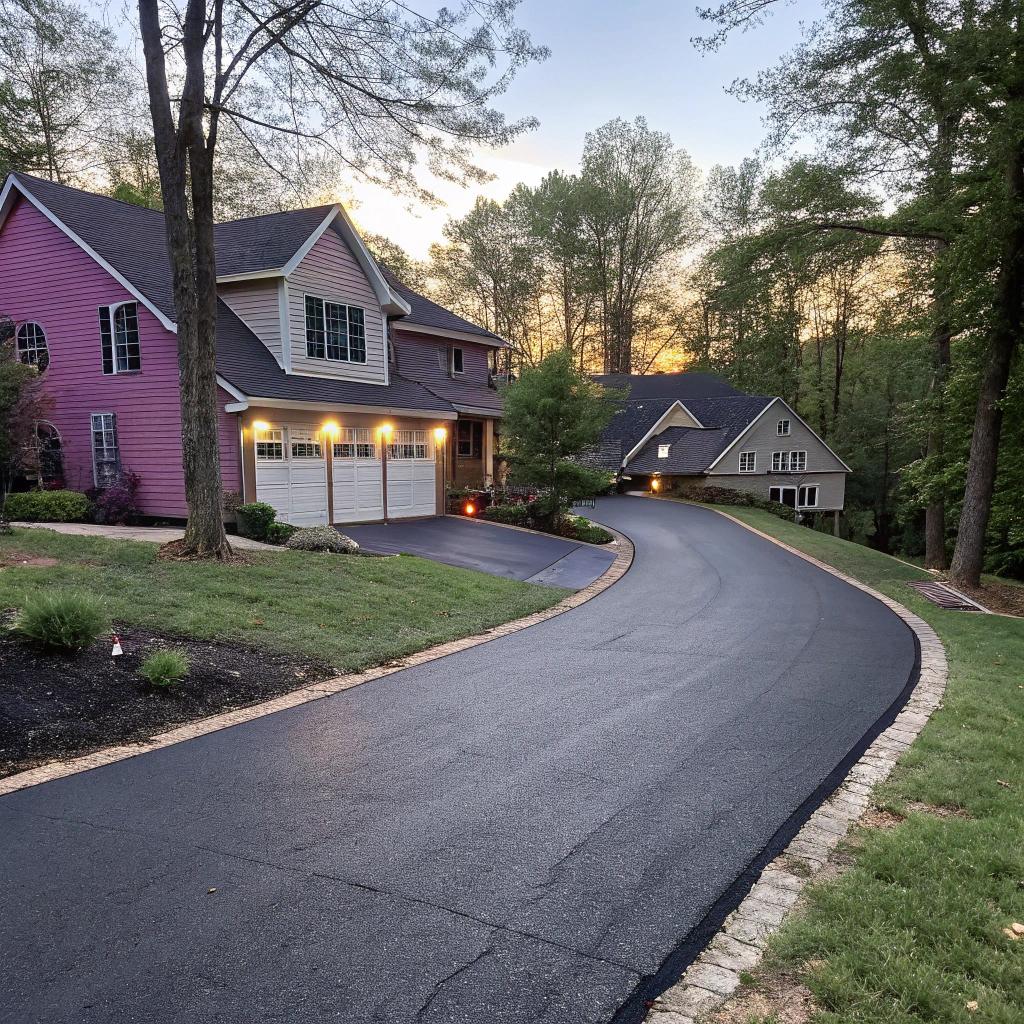

“A driveway is just for parking. Nobody really notices it unless it is cracked to pieces.”
That sounds reasonable at first, but it is not really true. In many Knoxville neighborhoods, the driveway takes up as much visual space as the front yard. If you get the design, material, and finish right, it can raise curb appeal and even help your home feel cleaner and better cared for. If you are already looking into driveway replacement Knoxville TN, you are not just fixing concrete. You are reshaping the first impression your home gives to anyone who pulls up.
So the short answer is: yes, a new driveway can boost curb appeal in Knoxville. But it only does that if you choose the right layout, surface, color, drainage, and contractor. A rushed or cheap-looking replacement can drag your house down just as fast as old cracks and stains.
I have walked past plenty of homes where the yard looked fine, the paint looked fine, but the driveway felt like an afterthought. Wrong slope, patchy repairs, mismatched colors. You notice it even if you do not think about it in words. It just gives you that sense of “something is off here.”
On the other hand, when the driveway lines up with the house style, the sidewalk, and even the mailbox, the whole place feels more pulled together. You do not stare at the driveway, you just feel like the home fits the street better. That is really what you are aiming for.
Let me break down how to think about that for Knoxville in particular, with our clay soil, hot summers, freeze-thaw cycles, and very mixed housing stock. Some of these ideas are basic. Some take a bit more planning. You do not have to apply all of them, but the more of them you think about, the better your new driveway will work for curb appeal and daily use.
How Knoxville climate affects driveway replacement
Knoxville is not the worst place for concrete, but it is not gentle either. We get heat, sun, rain, and winter temperature swings. All of that matters when you replace a driveway.
You want a driveway that still looks good in 5, 10, 15 years, not just in the first month after the crew leaves. If you ignore how local weather and soil behave, you increase the chance of cracks, spalling, or drainage problems that stain and warp the surface.
Here are a few local factors that shape smart driveway choices:
Freeze-thaw cycles and cracking
Knoxville winters are not like the Midwest, but we do get nights below freezing and warmer days. Water seeps into small gaps in concrete, freezes, expands, and starts to push the surface apart.
For curb appeal, this means:
– Small hairline cracks can spread and widen.
– Edges and corners may chip or flake.
– Pitted surfaces trap dirt and are hard to clean.
If you want the driveway to still look clean and solid a few winters from now, do not skimp on base prep, thickness, or joints. I know that sounds like something only a contractor worries about, but visible curb appeal starts with things you cannot see from the street.
Heavy Knoxville rain and drainage
Our storms can be short and intense. If water sits on your driveway or runs back toward the house, you not only get puddles, you also get dirt stains, algae film, and sometimes muddy edges that look messy.
This is where slope and drainage lines matter. A driveway can look great on day one, then after the first big storm you see:
– Standing water near the garage.
– Streams of dirty water cutting lines in the surface.
– Splash-back on the siding or garage door.
Good replacement planning will pitch water away from the house and toward the street or a drain. For curb appeal, a dry, clean surface after rain always looks better from the road.
Sun, heat, and surface color
Knoxville summers get hot, and direct sun can push driveway surface temperatures much higher than the air. Dark surfaces soak up more heat and can fade or show dust more.
Lighter concrete:
– Stays cooler underfoot.
– Reflects more light, which can make the front of the house feel brighter.
– Shows stains more, but also looks “clean” when washed.
Darker tints or asphalt:
– Hide oil spots a bit.
– Show dust, pollen, and dried water spots.
– Make the area look smaller and sometimes more formal.
You want a color that matches your house and works with the amount of sun your front yard gets. That may sound like a small detail, but from the street, that color is one of the first things people see.
Choosing the right driveway material for curb appeal
There is no perfect driveway material. Each one has tradeoffs. Some owners like the classic look of brushed concrete. Others want a more decorative surface. In Knoxville, the most common options are concrete, asphalt, and various paver or stamped finishes.
To make this a bit easier to compare, here is a simple table. It is not every option, but it covers the choices most homeowners consider for curb appeal.
| Material | Look from the street | Typical lifespan (with care) | Maintenance level |
|---|---|---|---|
| Standard brushed concrete | Clean, simple, neutral | 20–30 years | Low |
| Colored or stained concrete | More custom, matches house colors | 20–30 years | Low to medium (reseal color) |
| Stamped concrete | Decorative, patterned, higher impact | 20–30 years | Medium (reseal pattern) |
| Pavers (concrete or brick) | High-end look, strong visual detail | 25+ years (individual repairs) | Medium (weed control, sand joints) |
| Asphalt | Dark, simple, more casual | 15–20 years | Medium (sealcoating) |
Standard brushed concrete
For most Knoxville homes, this is still the best mix of cost, durability, and clean curb appeal. You get:
– A uniform look that pairs with almost any siding.
– Good grip when wet.
– Easy cleaning with a hose or pressure washer.
If your current driveway is broken or badly stained, just replacing it with well-poured brushed concrete already gives you a huge boost. You do not always need fancy patterns or colors.
Colored or stained concrete
If your exterior has strong color, such as a deep blue door or rich brick, a very light or very dark driveway can feel disconnected. A subtle tint in the concrete can tie things together.
Some owners go too bold here and regret it. I once saw a driveway tinted so red it almost matched the brick. It pulled your eye away from the house instead of toward it.
Safer choices:
– Warm gray for tan or beige homes.
– Slightly cool gray for white or light blue homes.
– Soft tan/stone color for brick homes.
Think of it like choosing grout for tile. It should support the main color, not compete with it.
Stamped concrete and pavers
Stamped concrete and pavers can bring a strong design element. They suggest a more custom build and can make a home stand out among plain driveways.
But there is a catch. If the pattern is very busy, or if it clashes with your house style, it can look forced. A small ranch with a driveway that looks like a castle courtyard feels strange.
Before you commit, ask yourself:
– Does this pattern fit the age and style of my home?
– Will it still feel right in 10 years?
– Is the extra visual detail making the house look better, or just louder?
Sometimes it is smarter to use patterns only on borders or near the entry, which I will touch on later.
Asphalt for Knoxville homes
Asphalt is common in some areas because it is flexible and can be more forgiving on certain soils. It also warms up faster and sheds snow and ice more quickly, though we do not get heavy snow very often.
For curb appeal, asphalt can look neat and simple if it is in good shape and regularly sealed. From a distance, a smooth black surface with crisp edges looks fine. Up close, it rarely feels as “finished” as good concrete or pavers.
If your street is mostly concrete driveways and yours is the only asphalt one, that contrast can stand out more than you think, especially when you go to sell. Sometimes the simpler route is still best, but it depends on budget and neighborhood norms.
Design choices that change curb appeal more than you think
Most people think only about surface material. But the layout, edges, and connection to the walkway affect curb appeal just as much.
Many driveways look mediocre not because of the concrete, but because of poor layout, harsh edges, or weak transitions to the yard and front door.
If you are replacing the driveway, you have a good chance to fix those details.
Driveway width and shape
A common problem in Knoxville suburbs is the too-narrow driveway. You have two cars, both fit, but doors barely open without kissing the grass, and visitors park on the street anyway.
Visually:
– A very narrow driveway can make a house feel squeezed.
– A slightly wider driveway feels more welcoming and functional.
– An oversized driveway can look like a parking lot and eat up yard space.
If you have the space and local code allows it, bumping the width a bit can improve both daily use and curb appeal. The trick is to keep edges soft with planting beds or curves so it does not feel like a slab of pavement.
Sometimes adding a gentle curve or flare near the street helps cars enter more comfortably and adds interest from the road. Curves soften the view, especially in front yards that are mostly straight lines.
Edging and borders
Clean edges are one of the biggest curb appeal upgrades. They might sound boring, but they make a huge visual difference.
Options that work well:
– A simple straight broom finish with crisp, saw-cut joints.
– A contrasting border strip in a slightly darker or lighter tint.
– A narrow band of pavers or bricks at the edge.
Even a 1-foot border in a matching or slightly contrasting material can frame the driveway. This draws the eye in a controlled way, toward the front door and the main entry instead of just to a blank slab.
Connecting driveway and front walk
If your driveway simply ends at the garage and your front walk starts somewhere random in the yard, people often cut across the grass. That kills the lawn and also makes the entry feel less clear.
When you replace the driveway, think about:
– Where guests naturally step out of their car.
– How you want them to walk to the front door.
You might tie the driveway and front walk together with:
– A side landing pad where passengers step out.
– A widened area near the front walk.
– Matching materials or patterns on both surfaces.
This is a chance to direct traffic in a way that protects your grass and makes the entry path obvious. That alone can change how welcoming the house feels.
Matching your driveway to your house style
Not every driveway fits every house. A craftsman bungalow, a brick colonial, and a newer suburban build all call for different touches.
Traditional and older homes
For older Knoxville homes, especially those near the city, you might have narrow lots and established trees. Too modern a driveway style can clash with the character.
Good fits:
– Plain or slightly tinted concrete with soft scoring lines.
– Brick or stone border near the sidewalk.
– Gentle curves that respect existing trees and roots.
Avoid highly textured patterns or very bright colors. The driveway should look like it belongs there and has “grown” with the house, not like a modern patch dropped in front.
Newer suburban homes
In many newer neighborhoods, driveways are very similar and very plain. That is not always bad. It does help keep the street consistent. But if you want more curb appeal, you can adjust within that basic style.
Small upgrades that stand out without looking odd:
– Slightly wider driveway than the builder standard.
– Neat control joints that line up with garage doors.
– A refined broom pattern, clean edges, and a light tint.
You do not need heavy decorative patterns to get a clean, finished look. Sometimes just making the driveway look better built than the originals on the street is enough.
Modern or contemporary homes
If your home is more modern, you have some extra flexibility. Larger panels, straight lines, and minimal joints can look sharp from the street.
Things that pair well:
– Larger rectangular sections with clean saw cuts.
– Very smooth or lightly textured finishes where traction is still safe.
– Simple, neutral colors like light gray or charcoal accents.
The one risk is making the driveway look like a commercial space. Keep it warm enough, with maybe a planted strip or a narrow gravel band, to avoid a cold, industrial feel.
Thickness, base, and concrete strength: boring but crucial
This is the part most homeowners do not want to think about. But it is exactly where many driveway replacements go wrong.
If a contractor pours too thin, skips base preparation, or uses weak concrete, you might not see problems in the first year. They show up slowly. Small cracks. Low spots where water sits. Flaking.
And then your shiny new driveway starts to look tired way too soon.
The “invisible” parts of a driveway, like its base depth and concrete mix, often decide if your investment looks good for 3 years or for 25.
Here is what usually matters for Knoxville:
Base preparation
The soil under your driveway needs to be stable. Knoxville has a lot of clay, which moves with moisture. A good base often includes:
– Removing soft or organic soil.
– Adding several inches of compacted gravel or crushed stone.
– Grading that directs water away correctly.
If your old driveway failed early or had repeated cracking, this is where a better contractor will pay extra attention.
Thickness and reinforcement
For many homes, 4 inches of concrete is a standard driveway thickness. Control joints and reinforcement (rebar or wire mesh) help control cracking.
If you park heavy vehicles, boats, or work trucks, or if your driveway slopes steeply, talk to the contractor about thicker sections at the street or garage areas. The curb appeal benefit is simple: fewer cracks for a longer time.
Concrete strength
Contractors talk about “psi” for concrete. Higher numbers usually mean stronger mixes. For a residential driveway, you want a mix strong enough to handle vehicle weight and local climate, not the absolute cheapest available.
You do not need to become an expert here, but you should ask clear questions:
– What thickness do you plan to pour?
– How will you prepare the base?
– How will you handle reinforcement and joints?
Strong answers to those questions protect the look of your driveway over time.
Color, finish, and texture choices that catch the eye
These details are where curb appeal really shows. People might not know why one driveway looks better than another, but often it comes down to color and texture choices.
Picking the right color
If you go with plain concrete, the natural light gray can work well. It is classic and neutral. If you want more character, tints and stains offer options.
Think about:
– Siding and trim color
– Brick or stone accents
– Roof color
If your roof is quite dark, a driveway that is a bit lighter than the roof but darker than the siding can keep balance. If your home is all light colors, a warm, light gray driveway can make the house feel slightly grounded without weighing it down.
A common mistake is picking a color in a sample book that looks good alone but not in front of your actual house. Ask to see photos of similar work on similar homes, not just little color chips.
Finish and texture
The top surface affects both slip resistance and appearance.
Common finishes:
– Broom finish: A light broom dragged across the surface for grip. This is standard and works well.
– Light exposed aggregate: The top cement layer is washed away a bit to show stones. Gives texture and a slightly more decorative feel.
– Smooth trowel: Very smooth, used more for patios than driveways because it can be slippery when wet.
For curb appeal, a light broom finish with clean lines is often enough. Exposed aggregate can add visual interest, but on a large driveway it can feel busy if the stone size or color is too bold.
A small mix, like broom finish on the main drive with a different texture or pattern on a border, can create a nice frame effect without being loud.
Driveway layout and small upgrades that pay off
You do not need to rebuild your whole front yard to lift curb appeal. Small design choices around the driveway can make a clear difference.
Simple layout changes
While you are replacing the driveway, think about small changes that fix long-running annoyances:
– A small parking pad extension on one side to avoid parking on grass.
– Slight curve or taper near the street to ease turning in.
– Better alignment with the garage door and front walk.
Those changes sound practical, and they are, but they also clean up the visual flow. A driveway that lines up properly with the home and street feels “right” when you look at it.
Landscaping next to the driveway
You do not need an elaborate garden. Just a clear, tidy border next to the driveway can make it pop.
Good simple choices:
– Narrow mulch beds with low shrubs or ornamental grasses.
– A strip of river rock between the drive and a fence.
– A short row of groundcover that stays low.
Try not to plant tall, heavy-root trees right next to the concrete. Their roots can lift the slab over time. Better to keep larger trees a bit farther away and use low plants for the immediate edge.
Lighting along the driveway
From a curb appeal viewpoint, lighting might be the most underrated upgrade. A driveway that has gentle, even light at night feels safe and welcoming.
Options:
– Low path lights on one or both sides.
– Downlights from the house soffit or garage.
– Modern bollard lights for contemporary homes.
Harsh, bright floodlights pointed straight at the street can be annoying and wash out the look of your home. Softer, downward-focused lighting usually gives a more refined impression.
Working with Knoxville contractors without losing your mind
Finding good concrete contractors in Knoxville is not impossible, but you need to ask the right questions and be willing to say no when something does not feel right.
I know it is tempting to focus only on price and availability. But for a large, visible project like a driveway, cutting too many corners often shows up directly in curb appeal.
Here are a few practical steps that help.
Compare more than one plan
When you get quotes, ask contractors not just “how much” but:
– What thickness and concrete strength they recommend.
– How they will handle slope and drainage.
– How they plan to protect nearby landscaping.
If one quote is much lower but skips detail on base prep or uses thinner concrete, you would be trading long-term appearance and strength for a short-term saving. That trade is rarely worth it.
Look at photos of actual Knoxville projects
Ask to see recent driveways they have completed in or near your area. Pay attention to:
– How clean the edges look.
– Whether water appears to pond anywhere.
– The quality of joints and any decorative borders.
If you can, drive by a couple of their past projects. A driveway is easy to inspect from the street. If you see big cracks or poor finish work on a 2-year-old driveway, that is a warning sign.
Be firm about what you want
You are not being difficult if you:
– Ask for written details on thickness, base, joints, and finish.
– Request a layout that slightly adjusts width or curve for function and looks.
– Decline add-ons that do not fit your home style.
Contractors appreciate clear direction. If something they suggest feels too flashy or does not match what you had in mind, say so. Better to sort it out before any forms go up.
Common driveway replacement mistakes that hurt curb appeal
Sometimes the best way to plan a good project is to look at how others went wrong. These are mistakes I see over and over again.
Most driveway curb appeal problems come from rushed planning, not from “bad luck” or weather alone.
Ignoring the front door and only thinking of the garage
If the driveway looks great ending at the garage, but there is no clear visual path to the front door, your curb appeal stays half-baked. The front door should still be the star.
Try to picture how a visitor sees your home from the street:
– Is it clear where they would park?
– Do they know where to walk without guessing?
– Does the driveway design guide their eyes toward the entry?
If the answer is no, adjust the layout or connections until the entry reads as the main focus.
Overdoing decorative patterns
Stamped concrete that imitates stone or brick can look nice when used carefully. When used across an entire large driveway in a loud pattern, it can look like a theme park.
This is where owners sometimes get carried away. The sample stamps look great in a catalog, but on a big slab in front of a simple home, the pattern can overpower everything.
A more balanced approach is to:
– Keep the main driveway simple.
– Use pattern or color on borders, at the apron by the street, or near the front walk.
That way you add interest where people see it up close, without turning the whole front yard into a pattern showcase.
Skipping sealing and basic upkeep
Concrete driveways in Knoxville usually benefit from periodic cleaning and, depending on finish, sealing. If you never clean off oil, leaf stains, or algae, the surface dulls and looks older than it is.
Simple habits:
– Rinse off leaf piles and muddy spots instead of letting them sit for months.
– Treat oil stains sooner rather than later.
– If you have stamped or colored concrete, follow the contractor’s advice on resealing.
You do not need to become obsessive, but some minimal care keeps curb appeal strong.
Practical curb appeal upgrades tied to a new driveway
Replacing a driveway is already a major project. It also creates a natural window to handle a few related upgrades while everything is somewhat torn up.
You do not have to do all of these, but thinking them through now can save trouble later.
Front entry refresh
Since the new driveway will pull attention toward the front of your home, it makes sense to clean up the entry area so it lives up to that new surface.
Low-effort upgrades:
– Fresh paint or stain on the front door.
– Updated house numbers that are easy to read from the street.
– A simple, clean porch light that fits the home style.
None of these cost as much as the driveway, but they ride the same wave of improved first impression.
Mailbox and street edge
If your mailbox is leaning, faded, or set in a crumbling base, it will clash with your new driveway. Since the contractor will be working near the street edge anyway, consider:
– Replacing or straightening the mailbox post.
– Adding a small, tidy bed at the base with stone or mulch.
– Keeping the grass line at the curb clean and even.
These small touches frame the edge of the new driveway and give a finished look.
Side yard and utility areas
In many Knoxville homes, side yards are where trash cans, AC units, and hose reels live. If your driveway runs along that side, the clutter can pull attention away from the improved surface.
Simple fixes:
– A short section of fence or screen to hide bins.
– A clear, paved pad for cans that is not right in the main view.
– Hooks or holders to keep hoses neat.
All these things support the sense of order and care that a fresh driveway suggests.
Frequently asked questions about driveway replacement in Knoxville
How long does a driveway replacement usually take?
For a typical Knoxville home, many driveway replacements take about 3 to 5 days of active work, plus some curing time before you drive on it. Weather, size, and complexity can stretch that period. Ask your contractor how they schedule pour day and when you can safely park on the new surface.
Will a new driveway really raise my home value?
There is no exact number that fits every case, and anyone who tries to give you one is guessing too much. What you can expect is better buyer impressions, fewer objections about repair costs, and stronger photos for online listings. That often translates into easier selling and sometimes a higher final price, especially when combined with other visible upgrades.
Is concrete always better than asphalt for curb appeal?
Not always, but for many Knoxville neighborhoods, quality concrete tends to look cleaner and more refined for a longer time. Asphalt can still look neat if it is fresh and sealed, and it might fit certain rural or long-drive situations. For most typical residential lots, a well-finished concrete driveway gives a more polished first look.
Should I widen my driveway when I replace it?
If you often park on the grass, swing doors into bushes, or struggle to fit two cars side by side, widening is worth thinking about. Just do not overdo it. A slight increase with good edge treatments and planting is usually enough. Check local codes and consider how the change will look compared with neighboring homes.
Can I do driveway replacement myself to save money?
Pouring a small patio is one thing. Replacing a full driveway that needs proper base prep, drainage planning, and consistent finish is a different level of work. Most homeowners who try full DIY on a driveway end up with issues in slope, cracking, or surface finish that hurt curb appeal. If curb appeal and long life are your goals, a skilled crew is usually the smarter path.
What is the single biggest driveway change that boosts curb appeal?
If I had to pick just one, I would say a straight, well-poured concrete driveway with correct slope, clean edges, and a clear connection to the front walk. It is not flashy, but when done correctly, it makes the whole front of the house feel more ordered and cared for. Everything else you add is a bonus on top of that foundation.
