

“If your drains are slow, you just need a bottle of drain cleaner. Hydro jetting is overkill and way too strong for normal homes.”
That sounds reasonable at first, but it is not true. For most stubborn or repeat clogs, simple drain cleaner does almost nothing long term, and hydro jetting is often the safest and most complete way to clear pipes, especially in places with older plumbing like Temecula. If you want drains that stay clear instead of clogging again in a week, professional hydro jetting Temecula service is usually the better answer.
I know that might feel like a sales pitch, but it really comes down to how clogs form and what removes them. Chemical cleaners only eat a tiny hole through soft buildup. The drain might start moving again, so it looks fixed, but the gunk is still on the pipe walls. Then a little more grease, toilet paper, or food scraps stick to that layer, and you are right back where you started.
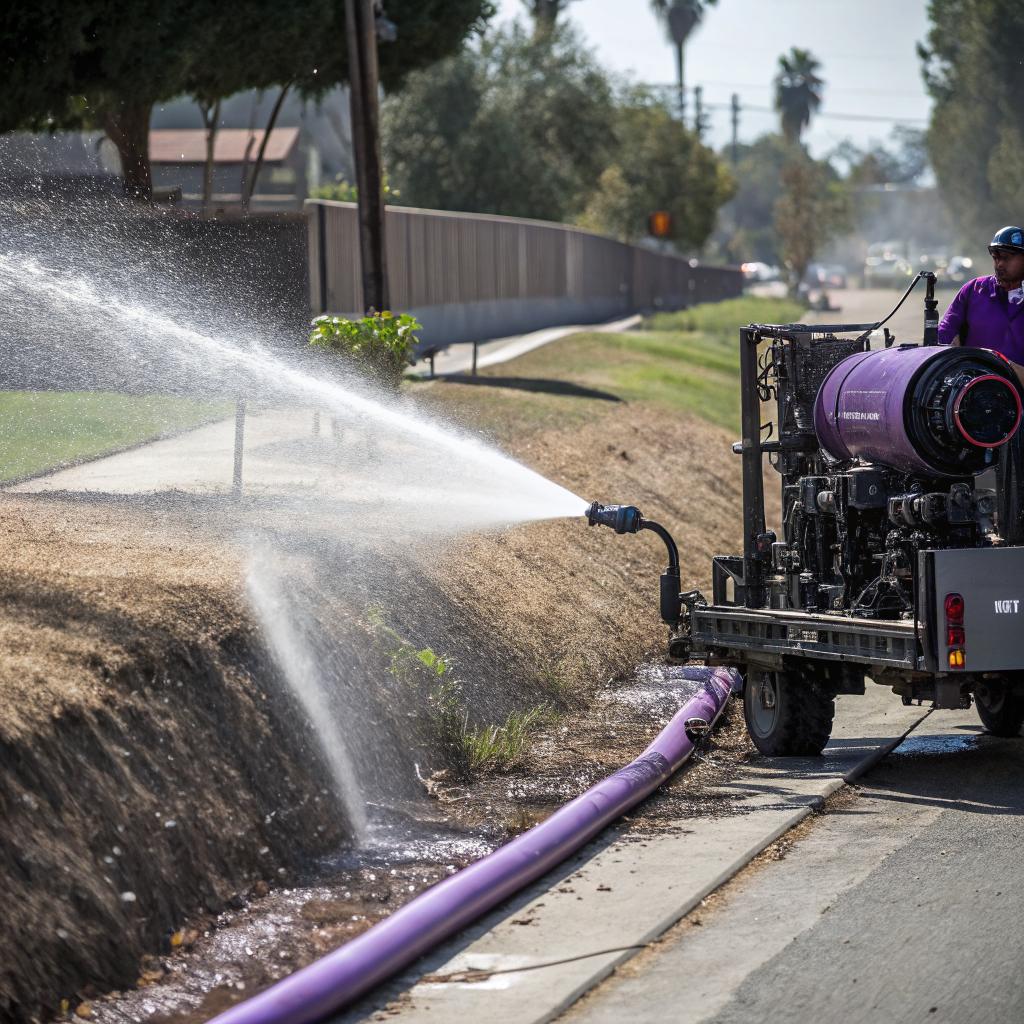
Hydro jetting works in a different way. It uses high pressure water inside the pipe, not chemicals, to scrub the walls clean. Think of the difference between poking a small hole in a sand pile with a stick and washing the whole pile away with a strong hose. One clears a path, the other actually removes the material. That is the basic idea, without trying to make it sound fancy.
I used to think hydro jetting was only for restaurants or big commercial lines. Maybe you thought that too. Then I saw an older Temecula home where the kitchen drain backed up every 3 or 4 months. Snaking helped, for a while. After one hydro jetting job, it stayed clear for more than two years. Same family, same cooking habits. The only thing that changed was how deeply the line got cleaned.
What hydro jetting really is (and what it is not)
Hydro jetting is a drain cleaning method that uses high pressure water inside your plumbing pipes. A hose with special nozzles feeds into the line. Water under pressure pushes forward and also sprays backward at sharp angles. Those backward jets pull the hose deeper into the pipe and break up buildup on all sides.
There is no blade, no spinning cutter, and no acid. Just water, controlled by a trained plumber who knows how much pressure your specific pipe can handle. That last part is important. This is not something you rent and guess at.
Here is where some confusion starts. People hear “high pressure” and imagine pipes bursting. In practice, a good plumber checks a few things first: pipe material, age, any known weak spots, and how serious the clog looks. Then they pick a nozzle and pressure level that match. Used correctly, hydro jetting is not harsher on your pipes than years of grease and sludge slowly eating at them.
“Hydro jetting is too strong for residential pipes” is usually wrong. Bad technique is dangerous, not the method itself.
I am not saying every single line should be jetted. Some very old, cracked, or fragile pipes might need repair or a gentler approach first. But for many Temecula homes, especially with long kitchen runs and tree roots near the sewer line, hydro jetting is often the best way to reset the system.
How hydro jetting works step by step
Let me walk through a typical visit. This is roughly what you can expect, though every company has its own style.
1. Assessment and access
The plumber usually starts with questions. Where is the slow drain? How often does it back up? Any gurgling sounds from other fixtures? Any bad smells near sinks or tubs?
Then they find an access point. This might be:
– A cleanout near the home or in the yard
– A cleanout in a garage or utility room
– Sometimes a roof vent, if needed
If the clog seems deep or stubborn, they might use a small camera first, or at least after an initial attempt. Some skip straight to jetting for known problem lines, but more careful techs like to see what they are dealing with.
2. Choosing pressure and nozzle
Hydro jet machines can reach very high pressure. That does not mean the plumber uses maximum force every time.
They consider:
– Pipe size
– Pipe material (cast iron, PVC, ABS, clay, etc.)
– Type of clog: grease, roots, scale, paper buildup
Different nozzles handle different jobs.
For example:
– A “penetrating” nozzle helps open a tight blockage
– A “flushing” nozzle focuses on cleaning the walls
– A “root cutting” nozzle targets tree roots in sewer lines
In Temecula, with many older clay or cast iron lines, roots and heavy scale are common in main sewers, while grease and soap buildup dominate inside kitchen lines.
3. The actual jetting
The hose feeds into the line and the pump starts. At first the water may push back a bit if the clog is dense, but as it breaks through, the jetting hose pulls itself deeper.
The water does three things at once:
1. Breaks up solid material
2. Peels soft buildup off the pipe walls
3. Flushes debris downstream into the sewer system
A good plumber will move slowly, with passes back and forth. They do not rush. The goal is not just to punch a hole in the clog. The goal is to restore as much of the original pipe diameter as possible.
At this point, some people get nervous about mess. In most setups, the water and debris stay entirely inside the line and exit at the city sewer connection. There is usually no spraying inside your home. The noisy part is the pump itself, which runs outside.
4. Camera check and wrap up
Many plumbers follow jetting with a camera inspection. This is not just a sales trick, although, yes, you pay for the time. It gives a clear view of:
– How clean the pipe is
– Any cracks, offsets, or low spots
– Roots that might grow back through joints
The video can help you decide if you just needed cleaning, or if there is a deeper repair to think about later.
Here is a simple table that shows how hydro jetting compares to other common drain cleaning methods.
| Method | How it works | How long results last | Best use |
|---|---|---|---|
| Chemical drain cleaner | Dissolves some soft material with harsh chemicals | Short term, often days or weeks | Minor hair or soap clogs, emergency only |
| Hand snake / auger | Metal cable drills a hole through clog | Moderate, months if buildup is mild | Simple clogs near sinks or tubs |
| Power snake | Motorized cable cuts and pushes through blockage | Good for some clogs, but buildup often remains | Main line blockages, roots, foreign objects |
| Hydro jetting | High pressure water scrubs pipe walls and flushes debris | Longer term, often years if habits improve | Heavy grease, sludge, roots, scale, repeat clogs |
Why Temecula homes see so many drain problems
Temecula is not a huge city, but it has a wide mix of homes. Some are newer builds with plastic pipes. Others are older, with cast iron or clay sewers that have served for decades.
Several things combine to create drain issues:
– Hard water that leaves mineral deposits
– Grease from cooking that cools and sticks
– Long runs from kitchens to the main sewer line
– Trees and shrubs near sewer pipes
– Occasional ground movement that shifts older lines
You might notice a pattern. There are many ways for the inside of a pipe to slowly close in. It rarely happens overnight. The trouble is, by the time you see slow draining sinks or hear toilets gurgle, the inside can already be narrowed by 30, 40, or even 60 percent.
By the time a drain backs up into a tub or floor, the actual clog you see is only part of the story. The rest is hidden buildup all along the line.
I have talked with homeowners who were surprised how bad their pipes looked on camera. They said something like, “But we only had one or two clogs before this.” The camera showed thick grease rings and scale that had been forming for years. Hydro jetting, in those cases, was less about a quick fix and more about catching up on years of neglect.
Common signs you might need hydro jetting, not just snaking
Not every slow drain needs hydro jetting. Sometimes a small clog near a sink trap is easy to clear with a short snake or even by taking the trap apart and cleaning it.
That said, there are patterns that point toward deeper buildup.
1. Repeated clogs in the same line
If the same kitchen sink, shower, or toilet backs up every few months, something deeper is going on. A snake can punch through the blockage, but it leaves a ring of buildup on the walls. Each time you clear only the center, that ring thickens around it.
Hydro jetting wipes most of that ring away. It is not magic, but it is as close as your pipes will get to a fresh start without replacement.
2. Slow drains in several fixtures
A single slow sink often points to a local issue. Slow draining in multiple spots in the home often points to a problem in a main line or larger branch.
For example:
– Shower drains gurgle when the toilet flushes
– The kitchen sink backs up when the dishwasher runs
– A basement or first floor tub fills when a nearby sink drains
These are signs of restricted flow deeper in the system. Hydro jetting can clear long runs in a way that simple snaking cannot match.
3. Bad smells or constant gurgling
Foul odors around drains often mean trapped waste and bacteria in the lines. When water cannot move smoothly through the pipe, air pockets form. This leads to gurgling sounds and sometimes brings sewer gas into the home.
Hydro jetting pushes water at enough pressure to clear these pockets and wash away the material feeding the smell.
4. Tree roots in the sewer line
Root intrusion is very common in older neighborhoods. Tiny roots find small gaps in pipe joints and grow toward moisture and nutrients inside the pipe.
Snakes can cut roots and temporarily restore flow, but they often leave small root hairs and rough surfaces behind. Roots then grow back, sometimes faster than before.
Hydro jetting with the right nozzle can strip roots more completely along the line. It does not fix a cracked or offset pipe, but it can buy time and reduce emergency calls while you plan any needed repair.
Is hydro jetting safe for your pipes?
This is the part where opinions start to clash. Some people say hydro jetting is always safe. Others say it will ruin old pipes. I do not think either extreme is right.
In practice, safety depends on three things:
– Pipe condition
– Pressure used
– Skill and judgment of the plumber
If a pipe is already cracked, severely corroded, or has missing sections, almost any strong cleaning method can expose that damage. You might clear the line and then find you have a break that needs repair. That is not the jetting creating a problem out of nowhere. It is more like finally seeing what was hidden.
On the other hand, an inexperienced person with a high pressure machine can absolutely damage a weakened line. That is why this is not a DIY project, even if you are handy in other areas.
A careful plumber will:
– Listen for signs of past issues, like frequent main line backups
– Ask about the age of the home
– Sometimes run a camera before pushing the jetter too far
– Adjust pressure for older or fragile materials
So, is hydro jetting safe? In the hands of a pro, for most residential systems, yes. Perfectly safe? No method is perfect. There is always some risk when you push a system that has been neglected for years.
If you are worried, ask direct questions:
– “How often do you hydro jet older pipes like mine?”
– “What pressure range will you use for this line?”
– “What happens if you find a break?”
A good plumber will answer plainly and not try to brush off concerns.
Hydro jetting vs. just replacing the pipes
Sometimes people wonder if they should skip cleaning and go straight to replacement or relining. It is not an easy call, and anyone who claims there is one right answer for every Temecula home is oversimplifying.
Here is a basic comparison.
| Option | What it does | When it makes sense | Downsides |
|---|---|---|---|
| Hydro jetting only | Cleans inside of existing pipes, removes buildup | Pipes are mostly intact, problems are clogs, not breaks | Does not fix cracks or major offsets |
| Spot repair + jetting | Fixes one bad section, cleans rest of line | Camera shows one or two trouble spots, rest of pipe looks decent | Some digging or invasive work at repair point |
| Full replacement / relining | New pipe or liner along longer section | Multiple breaks, heavy corrosion, constant backups | Highest cost, more disruption, permits often needed |
In many cases, hydro jetting is part of the process, even if larger repair follows. Clean pipes give a clearer camera view and help plumbers locate real damage, not just piles of sludge hiding details.
I will be honest here. Some companies push full replacements when careful cleaning and maintenance would be fine for several more years. Others underplay serious damage because nobody wants to hear about a big repair. The best path is somewhere in between.
How often should Temecula homeowners consider hydro jetting?
There is no single schedule that fits every home, but there are some basic patterns that help.
For typical homes that cook at home often, have a few trees nearby, and have average water use:
– Light use, no history of clogs: Hydro jetting only if needed after a camera shows heavy buildup
– Moderate use, rare clogs: Preventive jetting every 3 to 5 years for the main line
– Heavy use, repeat clogs, or restaurants near homes: Jetting every 1 to 2 years for key lines
Kitchen lines in particular tend to need more help than bathroom lines. Grease and food waste are stubborn. You might have perfectly fine bathroom drains but a kitchen sink that causes endless trouble.
If you have never had a camera inspection and live in an older part of Temecula, one combined visit for camera plus jetting can give a strong baseline. From there, you and the plumber can decide whether you should schedule preventive cleaning or simply call when signs appear.
What hydro jetting can remove that other methods miss
It is easy to say “high pressure water” and leave it at that. The value shows up when you look at what it actually removes.
1. Grease and fat buildup
Cooking oils, butter, meat fat, and sauces flow easily when hot. The problem starts when they cool and stick to the inside of the pipe. Over time, layers form, a bit like rings in a tree, except far less pretty and a lot smellier.
Snakes can poke through these layers. They might scrape off a bit. Hydro jetting strips them back much more aggressively and flushes the pieces away. That is why homes that fry food a lot or cook rich meals day after day tend to benefit from jetting more often.
2. Soap scum, hair, and biofilm
Bathroom drains have a different mix. Soap, hair, skin cells, and other organic material bind together and cling to rough surfaces. This traps more hair and more scum, until a mat forms.
High pressure water breaks up this mat and pulls it down the line. The jets also help smooth out minor irregularities on the inner surface, so new debris has less to latch onto.
3. Mineral scale in hard water areas
Temecula has reasonably hard water. Minerals in the water settle out on the pipe interiors over time. This mineral scale narrows pipes and creates rough surfaces for debris to stick to.
Hydro jetting can chip away at this scale and restore more of the original diameter. It will not remove 100 percent in every case, but the improvement in flow can still be significant.
4. Tree roots in sewer lines
Root intrusion is one of the trickiest problems. Strong water jets, used with a specialized nozzle, can slice roots from multiple angles and wash the fragments away. Snakes tend to twist and slice in one main direction, which does not always clean the entire circumference of the pipe.
You might still need long term root control or pipe repair, but jetting often stretches out the time between emergencies.
Hydro jetting and the environment
People often ask whether hydro jetting is safe for the environment. Here, the picture is clearer.
Hydro jetting uses water and mechanical force, not harsh chemical drain cleaners that can damage pipes and enter groundwater. The debris washed away is material already in your line: grease, soap, food waste, roots, and similar things.
If you have been pouring chemical drain cleaners down your sinks for years, switching to hydro jetting is actually a step toward less chemical use in your home. You might need fewer emergency cleanups and fewer plastic bottles of cleaner as well.
There is water use, of course. A jetting job uses more than a quick snake, but in the context of full home water use, it is not extreme. And if one thorough cleaning prevents several future visits and repeat chemical treatments, total impact can be lower over time.
What a Temecula homeowner can do to make hydro jetting last longer
Hydro jetting cleans your drains, but what you do afterward decides how long that clean feeling stays.
You do not need a long list of strict rules, but a few habits help a lot:
1. Be careful with grease
Let cooking grease cool and wipe it into the trash instead of rinsing it down the sink. A little residue will still go through the line, but avoiding full pans of hot oil makes a huge difference.
2. Use strainers in sinks and showers
Simple mesh strainers catch food scraps and hair before they enter the drain. Empty them into the trash regularly.
3. Watch what goes into toilets
Toilets handle human waste and toilet paper. That is all. Wipes, even those labeled as flushable, do not break down fast enough and often hang up on small rough spots in the line.
4. Schedule checks if you know there are old pipes
If a camera inspection showed some aging or small root intrusion, plan on follow-up checks and maybe a lighter jetting before things get bad again. Waiting for a full backup nearly always costs more, both in stress and in service fees.
Typical questions people in Temecula ask about hydro jetting
Let me finish by walking through some common questions, with plain answers.
Does hydro jetting always fix a clog?
No, not always. Hydro jetting clears most clogs very well, but if a pipe has collapsed, shifted badly, or is blocked by a solid object like a broken piece of pipe or a large foreign item, no amount of water will restore normal flow. In those cases, you need repair or replacement.
Will jetting damage my old cast iron pipes?
It can, if the pipes are already extremely thin or cracked, or if someone uses too much pressure. In many homes, though, controlled jetting actually helps extend useful life by removing corrosive buildup and reducing constant standing wastewater. A camera check before and after is the best way to judge.
Is hydro jetting loud or messy inside the house?
Most of the noise comes from the pump outside. Inside, you might hear some rushing water and minor vibration, but it is usually not severe. Mess is rare if the plumber has good access through a cleanout and the line is intact.
How long does a hydro jetting job take?
For a single residential line with normal access, many jobs finish in 1 to 2 hours, including set up and some camera time. More complex systems, multiple lines, or severe root problems can take longer.
Is it worth paying more for hydro jetting instead of just snaking?
If this is your first minor clog, a simple snake might be fine. If you have repeat clogs, gurgling, bad odors, or an older home in Temecula with a history of drain problems, paying more for hydro jetting once can spare you several smaller visits later. I would not say it is always the right choice, but in many repeat cases, the math favors it.
Think of hydro jetting less as a fancy upgrade and more as a deep clean when basic cleaning no longer keeps up.
Can I prevent ever needing hydro jetting?
Probably not forever. Even with perfect habits, pipes age, roots grow, and minerals build up. What you can do is stretch the time between major cleanings, catch issues earlier with simple checks, and choose methods that are gentler on your system over time.
If your drains in Temecula are already slow, or if you keep fighting the same clog again and again, it might be time to ask a plumber a simple question: “Would hydro jetting actually clean this line instead of just poking a hole in the clog?”
