
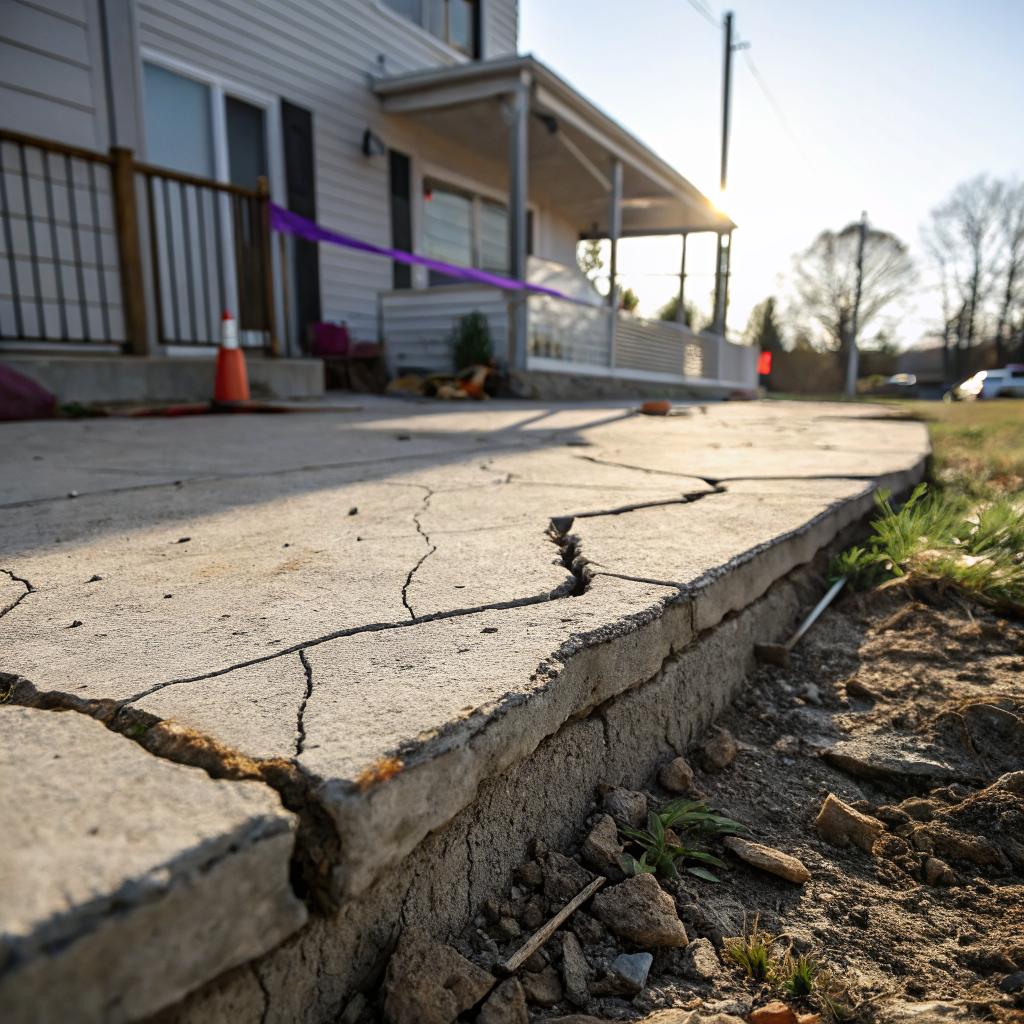

“If the house is still standing, the foundation must be fine.”
That line sounds reasonable at first, but it is false. A house can stay standing for years while the foundation slowly moves, cracks, and pulls things out of line. Smart homeowners in Murfreesboro pay attention to early warning signs and get help with foundation repair Murfreesboro TN before the damage grows and the cost jumps.
You do not need to panic every time you see a small crack in concrete. But you also should not ignore sticky doors, sloping floors, or gaps around windows. The answer sits somewhere in the middle, and that gray area is what makes foundation questions stressful. You might be wondering right now: Is my house in trouble, or am I overreacting? I have had that same uneasy feeling when I saw a diagonal crack creeping from a bedroom window in my own place. For a week I tried to convince myself it was nothing. Then I noticed the door in that room dragging on the carpet. That is when I knew I had to stop guessing and start learning how this really works.
This guide tries to walk you through that learning process in a simple way. No scare tactics. No buzzwords. Just what you actually need to know to make smart choices in Murfreesboro, where clay soils, rain patterns, and summer heat can all push a foundation around more than people expect.
How foundation problems start in Murfreesboro
Most foundation trouble in Murfreesboro does not start with the concrete itself. It starts with the dirt under it.
Middle Tennessee has a lot of clay in the soil. Clay swells when it gets wet and shrinks when it dries out. That movement might sound small, but over years it can lift some parts of a footing while other parts settle. Concrete is strong, but it does not like to bend. So it cracks.
Add groundwater, tree roots, and poor drainage, and you have a slow, quiet push and pull under your house. You do not see it, but you eventually see the symptoms.
Is this a local problem? Yes, to a point. Murfreesboro has:
– Warm, humid summers that dry out upper soil layers fast.
– Periods of heavy rain that soak clay and make it swell.
– Pockets of fill dirt from past construction that were not compacted well.
If your house sits on a hill, near a creek, or in a neighborhood that was graded with significant cut and fill, the risks can be higher. But even a flat lot in a nice subdivision can see issues if the builder skipped proper drainage or used thin footings.
Early signs your foundation needs attention
I think this is where most homeowners either overreact or stay in denial. Some cracks are harmless. Some are very serious. And they can look similar at first glance.
Here are common signs, in plain language.
Cracks that matter vs cracks that do not
Concrete shrinks as it cures. That often leaves thin, straight hairline cracks. Those are often cosmetic.
More serious cracks usually have one or more of these traits:
- Wider at the top than at the bottom (or the other way around)
- Diagonal, especially from window or door corners
- Horizontal cracks in basement walls or crawlspace foundation walls
- Cracks wider than a quarter inch
A simple trick is to mark the ends of a crack with a pencil and date it. Check again in a month. If the crack is longer or wider, something is still moving. That is a sign you should speak to a foundation company.
Doors, windows, and floors
Inside the house, subtle things can tell you more than the slab can.
Watch for:
- Interior doors that suddenly start rubbing at the top
- Gaps at the top of some doors and not others
- Windows that used to glide, now needing a shove
- Floors that feel like they slope toward one corner of a room
If one door sticks slightly, it might be humidity or minor framing shifts. If several doors on the same side of the house act strange, that pattern suggests the structure has moved.
Gaps, separations, and other odd details
You can also look around for:
- Cracks in drywall that run from the corner of a door or window up toward the ceiling
- Gaps between baseboards and floors that were not there last year
- Exterior brick separating from window frames or from the garage door opening
- Small gaps between chimney and siding
Any one of these can be minor. A group of them, especially on the same wall, is a reason to take things more seriously.
“If the cracks have been there for years and nothing terrible has happened, I can stop worrying.”
I understand why people think this, but it is only half true. Some cracks are stable. Others grow very slowly, so slowly that you do not notice month to month. The main risk is when you do not track them at all. That is why marking and watching is such a helpful habit.
Common causes of foundation issues in Murfreesboro
Not every problem is the builder’s fault, and not every problem is the soil’s fault. It is often a mix.
Drainage and water problems
Water is usually culprit number one.
If water collects near your foundation, it can:
– Soften and erode supporting soil.
– Build pressure against basement or crawlspace walls.
– Cause clay to swell on one side of the house more than the other.
Some common local triggers:
- Downspouts that dump water right next to the house
- Gutters clogged with leaves so water spills over the edge
- Yards that slope toward the house instead of away
- Lawn irrigation that keeps soil soggy near the walls
Even a simple thing, like a broken splash block or missing extension on a downspout, can make a difference over time. It feels small until you see the muddy trench along the wall.
Trees, roots, and plants
Trees near your house are not always a problem. But large trees can drink a lot of moisture from the soil, especially during dry spells. That can shrink clay under parts of your footing.
Signs roots might be affecting your foundation:
- Major trees planted very close to the house, within 10 feet or so
- Cracks that lean toward the side where the tree sits
- Raised walkways or driveway slabs near large roots
Sometimes the fix is not removing the tree, but adjusting watering habits and root barriers. Other times removal is the only real fix, which is not fun but sometimes necessary.
Soil and fill issues
Newer subdivisions around Murfreesboro often used fill dirt to flatten or shape lots. If that soil was not compacted well, it can settle over years.
This often shows up as:
– Settling near exterior walls.
– Steps pulling away slightly from the house.
– Driveway or walkway slabs dropping at one end.
Foundations are supposed to be designed for the soil type. When soil changes across a lot, or when fill was not handled well, you get uneven support and movement.
Types of foundation repair you will hear about
Once you start talking with contractors, the vocabulary comes fast. Piers, helical, push, mudjacking, underpinning. It can all blend together.
Let us break down the main methods in simple terms.
Concrete or steel piers
Piers are supports installed under your existing foundation to transfer weight to deeper, more stable soil.
Two common types:
- Push piers: Steel sections pushed into the ground using the weight of your house. They reach load bearing soil, then brackets attach them to the footing.
- Helical piers: Steel shafts with screw-like blades twisted into the ground. Often used where soil is softer near the surface.
Think of piers as adding “legs” under parts of your foundation that are sinking. Once in place, some systems can be used to gently lift sections of the house closer to level.
Slab leveling and injection methods
If you have a slab-on-grade home or sunken concrete in a garage or porch, you might hear about:
- Mudjacking: Pumping a slurry mix under the slab to raise it.
- Foam injection: Pumping expanding foam under the slab for lift and support.
These are often used for driveways, walkways, patios, or garage floors. For main structural foundations, piers are more common, but in some cases both approaches are used together.
Wall anchors and braces
Basement or crawlspace walls that bow inward often need lateral support.
Two common methods:
- Wall anchors: Plates installed on the inside wall connected by rods to anchor plates in the yard. They resist further movement.
- Carbon fiber straps or steel braces: Straps or beams attached to the inside of the wall to hold it from bowing more.
These methods do not always straighten a wall fully. Their main job is to stop things from getting worse.
Drainage and waterproofing
Sometimes contractors recommend fixes that are not direct “structural” repairs but are still part of the solution:
- Interior or exterior French drains
- Sump pumps
- Waterproof coatings
- Grading changes outside
If all someone wants to do is paint a sealant on a wet wall with no drainage work, I would personally be cautious. Paint does not fix water pressure outside the wall.
Comparing common foundation repair methods
Here is a simple table that can help you sort through typical options. Costs are rough ballpark numbers and vary a lot based on your specific home, access, and soil.
| Method | What it fixes | Typical use area | Rough cost range (per area) | Pros | Limits |
|---|---|---|---|---|---|
| Steel push piers | Settling, sinking foundation | Perimeter and interior footings | $1,200 – $2,500 per pier | Strong, reaches deep load bearing soil, can allow lift | Needs enough house weight, access can be tight |
| Helical piers | Settling, light structures | Additions, porches, lighter homes | $1,500 – $3,000 per pier | Good for lighter structures, works in many soil types | May not go as deep as push piers in some soils |
| Mudjacking | Sunken concrete slabs | Driveways, walkways, patios | $5 – $15 per sq. ft. | Can be cheaper than replacement, fast | Heavier material, can settle again in weak soils |
| Foam injection | Slab lifting and leveling | Driveways, garage floors, some slabs | $10 – $25 per sq. ft. | Lightweight, small holes, quick cure | Not for every structural issue, higher cost than mudjacking |
| Wall anchors | Bowing basement walls | Basements with yard space outside | $800 – $1,800 per anchor | Strong support, can straighten over time | Needs accessible yard for exterior plates |
| Carbon fiber straps | Minor to moderate bowing | Basements and crawlspace walls | $400 – $1,000 per strap | Low profile, minimal space loss | Does not usually straighten severely bowed walls |
These numbers are not promises, just a reality check. If someone gives you a quote that is far outside these ranges, you at least know to ask more questions.
What a proper foundation inspection should look like
If a contractor offers to “inspect” your foundation and then spends five minutes looking at one crack, that is not a real inspection.
A more complete visit usually includes:
- Walk around the outside of the home, checking grading, downspouts, and visible foundation surfaces
- Check inside rooms for cracks, sticking doors, and floor slopes
- Inspect the crawlspace or basement, including support posts, beams, joists, and walls
- Measure elevations in different rooms with a level or digital tool to see how much the floor varies
- Ask questions about when you first noticed signs and if anything has changed recently
You should expect them to explain what they see in clear terms. If their only answer is “This is bad, you need piers, sign here today,” that pressure is a red flag. Real problems are serious, but you still deserve time to think and compare.
“All foundation companies say something different, so there is no way to know who is right.”
I hear this a lot, and it is frustrating, but I do not think it is completely true. Yes, some companies push their favorite method for everything. Some salespeople are paid on commission and may oversell. But you can still find patterns.
If three companies visit and all three agree that part of your home is settling toward one corner, that pattern means something. The exact pier count or price might differ, but the basic diagnosis lines up. That is what you want to look for.
How to choose a foundation repair contractor in Murfreesboro
You do not need a perfect company. You need an honest one that suits your home and budget.
Here are some things that, in my opinion, matter more than a glossy brochure.
Local experience and references
Contractors who work in Murfreesboro a lot have seen the same clay soils, the same drainage patterns, the same builders. They know local quirks.
Ask for:
- Projects they have done in your area or neighborhood
- Customers you can call or message, not just star ratings
- How long they have worked around Middle Tennessee
A younger company is not always bad, but a brand new crew with no track record might not be where you want to experiment on a major repair.
Clear written scopes, not vague notes
Every quote should show:
- Where each pier, strap, or anchor will be installed
- The method and materials used
- What kind of results they are aiming for (stabilization only, or lift)
- What is included after repair, like patching concrete or minor drywall repair
If one quote says “Foundation repair package 1” with a single price, and another gives a drawing with labeled pier locations and notes, the more detailed one is usually easier to trust and compare.
Realistic warranties and expectations
Long warranties sound good, but you want to look at what they actually cover. Some things to ask:
- Does the warranty cover only materials, or labor too?
- Is it transferable if you sell the house?
- What is excluded? New movement outside repaired areas? Drainage issues?
Someone who tells you the house will “never move again” is probably exaggerating. Soils can keep shifting, trees can grow, new water problems can appear. Repairs focus on specific areas and causes.
Communication style
This seems small, but it matters. Do they answer your questions with patience? Do they give clear, straight answers even when it might hurt the sale?
You are not hiring a friend, but you want someone you can call back in a few years if something changes without dreading the conversation.
Cost of foundation repair in Murfreesboro
Foundation repair costs vary widely. That is not a dodge, it is just how it works.
Here is a rough sense of scale for typical residential work in the Murfreesboro area:
| Type of issue | Typical fix | Ballpark cost range |
|---|---|---|
| Minor settlement, small area | Few piers at one corner | $4,000 – $10,000 |
| Whole side of house settling | Multiple piers along one wall | $10,000 – $25,000 |
| Major bowing basement wall | Wall anchors or braces | $6,000 – $20,000 |
| Sunken driveway or patio | Mudjacking or foam injection | $800 – $5,000 |
| Drainage fixes and sump pump | French drain, pump, grading | $2,000 – $10,000 |
Again, these are rough. But they at least prepare you that a full structural repair is not a hundred dollar job. The cost often pushes people to delay. The problem is that the longer you wait while movement continues, the more work you may need later.
What you can do before calling a contractor
You do not need to be an expert, but a bit of homework helps you have a better conversation.
Document what you see
Before you bring anyone over:
- Take clear photos of cracks, door gaps, and any uneven floors
- Note the date and where each issue is located
- Mark the ends of larger cracks with pencil and check them over a few weeks if time allows
If you have a simple level or marble, you can gently test floor slopes. This is not scientific, but it gives you a sense of where things lean.
Check drainage and simple fixes
Walk around the house during or after a good rain if you can.
Look for:
- Water pooling near the foundation
- Splashing water off the roof where gutters overflow
- Downspouts discharging within a foot of the wall
Extending downspouts and cleaning gutters do not replace structural repairs, but they can stop ongoing water damage and show a contractor you are taking basic care seriously.
Pull any past reports
If you had a home inspection report when you bought the house, skim it for foundation notes. Sometimes a small issue was mentioned then but not treated as urgent. It can be useful to see if it has changed.
Preventing future foundation issues
You cannot control the soil under your house completely. You can lower the chances of problems getting worse.
Here are habits that help in Murfreesboro:
- Keep gutters clean at least twice a year, more often near trees
- Use downspout extensions so water flows several feet away from the foundation
- Make sure the soil slopes gently away from your house, not toward it
- Avoid planting large trees very close to the foundation
- Water foundation areas consistently during long droughts so soil does not shrink sharply
- Walk the inside and outside of your home once or twice a year, just looking for new or growing cracks
None of this guarantees a perfect foundation. But it lowers risk and gives you early warning, which often reduces the size and cost of any repair.
Common myths about foundation repair in Murfreesboro
You have already seen a few mistaken ideas. Here are some others that come up often.
“If I repair the foundation, my property value will crash”
This one is more nuanced. Some buyers get nervous about any history of foundation work. But many buyers are more comfortable when they see:
- Repairs done by a known, established company
- Clear documentation, drawings, and warranty
- Stable, crack free or repaired walls during their inspection
An unrepaired, obvious foundation problem can scare off far more buyers or lead to big price drops. So in many cases, getting repairs done and documented helps more than it hurts.
“I should wait until things get really bad to avoid paying twice”
I understand the logic here: why fix it now if it might move more later? The problem is that structural movement is not like a leaky faucet you can ignore for years.
As movement increases:
- More of the house is affected, needing more piers or supports
- Cracks in finishes get larger and harder to patch cleanly
- Doors, windows, and even plumbing lines can be stressed
It is fair to monitor and confirm that a problem is real. It is not wise to watch for years while you see steady change and do nothing.
“Any concrete crack means my foundation is failing”
This is the flip side. Concrete cracks are common. Some are harmless. Overreacting can cost money and stress you do not need.
The key is to look at pattern, width, and change over time. A stable hairline crack that has not moved in ten years is very different from a diagonal crack that keeps opening wider each year.
“Foundation problems are always the builder’s fault.”
Sometimes builders cut corners, and they should be held accountable when they do. But soil shifts, water patterns, landscaping choices, and homeowner maintenance all play a role too. Blaming one party for every issue might feel satisfying, but it does not help you choose the right fix.
Questions to ask a foundation repair company
If you want a quick checklist for your meetings, these questions can help you cut through vague sales talk.
About the diagnosis
- What do you think is causing the movement or cracking?
- How did you measure or confirm that?
- Is this an active problem, or do you think it has stabilized?
About the repair
- Why did you choose this method instead of another?
- What parts of the house will this repair affect?
- Are you lifting the house, just stabilizing it, or both?
About cost and future risks
- What could make this job cost more once you start?
- If I do nothing for a year, what might change?
- Are there smaller steps I could take now?
If their answers feel rehearsed, or they dodge direct questions, that is a sign to keep looking. You do not need perfect answers, but you deserve honest ones.
A quick example: how a typical Murfreesboro repair might play out
Let me walk through a simple scenario. This is not every house, but it mirrors a lot of actual cases in the area.
You notice:
– A diagonal crack from the corner of a front window.
– The front door rubbing at the top.
– Tiny gap between the front step and the house.
You call two or three companies. Each one:
– Measures the floor and finds the front right corner is about an inch lower than the center.
– Sees poor drainage near the front where water pools during rain.
– Notes clay-heavy soil from a simple probe or from local experience.
Their recommendations might differ in details, but many will suggest something like:
- Install 4 to 8 piers along the front right wall and corner.
- Lift that corner gently to close much of the drop.
- Improve drainage with a downspout extension and minor grading changes.
You review drawings and pick the contractor who explains things clearly and has solid references. The work might take a few days. There will be noise, some digging, and a bit of disruption, but not months of chaos.
After the lift, you may need some drywall touch up and door adjustment. Most contractors include basic patching. High-end cosmetic work, like repainting entire rooms, might be on you, so asking early helps.
A year later, you do your own walk around again. You see no new movement. Cracks stay small. Floors feel steady. That is what a good outcome looks like, not perfection, but stability.
Frequently asked questions about foundation repair in Murfreesboro
How urgent is foundation repair once I see signs?
If you see clear and growing signs like widening diagonal cracks, sticking doors, or wall bowing, you should schedule an inspection soon. It is rarely a “today or disaster tomorrow” situation, but waiting many months or years while active movement continues is rarely a good idea.
Can I sell a house in Murfreesboro with foundation problems?
Yes, but you will probably need to disclose what you know. Many buyers will ask for a discount or for repairs to be done. Having a recent report from a reputable company, and records of any work done, usually makes the process smoother.
Will my insurance cover foundation repair?
Most standard home insurance policies do not cover normal settlement or soil movement. They may cover sudden events like certain types of water damage or earthquakes if you have those riders, but not gradual issues. You would need to check your policy, but many homeowners end up paying for structural repairs themselves or through financing.
Is every older home in Murfreesboro eventually going to need foundation repair?
No. Many older homes sit on stable soil and have good drainage and never need major structural work. Age alone is not the problem. The mix of soil, water, construction quality, and maintenance is what matters. Older homes can even be more stable in some cases, because any big settlement already happened long ago.
What is the first small step I should take if I am worried right now?
Start simple. Walk around your home, inside and out. Take photos of anything that concerns you. Mark larger cracks and watch them for a few weeks if you can. Fix obvious drainage problems like clogged gutters or missing downspout extensions. Then, if you still feel uneasy or see movement, schedule at least one professional inspection so you are not guessing alone.
