
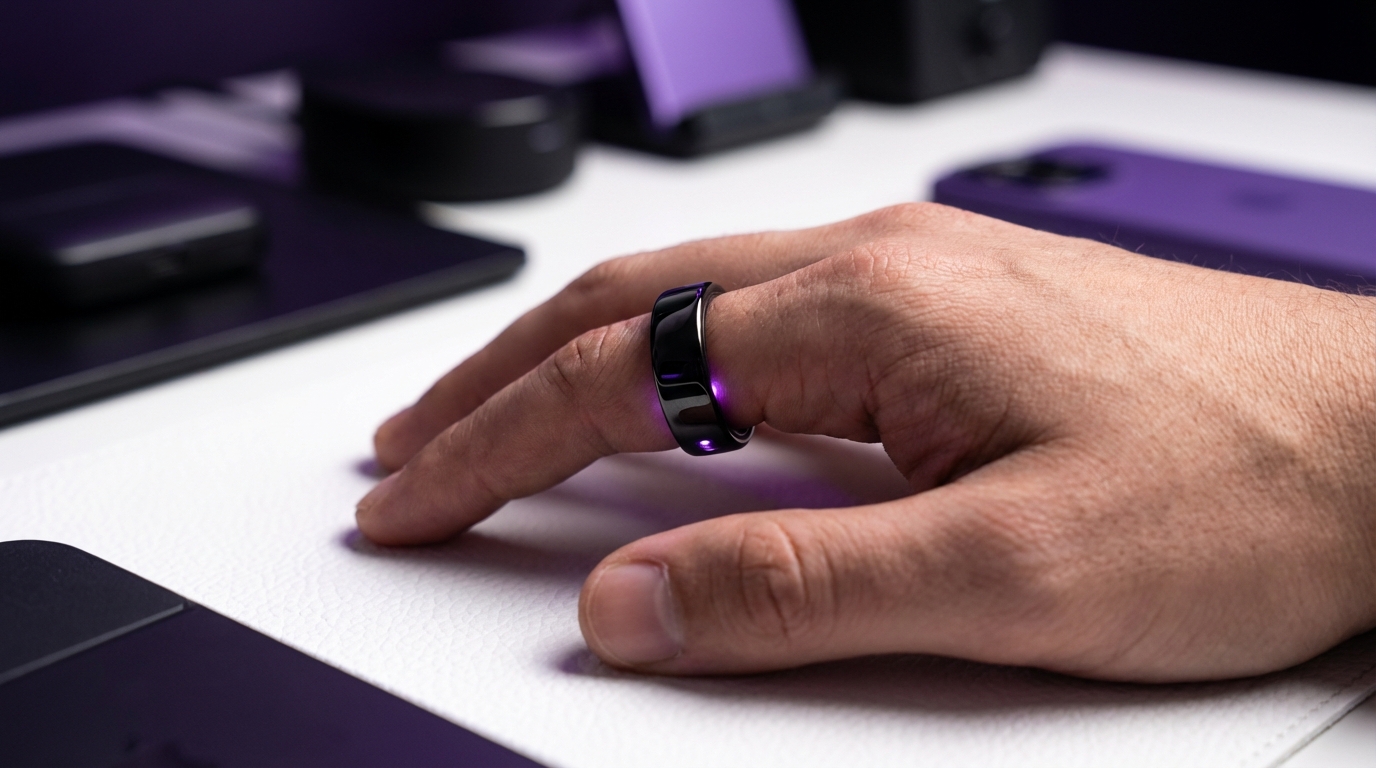

“The Oura Ring is just an overpriced step counter in a shiny shell.”
That line gets thrown around a lot. It sounds sharp, but it is not accurate. The Oura Ring is much more than a step counter, and in some cases it gives you better health signals than a smartwatch. The real question is not whether it works. It is whether it is worth the money, the subscription, and the tradeoffs for you.
I might be wrong, but most people look at wearable tech in a very binary way. Either it will magically fix their health, or it is a scam. The truth sits in a less dramatic place. Wearables like Oura are tools. Tools can help you see patterns, nudge you to better habits, and sometimes catch early warning signs. They do not sleep for you, move for you, or manage your stress for you.
The Oura Ring has built its name on sleep tracking and recovery. Not on fitness tracking, and not on productivity hacks. So if you are asking “Is it worth the hype?”, you are really asking something narrower: “Is the Oura Ring good enough at sleep and recovery to justify its cost and its quirks, compared to other devices and to doing nothing?”
Let me answer that directly: for some people, yes, it is worth it. For others, it is not. If your main goal is detailed sleep and recovery data in a small, low‑profile form factor, and you are willing to pay a monthly fee, the Oura Ring can be a strong choice. If you mainly care about workouts, step counts, or smartwatch features, you are looking in the wrong place.
“If I can get a cheap tracker that counts steps and shows sleep, why pay for Oura at all?”
This feels like a fair question. The thing is, sleep and recovery are harder to measure well than steps. Most devices can track movement. Fewer devices track heart rate variability (HRV) overnight with good stability, then turn that into a recovery signal that is actually useful without a PhD in physiology.
Still, the hype around Oura sometimes overshoots reality. Some claims go too far, and some expectations are unrealistic. So let me pull this apart carefully and show where it shines, where it falls short, and who should probably skip it.
What the Oura Ring Is Actually Built To Do
“Oura will tell you exactly how to sleep, train, and live every day.”
That kind of line shows up in marketing language and in social media. It sounds nice. It also sets you up for disappointment.
Here is what the Oura Ring is really designed for:
1. Sleep tracking with a focus on trends, not perfection
The core promise of Oura is sleep. It tracks:
– Bedtime and wake time
– Sleep duration
– Sleep stages (light, deep, REM)
– Sleep latency (how long you take to fall asleep)
– Sleep efficiency (time asleep vs time in bed)
– Nighttime movements
The ring uses a mix of sensors:
– Infrared LEDs to track heart rate and HRV
– A thermometer for skin temperature
– An accelerometer for movement
The app then gives you a “Sleep Score” each night. It is not a medical report. It is an index. It wraps several signals into one number you can glance at.
Is Oura perfect at sleep staging? No. Polysomnography in a lab is still the reference. Wearables estimate sleep stages. Oura does this as well as, and in some cases better than, many wrist wearables, but expecting lab‑level accuracy is a bad approach.
What it does well is consistency. If you keep the ring on every night, you can see how:
– A late meal affects your sleep
– Alcohol changes your HRV and resting heart rate
– Late‑night screens change your sleep latency
These patterns matter more than the exact number of minutes in deep sleep on Tuesday.
2. Recovery tracking through HRV and resting heart rate
The second big pillar is recovery. The ring tracks:
– Resting heart rate (RHR) during the night
– HRV during the night
– Breathing rate
– Skin temperature trends
From this, Oura gives you a “Readiness Score”. The idea: if your body is strained, sick, or under stress, your HRV falls, your resting heart rate rises, your temperature may shift, and your sleep quality often drops.
The ring turns these metrics into:
– A daily readiness number
– Color‑coded cues like “Pay attention” or “Take it easy”
Is this perfect? No. Recovery is personal. A simple score cannot capture all of it. Still, if you treat the score as a hint instead of a command, it can help you time rest days, watch for brewing illness, and sense when stress is piling up.
3. Activity tracking without trying to be a sports watch
Oura tracks:
– Steps
– General activity level
– Calories burned (estimates)
– Some workouts (automatic and manual logging)
But this is not a training watch. If your main interest is pace, distance, GPS data, or advanced workout metrics, a watch from Garmin, Polar, or Apple will serve you better.
Think of Oura’s activity view as context for your sleep and readiness, not as a full fitness log. The ring wants to know whether you moved enough, moved too much, or did something out of your regular pattern that might explain changes in your recovery data.
4. Exportable health data and integrations
If you like data:
– Oura can sync with Apple Health and Google Fit
– You can export data for your own analysis
– Some third‑party apps connect with Oura for coaching or performance tools
It is not the most flexible platform in the world, but for a ring, the integration level is decent. Just do not expect it to replace a full sports analytics setup.
What Makes the Oura Ring Different From a Smartwatch
“Why wear a ring when a smartwatch already sits on my wrist?”
This is where the Oura hype usually starts. Fans point to comfort, battery life, and sleep accuracy. Skeptics push back and say a watch can do all of that.
Let us break down rings vs watches in some concrete areas.
| Feature | Oura Ring | Smartwatch (typical) |
|---|---|---|
| Form factor | Small ring on a finger | Watch on wrist, bigger footprint |
| Comfort while sleeping | Very comfortable for most people | Some people find watches bulky in bed |
| Screen | No screen, app only | Full display with notifications |
| Battery life | About 4 to 7 days per charge | Ranges from 1 to 10 days depending on brand |
| Sleep focus | Core promise and design focus | Feature among many |
| Workout tracking | Basic | Often very detailed, with GPS |
| Subscription | Yes, for full features | Varies by brand |
| Social / phone features | None on device | Notifications, calls, apps |
For many people, the main benefit of Oura is simple: you can forget it is there. You put it on, it looks like a regular ring, and it stays out of your way. No buzzing, no glowing screen in your face at night, no temptation to read email at midnight because your wrist lit up.
If you already own a smartwatch, though, the ring is more of a specialist tool. Adding Oura on top of a watch only makes sense if you really care about night‑time comfort and sleep tracking quality, or you want to keep your wrist device off while sleeping.
The Real Costs: Money, Time, and Headspace
A lot of people focus only on the price tag of the ring. That is short‑sighted.
There are three cost layers:
1. The upfront hardware cost
Depending on model and finish, the Oura Ring usually sits in the mid to high price range for wearables. It is not cheap. Finishes like gold or certain limited editions can push the price higher.
You also have to handle sizing. Oura ships a sizing kit before they ship the ring itself. That extra step takes time, but it reduces the chance you end up with a ring that does not fit.
2. The subscription
This part frustrates a lot of people. The ring alone does not unlock everything. To access most meaningful insights, reports, and historical data, you need a monthly membership.
The membership cost is not huge on a monthly basis, but over several years, it adds up. If you stop paying, you keep some basic features, but you lose a significant slice of depth.
If you are tight on budget, or if you hate subscriptions in general, this might be enough reason to skip Oura and pick a device without ongoing fees.
3. The cognitive cost of all that data
This one rarely shows up in product pages.
There is a mental cost to tracking your body every day:
– You start checking scores every morning
– Your mood can rise or fall based on a number on your phone
– You might cancel a workout because your readiness score looks low, even if you feel fine
– Or you push too hard because your score looks high while your body feels off
For some people, the data is a helpful mirror. For others, it feeds anxiety or obsession. If you know you have perfectionist tendencies, or you are prone to health anxiety, going deep into sleep and recovery data can backfire.
If you feel your day is “ruined” by a low readiness or sleep score, that is a sign the device is not serving you. In that situation, you would be taking a bad approach to health, turning it into a scoreboard rather than a support system.
Where Oura Ring Really Shines
“Oura changed my life. I fixed my sleep in a month.”
You will see statements like that in reviews and case studies. They are true for some people, but there is a risk of mixing correlation and causation.
Often, what changed their life was not the ring itself. It was the shift in behavior triggered by the ring. Oura can be a powerful mirror that nudges you to act differently.
Here are use cases where the ring tends to deliver clear value.
1. Building better sleep habits
If you have never tracked your sleep before, Oura can make your habits visible:
– You see the impact of late caffeine
– You see how a regular bedtime stabilizes your scores
– You see the cost of late screens or long naps
The daily Sleep Score, plus graphs over weeks and months, help you connect choices with outcomes.
For many users, this alone leads to:
– Earlier bedtimes
– More regular sleep schedules
– Less late‑night eating and drinking
The ring does not force any of that. It just lowers the friction to seeing patterns, so behavior change becomes easier.
2. Managing training load and recovery
If you are active, especially with strength or endurance training, Oura can help you spot:
– When hard training days start to hit your sleep
– When your HRV is trending down for several days
– When your resting heart rate is not dropping as expected overnight
You can then adjust:
– Lighter training days when recovery looks off
– Taper weeks before events
– Extra rest when your body gives warning signs
Just be careful not to follow the recovery score blindly. Your own sense of tiredness and soreness still matters. If your body feels fine but the score dips a little, there is no need to overreact.
3. Catching early signs of illness or stress
The combination of HRV, resting heart rate, and temperature can sometimes signal something brewing:
– Slight rise in temperature
– Higher resting heart rate than usual
– Lower HRV
– Disturbed sleep
If you see those together, and you feel a bit off, you might choose to:
– Sleep more
– Adjust your training
– Watch for symptoms
Oura is not a diagnostic tool. It cannot tell you what illness you have. It just shows that your body is deviating from your own baseline.
4. Tracking patterns around menstrual cycles
For people who menstruate, Oura can help track:
– Temperature shifts throughout the cycle
– Changes in sleep quality
– HRV trends across phases
The app can give period predictions and cycle insights based on temperature and other factors. Predictive accuracy varies by person, but the trend data itself can be helpful for planning, training, and energy management.
Where the Oura Ring Falls Short
“Oura can replace your sports watch and your fitness app in one move.”
That line is misleading. The ring has clear tradeoffs, and for some buyers, these tradeoffs are dealbreakers.
1. Not a strong choice for workout metrics
For runners, cyclists, or other endurance athletes, Oura lacks:
– Onboard GPS
– Detailed pace and distance metrics
– Training load and performance modeling at the level of a serious sports watch
You can log workouts, and the ring will use them in its readiness patterns, but the data is shallow compared to dedicated training devices.
If you want deep workout analytics, you will either pair Oura with a sports watch or skip the ring and invest more deeply into that training stack.
2. Sleep staging is still an estimate
Marketing around sleep stages can create false confidence.
No consumer wearable is perfectly accurate at:
– Distinguishing light, deep, and REM sleep
– Tracking micro awakenings
– Measuring sleep onset with minute‑level precision every night
Oura has improved algorithms over time. Validation studies suggest the ring performs reasonably compared to other wearables. Still, treat exact stage breakdowns as rough guides, not medical data.
The most useful signals are:
– Time asleep
– Resting heart rate curve across the night
– HRV patterns
– Variations across days and weeks
If you obsess over whether you had 65 vs 75 minutes of deep sleep, you are giving the device more power than it deserves.
3. Subscription friction and feature gating
The membership model adds ongoing friction:
– You pay each month for full features
– Pausing or canceling removes some insights
– New features often sit behind the subscription wall
This can feel restrictive, especially when you already paid for hardware. If you strongly dislike this model, you are not wrong to see that as a poor fit for your preferences.
4. Durability, scratching, and comfort quirks
Even though the ring is built to be sturdy, it is still jewelry that faces:
– Scratches on metal finishes
– Risk of chipping if you hit hard surfaces
– Potential discomfort for grip sports (like certain weightlifting moves)
Oura suggests taking the ring off for some activities to avoid damage. That means missing data during those sessions. Some users also find that fingers swell with heat, which can affect comfort.
If your work or hobbies involve heavy manual tasks, metal tools, or frequent contact with hard surfaces, you need to think carefully about ring wear. A watch might be safer.
Comparing Oura to Other Wearables
To see whether Oura is worth the hype, you need to compare it to both:
– Doing nothing (no wearable)
– Other popular devices
Here is a simplified comparison.
| Use case | Oura Ring | Apple Watch | Garmin / similar sports watch | Basic fitness band |
|---|---|---|---|---|
| Strongest area | Sleep & recovery tracking | Smart features + general health | Sports and training metrics | Steps & simple sleep data |
| Form factor | Ring | Wrist watch | Wrist watch | Wrist band |
| Screen | None | High quality screen | Screen (varies) | Small or basic screen |
| Subscription needed? | Yes, for depth | No, core features work without | Usually no | Usually no |
| Workout data depth | Low to moderate | Moderate | High | Low |
| Comfort during sleep | High for most | Medium | Medium | Medium to high |
| Price range | High + subscription | High | Medium to high | Low to medium |
If you already own a good smartwatch and you sleep fine with it on, Oura is a tougher sell. If you hate sleeping with something on your wrist, or you want to avoid screens at night, the ring pulls ahead.
How To Decide If the Oura Ring Is Worth It for You
This is where many people take a weak approach. They ask “Is Oura worth it?” as if there is one answer for everyone.
A better approach is to walk through a simple decision process.
Step 1: Be honest about your main goal
Ask yourself:
– Do I want better sleep and recovery awareness above everything else?
– Or do I mainly care about steps, workouts, and phone features?
If sleep and recovery are top priorities, Oura fits the brief. If not, you are paying for the wrong strengths.
Step 2: Check your tolerance for subscriptions
You wrote that you want to know if the ring is “worth the hype.” Part of that hype hides the long‑tail cost.
Be honest:
– Am I comfortable paying monthly for health insights?
– Or will a growing bill irritate me over time?
If the subscription will annoy you later, you are better off with a non‑subscription device. Otherwise, you will resent the purchase and possibly stop using it.
Step 3: Think about your relationship with data
Some questions to ask:
– Do I get anxious when I see health numbers?
– Do I trust my body, or do I lean heavily on metrics?
– Have I obsessively checked stats in other apps before?
If you tend to obsess, Oura could push you into a stressful loop of score chasing. In that case, the ring might do more harm than good. You would not be wrong to skip wearables entirely.
If you tend to be relaxed but curious, you are more likely to use the data in a healthy way.
Step 4: Consider your daily comfort and style
Try this mental test:
– Would a ring fit my usual clothing and activities?
– Do I often lift heavy objects, play contact sports, or work with tools?
– Do my fingers swell often in heat or humidity?
A ring is subtle but less flexible than a watch in some daily contexts. If you keep removing it, your data will have holes, and the value goes down.
Step 5: Compare to doing nothing
One question often gets missed: what is your baseline?
Right now:
– Do you sleep well and wake up refreshed on most days?
– Do you feel aware of how your habits affect your energy?
– Or do you often feel tired and confused about why?
If your sleep and energy feel fine, the marginal gain from a ring is smaller. If you are struggling and you have no clear sense of patterns, Oura can serve as a structured experiment kit.
How To Get Real Value If You Buy an Oura Ring
If you decide to buy one, your outcome depends less on the ring and more on how you use it.
Here is a practical way to approach it.
1. Treat the first month as a baseline period
For at least 3 to 4 weeks:
– Wear the ring day and night
– Do not change your habits just yet
– Let it collect data on your normal sleep, activity, and recovery
During this time, only observe. Do not chase better scores. Let the app learn your personal baseline.
2. Focus on one or two experiments at a time
Once you have a baseline, pick simple experiments:
– Fix your bedtime within a 30‑minute window for 2 weeks
– Stop caffeine after a set time each day
– Keep screens away for the last 30 to 60 minutes before bed
Watch how your:
– Sleep duration
– Sleep latency
– Resting heart rate curve
change. This targeted approach is better than changing five things at once. That can confuse signal with noise.
3. Use scores as hints, not rules
When you see a low readiness score:
– Check in with how you actually feel
– Look at the trend, not a single data point
– Adjust if the score and your feeling match, ignore it if they clearly do not
This keeps your judgment in control. The ring becomes a partner, not a boss.
4. Reevaluate your usage every few months
Every 3 to 6 months, ask:
– Am I still looking at the data regularly?
– Is it influencing my habits in useful ways?
– Or has it turned into noise or stress?
If you are not using the insights, you could pause the membership or sell the ring. Sunk cost should not keep you locked in.
Common Misunderstandings About Oura
“If my readiness is high, I can push hard, no matter what.”
This mindset is risky. Even a good readiness score cannot:
– See local muscle soreness
– Understand your life stress in detail
– Know your training plan context
Treat high readiness as a green light with common sense, not as a guarantee.
“If my deep sleep is low, my night was bad.”
Deep sleep amounts vary by person and change with age. A single night with lower deep sleep does not mean something is wrong. What matters more is:
– Overall sleep time
– How you felt the next day
– Patterns across many nights
If you feel fine but deep sleep looks low once in a while, do not panic.
“Oura will fix my sleep problems.”
Oura can highlight patterns and nudge you toward better habits. It cannot:
– Remove noisy neighbors
– Fix sleep disorders
– Heal chronic stress on its own
If you suspect a real sleep disorder (like sleep apnea or chronic insomnia), a wearable is not the right end point. A proper medical assessment is the right path. Relying on Oura alone in that case would be a bad approach.
Is the Oura Ring Worth the Hype?
Let me pull this together without sugarcoating it.
The Oura Ring is worth it if:
– You care deeply about sleep and recovery
– You want a low‑profile, screen‑free form factor
– You are comfortable with a subscription
– You have a fairly balanced mindset around data
– You are ready to change habits based on what you see
The Oura Ring is not worth it if:
– You mainly want workout metrics, GPS, or smartwatch features
– You strongly dislike subscriptions
– You tend to obsess over health numbers
– Your work or sports make wearing a ring awkward or risky
– Your sleep is already strong and you are not interested in detailed tracking
If you are sitting in the middle, leaning slightly toward curiosity about your sleep, and you can afford it without stress, trying Oura for 6 to 12 months can make sense. Treat that period as an experiment. If your habits, energy, and self‑awareness improve, great. If not, be honest, cut your losses, and move on.
The hype around Oura often oversells the ring as a magic solution. It is not that. It is a focused tool for people who want to see sleep and recovery more clearly, and who are willing to act on what they learn. If that is you, the ring can earn its place on your finger. If it is not, your money and attention are better spent somewhere else.
